Ah, the Moon—Earth’s favorite neighbor, forever hanging in the sky like a celestial nightlight. But why, oh why, did the USA land there six times, only to ghost the lunar scene like a cosmic fling gone awry? Let’s dive into the interstellar soap opera that is America’s lunar escapades, complete with Cold War drama, budgetary bloopers, and a dash of Elon Musk Twitter madness.
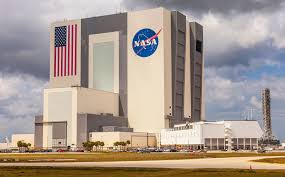
Picture it: the swinging ’60s, a time when bell-bottoms were in vogue and the space race was all the rage. Enter John F. Kennedy (side note – a man who was elected as President of the United States of America at the age of just 41 – imagine that power at 41!). The dashing president with a penchant for bold declarations. In a move that would make even the most seasoned reality TV star blush, Kennedy announced to the world, “We choose to go to the Moon!” And just like that, NASA’s Apollo program was born, with the Moon becoming the ultimate prize in humanity’s cosmic game of capture the flag. Kennedy Space Centre is still hailed as one of the ultimate sites for space exploration; despite the tragic fact that JFK was assasinated before he could ever see his dream realised.
Fast forward to July 20, 1969, when Neil Armstrong and Buzz Aldrin strutted their stuff on the lunar surface like a couple of interstellar rock stars. Meanwhile, Michael Collins (I know you’ve never heard of him, but it took three men to reach the moon – sadly only two could actually touch it’s surface) orbited above, presumably binge-watching space documentaries and contemplating the meaning of life. It was a moment of triumph, a cosmic mic drop heard ’round the world.
But as the ’70s dawned and disco fever swept the nation, America’s lunar ambitions began to wane. Blame it on budget cuts or a collective midlife crisis, but suddenly, the Moon just wasn’t as alluring as it once was. Sure, there were a few more Apollo missions, but they lacked the pizzazz of the initial lunar landing. It was as if America had achieved its lunar destiny and now sought new cosmic conquests, like sending cheese to Mars or starting a lunar colony of space-faring llamas.
And then there were the mishaps—oh, the mishaps! Apollo 13, the mission that went from bad to worse faster than you can say “Houston, we have a problem.” Ron Howard’s movie, starring Tom Hanks and Kevin Bacon, is perhaps one of the best movies of all time in my personal opion. All I can say is thank the lord my father made me watch it when I was young and taught me the basics of the Apollo missions. And that is no exaggeration, as my father was alive to watch such a crisis live. Sometimes I have bumpted into nerds, like myself, who believed that Apollo 13 never happened – or that the movie over-dramatised everything.
I don’t want this article to be specifically about Apollo 13, but rather the moon landings in general. So if you want to know more about Apollo 13 watch the movie, hit up Wikipedia … or just wish your dad was as smart as mine. Up to you. (SPOILER ALERT!!!!!! = But fear not, for the crew survived to tell the tale, proving once and for all that space travel is equal parts exhilarating and utterly bonkers).
Oh BUT STOP! The thrill of watching SpaceX nail yet another rocket landing—it’s like witnessing a cosmic ballet of engineering prowess and sheer audacity. My heart skipped a beat as the fourth rocket touched down with the finesse of a seasoned dancer. I, probably along with the rest of the world, knew that this was Musk’s last shot at getting funding from NASA and respect from the rest of the world. The “Nerd World” held its breath. Third time’s a charm? Well, for Musk it was the fourth (AND FINAL) time. But alas, the excitement has waned as SpaceX seems to have taken an extended intermission from its rocket landing spectaculars. Here’s hoping for an encore performance soon!
But wait, there’s more! Enter Elon Musk, the eccentric billionaire with a penchant for flamethrowers and Twitter rants. While his company ‘SpaceX’ aims for the stars, Musk seems more interested in stirring up controversy on social media than plotting the next cosmic conquest. It’s like watching a cosmic soap opera unfold in real-time, complete with rocket launches, love triangles, and the occasional meme-induced meltdown.
Furthermore, as we see the USA and Kennedy’s dream fall away – India and China’s space programs are skyrocketing, quite literally, with ambitious missions and rapid advancements. India’s ISRO has achieved milestones like the ‘Mars Orbiter Mission’ on a shoestring budget, while China’s CNSA boasts lunar landings and plans for a space station. Meanwhile, the USA, once the undisputed cosmic champion, finds itself playing catch-up in the interstellar Olympics. As the global space race heats up, America must innovate and collaborate to stay ahead in the celestial game.
With Putin flexing his space muscles and India’s space program gaining steam, the stage is set for a new space race of epic proportions. Perhaps Space Travel is not the immediate concern for the USA (let alone smaller countries) as we currently see ourselves in such economic and political turmoil. Nevertheless, the fact India and China are launching their own Space Programs (without even consulting the USA or Russia) would certainly point to the fact that there is a shift in the balance of power.
So why did the USA land on the Moon but never return? The answer, it seems, is a cosmic confluence of geopolitics, budget constraints, and the capricious whims of fate. But fear not, fellow space cadets, for the final frontier beckons, a tantalizing adventure waiting to unfold. After all, in the grand cosmic comedy of errors, anything is possible—even a lunar hoedown with Neil Armstrong leading the moonwalk.
Perhaps Kennedy and the Kennedy Space Centre must be consigned to a beautiful American History. That is, of course, unless Trump can Make America Great Again on Earth and on the Moon …

 Ignorantly Ignorant