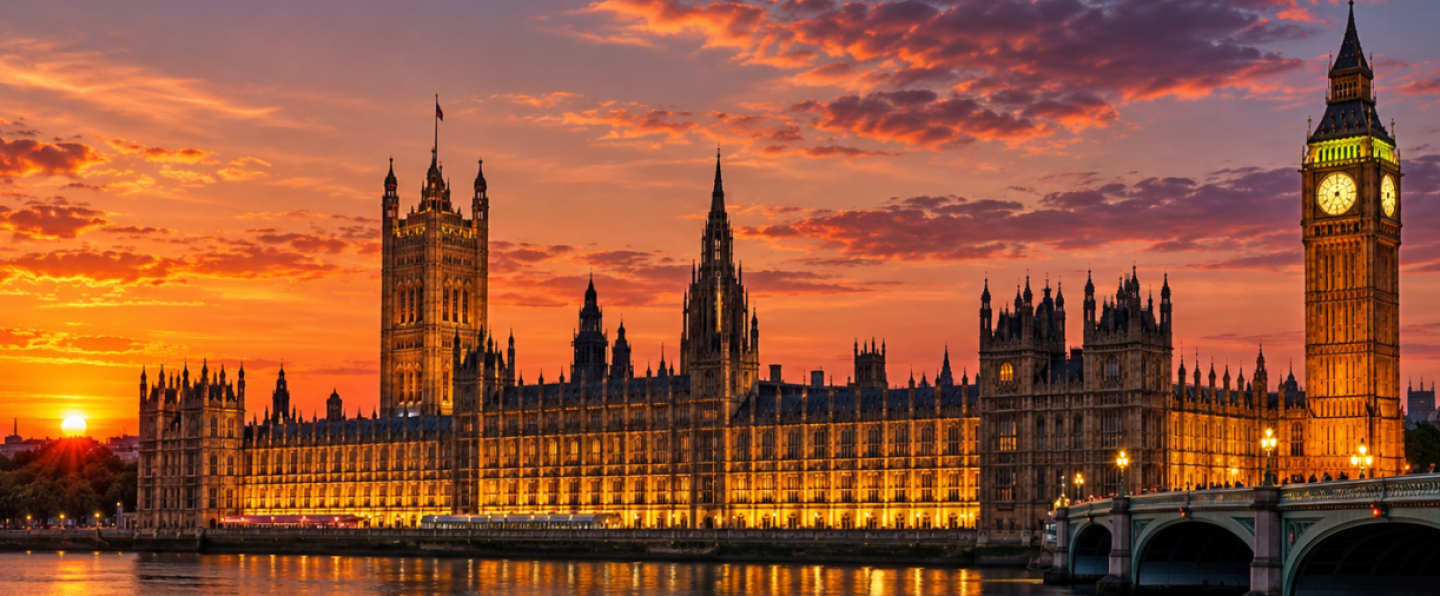
The Midterms Are Beginning to Look Like a Referendum on Trump

There is a particular point in an American election campaign when what once looked like a collection of interesting polls begins to resemble a genuine political trend. We may now be approaching that point in the 2026 midterm elections. The election is still a month away, and American politics is famously capable of producing extraordinary reversals in a remarkably short period of time, but the evidence accumulating across the country is becoming increasingly difficult for Republicans to dismiss. Democrats are ahead on the national congressional ballot, their voters appear considerably more engaged, President Donald Trump’s approval rating has fallen to deeply uncomfortable levels, and Republican candidates in competitive races are increasingly behaving as though the president’s name is something they would rather keep at arm’s length.

At this stage, I would be genuinely surprised if Democrats did not win the House of Representatives. The Senate is a more complicated proposition because the electoral map gives Republicans structural advantages that do not disappear simply because the national political environment has turned against them. Yet even there, the closer we get to November 3, the harder it becomes to dismiss the possibility of a Democratic majority. What looked like an ambitious Democratic objective earlier in the campaign is beginning to look like a perfectly realistic outcome. And there is one person who sits at the centre of almost all of it: Donald Trump.

The latest polling is not merely showing Democrats with a small advantage. It is showing a pattern. Recent national congressional polling has Democrats ahead of Republicans by a significant margin, with several surveys showing advantages that would be more than sufficient to put a large number of Republican-held House seats into play. Pew Research Center has also found Democrats with an advantage on the congressional ballot, while Democratic voters appear more engaged with the coming election than Republicans. That enthusiasm gap matters enormously in a midterm election because turnout is lower than during a presidential election and relatively small differences in motivation can have enormous consequences in individual congressional districts and states. A party that enters a midterm election with an enthusiastic base while the president occupying the White House is unpopular is already starting with a significant advantage.

The House of Representatives is where the Democratic case is strongest. The Republican majority is narrow, and narrow majorities are notoriously difficult to defend in midterm elections when the party occupying the White House is unpopular. A president’s party has historically tended to lose seats during midterms, and when the president is particularly unpopular, the losses can become much larger. Republicans are therefore not simply trying to defend a comfortable majority against a reasonably strong Democratic opposition; they are trying to defend a narrow majority while their president is unpopular, while Democrats are performing strongly on the national congressional ballot and while a number of previously safe Republican districts are becoming competitive.

This is why I think Democrats should be looking beyond the question of whether they can scrape together enough seats to take control of the House. The political environment increasingly suggests that they should be thinking about whether they can win convincingly. A narrow victory would be enough to change the balance of power in Washington, but a large Democratic victory would tell a much more important political story. It would demonstrate that the electorate had not simply moved against a handful of vulnerable Republican representatives but had turned decisively against the broader political direction of the Republican Party and the Trump administration.

The significance of that distinction should not be underestimated. If Democrats begin winning Republican-held districts that would normally be considered safely conservative, the election starts to look less like an ordinary midterm contest and more like a national wave. Republican candidates are then forced to spend money defending seats they never expected to have to defend, while Democrats can use their resources to attack increasingly ambitious targets. That creates a vicious cycle for the party defending the majority because every additional seat that becomes competitive forces Republicans to divide their resources further.

The Senate is a much more complicated proposition. The electoral map is more favourable to Republicans than the House map, and Democrats have fewer obvious opportunities. Several Republican-held Senate seats are in states where Donald Trump remains capable of winning or where the underlying political structure remains favourable to Republicans. It would therefore be premature to describe a Democratic Senate victory as inevitable.

But there is a significant difference between saying that a Democratic Senate victory is not inevitable and saying that it is unlikely. Those are no longer the same thing. Several current forecasting models are giving Democrats a genuine chance of taking control of the chamber, and that possibility becomes more credible if the national political environment continues moving in the same direction. If Democrats maintain a substantial advantage on the generic congressional ballot, if their voters remain more enthusiastic about participating, and if Trump’s approval rating remains deeply underwater, the Republican Party may find that its structural advantage in the Senate map is simply not enough to protect every vulnerable seat.

That is why the Senate could ultimately become the biggest surprise of election night. Earlier in the campaign, Democratic control of the Senate would have looked like a difficult objective requiring almost everything to go right. As we get closer to November, however, it is becoming increasingly difficult to dismiss. If the current political environment persists, I would be genuinely surprised if Democrats did not at least come extremely close to taking the chamber, and I would be even more surprised if Republicans managed to emerge from the election having comfortably retained both chambers of Congress.

The most interesting aspect of this election may be the increasingly obvious problem Republicans have with their own president. Donald Trump remains an extraordinarily powerful political figure, and there is no question that his support can still be enormously valuable to Republican candidates. His endorsement carries considerable weight with the Republican base, his rallies can generate enormous enthusiasm and his ability to dominate the political conversation remains unmatched. But the very qualities that make Trump such an effective political force within the Republican Party can become liabilities when candidates need to appeal beyond the Republican base.

This is the strange paradox of Trumpism. Trump is exceptionally good at energising people who already love him, but he is also exceptionally good at energising people who absolutely do not. In a presidential primary, the first group can be enough to determine the outcome. In a general election, particularly in competitive suburban congressional districts and closely contested Senate states, the second group can be just as important.

Recent polling has put Trump’s approval rating at around the low 30s, which is an extraordinarily difficult position for a president’s party to be in ahead of a midterm election. The problem is not simply that some voters dislike him. It is that Trump’s political identity has become so closely intertwined with the Republican Party that Republican candidates cannot easily separate themselves from him even when doing so might be electorally advantageous.

That leaves Republican candidates with a remarkably difficult choice. If they embrace Trump completely, they risk inheriting his unpopularity among independent and moderate voters. If they distance themselves from him, they risk alienating the Republican voters who remain intensely loyal to him. There is no obvious way out of the dilemma because Trump has spent years transforming the Republican Party into a political movement centred around his personality, his political instincts and his particular view of American politics.

Recent reporting has highlighted just how significant this problem has become. Republican candidates in competitive congressional races are increasingly distancing themselves from Trump on particular issues, even while remaining members of a party that is still fundamentally shaped by his presidency. That tells you something important. These candidates may not want to admit publicly that Trump is hurting them, but their campaign strategies increasingly suggest that they understand the risk.

There is something almost absurd about the position in which some Republican candidates now find themselves. Trump wants the midterms to be a referendum on his presidency. He wants Republican candidates to embrace his agenda and defend his record. Yet candidates running in competitive districts increasingly want voters to judge them independently. They want to talk about local issues, their own records and the concerns of their constituents rather than spending every day defending the latest controversy surrounding the president.

The problem is that they cannot completely escape him. Trump is the president, the leader of their party and the central figure in Republican politics. Democrats can therefore continue asking a very simple question: if you vote Republican, aren’t you also voting to give Donald Trump more power?

That is a potentially devastating argument in a midterm election. Voters do not need to dislike their individual Republican representative in order to vote against them. They simply need to believe that Congress should provide a check on the president. If Democrats successfully turn the election into a referendum on whether Trump should have more or less power, Republican candidates could find themselves fighting a national battle that many of them would rather have avoided.

The more Trump makes the election about himself, the harder it becomes for Republican candidates to make the case that they should be judged independently. This is perhaps the greatest political irony of the moment. Trump spent years arguing that the Republican Party needed to become more unified around a clear political identity, and he succeeded spectacularly. But that success means that when voters become dissatisfied with Trump, Republican candidates have very little room to escape the consequences.

The other major issue is the economy. Elections are rarely decided entirely by ideology, particularly in midterms, and voters tend to become much more unforgiving when they feel that their everyday financial circumstances are deteriorating. Inflation, food prices, housing costs, energy prices and wages are considerably more tangible to voters than most of the ideological arguments that dominate political coverage.

This gives Democrats an obvious opportunity. They can argue that Americans should judge the Trump administration according to a simple question: are you better off than you were before? If voters answer no, Democrats do not necessarily need to persuade them that every Democratic policy is superior. They simply need to persuade them that Republicans deserve to be punished for the economic situation.

That is a much easier argument to make in a midterm election than trying to persuade voters to embrace an entire Democratic ideological programme. The opposition party can campaign as a check on the administration rather than presenting itself as an alternative government-in-waiting, and if Trump’s approval remains around the low 30s, that strategy could be remarkably effective.

This is also where Trump’s political style could become particularly damaging. His presidency is rarely quiet. Every day brings another controversy, another confrontation, another argument and another political battle. That style is extraordinarily effective at maintaining attention, but constant political conflict can eventually become exhausting to voters who are not particularly interested in politics. A voter can agree with some of Trump’s policies while simultaneously deciding that the country simply needs less drama.

That exhaustion should not be underestimated.

It would nevertheless be a mistake to assume that the election is already decided. American politics has a remarkable capacity for surprise, and there is still plenty of time for Republicans to change the trajectory of the race. Trump remains capable of dominating the news cycle, energising his supporters and turning an obscure congressional contest into a national culture-war battle. His supporters remain extraordinarily loyal, and Republican voters who are currently less enthusiastic could become much more motivated as election day approaches.

The biggest danger for Democrats is therefore complacency. A favourable national environment does not automatically translate into a Democratic Senate majority, and even the House should not be treated as a certainty. The Senate map remains difficult, Republican candidates can outperform Trump, and voters who dislike the president can still vote for Republican candidates.

Democrats also have their own problems. Republicans retain advantages on several important issues, particularly immigration and crime, and Democrats cannot simply assume that every voter who is unhappy with Trump will automatically vote Democratic. They need to give those voters a reason to support them rather than simply a reason to oppose Republicans.

That distinction will ultimately determine whether this becomes an ordinary Democratic victory or a genuine political wave.

Republicans will argue that Democrats are too far to the left, too weak on immigration, too willing to obstruct the president and too committed to policies that they believe have failed. Democrats will argue that Republicans have given Trump too much power and that the only way to restore a meaningful check on the administration is to hand Congress back to the opposition.

The Democrats therefore have a potentially powerful argument that goes beyond individual races. They can tell voters that they do not have to decide whether they love or hate the Democratic Party. They simply have to decide whether they want Donald Trump to have an unchecked Republican Congress behind him for the remainder of his presidency.

If enough voters answer no, Democrats could have an extraordinary night.

And that is why the closer we get to November, the more surprised I would be if Democrats did not convincingly win the House. The national environment is simply becoming too difficult for Republicans to overcome, particularly when they are defending a narrow majority while their president remains deeply unpopular. The Senate is obviously harder, and there are still several races where Republicans have significant structural advantages, but the idea of Democrats taking the chamber is no longer some distant fantasy. It is increasingly a plausible outcome.

There is an extraordinary irony at the centre of all of this. Donald Trump has spent more than a decade transforming the Republican Party into a movement that revolves around him. He defeated the traditional Republican establishment, reshaped the party’s electoral coalition, changed its rhetoric and made his personal political brand inseparable from Republican identity.

That transformation produced enormous electoral benefits. But it also created an enormous vulnerability.

A political party that is closely identified with one person becomes extraordinarily powerful when that person is popular, but extraordinarily vulnerable when that person becomes unpopular. Republican candidates cannot simply pretend that Trump does not exist because their own voters are too closely connected to him. At the same time, they cannot always afford to embrace him because independent voters and moderate Republicans may be increasingly uncomfortable with the president.

This is the fundamental problem with having Trump on your side. His endorsement can win you a primary. His supporters can provide an enormous electoral base. His political machine can generate money, attention and enthusiasm. But when the general electorate turns against him, all of those advantages can become liabilities. The very voters who make Trump such a formidable force within the Republican Party can become a ceiling on the party’s ability to expand beyond its existing coalition. And if the current polling is correct, that ceiling may be becoming increasingly important.

There is still time for this election to change. There will be unexpected events, damaging advertisements, political scandals, candidate mistakes and probably several moments that completely dominate the news cycle for a few days. American elections are not predictable enough to declare the result before voters have actually cast their ballots.

But elections are ultimately about probabilities rather than certainties, and the probabilities are becoming increasingly favourable to Democrats. The House should be theirs. If the current environment continues, I would be surprised if they did not win it convincingly rather than simply scraping across the line.

The Senate is harder to predict, but the possibility of a Democratic majority is becoming increasingly difficult to dismiss. If Democratic enthusiasm remains high, if Republicans continue distancing themselves from Trump in competitive races, and if Trump’s approval remains around the low 30s, the structural advantages Republicans possess in the Senate may not be sufficient to protect every vulnerable seat.

The irony is that Trump may have spent years building the most personally loyal political movement in modern American history, only to discover that loyalty has a weakness. It can make a party extraordinarily powerful when its leader is popular, but it can make the entire party extraordinarily vulnerable when the electorate turns against him. For Republicans, that may be the defining problem of the 2026 midterms. They have Donald Trump on their side.

And increasingly, that may not be the advantage they once thought it was.

To what extent was the Zionist movement successful in achieving its objectives in 1948?

**For those of you who do not know. I did a Masterโ€™s Degree in โ€˜International History and Politicsโ€™ at The University of Leeds and graduated in 2020. I got a Distinction. I was good. **

I haven’t posted on this blog in over a year (a surprise to myself)! I remember stopping because ChatGPT started to become regularly used and people were suspecting that I was using it to write my articles. I never have for my blog posts; I’ve never seen the point and I’ve never even thought ChatGPT is even that good. It is NOT AI. It is, what I like to call, ‘advanced Googling’.

But with the genocide currently going on in Gaza, conducted by Israel (let’s just call it what it is), I remembered this morning that I actually did a very long module on ‘The Israel-Palestine Conflict’ and completed it in 2019. This essay got 81/100 – so it’s bloody good. Of course, I was writing it 6 years ago so my views where tempered quite a lot compared to how they are now. But I thought I would share this, just as a brief history lesson of such a messy conflict.

I have a lot I could write here about Netanyahu being one of the worst dictators of the modern age. I could write about how Israel’s nuclear regime is suspect, with not even top cabinet members having knowledge of how many nukes they possess.

I just want to quickly recount Mehdi Hasan’s (a genius) debate with Danny Ayalon (former Israeli Cabinet Minister), in which Ayalon himself says that he has no idea how many nukes Israel has. Hasan points out the hypocrisy of this by stating: “Imagine if an Iranian Ambassador came onto this show and I asked how many nukes they had and he just shrugged and said, ‘I dunno’, would you not be outraged? Can you not see the blatant hypocrisy?”

Ayalon admits yes! Hassan then beautifully reminds Ayalon that Iran, and its’ surrounding Arab nations had subscribed to UN Resolution 487. Ayalon insists there is no such resolution concerning Israel’s nuclear capabilities; to which Hassan responds, quoting the resolution, stating that “This board furthermore notes that Israel has not adhered to the Treaty on the Non-Proliferation of Nuclear Weapons. Making the area deeply concerned about the danger to international peace and security created by the premeditated Israeli air attack on Iraqi nuclear installations on 7 June 1981.”

I do not ignore the events of October 7th, horrific and monstrous as they were, but I ask – what about the events on October the 6th? What about the events on October the 8th, or 9th … or 10th? Or YESTERDAY? The essay beneath is an extremely tempered version of my views now, not only because the situation was vastly different 6 years ago, but also because (and I won’t lie about this) I wanted to secure a good grade in this module.

But for those of you who do not want to read the entire essay, here’s a summary: No, the Zionist movement WAS NOT WHOLLY successful in achieving its objectives in 1948. Zionists wanted to escape Europe and find a peaceful homeland. They wanted to escape the horrors placed upon Jewish people by the Holocaust and the Soviet Union.

Leaders of the Zionist movement even considered Argentina as a ‘homeland’ to be safe, they just wanted a recognised state that was AWAY from Europe! If leading Zionist thinkers, such as Theodore Herzl, could see what Israel is conducting today they would be appalled, ashamed and embarrassed by the horrific scenes they had created. There is a difference between being anti-Israel and antisemitic. Israel is a rogue, fascist, murdering state. Jewish people are Jewish people, from different places all over the world, most of whom, to their credit, have renounced the actions of Israel.

And that is why I have finally decided to post this essay, as I am reminded of Martin Niemรถller’s brilliant poem (rather ironically, written by an initial supporter of Hitler, until he began to see how the Nazis were treating minorities withing Germany): “First they came for…”:

First they came for the Communists
And I did not speak out
Because I was not a Communist
Then they came for the Socialists
And I did not speak out
Because I was not a Socialist
Then they came for the Trade Unionists
And I did not speak out
Because I was not a Trade Unionist
Then they came for the Jews
And I did not speak out
Because I was not a Jew
Then they came for ME
And there was no one left
To speak out for me
.

And SO … (FINALLY) … MY ESSAY FROM 2019:

Candidate Name: Nesaar Uppal  
Candidate Number: ############
Module Name: The Israel-Palestine Conflict
Module Code: PIED5501M

The early modern roots of the Zionist movement emerged from the persistent persecution of Jewish people across Europe for hundreds of years (Halperin, 2015). This persecution caused Jewish people to be spread all across Europe and the Middle East in diaspora.[1] Seeing this persecution, diaspora and finding a religious right to create a Jewish homeland many believed that people of the Jewish faith deserved their own land and their own government (Herzl, 1895; Weizmann, 2005). Theodore Herzl, one of the first Zionist thinkers and perhaps the most influential, planned to create a homeland for Jews to escape persecution in Europe. The creation of an internationally recognised Jewish homeland was indeed the main aim of the Zionist movement, with Eichler (2016) noting that โ€˜the official goal of the Zionist movement โ€ฆ a Jewish national home to be secured by international law.โ€™ However, a number of other Zionist objectives emerged causing divisions within the Zionist movement about which aims to pursue first. Along with creating a Jewish homeland and ending diaspora, Herzl genuinely wanted to also bring economic prosperity to the region, with better infrastructure and more finance Herzl hoped that Jewish immigration would โ€˜help them (Arabs) raise their own economic standardโ€™ (Weinstock, 2011, p.50).

Herzlโ€™s desire for a mass migration of Jews to the Middle East to end diaspora, referred to as Aliyah, took place in waves, with the first being between 1881 and 1903 (Greilsammer, 2011). However, as the third and fourth Aliyahโ€™s took place in the 1920s and 1930s more and more communist Jews from Eastern Europe brought their communist ideas to the Jewish homeland, hoping to create a communist state (Greilsammer, 2011). After the devastating persecution which occurred during the Second World War the immigration of Jews to Palestine increased massively; Weinstock (1973, p.55) commented that โ€˜fascism in Europe gave considerable impulse โ€ฆ at the end of the Second World War the 583,000 Jews represented 1/3 of the Palestine population.โ€™ This continued immigration, purchasing of Arab land and refusal to allow Arabs to work on Jewish-owned land led to increased tensions.[2] These tensions came to a helm in 1947 and 1948. In 1947 the United Nations issued resolution 181 which called for a partition plan of Palestine, effectively granting a Jewish homeland in the region and greatly angering the Arab League (Greilsammer, 2011, p.44). Following this, in 1948 a coalition of Arab forces invaded Israel in 1948, the day after the Israeli leader David Ben-Gurion declared independence for Israel. During the following ten months of fighting the Arab coalition eventually lost and was forced to retreat, with Israel taking control of the whole of Palestine and a large section of Transjordan, 60% more land than what they had been guaranteed by the UN (Rogan, 2008, pp.102-103).

In a number of ways, it could be contended that the Zionist movement was very successful in achieving its objectives in 1948. It became an internationally recognised sovereign state which was indeed the key aim of Zionism; it was also able to provide a safe homeland for persecuted Jews and whilst diaspora was never fully achieved and later referred to as โ€˜idealisticโ€™ it still provided refugee for hundreds of thousands of Jews. However, in a number of other ways it failed in achieving its original objectives. Herzl envisaged a model society based on equality with Arabs, as Karsh (2006, p.470) demonstrates that โ€˜the archives show that rather than seek the expulsion of the Palestinian Arabs, the Zionist leaders believed that there was sufficient room in Palestine for both peoples to live side by side in peace and equality.โ€™ This failure to assimilate with Palestinian Arabs was further compounded by Jewish settlerโ€™s hoarding land and wealth from Arabs, creating a Jewish elite and not an equal society. There are a number of reasons for the success of the Zionist movement in 1948. Support from the West, particularly the USA and the UN, was vital in securing their independence. Moreover, Britainโ€™s withdrawal from the region and their simultaneous problems with India and Pakistan gaining independence meant that support for the Arab cause dwindled after the Second World War. Furthermore, Israelโ€™s superior financial situation, technology and international support meant they were able to win the 1948 war and secure a sovereign state for themselves.

The primary Zionist objective was to create an internationally-recognised national home for Jewish people; Weinstock (1973, p.51) notes that when Herzl โ€˜convened the first Zionist Congress at Basle in 1897โ€™ he described the Zionist aim โ€˜as being the establishment for Jewish people of a home in Palestine secured by public law.โ€™ Certainly, this was achieved first with the UN resolution 181 in 1947 which guaranteed a partition plan but was then further emphasised by David Ben-Gurionโ€™s declaration of independence in May 1948. Moreover, Zionists also wanted to see โ€˜the revival of the Hebrew language and cultureโ€™ and saw this โ€˜as one of the essential elements of a new societyโ€™ (Greilsammer, 2011, p.43). Indeed, there can be little debate about the success of Zionism with regards to this particular aspect of their objectives. Conforti (2011, p.572-573) reaffirms this success by analysing the UNโ€™s actions after the British withdrawal from the region, concluding that โ€˜from the legal point of view, the resolution of November 1947 that decided the division of Palestine in a Jewish and an Arab state was the international communityโ€™s (UN and USA) endorsement of the creation of Israelโ€™. However, the creation of a Jewish national home was not supposed to come at the expense of the Palestinian population. Numerous times, Herzl and other key Zionist leaders expressed their desire to share the land with Arab Palestinians. After analysing Herzlโ€™s works, Karsh (2006, p.471) concludes that โ€˜there was no trace of such a belief (that Arabs should be expelled to allow Jews to enter Palestine) in either Herzlโ€™s famous political treatise The Jewish State (1896) or his 1902 Zionist novel Altneuland (Old-New Land).โ€™ Numerous political leaders shared this idea of peaceful co-habitation with the Arab population. Indeed, as early as 1934, โ€˜Jabotinskyโ€™s Revisionist Party prepared a draft constitution for Jewish Palestine, which put the Arab minority on an equal footing with its Jewish counterpart โ€˜throughout all sectors of the countryโ€™s public lifeโ€™ (Karsh, 2006, p.473). Thus, the apparent success in 1948 of creating an internationally recognised Jewish state is undoubtedly tainted by the fact that this came at the expense of a lot of Jewish and Arab lives and created a high level of animosity between the Jewish population in Israel and the surrounding Arab nations. The creation of the state was, as Greilsammer (1973, p.50) โ€˜on some levels, an incredible successโ€™.

The success of the Zionists in creating a nation-state was due to a number of contributing factors and fortunate circumstances, including Western support, British withdrawal and Arab divisions. Eichler is perhaps the historian who places the most emphasis on Western aid benefitting Zionism, asking โ€˜how could we even think of the Zionist movement succeeding without support from Western colonial powers?โ€™ (Eichler, 2016, p.8). After the end of the Second World War the British Empire was in full retreat and the British government could not afford to sustain its influence across the globe, it had also become heavily indebted to the USA who were very anti-imperialist. These factors forced Britain to retreat further from the Balfour Declaration in 1917 and the Middle East in general. Moreover, Conforti (2011, p.570-571) astutely comments that โ€˜it (Israel) emerged at the same time as independent India and Pakistan, a time when the British Empire was crumbling, and the Zionist movement was able to take advantage of British weakness.โ€™ Zionist leaders, sensing this withdrawal, used an โ€˜armed insurrectionโ€™ to โ€˜force the British to turn over the Palestine file to the UNโ€™ (Eichler, 2016, p.8).  Also, the Zionists were able to achieve their objective of creating and securing a Jewish homeland because of divisions within the Arab League.[3] These divisions were exploited by the Israeli armed forces. Indeed, Rai (2014, p.2) notes that Zionists were successful in 1948 because โ€˜the Arab governments all pursued their own objectives, with King Abdullah of Transjordan willing to accept a Jewish state in return for territorial gains.โ€™ These divisions were further compounded by the fact that the newly formed Israel was more unified, better equipped and more financially able to sustain a war (Weinstock, 1973) Indeed, Weinstock (1973, p.58) estimates that, in the 1940s, โ€˜the Arab industrial sector amounted at most to 10% of the global Palestinian industrial produceโ€™ and that โ€˜in 1942 โ€ฆ Arab industry in Palestine consisted of 1,558 establishments engaging 8,804 persons.โ€™ Weinstock (1973, p.58) therefore concludes that the Zionists were able to create and protect their sovereign state because they were โ€˜possessing technological and financial advantages.โ€™ Thus, the Zionist movement was successful in achieving its main objective of an internationally recognised Jewish homeland, to some extent. This new state did not allow Arabs and Jews to peacefully co-exist, as Herzl had originally intended, because of the nature in which Israel declared its own independence and sided with Western powers, who many Arabs saw as the enemy (Rai, 2014). Nevertheless, the creation of a safe Jewish homeland just three years after the Holocaust in Europe was an enormous success. The movement was also so successful in achieving this particular objective because of the extremely poor and divided Arab opposition and a large amount of political and economic support from the West.

Another objective of the Zionist movement, an extension of the creation of an internationally recognised home, was to re-define the stereotypical Jewish man and create a model socialist society based on democracy, law and equality. It could be said that in 1947 and 1948 Israel failed to achieve this objective. As Greilsammer (2011, p.41) repeatedly states, a secondary key objective for Zionists was โ€˜to form a new Jewish man, strong, healthy and free, both typical and universal, to be an example for other nations.โ€™ Indeed, Lustick (1980, pp.131-132) accurately notes that โ€˜most Zionist founders dreamt of a modern, pluralist, secular, democratic stateโ€™ before concluding that they failed in this objective and, in 1948, โ€˜Instead of creating a new Jew and a state built on mutual tolerance and respect for the Other, Israel fixed certain behaviours and perpetuated divisions.โ€™ Thus, Israel did not represent the model society that many Zionists had dreamt of prior to Israelโ€™s independence in 1948. Indeed, some historians consider the desire to create a model state with model citizens as admirable, but a complete failure in the case of Israel. Because the Zionist movement had elected Palestine as a place to establish their homeland, the economic realities of the region became clear quickly. David Ben-Gurion was unable to improve the economy as quickly as had been expected and โ€˜general austerity was the ruleโ€™ with โ€˜the power of the Labour Party becoming overwhelming and Ben-Gurionโ€™s autocracy was insufferable for manyโ€™ (Davidson, 2002, p.24). In fact, Greilsammer (2011, p.50) is especially critical of the failure of the Zionist movement to create a fair and modern state, commenting that โ€˜the gap between the ideal of the founders of Zionism and reality is even more striking as we consider the theme of โ€˜conquest of laborโ€™ โ€ฆ and the desire to build a society where there would be no exploitation.โ€™ The initial Zionist leaders expressed their desire to allow Arabs to continue living with the same rights that they had. It could even be claimed that Gurion was an idealist in the 1930s, as he claimed that this new Jewish state would have โ€˜one law for all residents, just rule, love of oneโ€™s neighbour, true equality. The Jewish state will be a role model to the world in its treatment of minorities and members of other nations. Law and justice will prevail in our stateโ€™ (Karsh, 2006, p.481).

However, the Zionist movement failed in this objective to create peace and harmony between Arabs who had lived in the region for generations and the newly created Jewish homeland. Herzl himself โ€˜did not envision the Jewish-Arab conflictโ€™ (Eichler, 2016, p.6). Instead of the envisaged peaceful transition into a Jewish majority in Palestine, the 1948 war forced Israel to take a hard-line against any potential Arab enemies. This led to the creation of 700,000 Palestinian refugees. This brutal expulsion was not a reflection of the โ€˜future Jewish national home as an ideal societyโ€™ (Eichler, 2016, p.6). Whilst it is true that Israel remains a full democracy which is supposed to appeal to both Arabs and Jews, for example by having rules such as โ€˜in every Cabinet where the Prime Minister is a Jew, the vice-premiership shall be offered to an Arab and vice versaโ€™ (Karsh, 2006, p.472). Glass (2001) comments that โ€˜Herzl did conceive of a diverse societyโ€™ and that โ€˜the Israeli political system in place over this time is a far cry from Herzlโ€™s own vision.โ€™ Thus, it is apparent that a key objective of the Zionist movement was to create a model society with model citizens that was fair and reflected the best practices of Western democracies. However, in 1948 its treatment of the Palestinian Arab population, combined with economic and social realities of governing such a new and impoverished state meant that Zionists ultimately failed to create a tolerant society and instead built a right-wing anti-Arab state; as Weinstock (1973, p. 43) concludes, โ€˜it is doubtful whether the founders of the Zionist movement would have relished this prospect.โ€™

A third essential objective of the Zionist movement was to fully achieve an end to diaspora and group together all the persecuted Jews from across the globe in one nation to guarantee their safety. This was a goal right from the beginning as Jewish persecution was the essential reasoning for the necessity of a singular Jewish homeland in the first place. Indeed, Greilsammer (2011, p.41) states that โ€˜the first goal of this ideology was to end the Jewish Diaspora โ€ฆ and to bring them to Israel.โ€™ Indeed, with regards to this particular goal the Zionist movement was extremely successful. The expansion of the Jewish community in Palestine was massive in the early 20th century, as the โ€˜Jewish population rose from 24,000 in 1882 to 175,000 in 1931โ€™ (Weinstock, 1973, p. 55). These Aliyahโ€™s involved the emigration of Jews from all over the world, including Jews โ€˜from communist countries after de-Stalinization; Jews from Egypt; Jews from post-Soviet countries, and Ethiopian Jewsโ€™ (Greilsammer, 2011, p.45). This growth in population continued and was accelerated by the Second World War so that, by 1948, the Jewish population was close to 500,000. This was a massive increase in population but did not reflect the initial Zionist ideal of all Jews living in one state.

Indeed, it would be impossible for every single person of the Jewish faith to relocate to Israel; some have found accepting new homes in Britain or the USA whilst some others fear for their own safety if they were to move to the Middle East. Indeed, as Neff (1995, p.6) highlights, โ€˜some Jewish communities, such as the one in Alegria, are not moving to Israel, but to other countries.โ€™ After the mass migrations which took place prior to 1948 the Zionist leadership began to accept that โ€˜the likelihood of mass migration again is extremely lowโ€™ (Greilsammer, 2011, p.46). Indeed, Ben-Gurion himself privately stated that โ€˜the idea of the Zionist โ€˜triumphโ€™, a definitive end to the Diaspora, is not believable anymoreโ€™ (Jensehaugen, 2012, p.289). Moreover, Eichler (2016, p.6) notes that โ€˜Herzl accepted that ending diaspora was unlikelyโ€™ but he still aimed to gather a majority of Jews in one state so that โ€˜Jews who were left in the diaspora would be respected because now the Jews would be a normal people with a normal political homeland.โ€™

Thus, it could be deemed that this objective was successful because the Zionist movement adapted their definition to fit reality; they became aware that not every Jew in the world would want to live in that particular part of the world (Jensehaugen, 2012). However, the leadership still accepted the importance and necessity to encourage Jewish migration, which was effective prior to 1948, so that the Jewish identity and pride could be re-established (Klocke, 2014). The Zionist movement was able to achieve this particular objective with relative ease due to the fact that Jews across Europe had been persecuted terribly for hundreds of years (Morris, 2009, pp. 82-87). This was exposed with events such as the Dreyfus Affair in France, or the Holocaust in Germany or the Pogroms in Eastern Europe (Zollman, 2002). It was not hard for Zionists to convince persecuted Jews to unite together under one sovereign state because that is what a lot of them wished for anyway because of their poor treatment in Europe (Jensehaugen, 2012). Nevertheless, Weinstock (1973, p.53) does raise the important point that โ€˜it is thought that the wave of socialist Zionists (from Eastern Europe) was the main cause of hostility with the Arab population.โ€™ The hostility towards these migrants came from Zionists as well as Arabs and โ€˜Russian Jews were considered by a number of Zionists and members of the Yishuv to constitute a major factor in arousing the hostility of the Palestinian Arabsโ€™ (Weinstock, 1973, p.53). Thus, whilst the Zionist movement may have been as successful as possible in reducing Jewish diaspora around the globe, this may have made it a lot more difficult for Arabs to tolerate them and therefore reduced the success of some of the other Zionist goals.

In conclusion, it is difficult to assess the success of the Zionist movement in 1948 because it was โ€˜continually evolving and adapting during the first half of the 20th centuryโ€™ (Conforti, 2011, p.570). Undeniably, the creation of a sovereign state in 1948 and a Jewish home which could unite any persecuted Jewish people from around the world was a huge success. Furthermore, the establishment of a democratic system and one of the finest legal systems in the world is no small achievement in such a short space of time, considering that mass Jewish migration into the region only really began in 1905 with the Second Aliyah (Morris, 2009, pp.142-144). However, the first Zionist leaders, such as Herzl or Weizmann, wanted to create a model society with model citizens and, perhaps most importantly, felt that their presence in the region would be โ€˜beneficialโ€™ (Weinstock, 1973, p.49). The Zionist movement, for the most part, genuinely believed that there would be enough space in Palestine for new Jewish immigrants and existing Arab citizens (Herzl, 1895). After the 1948 war, however, these objectives completely failed. Hostilities between the Arab countries and Israel was extremely high, 700,000 Palestinian Arab refugees were displaced, and Israel became a right-wing autocratic state for a number of years in an attempt to boost its own economy (Margolick, 2008). However, as outlined by Herzl (1895) the main aims of the Zionist movement should always remain the creation of a Jewish homeland, the end of diaspora and the revival of Hebrew and Jewish culture. These key aims were achieved, to some extent, by the end of 1948.

Any successes that the Zionist movement enjoyed were down to a number of contributing factors. Most important of which was the support from the West (Rogan, 2008). Perhaps borne out of guilt from the atrocities of the Holocaust, or perhaps because the USA saw limitless benefits of having an allied democracy in the region, the West was very eager to support the Zionist movement (Rogan, 2008, pp.23-26). Britainโ€™s withdrawal from the region and the takeover of the Palestine situation by the UN definitely benefitted the Zionist cause as it created the partition plan in 1947 and paved the way for a declaration of Israelโ€™s independence in 1948 (Glass, 2001). Moreover, the disunity between the surrounding Arab states and โ€˜their lack of wealth and infrastructure also made Zionistโ€™s objectives easier to achieveโ€™, as they could buy land cheaply and during the 1948 war they were able to beat a coalition of forces simply due to their better resources and their ability to divide the Arab states (Karsh, 2006, p.479). Thus, the Zionist movement was successful in achieving their main aims in 1948 of ending diaspora and creating a sovereign Jewish state, but this success came at a price and that was the type of state they wanted to build. Israel in 1948 did not reflect the thinking of original Zionists who wanted Arabs and Jews to live side-by-side and wanted to build a model society (Rai, 2014). A more nuanced conclusion would suggest that the Zionist movement was very successful in achieving its objectives in 1948, but this success caused problems later on with surrounding Arab states which has largely tainted the view political historians have on Zionism and its success.

Any successes that the Zionist movement enjoyed were down to a number of contributing factors. Most important of which was the support from the West (Rogan, 2008). Perhaps borne out of guilt from the atrocities of the Holocaust, or perhaps because the USA saw limitless benefits of having an allied democracy in the region, the West was very eager to support the Zionist movement (Rogan, 2008, pp.23-26). Britainโ€™s withdrawal from the region and the takeover of the Palestine situation by the UN definitely benefitted the Zionist cause as it created the partition plan in 1947 and paved the way for a declaration of Israelโ€™s independence in 1948 (Glass, 2001). Moreover, the disunity between the surrounding Arab states and โ€˜their lack of wealth and infrastructure also made Zionistโ€™s objectives easier to achieveโ€™, as they could buy land cheaply and during the 1948 war they were able to beat a coalition of forces simply due to their better resources and their ability to divide the Arab states (Karsh, 2006, p.479). Thus, the Zionist movement was successful in achieving their main aims in 1948 of ending diaspora and creating a sovereign Jewish state, but this success came at a price and that was the type of state they wanted to build. Israel in 1948 did not reflect the thinking of original Zionists who wanted Arabs and Jews to live side-by-side and wanted to build a model society (Rai, 2014). A more nuanced conclusion would suggest that the Zionist movement was very successful in achieving its objectives in 1948, but this success caused problems later on with surrounding Arab states which has largely tainted the view political historians have on Zionism and its success.

Word Count: 3,557


Bibliography:

Conforti, Y. 2011. Between Ethnic and Civic: The Realistic Utopia of Zionism. Israel Affairs. 17(4), pp.563-582.

Davidson, L. 2002. Zionism in the US 1917-1948: Zionism and the betrayal of American Democratic Principles. Journal of Palestine Studies. 1(3), p.21-35.

Eichler, W. 2016. Theodor Herzl and the Trajectory of Zionism. [Online]. [Date Accessed 1 May 2020]. Available from: https://www.opendemocracy.net/en/north-africa-west-asia/theodor-herzl-and-trajectory-of-zionism/

Glass, C. 2001. The Mandate Years Colonialism and the Creation of Israel. [Online]. [Date Accessed 27 April 2020]. Available from: https://www.theguardian.com/books/2001/may/31/londonreviewofbooks

Greilsammer, I. 2011. Zionism Between Ideal and Reality. Cairn Info. 47(3), pp.41-51.

Halperin, L. 2015. Origins and Evolution of Zionism. Foreign Policy Research Institute. pp.1-10.

Herzl, T. 1895. The State of the Jews. England: Tredition Classics.

Jensehaugen, J. 2012. Securing the State: From Zionist Ideology to Israeli Statehood. Diplomacy & Statecraft. 23(2), pp.280-303.

Karsh, E. 2006. Resurrecting the Myth: Benny Morris, the Zionist Movement, and the โ€˜Transferโ€™ Idea. Israel Affairs. 11(3), pp.469-490.

Klocke, Z. 2014. An Investigation into Zionismโ€™s Inner Leadership. [Online]. [Date Accessed 24 April 2020]. Available from: https://pdxscholar.library.pdx.edu/cgi/viewcontent.cgi?article=1047&context=younghistorians

Lustick, I. 1980. Zionism and the State of Israel: Regime Objectives and the Arab Minority in the First Years of Statehood. 16(1), pp.127-16.

Margolick, D. 2008. Endless War. [Online]. [Date Accessed: 23 April 2020] Available from: https://www.nytimes.com/2008/05/04/books/review/Margolick-t.html

Morris, B. 2009. 1948: A History of the First Arab-Israeli War. Yale: Yale University Press.

Neff, D. 1995. The Palestinians and Zionism: 1897-1948. Middle East Policy Council. 4(1), pp.1-10.

Rai, S. 2014. What Were the Causes and Consequences of the 1948 Arab-Israeli War? University of Leicester. 12(2), pp.1-3.

Rogan, E. 2008. The War for Palestine: Rewriting the History of 1948. England: Cambridge University Press.

Weizmann, C. 2005. The Letters and Papers of Chaim Weizmann (Series A: Letters): United Nations; Weizmann First President of Israel; The Prisoner of Rehovot. England: Transaction Publishers.

Weinstock, N. 1973. The Impact of Zionist Colonisation on Palestinian Arab Society Before 1948. Journal of Palestine Studies. 2(2), pp.49-63.

Zollman, J. 2002. The Dreyfus Affair. [Online]. [Date Accessed: 12 April 2020]. Available from: https://www.myjewishlearning.com/article/the-dreyfus-affair/


[1] โ€˜Diasporaโ€™ is a term which refers to a scattered population that live beyond the borders of what they would consider their homeland. In this essay the term refers to Jewish people being spread beyond the borders of modern-day Israel.

[2] Early Zionists did not want Arabs working on their land because they thought this was too much like imperialism, but in actual fact it just served to create a Jewish elite with a great deal of wealth.

[3] Refers to the coalition of Arab forces which invaded Israel in 1948, included Saudi Arabia, Yemen and Egypt.