In Britain we love to talk about the weather. Not only does it provide an easy source of small talk when interacting with Karen from across the road, but it’s also a fact that Britain has historically always enjoyed four very differing seasons. There were months where you could guarantee times of pure sunshine and pollen and, if you were to go far back enough, even months where you could guarantee snow!
I have a huge amount of respect for climate protestors and their leaders. But we must remember there is only so much Sir David Attenborough can do for us! The man’s old and we can happily watch his incredible shows going “Awwwww” or gasping at the marvels of nature – but soon it’ll all be gone. Sitting here in my boiling room, watching the rain fall down and remembering it being a boiling 26 degrees just a few days ago – I do start to wonder whether the weather will be such a hot topic in the future (jeeez count them puns)!
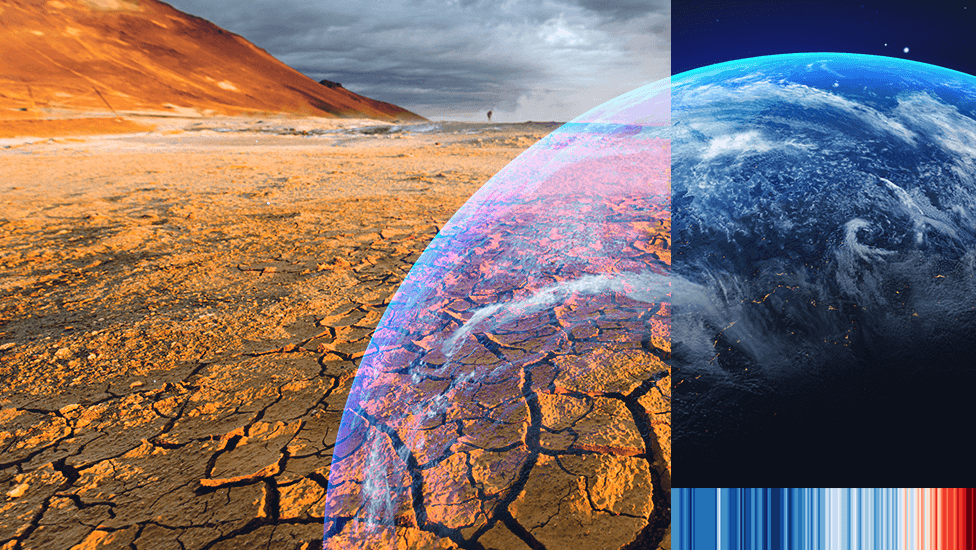
First, let’s get one thing straight: climate change is a natural cycle. Throughout Earth’s history, temperatures have yo-yoed more than a dieter in January. From the Ice Ages to the Medieval Warm Period, our planet has seen it all.
But ah, the climate conspiracists! These are the folks who believe that climate change is a hoax, a ruse cooked up by shadowy figures to…well, it’s not entirely clear what they think the endgame is. Some argue it’s about control, others say it’s a ploy to sell more electric cars.
Let’s take a look at some of their greatest hits:
- “Climate change is a hoax!” Yes, because melting ice caps and record-breaking temperatures are clearly figments of our collective imagination. Never mind the fact that 97% of climate scientists agree that human activities are driving unprecedented changes in the Earth’s climate. But hey, what do scientists know, right?
- “Volcanoes emit more CO2 than humans!” Nice try, but volcanic emissions pale in comparison to human activities. Humans pump out about 35 billion tons of CO2 annually, whereas all the volcanoes in the world combined emit roughly 200 million tons. That’s like comparing a firecracker to a nuclear explosion.
- “It’s all about the money!” Ah, yes. Because the real power brokers are clearly those climate scientists, raking in the big bucks from their well-funded research grants while fossil fuel executives struggle to make ends meet. Seriously, ExxonMobil’s annual revenue is around $178 billion. The entire global climate fund? A measly $10.3 billion.
Now, let’s talk about what we’ve done—or rather, failed to do. Remember the Paris Agreement? That grand accord where nearly every country on Earth pledged to keep global temperature rise well below 2 degrees Celsius above pre-industrial levels, ideally aiming for 1.5 degrees? Spoiler alert: we’re on track to blow past both targets. Current policies have us headed for a scorching 2.7 degrees Celsius increase by the end of the century.
Yet in 2022, China’s CO2 emissions hit a staggering 10 billion tons. The U.S. rejoined the Paris Agreement, aiming to halve emissions by 2030, but emissions rose by 6.2% in 2022. The EU wants to be carbon neutral by 2050, but emissions in 2022 were only 24% lower than in 1990. Progress, sure, but not nearly enough.
The root of these failures? Greed. Fossil fuel industries, with their deep pockets and influential lobbying, consistently hinder progress. In 2022, global fossil fuel subsidies amounted to a whopping $423 billion, effectively undermining climate efforts. Companies like ExxonMobil, Chevron, and Saudi Aramco continue to post record profits while the planet burns. Nations prioritize short-term economic gains over long-term sustainability, like Brazil’s Amazon deforestation for beef and soy exports.
And here’s the kicker: even if we magically stopped all emissions today, we’d still have to reverse the damage we’ve already done. According to the IPCC, the last time CO2 levels were this high was during the Pliocene Epoch, around 3 million years ago, when sea levels were 15-25 meters higher. The damage we’ve done is baked into the system.
CO2 stays in the atmosphere for centuries, meaning the effects of our past emissions will continue to unfold. The Greenland Ice Sheet is melting at an unprecedented rate, with Arctic ice-free summers possible by 2035. The oceans, which absorbed 90% of the excess heat, suffer from coral bleaching and ecosystem disruption. Reversing this damage isn’t just challenging; it’s virtually impossible within our lifetimes.
So, where does this leave us? We’ve missed the boat, and the climate ship has sailed. But while we may not reverse the damage, we can still mitigate its worst effects. We need a drastic overhaul of our energy systems, reduction in fossil fuel subsidies, and significant investment in renewables. We must build resilient infrastructure, develop sustainable agriculture, and protect vulnerable communities.

 Ignorantly Ignorant