Articles

To what extent was the Zionist movement successful in achieving its objectives in 1948?

**For those of you who do not know. I did a Master’s Degree in ‘International History and Politics’ at The University of Leeds and graduated in 2020. I got a Distinction. I was good. **

I haven’t posted on this blog in over a year (a surprise to myself)! I remember stopping because ChatGPT started to become regularly used and people were suspecting that I was using it to write my articles. I never have for my blog posts; I’ve never seen the point and I’ve never even thought ChatGPT is even that good. It is NOT AI. It is, what I like to call, ‘advanced Googling’.

But with the genocide currently going on in Gaza, conducted by Israel (let’s just call it what it is), I remembered this morning that I actually did a very long module on ‘The Israel-Palestine Conflict’ and completed it in 2019. This essay got 81/100 – so it’s bloody good. Of course, I was writing it 6 years ago so my views where tempered quite a lot compared to how they are now. But I thought I would share this, just as a brief history lesson of such a messy conflict.

I have a lot I could write here about Netanyahu being one of the worst dictators of the modern age. I could write about how Israel’s nuclear regime is suspect, with not even top cabinet members having knowledge of how many nukes they possess.

I just want to quickly recount Mehdi Hasan’s (a genius) debate with Danny Ayalon (former Israeli Cabinet Minister), in which Ayalon himself says that he has no idea how many nukes Israel has. Hasan points out the hypocrisy of this by stating: “Imagine if an Iranian Ambassador came onto this show and I asked how many nukes they had and he just shrugged and said, ‘I dunno’, would you not be outraged? Can you not see the blatant hypocrisy?”

Ayalon admits yes! Hassan then beautifully reminds Ayalon that Iran, and its’ surrounding Arab nations had subscribed to UN Resolution 487. Ayalon insists there is no such resolution concerning Israel’s nuclear capabilities; to which Hassan responds, quoting the resolution, stating that “This board furthermore notes that Israel has not adhered to the Treaty on the Non-Proliferation of Nuclear Weapons. Making the area deeply concerned about the danger to international peace and security created by the premeditated Israeli air attack on Iraqi nuclear installations on 7 June 1981.”

I do not ignore the events of October 7th, horrific and monstrous as they were, but I ask – what about the events on October the 6th? What about the events on October the 8th, or 9th … or 10th? Or YESTERDAY? The essay beneath is an extremely tempered version of my views now, not only because the situation was vastly different 6 years ago, but also because (and I won’t lie about this) I wanted to secure a good grade in this module.

But for those of you who do not want to read the entire essay, here’s a summary: No, the Zionist movement WAS NOT WHOLLY successful in achieving its objectives in 1948. Zionists wanted to escape Europe and find a peaceful homeland. They wanted to escape the horrors placed upon Jewish people by the Holocaust and the Soviet Union.

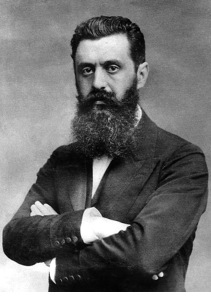
Leaders of the Zionist movement even considered Argentina as a ‘homeland’ to be safe, they just wanted a recognised state that was AWAY from Europe! If leading Zionist thinkers, such as Theodore Herzl, could see what Israel is conducting today they would be appalled, ashamed and embarrassed by the horrific scenes they had created. There is a difference between being anti-Israel and antisemitic. Israel is a rogue, fascist, murdering state. Jewish people are Jewish people, from different places all over the world, most of whom, to their credit, have renounced the actions of Israel.

And that is why I have finally decided to post this essay, as I am reminded of Martin Niemöller’s brilliant poem (rather ironically, written by an initial supporter of Hitler, until he began to see how the Nazis were treating minorities withing Germany): “First they came for…”:

First they came for the Communists
And I did not speak out
Because I was not a Communist
Then they came for the Socialists
And I did not speak out
Because I was not a Socialist
Then they came for the Trade Unionists
And I did not speak out
Because I was not a Trade Unionist
Then they came for the Jews
And I did not speak out
Because I was not a Jew
Then they came for ME
And there was no one left
To speak out for me
.

And SO … (FINALLY) … MY ESSAY FROM 2019:

Candidate Name: Nesaar Uppal  
Candidate Number: ############
Module Name: The Israel-Palestine Conflict
Module Code: PIED5501M

The early modern roots of the Zionist movement emerged from the persistent persecution of Jewish people across Europe for hundreds of years (Halperin, 2015). This persecution caused Jewish people to be spread all across Europe and the Middle East in diaspora.[1] Seeing this persecution, diaspora and finding a religious right to create a Jewish homeland many believed that people of the Jewish faith deserved their own land and their own government (Herzl, 1895; Weizmann, 2005). Theodore Herzl, one of the first Zionist thinkers and perhaps the most influential, planned to create a homeland for Jews to escape persecution in Europe. The creation of an internationally recognised Jewish homeland was indeed the main aim of the Zionist movement, with Eichler (2016) noting that ‘the official goal of the Zionist movement … a Jewish national home to be secured by international law.’ However, a number of other Zionist objectives emerged causing divisions within the Zionist movement about which aims to pursue first. Along with creating a Jewish homeland and ending diaspora, Herzl genuinely wanted to also bring economic prosperity to the region, with better infrastructure and more finance Herzl hoped that Jewish immigration would ‘help them (Arabs) raise their own economic standard’ (Weinstock, 2011, p.50).

Herzl’s desire for a mass migration of Jews to the Middle East to end diaspora, referred to as Aliyah, took place in waves, with the first being between 1881 and 1903 (Greilsammer, 2011). However, as the third and fourth Aliyah’s took place in the 1920s and 1930s more and more communist Jews from Eastern Europe brought their communist ideas to the Jewish homeland, hoping to create a communist state (Greilsammer, 2011). After the devastating persecution which occurred during the Second World War the immigration of Jews to Palestine increased massively; Weinstock (1973, p.55) commented that ‘fascism in Europe gave considerable impulse … at the end of the Second World War the 583,000 Jews represented 1/3 of the Palestine population.’ This continued immigration, purchasing of Arab land and refusal to allow Arabs to work on Jewish-owned land led to increased tensions.[2] These tensions came to a helm in 1947 and 1948. In 1947 the United Nations issued resolution 181 which called for a partition plan of Palestine, effectively granting a Jewish homeland in the region and greatly angering the Arab League (Greilsammer, 2011, p.44). Following this, in 1948 a coalition of Arab forces invaded Israel in 1948, the day after the Israeli leader David Ben-Gurion declared independence for Israel. During the following ten months of fighting the Arab coalition eventually lost and was forced to retreat, with Israel taking control of the whole of Palestine and a large section of Transjordan, 60% more land than what they had been guaranteed by the UN (Rogan, 2008, pp.102-103).

In a number of ways, it could be contended that the Zionist movement was very successful in achieving its objectives in 1948. It became an internationally recognised sovereign state which was indeed the key aim of Zionism; it was also able to provide a safe homeland for persecuted Jews and whilst diaspora was never fully achieved and later referred to as ‘idealistic’ it still provided refugee for hundreds of thousands of Jews. However, in a number of other ways it failed in achieving its original objectives. Herzl envisaged a model society based on equality with Arabs, as Karsh (2006, p.470) demonstrates that ‘the archives show that rather than seek the expulsion of the Palestinian Arabs, the Zionist leaders believed that there was sufficient room in Palestine for both peoples to live side by side in peace and equality.’ This failure to assimilate with Palestinian Arabs was further compounded by Jewish settler’s hoarding land and wealth from Arabs, creating a Jewish elite and not an equal society. There are a number of reasons for the success of the Zionist movement in 1948. Support from the West, particularly the USA and the UN, was vital in securing their independence. Moreover, Britain’s withdrawal from the region and their simultaneous problems with India and Pakistan gaining independence meant that support for the Arab cause dwindled after the Second World War. Furthermore, Israel’s superior financial situation, technology and international support meant they were able to win the 1948 war and secure a sovereign state for themselves.

The primary Zionist objective was to create an internationally-recognised national home for Jewish people; Weinstock (1973, p.51) notes that when Herzl ‘convened the first Zionist Congress at Basle in 1897’ he described the Zionist aim ‘as being the establishment for Jewish people of a home in Palestine secured by public law.’ Certainly, this was achieved first with the UN resolution 181 in 1947 which guaranteed a partition plan but was then further emphasised by David Ben-Gurion’s declaration of independence in May 1948. Moreover, Zionists also wanted to see ‘the revival of the Hebrew language and culture’ and saw this ‘as one of the essential elements of a new society’ (Greilsammer, 2011, p.43). Indeed, there can be little debate about the success of Zionism with regards to this particular aspect of their objectives. Conforti (2011, p.572-573) reaffirms this success by analysing the UN’s actions after the British withdrawal from the region, concluding that ‘from the legal point of view, the resolution of November 1947 that decided the division of Palestine in a Jewish and an Arab state was the international community’s (UN and USA) endorsement of the creation of Israel’. However, the creation of a Jewish national home was not supposed to come at the expense of the Palestinian population. Numerous times, Herzl and other key Zionist leaders expressed their desire to share the land with Arab Palestinians. After analysing Herzl’s works, Karsh (2006, p.471) concludes that ‘there was no trace of such a belief (that Arabs should be expelled to allow Jews to enter Palestine) in either Herzl’s famous political treatise The Jewish State (1896) or his 1902 Zionist novel Altneuland (Old-New Land).’ Numerous political leaders shared this idea of peaceful co-habitation with the Arab population. Indeed, as early as 1934, ‘Jabotinsky’s Revisionist Party prepared a draft constitution for Jewish Palestine, which put the Arab minority on an equal footing with its Jewish counterpart ‘throughout all sectors of the country’s public life’ (Karsh, 2006, p.473). Thus, the apparent success in 1948 of creating an internationally recognised Jewish state is undoubtedly tainted by the fact that this came at the expense of a lot of Jewish and Arab lives and created a high level of animosity between the Jewish population in Israel and the surrounding Arab nations. The creation of the state was, as Greilsammer (1973, p.50) ‘on some levels, an incredible success’.

The success of the Zionists in creating a nation-state was due to a number of contributing factors and fortunate circumstances, including Western support, British withdrawal and Arab divisions. Eichler is perhaps the historian who places the most emphasis on Western aid benefitting Zionism, asking ‘how could we even think of the Zionist movement succeeding without support from Western colonial powers?’ (Eichler, 2016, p.8). After the end of the Second World War the British Empire was in full retreat and the British government could not afford to sustain its influence across the globe, it had also become heavily indebted to the USA who were very anti-imperialist. These factors forced Britain to retreat further from the Balfour Declaration in 1917 and the Middle East in general. Moreover, Conforti (2011, p.570-571) astutely comments that ‘it (Israel) emerged at the same time as independent India and Pakistan, a time when the British Empire was crumbling, and the Zionist movement was able to take advantage of British weakness.’ Zionist leaders, sensing this withdrawal, used an ‘armed insurrection’ to ‘force the British to turn over the Palestine file to the UN’ (Eichler, 2016, p.8).  Also, the Zionists were able to achieve their objective of creating and securing a Jewish homeland because of divisions within the Arab League.[3] These divisions were exploited by the Israeli armed forces. Indeed, Rai (2014, p.2) notes that Zionists were successful in 1948 because ‘the Arab governments all pursued their own objectives, with King Abdullah of Transjordan willing to accept a Jewish state in return for territorial gains.’ These divisions were further compounded by the fact that the newly formed Israel was more unified, better equipped and more financially able to sustain a war (Weinstock, 1973) Indeed, Weinstock (1973, p.58) estimates that, in the 1940s, ‘the Arab industrial sector amounted at most to 10% of the global Palestinian industrial produce’ and that ‘in 1942 … Arab industry in Palestine consisted of 1,558 establishments engaging 8,804 persons.’ Weinstock (1973, p.58) therefore concludes that the Zionists were able to create and protect their sovereign state because they were ‘possessing technological and financial advantages.’ Thus, the Zionist movement was successful in achieving its main objective of an internationally recognised Jewish homeland, to some extent. This new state did not allow Arabs and Jews to peacefully co-exist, as Herzl had originally intended, because of the nature in which Israel declared its own independence and sided with Western powers, who many Arabs saw as the enemy (Rai, 2014). Nevertheless, the creation of a safe Jewish homeland just three years after the Holocaust in Europe was an enormous success. The movement was also so successful in achieving this particular objective because of the extremely poor and divided Arab opposition and a large amount of political and economic support from the West.

Another objective of the Zionist movement, an extension of the creation of an internationally recognised home, was to re-define the stereotypical Jewish man and create a model socialist society based on democracy, law and equality. It could be said that in 1947 and 1948 Israel failed to achieve this objective. As Greilsammer (2011, p.41) repeatedly states, a secondary key objective for Zionists was ‘to form a new Jewish man, strong, healthy and free, both typical and universal, to be an example for other nations.’ Indeed, Lustick (1980, pp.131-132) accurately notes that ‘most Zionist founders dreamt of a modern, pluralist, secular, democratic state’ before concluding that they failed in this objective and, in 1948, ‘Instead of creating a new Jew and a state built on mutual tolerance and respect for the Other, Israel fixed certain behaviours and perpetuated divisions.’ Thus, Israel did not represent the model society that many Zionists had dreamt of prior to Israel’s independence in 1948. Indeed, some historians consider the desire to create a model state with model citizens as admirable, but a complete failure in the case of Israel. Because the Zionist movement had elected Palestine as a place to establish their homeland, the economic realities of the region became clear quickly. David Ben-Gurion was unable to improve the economy as quickly as had been expected and ‘general austerity was the rule’ with ‘the power of the Labour Party becoming overwhelming and Ben-Gurion’s autocracy was insufferable for many’ (Davidson, 2002, p.24). In fact, Greilsammer (2011, p.50) is especially critical of the failure of the Zionist movement to create a fair and modern state, commenting that ‘the gap between the ideal of the founders of Zionism and reality is even more striking as we consider the theme of ‘conquest of labor’ … and the desire to build a society where there would be no exploitation.’ The initial Zionist leaders expressed their desire to allow Arabs to continue living with the same rights that they had. It could even be claimed that Gurion was an idealist in the 1930s, as he claimed that this new Jewish state would have ‘one law for all residents, just rule, love of one’s neighbour, true equality. The Jewish state will be a role model to the world in its treatment of minorities and members of other nations. Law and justice will prevail in our state’ (Karsh, 2006, p.481).

However, the Zionist movement failed in this objective to create peace and harmony between Arabs who had lived in the region for generations and the newly created Jewish homeland. Herzl himself ‘did not envision the Jewish-Arab conflict’ (Eichler, 2016, p.6). Instead of the envisaged peaceful transition into a Jewish majority in Palestine, the 1948 war forced Israel to take a hard-line against any potential Arab enemies. This led to the creation of 700,000 Palestinian refugees. This brutal expulsion was not a reflection of the ‘future Jewish national home as an ideal society’ (Eichler, 2016, p.6). Whilst it is true that Israel remains a full democracy which is supposed to appeal to both Arabs and Jews, for example by having rules such as ‘in every Cabinet where the Prime Minister is a Jew, the vice-premiership shall be offered to an Arab and vice versa’ (Karsh, 2006, p.472). Glass (2001) comments that ‘Herzl did conceive of a diverse society’ and that ‘the Israeli political system in place over this time is a far cry from Herzl’s own vision.’ Thus, it is apparent that a key objective of the Zionist movement was to create a model society with model citizens that was fair and reflected the best practices of Western democracies. However, in 1948 its treatment of the Palestinian Arab population, combined with economic and social realities of governing such a new and impoverished state meant that Zionists ultimately failed to create a tolerant society and instead built a right-wing anti-Arab state; as Weinstock (1973, p. 43) concludes, ‘it is doubtful whether the founders of the Zionist movement would have relished this prospect.’

A third essential objective of the Zionist movement was to fully achieve an end to diaspora and group together all the persecuted Jews from across the globe in one nation to guarantee their safety. This was a goal right from the beginning as Jewish persecution was the essential reasoning for the necessity of a singular Jewish homeland in the first place. Indeed, Greilsammer (2011, p.41) states that ‘the first goal of this ideology was to end the Jewish Diaspora … and to bring them to Israel.’ Indeed, with regards to this particular goal the Zionist movement was extremely successful. The expansion of the Jewish community in Palestine was massive in the early 20th century, as the ‘Jewish population rose from 24,000 in 1882 to 175,000 in 1931’ (Weinstock, 1973, p. 55). These Aliyah’s involved the emigration of Jews from all over the world, including Jews ‘from communist countries after de-Stalinization; Jews from Egypt; Jews from post-Soviet countries, and Ethiopian Jews’ (Greilsammer, 2011, p.45). This growth in population continued and was accelerated by the Second World War so that, by 1948, the Jewish population was close to 500,000. This was a massive increase in population but did not reflect the initial Zionist ideal of all Jews living in one state.

Indeed, it would be impossible for every single person of the Jewish faith to relocate to Israel; some have found accepting new homes in Britain or the USA whilst some others fear for their own safety if they were to move to the Middle East. Indeed, as Neff (1995, p.6) highlights, ‘some Jewish communities, such as the one in Alegria, are not moving to Israel, but to other countries.’ After the mass migrations which took place prior to 1948 the Zionist leadership began to accept that ‘the likelihood of mass migration again is extremely low’ (Greilsammer, 2011, p.46). Indeed, Ben-Gurion himself privately stated that ‘the idea of the Zionist ‘triumph’, a definitive end to the Diaspora, is not believable anymore’ (Jensehaugen, 2012, p.289). Moreover, Eichler (2016, p.6) notes that ‘Herzl accepted that ending diaspora was unlikely’ but he still aimed to gather a majority of Jews in one state so that ‘Jews who were left in the diaspora would be respected because now the Jews would be a normal people with a normal political homeland.’

Thus, it could be deemed that this objective was successful because the Zionist movement adapted their definition to fit reality; they became aware that not every Jew in the world would want to live in that particular part of the world (Jensehaugen, 2012). However, the leadership still accepted the importance and necessity to encourage Jewish migration, which was effective prior to 1948, so that the Jewish identity and pride could be re-established (Klocke, 2014). The Zionist movement was able to achieve this particular objective with relative ease due to the fact that Jews across Europe had been persecuted terribly for hundreds of years (Morris, 2009, pp. 82-87). This was exposed with events such as the Dreyfus Affair in France, or the Holocaust in Germany or the Pogroms in Eastern Europe (Zollman, 2002). It was not hard for Zionists to convince persecuted Jews to unite together under one sovereign state because that is what a lot of them wished for anyway because of their poor treatment in Europe (Jensehaugen, 2012). Nevertheless, Weinstock (1973, p.53) does raise the important point that ‘it is thought that the wave of socialist Zionists (from Eastern Europe) was the main cause of hostility with the Arab population.’ The hostility towards these migrants came from Zionists as well as Arabs and ‘Russian Jews were considered by a number of Zionists and members of the Yishuv to constitute a major factor in arousing the hostility of the Palestinian Arabs’ (Weinstock, 1973, p.53). Thus, whilst the Zionist movement may have been as successful as possible in reducing Jewish diaspora around the globe, this may have made it a lot more difficult for Arabs to tolerate them and therefore reduced the success of some of the other Zionist goals.

In conclusion, it is difficult to assess the success of the Zionist movement in 1948 because it was ‘continually evolving and adapting during the first half of the 20th century’ (Conforti, 2011, p.570). Undeniably, the creation of a sovereign state in 1948 and a Jewish home which could unite any persecuted Jewish people from around the world was a huge success. Furthermore, the establishment of a democratic system and one of the finest legal systems in the world is no small achievement in such a short space of time, considering that mass Jewish migration into the region only really began in 1905 with the Second Aliyah (Morris, 2009, pp.142-144). However, the first Zionist leaders, such as Herzl or Weizmann, wanted to create a model society with model citizens and, perhaps most importantly, felt that their presence in the region would be ‘beneficial’ (Weinstock, 1973, p.49). The Zionist movement, for the most part, genuinely believed that there would be enough space in Palestine for new Jewish immigrants and existing Arab citizens (Herzl, 1895). After the 1948 war, however, these objectives completely failed. Hostilities between the Arab countries and Israel was extremely high, 700,000 Palestinian Arab refugees were displaced, and Israel became a right-wing autocratic state for a number of years in an attempt to boost its own economy (Margolick, 2008). However, as outlined by Herzl (1895) the main aims of the Zionist movement should always remain the creation of a Jewish homeland, the end of diaspora and the revival of Hebrew and Jewish culture. These key aims were achieved, to some extent, by the end of 1948.

Any successes that the Zionist movement enjoyed were down to a number of contributing factors. Most important of which was the support from the West (Rogan, 2008). Perhaps borne out of guilt from the atrocities of the Holocaust, or perhaps because the USA saw limitless benefits of having an allied democracy in the region, the West was very eager to support the Zionist movement (Rogan, 2008, pp.23-26). Britain’s withdrawal from the region and the takeover of the Palestine situation by the UN definitely benefitted the Zionist cause as it created the partition plan in 1947 and paved the way for a declaration of Israel’s independence in 1948 (Glass, 2001). Moreover, the disunity between the surrounding Arab states and ‘their lack of wealth and infrastructure also made Zionist’s objectives easier to achieve’, as they could buy land cheaply and during the 1948 war they were able to beat a coalition of forces simply due to their better resources and their ability to divide the Arab states (Karsh, 2006, p.479). Thus, the Zionist movement was successful in achieving their main aims in 1948 of ending diaspora and creating a sovereign Jewish state, but this success came at a price and that was the type of state they wanted to build. Israel in 1948 did not reflect the thinking of original Zionists who wanted Arabs and Jews to live side-by-side and wanted to build a model society (Rai, 2014). A more nuanced conclusion would suggest that the Zionist movement was very successful in achieving its objectives in 1948, but this success caused problems later on with surrounding Arab states which has largely tainted the view political historians have on Zionism and its success.

Any successes that the Zionist movement enjoyed were down to a number of contributing factors. Most important of which was the support from the West (Rogan, 2008). Perhaps borne out of guilt from the atrocities of the Holocaust, or perhaps because the USA saw limitless benefits of having an allied democracy in the region, the West was very eager to support the Zionist movement (Rogan, 2008, pp.23-26). Britain’s withdrawal from the region and the takeover of the Palestine situation by the UN definitely benefitted the Zionist cause as it created the partition plan in 1947 and paved the way for a declaration of Israel’s independence in 1948 (Glass, 2001). Moreover, the disunity between the surrounding Arab states and ‘their lack of wealth and infrastructure also made Zionist’s objectives easier to achieve’, as they could buy land cheaply and during the 1948 war they were able to beat a coalition of forces simply due to their better resources and their ability to divide the Arab states (Karsh, 2006, p.479). Thus, the Zionist movement was successful in achieving their main aims in 1948 of ending diaspora and creating a sovereign Jewish state, but this success came at a price and that was the type of state they wanted to build. Israel in 1948 did not reflect the thinking of original Zionists who wanted Arabs and Jews to live side-by-side and wanted to build a model society (Rai, 2014). A more nuanced conclusion would suggest that the Zionist movement was very successful in achieving its objectives in 1948, but this success caused problems later on with surrounding Arab states which has largely tainted the view political historians have on Zionism and its success.

Word Count: 3,557

Bibliography:

Conforti, Y. 2011. Between Ethnic and Civic: The Realistic Utopia of Zionism. Israel Affairs. 17(4), pp.563-582.

Davidson, L. 2002. Zionism in the US 1917-1948: Zionism and the betrayal of American Democratic Principles. Journal of Palestine Studies. 1(3), p.21-35.

Eichler, W. 2016. Theodor Herzl and the Trajectory of Zionism. [Online]. [Date Accessed 1 May 2020]. Available from: https://www.opendemocracy.net/en/north-africa-west-asia/theodor-herzl-and-trajectory-of-zionism/

Glass, C. 2001. The Mandate Years Colonialism and the Creation of Israel. [Online]. [Date Accessed 27 April 2020]. Available from: https://www.theguardian.com/books/2001/may/31/londonreviewofbooks

Greilsammer, I. 2011. Zionism Between Ideal and Reality. Cairn Info. 47(3), pp.41-51.

Halperin, L. 2015. Origins and Evolution of Zionism. Foreign Policy Research Institute. pp.1-10.

Herzl, T. 1895. The State of the Jews. England: Tredition Classics.

Jensehaugen, J. 2012. Securing the State: From Zionist Ideology to Israeli Statehood. Diplomacy & Statecraft. 23(2), pp.280-303.

Karsh, E. 2006. Resurrecting the Myth: Benny Morris, the Zionist Movement, and the ‘Transfer’ Idea. Israel Affairs. 11(3), pp.469-490.

Klocke, Z. 2014. An Investigation into Zionism’s Inner Leadership. [Online]. [Date Accessed 24 April 2020]. Available from: https://pdxscholar.library.pdx.edu/cgi/viewcontent.cgi?article=1047&context=younghistorians

Lustick, I. 1980. Zionism and the State of Israel: Regime Objectives and the Arab Minority in the First Years of Statehood. 16(1), pp.127-16.

Margolick, D. 2008. Endless War. [Online]. [Date Accessed: 23 April 2020] Available from: https://www.nytimes.com/2008/05/04/books/review/Margolick-t.html

Morris, B. 2009. 1948: A History of the First Arab-Israeli War. Yale: Yale University Press.

Neff, D. 1995. The Palestinians and Zionism: 1897-1948. Middle East Policy Council. 4(1), pp.1-10.

Rai, S. 2014. What Were the Causes and Consequences of the 1948 Arab-Israeli War? University of Leicester. 12(2), pp.1-3.

Rogan, E. 2008. The War for Palestine: Rewriting the History of 1948. England: Cambridge University Press.

Weizmann, C. 2005. The Letters and Papers of Chaim Weizmann (Series A: Letters): United Nations; Weizmann First President of Israel; The Prisoner of Rehovot. England: Transaction Publishers.

Weinstock, N. 1973. The Impact of Zionist Colonisation on Palestinian Arab Society Before 1948. Journal of Palestine Studies. 2(2), pp.49-63.

Zollman, J. 2002. The Dreyfus Affair. [Online]. [Date Accessed: 12 April 2020]. Available from: https://www.myjewishlearning.com/article/the-dreyfus-affair/


[1] ‘Diaspora’ is a term which refers to a scattered population that live beyond the borders of what they would consider their homeland. In this essay the term refers to Jewish people being spread beyond the borders of modern-day Israel.

[2] Early Zionists did not want Arabs working on their land because they thought this was too much like imperialism, but in actual fact it just served to create a Jewish elite with a great deal of wealth.

[3] Refers to the coalition of Arab forces which invaded Israel in 1948, included Saudi Arabia, Yemen and Egypt.
From Waistcoat to Winner: Southgate’s Redemption and England’s Revival

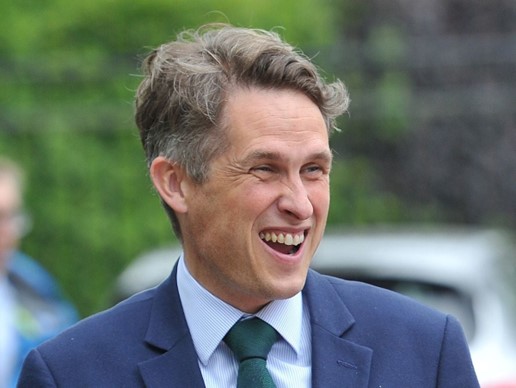
Let’s get one thing straight: Gareth Southgate is the best thing to happen to English football since Sir Alf Ramsay. Now, I know what you’re thinking—”Isn’t that the guy who missed the penalty in Euro ’96?” Yes, but let’s put that behind us. In fact, it’s precisely because of that miss that Southgate’s tale is one of the greatest redemption stories in football history.

While Ramsay’s 1966 World Cup win is etched in every English fan’s memory, it’s time to appreciate the modern-day knight of the Three Lions. Let’s dive into some hard-hitting facts and a few laughs along the way to show why Gareth Southgate is criminally underrated and arguably the best manager England has seen since the days of black and white television.

First, let’s rewind to Euro 1996. Picture it: Southgate steps up for the penalty, and… well, you know the rest. But fast forward 25 years, and there he is, not just stepping up, but guiding an entire team to their first major tournament final since 1966. A semi-final in the World Cup, followed by a final in the Euros, and reaching back-to-back finals (with the Nations League in between)—if that’s not redemption, what is?

Sir Alf Ramsay took England to World Cup glory in 1966, the first and only time the trophy has been in English hands. But let’s be honest, the world of football back then didn’t have the kind of competition it does today. Ramsay had to face teams like Portugal and West Germany, sure, but Southgate has had to navigate the minefields of social media criticism, VAR controversies, and a squad that dances more than it plays (looking at you, Jesse Lingard).

Southgate’s record speaks for itself: under his leadership, England reached the semi-finals of the 2018 World Cup, the final of Euro 2020, and another final in the 2022-23 Nations League. Ramsay’s team might have won the World Cup, but Southgate’s squad has given us consistent thrills and heart-stopping moments in an era where the pressure is off the charts.

Southgate’s greatest strength lies in his ability to foster unity and teamwork. His philosophy is built on support and understanding, knowing the pain of failure firsthand. Remember how he consoled Bukayo Saka after his penalty miss in the Euro 2020 final? That’s the kind of empathy and leadership that makes a difference.

It’s not just about tactics; it’s about building a team that fights for each other. Southgate has managed to cultivate a sense of camaraderie and belief, making players want to play for the badge and for each other. This isn’t just a team; it’s a family. And let’s face it, England hasn’t looked this united since the Spice Girls were topping the charts.

Critics might argue that England’s football under Southgate can be “boring,” but hey, boring football is grinding out the wins. And let’s talk about penalty shootouts—a decades-long bane for England. Not anymore. After beating Switzerland in a shootout, England seems to have found a newfound comfort with penalties. It’s a far cry from the historical nerves and mishaps, showing just how much the mental game has changed under Southgate’s leadership.

Of course, Southgate hasn’t been free from criticism. Playing Harry Kane and Phil Foden out of position has ruffled some feathers. But how do you sideline a captain who has done so much for England? People tend to forget that Kane scored a crucial penalty last night and has been a heroic leader. It’s a dilemma similar to what Ole Gunnar Solskjaer faced with Cristiano Ronaldo at Manchester United—you can’t live with him, you can’t play without him. Because he gets the goals.

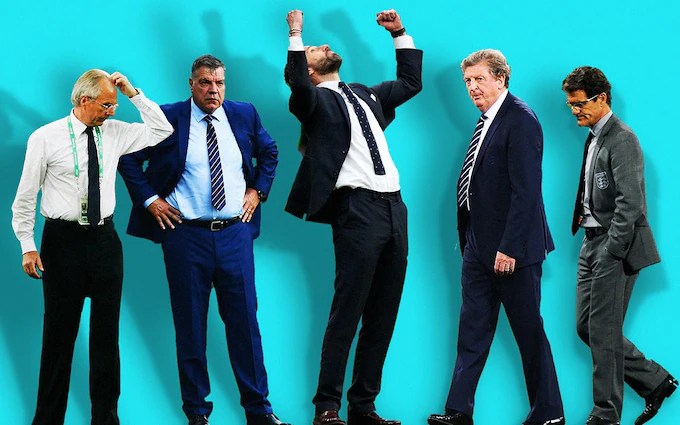
When comparing Southgate to other managers who have tried and failed to lead England to glory, the differences are stark. Sven-Göran Eriksson brought us quarter-final exits and a love affair with David Beckham’s right foot. Fabio Capello brought discipline but forgot to pack his creativity. Roy Hodgson’s tactics were as thrilling as a cold cup of tea. Compared to these illustrious figures, Southgate is a breath of fresh air. He’s pragmatic yet inspiring, firm yet understanding. He’s like the Mary Poppins of football managers—practically perfect in every way, with a waistcoat instead of a carpetbag.

The mere fact that we are now disappointed with performances in the quarters and semis shows how far this team has come. England fans now have sincere expectations, not just hope. Yes, that heaps a lot more pressure and criticism on Southgate. But what we all feel now, a sense that something MIGHT happen on Sunday, is such a far cry from where we were just a decade ago with the “Golden Generation.”

Come Sunday, whether England wins or loses, Southgate’s legacy is already cemented. He’s brought hope, excitement, and a genuine sense of pride back to English football. He’s shown that with unity, empathy, and a good dose of tactical nous, you can compete with the best in the world.

In conclusion, Gareth Southgate is not just an underrated manager; he’s a national treasure. His journey from the agony of Euro ’96 to the euphoria of leading England to their first final in over half a century is a story of resilience and redemption. So, here’s to Gareth Southgate—the best manager England has had since Sir Alf Ramsay, and quite possibly, ever. Cheers, Gareth. You’ve done us proud.

2024: The Great Tory Trainwreck and Labour’s Lukewarm Landslide

Welcome, dear readers, to the carnival of British politics! With the 2024 General Election just around the corner, our tea leaves have brewed up a stormy prediction. Grab your popcorn, because the once indomitable Tory Party is on track for a cataclysmic crash that will make the Titanic look like a leisurely swim. How bad? Think fewer than 100 seats, folks. Yes, you read that right — double digits! But don’t pop the champagne for Labour just yet. This isn’t quite the Tony Blair landslide of 1997. Instead, expect a motley coalition of smaller parties ready to seize the day.

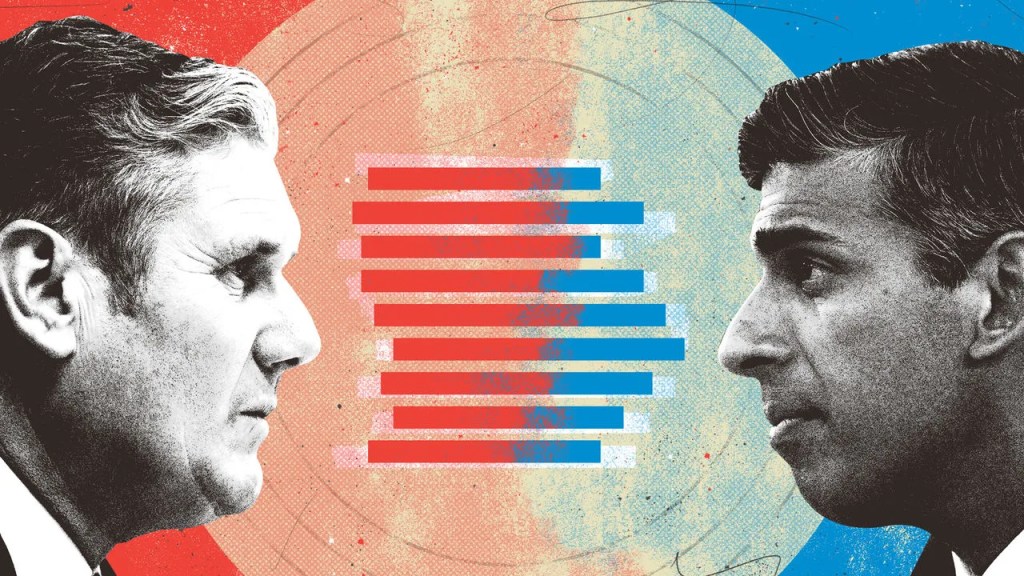
It’s hard to pinpoint exactly when the Tories’ fortune started to nosedive, but here we are. Polling data from the latest YouGov surveys shows a number of deadly red flags. Recent numbers show the Conservatives at a bleak 22%, a stark fall from their glory days of 43.6% in 2019. Labour is soaring ahead at 37%, while the Liberal Democrats are cozying up with 15%, the Green Party is planting roots at 7%, the SNP is kilted up at 4%, and a ragtag group of “Others” — including Nigel Farage’s Reform UK — are pulling in a surprisingly robust 15%. It’s a bloodbath, with the Tories projected to scrape through with a pitiful 75 seats if these trends hold. Yes, you read it here first, I know they’ll be in double digits.

Traditional Tory voters, it seems, are caught in a political existential crisis. Voting Labour? That’s like a lifelong carnivore suddenly turning vegan — highly unlikely and emotionally traumatic. Almost unthinkable! Although possible that some may see the light. But where will the ones who would rather eat their own vomit than side with Starmer go? For those who like their politics with a dash of hardline rhetoric and a side of Brexit nostalgia, Nigel Farage’s Reform UK is the new sanctuary. A sizable chunk of ex-Tories seem ready to swap their blue rosettes for Farage’s brand of rebellious reform, with his party polling at around 8%. It’s clear that he’s becoming the pied piper for disillusioned Conservatives.

Then there are the Tories who, while horrified by Labour, aren’t quite ready to go full Farage. Enter the Liberal Democrats, with their polite centrism and promises of a “kinder, gentler” approach. They’re attracting Tories like a well-dressed pub on a Sunday afternoon, bringing them up to a respectable 15% in the polls. Meanwhile, the Greens are also gaining traction, riding the wave of climate consciousness. While they won’t be breaking into the double digits in terms of seats, their presence is growing, especially among younger voters who think recycling alone won’t save the planet (it won’t, but that’s for another day). And in Scotland, the SNP continues to scoop up seats like they’re collecting rare Pokémon cards. With Scottish Tories on the decline, the SNP could dominate north of the border, as they did before, further slicing into the Conservative pie.

So, with the Tories imploding like a poorly baked soufflé, Labour is set to not just win, but secure a massive majority. Picture the House of Commons as a sea of red, with Keir Starmer at the helm of a Labour government. But before we get carried away with visions of triumphant social reforms, let’s take a step back. The reality is that even with this monumental win, Labour’s path is strewn with the rubble of past mismanagement and current crises. They may not be as scandal-ridden as their predecessors, but being less corrupt is a pretty low bar to set. The new government will inherit an economy bruised by Brexit, strained by a pandemic, and burdened by a decade of austerity.

Despite their majority, Labour will be hamstrung by the monumental task of cleaning up the mess left by the Tories. For Starmer, the initial years in office will likely be dominated by crisis management rather than sweeping changes. Fixing what’s broken — from the NHS to the cost-of-living crisis — will take precedence over implementing the more ambitious elements of their manifesto. They’ll need to shore up their position and build enough momentum to survive a full five-year term. If they manage to stabilize the ship and earn the public’s trust, then maybe, just maybe, they can start rolling out some of their more progressive policies.

As the curtains rise on the 2024 election, the script promises a shakeup in British politics, but perhaps not the revolutionary overhaul some might expect. The Tories are bracing for an epic collapse, while Labour is preparing for a cautiously optimistic win. That’s the way it should be … neither party has been that impressive and, from asking a select few who I consider educated in the world of politics, the response I get in my questioning of which party they will vote for and why is inevitably … “well, they aren’t like the Tories”. Fair enough.

So, dear reader, keep your seatbelt fastened and your sense of humour intact. The prediction of this blog is a Tory meltdown, but that doesn’t necessarily mean a victory for the left! (Does Labour even represent the “Left” anymore or is it just “Not Tory”? Think on that …

The next few months are going to be a wild ride through the twists and turns of British democracy. And remember, in politics, as in life, it’s often the unexpected that steals the show. Stay tuned, stay sceptical, and always question the polls. They’re as reliable as the British weather forecast — often wrong, but always entertaining.

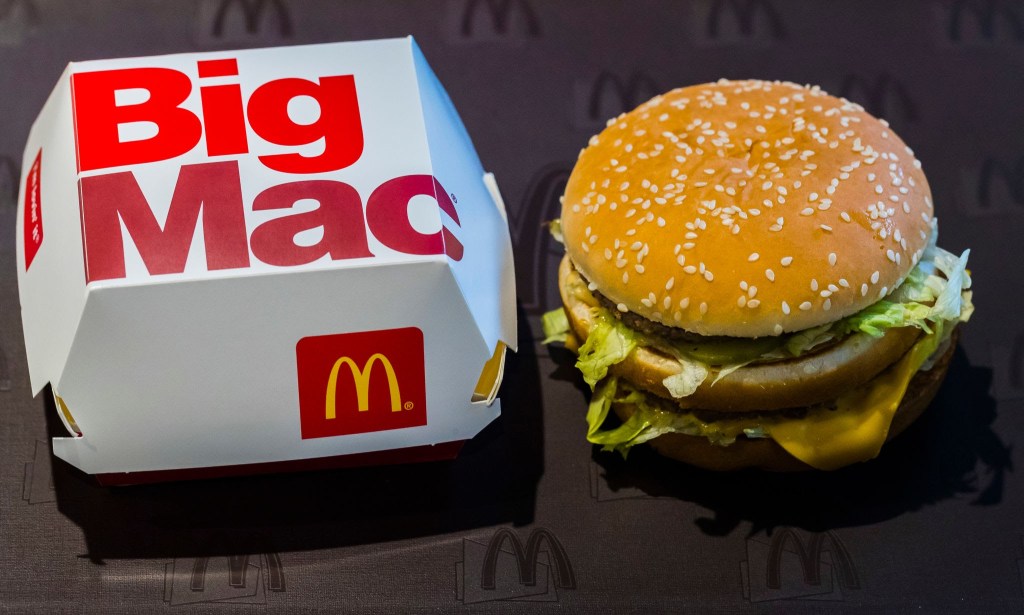
From Big Macs to Big Impact: The Supersized Legacy of Spurlock Morgan

Once upon a time, in the early 2000s, the world of fast food was rocked by a man with a mission and an iron stomach. Enter Spurlock Morgan, a documentary filmmaker with a flair for the dramatic and a stomach for… well, pretty much anything. His rise to fame began with a film that would forever change the way we think about the golden arches and their ubiquitous, calorie-laden offerings.

In 2004, Spurlock introduced us to “Supersize Me,” a documentary that chronicled his 30-day odyssey of eating nothing but McDonald’s. It was a month-long extravaganza of Big Macs, fries, and fizzy sodas, all supersized, of course. Spurlock’s idea was simple yet daring: eat McDonald’s three times a day and see what happens. Spoiler alert: it wasn’t pretty. His weight ballooned, his cholesterol skyrocketed, and his liver… well, let’s just say it probably started drafting a resignation letter.

The film’s impact was as outsized as his meals. “Supersize Me” didn’t just gross millions at the box office; it earned more than $20 million worldwide, catapulting Spurlock into the realm of high-earning non-fiction filmmakers. The documentary led to significant changes in the fast-food industry. McDonald’s, perhaps fearing a future where their mascot would be a cautionary tale rather than a clown, phased out their supersize option and started offering healthier alternatives. Salads, apple slices, and even milk were suddenly thrust into the spotlight, much to the chagrin of burger enthusiasts everywhere.

Buoyed by his newfound fame, Spurlock didn’t stop there. Over the next 13 years, he produced nearly 70 documentary films and TV series through his production company, Warrior Poets. True to form, Spurlock’s projects often delved into controversial and provocative topics, from exploring the world’s most dangerous places in “30 Days” to dissecting corporate America in “The Greatest Movie Ever Sold,” a film financed entirely by product placements. His knack for turning the mundane into the magnificent was unparalleled.

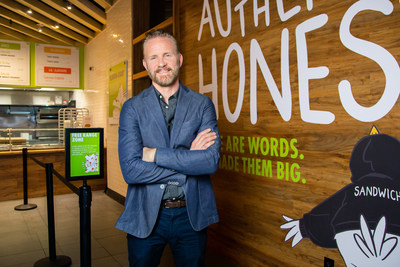
In a move that seemed equal parts genius and ironic, Spurlock eventually opened his own fast-food restaurant, Holy Chicken! It was a place where transparency was on the menu, quite literally. The restaurant boasted free-range chickens, locally sourced ingredients, and a commitment to honesty that was as refreshing as it was unexpected. Customers could enjoy their meals knowing exactly where their food came from, how it was prepared, and just how many calories they were consuming – a far cry from the mystery meat days of yore. “We are ultimately going to be the first honest fast food restaurant,” he told Today. “We are going to set the record straight.”

Spurlock’s final project was a sequel to his groundbreaking documentary. “Super Size Me 2: Holy Chicken!” examined how the fast food industry had rebranded itself as healthier in the years since the original film. The sequel wasn’t just a rehash of old material; it was a pointed critique of the ways in which fast-food chains used marketing and regulatory loopholes to present a facade of healthiness. In conjunction with the film’s release, Spurlock launched Holy Chicken!, positioning it as a more “humane” fast-food option. The menu was designed to highlight certain regulations he claimed fast-food chains sidestepped, making it a culinary manifesto against the industry’s smoke and mirrors.

However, Spurlock’s career wasn’t all laughter and happy meals. In 2017, he came forward with a confession that rocked his fan base and the industry. Spurlock admitted to past instances of sexual misconduct, detailing an incident from his college days and another involving a former employee. His candor was shocking and sobering, a far cry from the playful provocateur the public had come to know.

The fallout was immediate. Spurlock stepped down from Warrior Poets, and his projects were halted. It was a stark reminder that even those who challenge norms and fight for transparency are not immune to the consequences of their actions. His admission and the subsequent backlash were a testament to the growing accountability movement within the entertainment industry.

In the later years of his life, Spurlock faced another formidable adversary: cancer. He battled the disease with the same tenacity that had characterized his career, but this was one fight he couldn’t win. Spurlock passed away, leaving behind a legacy that was as complex as it was impactful.

Spurlock Morgan was a man of contradictions: a provocateur with a cause, a documentarian with a penchant for the absurd, and an entrepreneur who believed in transparency. His work with “Supersize Me” forced a billion-dollar industry to take a hard look at itself, while his later ventures continued to challenge the status quo.

Despite the controversies that marred his career, Spurlock’s contributions to both film and food are undeniable. He made us laugh, made us think, and maybe even made us a little bit healthier. In the end, Spurlock Morgan’s story is a reminder that even the most unlikely heroes can leave a lasting mark on the world.

And so, as we bid farewell to a man, whose crimes no one can defend, who once supersized himself for the sake of enlightenment. We can only hope that the positive aspects of his legacy live on, as we marvel at his questioning of the norm and the striving for betterment continues to inspire future generations – just with a little less sodium and a lot more heart.

Blunders, Bungles, and Ballots: A Hilarious History of Tory Turmoil

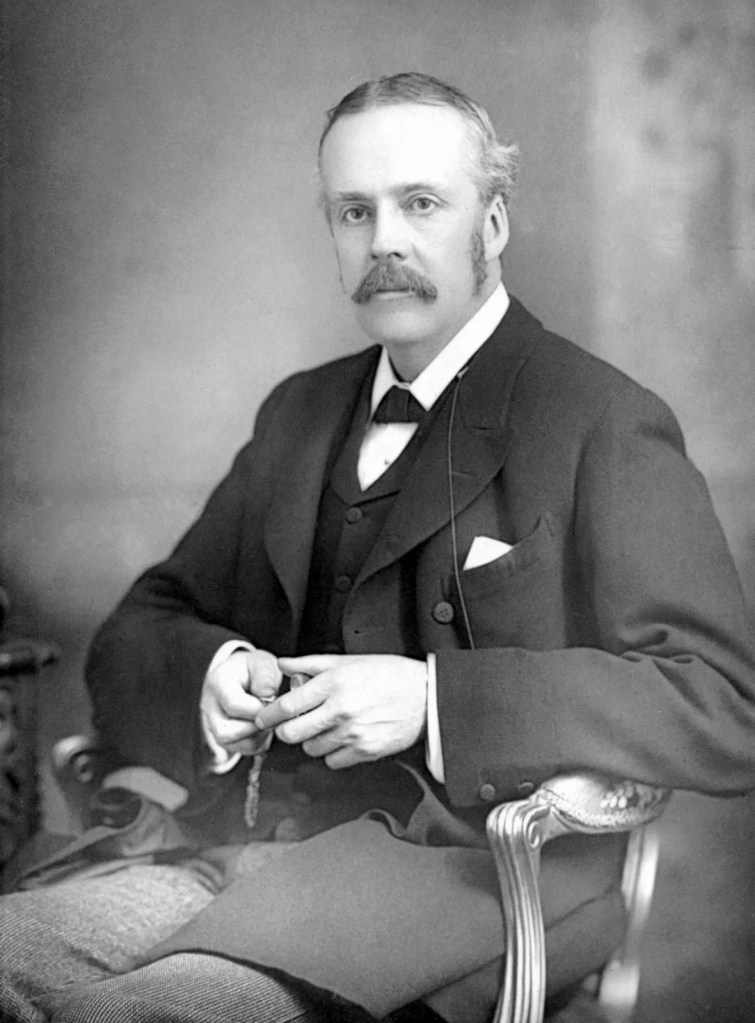
In the grand narrative of British political history, few periods evoke as much rueful amusement as the twin sagas of Tory tribulation in the 1906 and 1997 general elections. Picture, if you will, the pomp and circumstance of Arthur Balfour’s era, as he, with the confidence of a lion entering the colosseum, led his Conservative cohorts into the electoral arena of 1906.

And if the name “Balfour” sounds familiar to you – well done! Arthur Balfour famously issued the Balfour Declaration in 1917, announcing British support for a national home for the Jewish people in Palestine. As Foreign Secretary, he was just as useless as when he was Prime Minister during one of the Tories’ largest political losses in history. We must note, history remembers the winners … but it also remembers the inadequate losers too. Balfour. Remember the name.

Prior to the election, the resurgent Liberals, under the dynamic leadership of Henry Campbell-Bannerman, would prove to be a formidable opponent. As the dust settled, the Tories found themselves floundering in the wake of an electoral tsunami, losing a staggering 246 seats – an electoral catastrophe of unparalleled magnitude. The Liberals, buoyed by their triumph, seized control of the House of Commons with an impressive 399 seats, marking the dawn of a new political era.

Fast forward to the tumultuous terrain of 1997, where John Major’s Conservative Party found itself adrift in a sea of discontent and disillusionment. The once-mighty Tories, who had long held sway over British politics, now faced the unenviable task of defending their record against the rising tide of Tony Blair’s New Labour movement.

Major, with his trademark understated demeanour and steadfast determination, sought to rally the troops and steer the ship of state through the stormy waters of economic uncertainty and political upheaval. Alas, it was not to be. Blair’s New Labour juggernaut, with its slick campaign machinery and irresistible charisma, swept aside the Tories with ruthless efficiency. The result? A devastating defeat that saw the Conservatives haemorrhage 178 seats, leaving them with a mere 165 in the House of Commons. Meanwhile, New Labour, riding high on a wave of optimism and promise, secured a commanding majority of 179 seats, signalling the dawn of a new political era.

With a statesman-like leader, such as Major, the Tories still suffered a staggering loss of 178 seats – leaving them with just 165 seats and Blair with an unbelievable 418 seats. That was with a well-respected statesman at the helm. Since 2015 we have dealt with incompetency, corruption, inadequacy or just plain evil. You may know them as Theresa May, Boris Johnson, Liz Truss or Rishi Sunak. So what could happen in 2024?

To answer this, we need to know what precipitated these seismic shifts in the political landscape. Ah, the devil is in the details. In both instances, a union of factors conspired to spell doom for the Conservative Party.

Economic mismanagement, internal divisions, and a failure to resonate with the aspirations of the electorate all played their part in sealing the Tories’ fate. From Balfour’s struggles to address the pressing issues of unemployment and social reform to Major’s battles with economic instability and European integration, the Conservatives found themselves out of step with the prevailing mood of the nation. Moreover, their perceived detachment from the concerns of ordinary voters only served to exacerbate their woes, as they grappled with an increasingly restive electorate clamouring for change. Sound familiar?

Of course, no political debacle would be complete without a healthy dose of hubris, and the Tories certainly didn’t disappoint on that front. From Balfour’s overconfidence in the face of impending defeat to Major’s stubborn refusal to heed the warning signs of electoral annihilation, the Conservatives seemed destined to stumble headlong into the abyss of political oblivion. It was like watching a Greek tragedy unfold in real-time, with the protagonists blinded by their own arrogance and pride, unable to see the writing on the wall until it was too late.

So, what does the future hold for the Tories in 2024? Will they learn from the mistakes of their forebears, or are they doomed to repeat the sins of the past? Only time will tell. Could they end up with fewer than 100 seats? It’s not unimaginable! One can hope.

With Rishi Sunak at the helm and a litany of scandals and missteps to contend with, the Conservatives face an uphill battle to retain their grip on power. And if history is any guide, they may well find themselves once again cast adrift in the choppy seas of electoral defeat, as the electorate delivers its verdict with a resounding cry of “out with the old, in with the new!”

Sunak’s Soaked Snap Election: A Comedy of Errors in Shades of Blindness

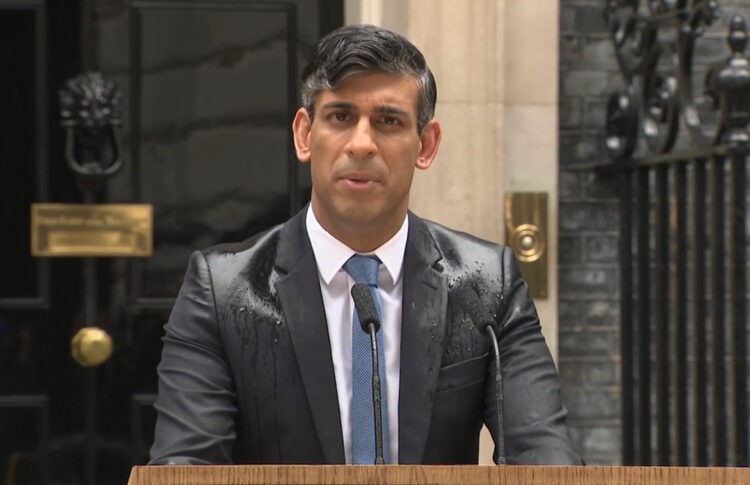
As the rain-soaked streets of Westminster witnessed Rishi Sunak’s decision to call a snap election, it was like watching a soggy soap opera unfold in real-time. The stage was set for a political drama of epic proportions, complete with plot twists and turns that would make even the most seasoned scriptwriter blush. But he did it! He called an election earlier than necessary! And clearly this was not staged or planned; just look at the weather … or his face.

This upcoming election marks the first real test of the electorate’s mood since 2019, a time when Boris Johnson’s buoyant charisma and unyielding Brexit fervor propelled the Tories to a resounding victory. But alas, it seems Sunak’s ego couldn’t resist the siren call of power, leading him to remove the one thing that made people vote Tory: Boris Johnson himself.

Since the last real, pre-COVID and fair election, in my opinion, was held in 2015 and resulted in a Tory majority. Since then, I would argue, we have had four of the most corrupt and despicable Prime Ministers in our history. David Cameron used to make you shudder? Perhaps you hold a deep hatred for Thatcherite politics. Well, to be fair, those leaders were successful in, at the very least, getting things done. Since 2015, we’ve had Theresa May, Boris Johnson, Liz Truss and Rishi Sunak. A whos-who of incompetence, evil and, in Liz Truss’ case a genuine ignorance about who that moron was or where she came from.

More importantly, however, only Boris Johnson was genuinely elected democratically in 2019. In 2015, David Cameron legitimately won a general election (with the promise of a Brexit vote – thanks Dave!), but soon jumped ship and left us with Theresa May. Then Boris won the election in 2019 before being somehow beaten by Liz Truss and Rishi Sunak. None of these people were elected by the people. Rishi Sunak was NOT an elected Prime Minister so don’t shed a tear if he fails to win his first actual general election as leader.

In her usual no-holds-barred style, Angela Rayner, the Deputy Leader of the Labour Party, described Sunak as a “pint-size wannabe loser,” a title that seemed to hit the mark with surprising accuracy. Sunak’s attempts to distance himself from Johnson left him resembling a damp squib rather than a political powerhouse.

Sunak’s journey from economic wunderkind to political pariah has been as chaotic as a hen party in a downpour. His ‘Eat Out to Help Out’ scheme, initially hailed as a stroke of genius, quickly devolved into a public health nightmare, akin to handing out umbrellas during a monsoon and expecting sunshine. It is now thought to have actually extended the length and dangers of COVID-lockdown.

Then came the ‘pingdemic,’ a debacle of epic proportions that saw Sunak caught in the crossfire of his own misguided policies. As the nation grappled with staff shortages and supply chain disruptions, Sunak found himself pinged by his own NHS Test and Trace app while extolling the virtues of returning to the office. It was a comedy of errors that would have been hilarious if it hadn’t been so detrimental.

But perhaps the pièce de résistance in Sunak’s political pantomime was his brazen betrayal of Boris Johnson. Like a snake shedding its skin, Sunak attempted to slither away from the Prime Minister, leaving a trail of WhatsApp messages and strategic leaks in his wake. Yet, for all his machinations, Sunak’s attempts to position himself as the Tories’ next top dog only served to highlight his own shortcomings as a leader.

As the rain continues to fall on Westminster, one can’t help but wonder if Sunak’s decision to call a snap election is one last throw of the dice, a desperate bid to catch the snoozing Labour and Lib Dems off guard. But let’s face it, trying to surprise your opponents when you represent the most corrupt government in UK history is like trying to sneak up on someone in a room full of flashing neon signs.

In the end, Rishi Sunak’s snap election may be nothing more than a futile attempt to outrun the storm clouds gathering overhead. But as the saying goes, you can’t outrun the rain forever, and sooner or later, Sunak will find himself soaked to the bone, facing the consequences of his actions. And if the electorate’s appetite for change is anything to go by, even the charisma-vacuum that is Keir Starmer might start looking like a breath of fresh air in comparison.

Here we go …

The Climate Change Chronicles: How Global Greed and Failed Agreements Left Us Adrift

In Britain we love to talk about the weather. Not only does it provide an easy source of small talk when interacting with Karen from across the road, but it’s also a fact that Britain has historically always enjoyed four very differing seasons. There were months where you could guarantee times of pure sunshine and pollen and, if you were to go far back enough, even months where you could guarantee snow!

I have a huge amount of respect for climate protestors and their leaders. But we must remember there is only so much Sir David Attenborough can do for us! The man’s old and we can happily watch his incredible shows going “Awwwww” or gasping at the marvels of nature – but soon it’ll all be gone. Sitting here in my boiling room, watching the rain fall down and remembering it being a boiling 26 degrees just a few days ago – I do start to wonder whether the weather will be such a hot topic in the future (jeeez count them puns)!

First, let’s get one thing straight: climate change is a natural cycle. Throughout Earth’s history, temperatures have yo-yoed more than a dieter in January. From the Ice Ages to the Medieval Warm Period, our planet has seen it all.

But ah, the climate conspiracists! These are the folks who believe that climate change is a hoax, a ruse cooked up by shadowy figures to…well, it’s not entirely clear what they think the endgame is. Some argue it’s about control, others say it’s a ploy to sell more electric cars.

Let’s take a look at some of their greatest hits:

  1. “Climate change is a hoax!” Yes, because melting ice caps and record-breaking temperatures are clearly figments of our collective imagination. Never mind the fact that 97% of climate scientists agree that human activities are driving unprecedented changes in the Earth’s climate. But hey, what do scientists know, right?
  2. “Volcanoes emit more CO2 than humans!” Nice try, but volcanic emissions pale in comparison to human activities. Humans pump out about 35 billion tons of CO2 annually, whereas all the volcanoes in the world combined emit roughly 200 million tons. That’s like comparing a firecracker to a nuclear explosion.
  3. “It’s all about the money!” Ah, yes. Because the real power brokers are clearly those climate scientists, raking in the big bucks from their well-funded research grants while fossil fuel executives struggle to make ends meet. Seriously, ExxonMobil’s annual revenue is around $178 billion. The entire global climate fund? A measly $10.3 billion.

Now, let’s talk about what we’ve done—or rather, failed to do. Remember the Paris Agreement? That grand accord where nearly every country on Earth pledged to keep global temperature rise well below 2 degrees Celsius above pre-industrial levels, ideally aiming for 1.5 degrees? Spoiler alert: we’re on track to blow past both targets. Current policies have us headed for a scorching 2.7 degrees Celsius increase by the end of the century.

Yet in 2022, China’s CO2 emissions hit a staggering 10 billion tons. The U.S. rejoined the Paris Agreement, aiming to halve emissions by 2030, but emissions rose by 6.2% in 2022. The EU wants to be carbon neutral by 2050, but emissions in 2022 were only 24% lower than in 1990. Progress, sure, but not nearly enough.

The root of these failures? Greed. Fossil fuel industries, with their deep pockets and influential lobbying, consistently hinder progress. In 2022, global fossil fuel subsidies amounted to a whopping $423 billion, effectively undermining climate efforts. Companies like ExxonMobil, Chevron, and Saudi Aramco continue to post record profits while the planet burns. Nations prioritize short-term economic gains over long-term sustainability, like Brazil’s Amazon deforestation for beef and soy exports.

And here’s the kicker: even if we magically stopped all emissions today, we’d still have to reverse the damage we’ve already done. According to the IPCC, the last time CO2 levels were this high was during the Pliocene Epoch, around 3 million years ago, when sea levels were 15-25 meters higher. The damage we’ve done is baked into the system.

CO2 stays in the atmosphere for centuries, meaning the effects of our past emissions will continue to unfold. The Greenland Ice Sheet is melting at an unprecedented rate, with Arctic ice-free summers possible by 2035. The oceans, which absorbed 90% of the excess heat, suffer from coral bleaching and ecosystem disruption. Reversing this damage isn’t just challenging; it’s virtually impossible within our lifetimes.

So, where does this leave us? We’ve missed the boat, and the climate ship has sailed. But while we may not reverse the damage, we can still mitigate its worst effects. We need a drastic overhaul of our energy systems, reduction in fossil fuel subsidies, and significant investment in renewables. We must build resilient infrastructure, develop sustainable agriculture, and protect vulnerable communities.

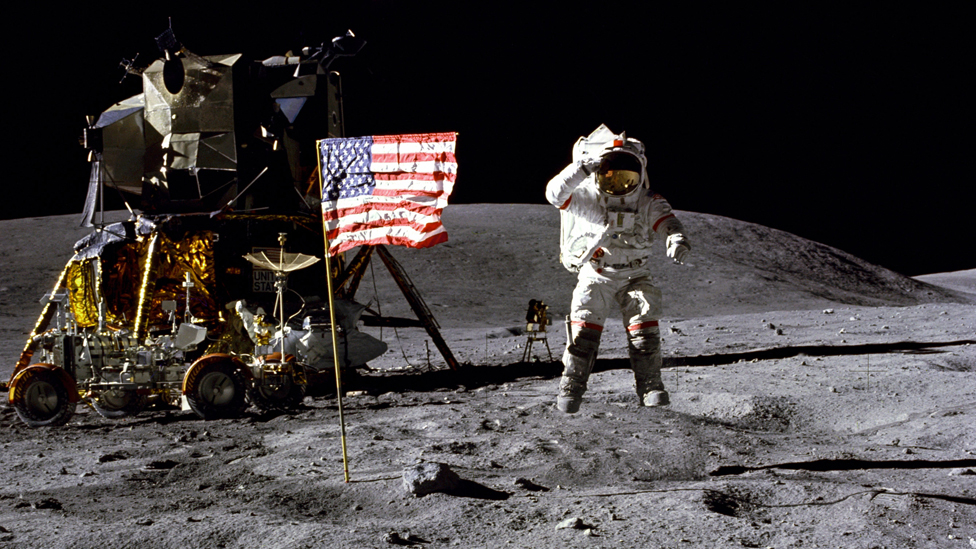
Believe it (or not) – Man Landed on the Moon.

In all of human history, few events have captivated the world’s imagination quite like the Apollo moon landings. Yet, despite overwhelming evidence to the contrary, conspiracy theories continue to persist, suggesting that the United States never actually set foot on the lunar surface (AND I BLOODY HATE IT!). But fear not, truth seekers, for I can, through a LOT of research, here to debunk every argument against the moon landings and prove once and for all that America did indeed achieve this monumental feat.

The first argument, and the one most of us are probably aware of is “The Flag Waving Debate Conspiracy”. Theorists often point to the American flag planted on the lunar surface, claiming that its movement suggests the presence of wind, which is impossible in the vacuum of space. However, they fail to acknowledge that the flag’s movement was caused by the astronauts twisting it to plant it securely in the lunar soil. It had a pole holding the flag up, like on Earth, but another pole along the top of the flag so that the flag would not just drop down! THINK! The flag had two poles in it, and with the absence of air resistance, the flag continued to move momentarily due to inertia, as seen infootage from subsequent missions. The motion was not caused by wind! It was caused by the second pole! If they hadn’t added that pole the flag would have simply dropped due to the lack of wind on the moon.

How would that have looked?

Then there is the so-called ‘Missing Stars Skeptics’ who argue that photographs taken on the lunar surface lack stars in the background, suggesting that they were staged in a studio with a black backdrop. However, astrophotography experts have explained that the cameras used on the moon were adjusted to capture the bright lunar landscape, making the faint stars invisible in the images. Additionally, the exposure settings necessary to capture the dim stars would have overexposed the bright lunar surface.

(A side note to this.) If you have the world’s smartest minds on the planet working on this mission do you not think that they would’ve added stars if that’s what you were supposed to see? The idea that they just, what, forgot to add stars to these “fake pictures” is good enough? If these genuises knew that they would see stars in their videos/pictures guess what – THEY WOULD HAVE ADDED STARS!

A lesser-known but important conspiracy is ‘The Van Allen Radiation Belt Conspiracy’ where theorists claim that the Van Allen radiation belts surrounding Earth would have been lethal to the Apollo astronauts, preventing them from reaching the moon. However, NASA scientists meticulously calculated the trajectory and timing of the Apollo missions to minimize the astronauts’ exposure to radiation. Furthermore, the spacecraft’s shielding provided sufficient protection against radiation during their brief passage through the Van Allen belts.

NASA, nor any of their scientists, denied the existence of this Belt, but they navigated their way around it. This “argument” (conspiracy) is actually perhaps one that annoys me the most. One can easily wave (pardon the pun) the flag issue or the camera footage; but this is actual science. The fact that NASA and the astronauts were willing to solve this problem and even then take the risk of moving into space makes their missions all the more incredible? Let’s not forget, the USSR was the first to enter orbit, the first to send a mammal into space and the first to send a man into space – if this Belt was so inpentrable and dangerous … how did they manage that? (THE FLAG HAS TWO POLES – JUST LOOK!)

Okay, fine, the shadows and lighting. This is one of the most common arguments against the moon landings is the purported inconsistency in shadows and lighting seen in photographs and videos. Critics claim that multiple light sources indicate artificial studio lighting. However, these anomalies can be easily explained by the uneven terrain of the lunar surface, which reflects sunlight at various angles, creating shadows that appear inconsistent to the untrained eye. Personally, I don’t understand this conspiracy or its merits – have you been on the surface of the moon? (NO). Do you fully understand the reflection of light from the Sun to the Moon as and when it occurs? (NO). And neither do I. This is not an argument.

Finally, my favourite – the Footprints and Rover Tracks Skeptics question the appearance of footprints and rover tracks in the lunar soil, suggesting that they should not remain preserved due to the lack of atmosphere and erosion mechanisms on the moon. Even as I write that sentence it makes no sense. The astronauts landed in their LEM and walked on the moon, later taking a rover machine to their and even playing golf. Not-so-recent satellites have shown ALL of these tracks and markers, suggesting someone (GOD KNOWS WHO) landed on the moon.

Conspiracy theoritst then argue why are those footprints/trackprints still there due to erosion and lack of atmosphere on the moon. If there’s a lack of atmosphere… they should remained untouched (as they are). This argument also contradicts the “Flag Conspiracy”! I think people are getting a bit confused here.

FACTS – lunar soil behaves differently from Earth soil, lacking moisture and microbial activity that would cause erosion. Additionally, the absence of wind and water on the moon allows footprints and rover tracks to remain intact for centuries, as evidenced by recent lunar missions. That’s why we CAN STILL see the footprints, rover tracks and even a golf tee!

In conclusion, the notion that the United States did not land on the moon is a myth perpetuated by conspiracy theorists who cherry-pick evidence and ignore scientific facts. In my opinion, these are people who do not believe that man landed on the moon because we aren’t doing it every day in the 21st century. Our failure in progress (after the 1970s) does not mean that there was no progress beforehand. Millions around the world watched the moon landings. Hundreds of thousands of people worked on the Apollo Missions. A few fortunate men were allowed to touch the moon.

And yet, not a single person has come forward about it all being a scam. We have whistleblowers right now coming out about the FED changing interest rates, but not one single person (in about 70 years) has come forward and said it was all a fraud .. explain.

The Apollo moon landings represent one of humanity’s greatest achievements, made possible by the dedication, ingenuity, and bravery of thousands of individuals involved in the space program. As we continue to explore the cosmos, let us celebrate the triumph of human exploration and leave the moon landing hoaxes where they belong—in the realm of science fiction.

Moon Bound: Why America Went Once and Never Returned

Ah, the Moon—Earth’s favorite neighbor, forever hanging in the sky like a celestial nightlight. But why, oh why, did the USA land there six times, only to ghost the lunar scene like a cosmic fling gone awry? Let’s dive into the interstellar soap opera that is America’s lunar escapades, complete with Cold War drama, budgetary bloopers, and a dash of Elon Musk Twitter madness.

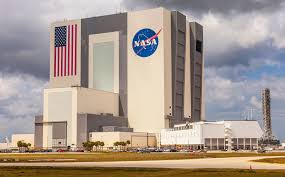
Picture it: the swinging ’60s, a time when bell-bottoms were in vogue and the space race was all the rage. Enter John F. Kennedy (side note – a man who was elected as President of the United States of America at the age of just 41 – imagine that power at 41!). The dashing president with a penchant for bold declarations. In a move that would make even the most seasoned reality TV star blush, Kennedy announced to the world, “We choose to go to the Moon!” And just like that, NASA’s Apollo program was born, with the Moon becoming the ultimate prize in humanity’s cosmic game of capture the flag. Kennedy Space Centre is still hailed as one of the ultimate sites for space exploration; despite the tragic fact that JFK was assasinated before he could ever see his dream realised.

Fast forward to July 20, 1969, when Neil Armstrong and Buzz Aldrin strutted their stuff on the lunar surface like a couple of interstellar rock stars. Meanwhile, Michael Collins (I know you’ve never heard of him, but it took three men to reach the moon – sadly only two could actually touch it’s surface) orbited above, presumably binge-watching space documentaries and contemplating the meaning of life. It was a moment of triumph, a cosmic mic drop heard ’round the world.

But as the ’70s dawned and disco fever swept the nation, America’s lunar ambitions began to wane. Blame it on budget cuts or a collective midlife crisis, but suddenly, the Moon just wasn’t as alluring as it once was. Sure, there were a few more Apollo missions, but they lacked the pizzazz of the initial lunar landing. It was as if America had achieved its lunar destiny and now sought new cosmic conquests, like sending cheese to Mars or starting a lunar colony of space-faring llamas.

And then there were the mishaps—oh, the mishaps! Apollo 13, the mission that went from bad to worse faster than you can say “Houston, we have a problem.” Ron Howard’s movie, starring Tom Hanks and Kevin Bacon, is perhaps one of the best movies of all time in my personal opion. All I can say is thank the lord my father made me watch it when I was young and taught me the basics of the Apollo missions. And that is no exaggeration, as my father was alive to watch such a crisis live. Sometimes I have bumpted into nerds, like myself, who believed that Apollo 13 never happened – or that the movie over-dramatised everything.

I don’t want this article to be specifically about Apollo 13, but rather the moon landings in general. So if you want to know more about Apollo 13 watch the movie, hit up Wikipedia … or just wish your dad was as smart as mine. Up to you. (SPOILER ALERT!!!!!! = But fear not, for the crew survived to tell the tale, proving once and for all that space travel is equal parts exhilarating and utterly bonkers).

Oh BUT STOP! The thrill of watching SpaceX nail yet another rocket landing—it’s like witnessing a cosmic ballet of engineering prowess and sheer audacity. My heart skipped a beat as the fourth rocket touched down with the finesse of a seasoned dancer. I, probably along with the rest of the world, knew that this was Musk’s last shot at getting funding from NASA and respect from the rest of the world. The “Nerd World” held its breath. Third time’s a charm? Well, for Musk it was the fourth (AND FINAL) time. But alas, the excitement has waned as SpaceX seems to have taken an extended intermission from its rocket landing spectaculars. Here’s hoping for an encore performance soon!

But wait, there’s more! Enter Elon Musk, the eccentric billionaire with a penchant for flamethrowers and Twitter rants. While his company ‘SpaceX’ aims for the stars, Musk seems more interested in stirring up controversy on social media than plotting the next cosmic conquest. It’s like watching a cosmic soap opera unfold in real-time, complete with rocket launches, love triangles, and the occasional meme-induced meltdown.

Furthermore, as we see the USA and Kennedy’s dream fall away – India and China’s space programs are skyrocketing, quite literally, with ambitious missions and rapid advancements. India’s ISRO has achieved milestones like the ‘Mars Orbiter Mission’ on a shoestring budget, while China’s CNSA boasts lunar landings and plans for a space station. Meanwhile, the USA, once the undisputed cosmic champion, finds itself playing catch-up in the interstellar Olympics. As the global space race heats up, America must innovate and collaborate to stay ahead in the celestial game.

With Putin flexing his space muscles and India’s space program gaining steam, the stage is set for a new space race of epic proportions. Perhaps Space Travel is not the immediate concern for the USA (let alone smaller countries) as we currently see ourselves in such economic and political turmoil. Nevertheless, the fact India and China are launching their own Space Programs (without even consulting the USA or Russia) would certainly point to the fact that there is a shift in the balance of power.

So why did the USA land on the Moon but never return? The answer, it seems, is a cosmic confluence of geopolitics, budget constraints, and the capricious whims of fate. But fear not, fellow space cadets, for the final frontier beckons, a tantalizing adventure waiting to unfold. After all, in the grand cosmic comedy of errors, anything is possible—even a lunar hoedown with Neil Armstrong leading the moonwalk.

Perhaps Kennedy and the Kennedy Space Centre must be consigned to a beautiful American History. That is, of course, unless Trump can Make America Great Again on Earth and on the Moon …

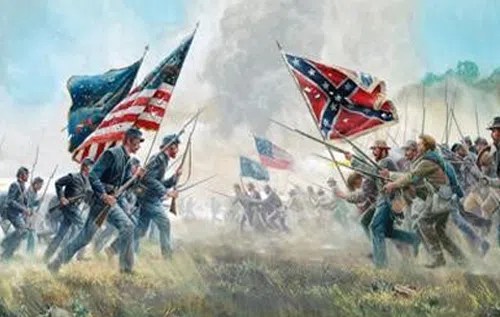
America’s Hidden Civil War: How Modern Political Divides Mirror the 1850s

It’s easy to think that a civil war, the kind with muskets and Gettysburg-type battlefields, is a relic of history. But if you look closely, you might notice that America’s internal civil war has already started. Don’t worry, it’s not the kind with bayonets and cannonballs. No, this one is much sneakier and mostly fought on Twitter and cable news.

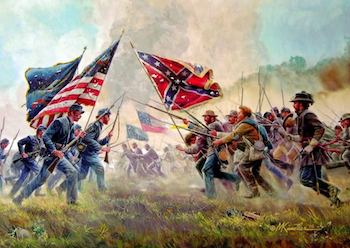
Back in the 1850s, America seemed like it was cruising. The economy was growing, railroads were being built, and people were heading West to chase gold and glory. The country was expanding, not just geographically but also culturally. There were abolitionists and pro-slavery folks, and they got into it from time to time. Sure, there were a few skirmishes in places like “Bleeding Kansas,” but who would’ve thought that would lead to a full-blown civil war? It’s like when you miss a step on the stairs, and before you know it, you’re tumbling all the way down. Except in this case, the tumble led to half a million people dead and a country in shambles.

Today, we’ve got our own set of issues. The economy is as shaky as a Jenga tower in an earthquake, and politics is more polarized than ever. It feels like you can’t have a Christmas dinner without someone bringing up a contentious topic. And let’s not even get started on social media, where the “unfriend” button is the modern equivalent of a duel. If Facebook existed in the 1850s, you could bet Lincoln would’ve blocked a whole bunch of people.

Our political climate has a lot in common with those pre-Civil War days. The country is split into red and blue, like someone tried to do a tie-dye job and got the colors wrong. Politicians are acting like it’s a reality TV show where drama is the main ingredient. Remember the Kansas-Nebraska Act? That was the reality TV of the 1850s. It was like, “Let’s let people vote on whether they want slavery or not. What could go wrong?” Spoiler alert: everything.

Meanwhile, the rest of the world isn’t exactly a paragon of stability. Global tensions are high, and it feels like everyone is playing a game of “Whack-a-Mole” with crises popping up all over. War in one country, coups in another, and the U.S. economy breaking like it’s been jinxed by a fortune cookie. It’s like the world is playing Jumanji, and no one can find the dice to roll their way out of the game.

The modern civil war isn’t fought with rifles and bayonets. It’s fought with memes, hashtags, and, occasionally, shouting matches on cable news. The battleground is the comment section, where everyone has an opinion, and no one has a filter. You can get into a heated argument over whether pineapple belongs on pizza (IT DOES NOT), let alone discuss politics or social issues.

But here’s the thing: even though it feels like everything’s falling apart, there’s hope. Sure, it’s not easy to find common ground when everyone’s busy shouting, but history has shown that the U.S. has a knack for coming back from the brink. After all, we’ve got some pretty good survival instincts—just look at the number of reality shows we can binge-watch without losing our minds.

Maybe the secret to avoiding a full-blown civil war is to remember that we’re all in this together. Instead of digging deeper trenches and building higher walls, we need to start talking to each other. Not just about the big stuff, like politics and the economy, but also about the little things, like how to fix a leaky faucet or whether it’s okay to eat cereal for dinner.

In the end, if we can find a way to laugh at ourselves and our differences, maybe we can keep the hidden civil war from becoming a full-blown reality. Because let’s be honest, nobody wants to fight a war that only ends up giving you carpal tunnel syndrome from all the online arguing.

As light-hearted as I wish this article could be, however, it is not. The war has started – but how it will unfold … who can tell?

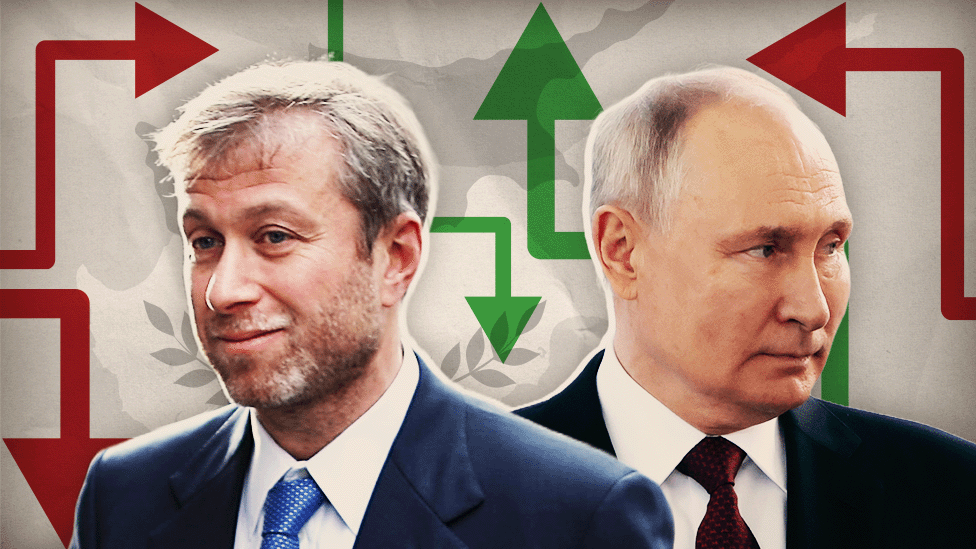
From Putin’s Inner Circle to Chelsea’s Winner Circle: The Wild Ride of Roman Abramovich

Roman Abramovich’s tenure at Chelsea Football Club is one of the most remarkable success stories in modern football. When he acquired the club in 2003, Abramovich brought a fresh perspective to the sport: a combination of business acumen and a willingness to spend what was necessary to win. This approach turned Chelsea into a powerhouse almost overnight.

Under Abramovich’s ownership, Chelsea transformed from a mid-table Premier League team into one of the most successful clubs in Europe. His financial investments in players and facilities were unparalleled. Chelsea’s trophy cabinet, previously gathering dust, suddenly overflowed with silverware. The club won five Premier League titles, five FA Cups, three League Cups, and two UEFA Champions League trophies during his reign. It’s no exaggeration to say that Abramovich’s influence on Chelsea was transformative, not just for the club but for English football as a whole.

Abramovich’s success with Chelsea didn’t just come from opening his wallet, although that certainly helped. He also displayed a knack for hiring the right managers and supporting them with the resources needed to succeed. His choices, like José Mourinho, Carlo Ancelotti, and Antonio Conte, became iconic in Chelsea’s history. He even made bold moves like sacking a successful manager to achieve greater success, a testament to his relentless pursuit of excellence.

However, Abramovich’s close relationship with Russian President Vladimir Putin has always been a topic of interest. As one of Russia’s most influential oligarchs, Abramovich maintained strong ties with the Kremlin. His position as Governor of Chukotka, a remote Russian region, illustrated his strategic connections to Putin’s inner circle. It wasn’t just about business; it was about being in a small and exclusive club where having friends in high places was crucial for survival.

Putin’s circle of trust is notoriously tight, with loyalty valued above all else. Abramovich, known for his discretion and support of the Kremlin’s policies, was among the privileged few. These relationships benefited his business interests, allowing him to navigate the complexities of Russian politics while expanding his wealth. It wasn’t just about staying in Putin’s good graces; it was about ensuring his position as an oligarch was secure.

When Russia invaded Ukraine in 2022, these connections to Putin became a significant liability for Abramovich. Western sanctions targeted Russian oligarchs, and Abramovich was among those affected. His assets were frozen, and he faced travel restrictions, leading to the sale of Chelsea Football Club. The sale marked the end of an era, and Abramovich’s pledge to donate the proceeds to aid Ukraine’s war victims was seen as an attempt to distance himself from the Kremlin.

Abramovich’s journey with Chelsea and his ties to Putin reflect the duality of his life. On one hand, he achieved tremendous success with Chelsea, turning the club into a football juggernaut. On the other hand, his connections to Putin’s small circle became a liability, impacting his freedom and business operations. It’s a complex story of ambition, loyalty, and the changing landscape of geopolitics. While Abramovich’s future remains uncertain, his impact on Chelsea and his connection to Russia’s inner circle will continue to be subjects of fascination.

Netanyahu’s Failure: Why Resignation Should Have Followed the October 7th Attacks

In the wake of the devastating October 7th attacks, which saw a surge of violence targeting Israelis and Jewish people, one question looms large: why has Prime Minister Benjamin Netanyahu not resigned? It’s a question that demands answers, as the failure of Israeli intelligence to prevent these attacks represents a profound dereliction of duty on the part of the country’s leadership.

Let’s be clear: the primary responsibility of any government is to ensure the safety and security of its citizens. In Israel, where the threat of violence is an ever-present reality, this responsibility takes on added significance. Yet, in the aftermath of the October 7th attacks, it’s evident that Netanyahu’s government failed to live up to this fundamental obligation.

The attacks themselves were a tragic reminder of the ongoing threats facing Israel and the Jewish community worldwide. From the brutal stabbing of innocent civilians to the desecration of synagogues, the perpetrators of these heinous acts sought to sow fear and division among Israelis and Jews everywhere. And while such acts of terror are sadly nothing new, what is particularly galling is the apparent failure of Israeli intelligence to anticipate and prevent them.

As Prime Minister, Netanyahu bears ultimate responsibility for the failures of his government, including those of the intelligence agencies tasked with safeguarding the nation. The fact that these attacks were able to occur on his watch, despite warnings and intelligence indicating a heightened threat level, speaks to a systemic breakdown in Israel’s security apparatus.

Moreover, Netanyahu’s response to the attacks has been woefully inadequate. Rather than taking responsibility and acknowledging the failures of his government, he has instead sought to deflect blame and exploit the tragedy for political gain. This cynical approach not only does a disservice to the victims of the attacks but also undermines public trust in the government’s ability to keep Israelis safe.

In any other democracy, such a failure of leadership would be met with swift and decisive consequences. Yet, inexplicably, Netanyahu remains in power, seemingly impervious to calls for accountability. This is not leadership; it’s a betrayal of the trust placed in him by the Israeli people.

Resignation is the only appropriate course of action for Netanyahu in the aftermath of the October 7th attacks. By stepping down, he would not only acknowledge the gravity of the failures that occurred under his watch but also pave the way for new leadership capable of restoring public confidence in Israel’s security apparatus.

Furthermore, Netanyahu’s resignation would send a powerful message to the perpetrators of terror that Israel will not tolerate attacks on its citizens and will hold those responsible for security failures to account. It would also demonstrate to the international community that Israel takes its commitment to protecting its people seriously and will not allow political considerations to override the imperative of ensuring their safety.

In the end, Netanyahu’s continued tenure as Prime Minister in the wake of the October 7th attacks is not only untenable but morally indefensible. It’s time for him to do the right thing, put the interests of the Israeli people first, and resign. Anything less would be a betrayal of the trust placed in him and a disservice to the victims of the attacks and their families.

Facing Reality: Iran’s Wake-Up Call and the Cost of Western Indecision

It’s remarkable what can finally grab the attention of those in power. In this case, it’s not the heartfelt protests, the sage advice from experts, or the diplomatic maneuvers that are causing a stir. No, it’s a threat from Iran that’s finally making Western leaders sit up and take notice. It’s almost as if they needed a bit of a nudge from an unexpected source to start seeing the bigger picture.

Let’s rewind the tape a bit and take a stroll through history. Picture the 20th century, a time of global power plays and more than a few colossal blunders. Iran, once known as Persia, found itself right in the middle of the action. Take, for example, the 1953 debacle when Mossadegh decided to nationalize the oil industry. Enter the CIA, swooping in like a plot twist from a spy novel to shake things up. It’s a tale of intrigue and deception that would make James Bond raise an eyebrow.

Then there’s the Iran-Iraq War of the ’80s, a brutal conflict that claimed countless lives. It’s the classic tale of two adversaries locked in a deadly embrace while the rest of the world looked on, too timid to intervene. Spoiler alert: it didn’t end well for anyone involved.

Fast forward to the 21st century, where Iran’s nuclear ambitions took center stage. Negotiations, sanctions, and more negotiations followed, all while Israel kept a wary eye on the proceedings. It’s like a high-stakes game of poker, with the fate of the region hanging in the balance.

And let’s not forget Iran’s ongoing feud with Israel, a bitter rivalry that’s claimed its fair share of casualties. It’s the kind of animosity that puts your average sports rivalry to shame. Think Yankees vs. Red Sox, but with nuclear warheads instead of baseball bats. Yeah, it’s serious stuff.So here we are, with Iran throwing threats around like confetti and the West scrambling to catch up. It’s a sobering reminder of just how high the stakes are in the Middle East.

But here’s the thing: it didn’t have to be this way. If Western leaders had shown even a shred of courage or morality decades ago, countless lives could have been spared. Instead, they chose the path of least resistance, turning a blind eye to injustice and suffering in the name of political expediency.

So while it’s heartening to see some belated recognition of the situation, let’s not forget the cost of this collective failure of leadership. It’s a bitter pill to swallow, but perhaps it will serve as a wake-up call for those who have the power to make a difference. After all, if we don’t learn from history, we’re doomed to repeat it. And in the case of the Middle East, that’s a price we simply can’t afford to pay.

As tensions simmer and threats are exchanged, it’s natural to wonder: what if things escalate further? In a hypothetical scenario where Iran follows through on its ultimatum and launches an attack on Israel, the potential consequences could be catastrophic. With both countries possessing formidable military capabilities, the prospect of open conflict is a sobering one.

Let’s break it down. On one side, you have Iran, a nation with a sizable military force and a strategic advantage due to its geographical proximity to Israel. Iran boasts an array of conventional weaponry, including tanks, artillery, and a large standing army. But perhaps most concerning is its ballistic missile arsenal, which poses a significant threat to Israeli population centers and military installations alike. Add to that Iran’s network of proxy forces, such as Hezbollah in Lebanon, and you have a potent mix of conventional and asymmetric capabilities at Tehran’s disposal.

On the other side, you have Israel, a small but technologically advanced nation with a military that punches well above its weight. Israel’s air force is its most potent asset, equipped with state-of-the-art fighter jets like the F-15 and F-16, as well as advanced missile defense systems such as the Iron Dome. Israel also possesses a formidable array of ground forces, including highly trained infantry and elite special operations units.

In a conventional military confrontation, Israel would likely have the upper hand. Its superior air power and technological edge would allow it to strike Iranian targets with precision while minimizing its own casualties. Israel’s Iron Dome system would provide an additional layer of defense against incoming missiles, further tilting the odds in its favor.

However, the situation becomes far more complex when you factor in Iran’s unconventional capabilities, such as its ballistic missiles and proxy forces. A sustained conflict could see Iran raining missiles down on Israeli cities, causing widespread destruction and loss of life. Additionally, Iran’s proxies, particularly Hezbollah in Lebanon, could launch cross-border attacks, further complicating Israel’s strategic calculus.

But perhaps the most significant factor to consider is the international response. While Israel has traditionally enjoyed strong support from its allies, including the United States, there’s no guarantee that such support would materialize in the event of another conflict with Iran. With the Middle East already a powder keg of regional rivalries and geopolitical tensions, the prospect of a broader conflagration looms large.

In the end, the true winners of such a conflict would be few and far between. The human cost would be staggering, with innocent civilians on both sides bearing the brunt of the violence. Moreover, the destabilizing effects of a major conflict in the region would reverberate far beyond the borders of Iran and Israel, potentially triggering a wider regional crisis with global ramifications.

As we contemplate the potential consequences of further escalation, it’s clear that the path to peace in the Middle East is fraught with peril. Diplomacy, dialogue, and a commitment to finding common ground must prevail if we are to avoid the catastrophic consequences of another senseless war. The stakes could not be higher, and the time for action is now.

MPs to Vote on ‘Smoking Ban’ – for those born after 2009

Up in Smoke: The Great UK Smoking Ban Saga

In the hazy realm of public health policies, the United Kingdom has often been hailed as a pioneer, wielding its legislative wand to cast away the clouds of tobacco smoke from public spaces. But now, a new proposal has emerged from the mist: a smoking ban targeted at those born after 2009. As with any good saga, this proposal comes with its fair share of drama, skepticism, and potential plot twists.

Across the pond in New Zealand, a similar ban was attempted, but the results were about as clear as a foggy London morning. While the intentions were noble—creating a smoke-free generation—the reality was a bit murkier. Despite efforts to snuff out smoking among the younglings, enforcing the ban proved to be as challenging as herding cats at a catnip convention. It seems that where there’s a puff, there’s a way, and teenagers are nothing if not resourceful when it comes to getting their hands on forbidden treats.

But let’s not forget the cautionary tales of history, whispered to us from the smoke-filled speakeasies of the Prohibition era. When America decided to ban the sale of alcohol, it unwittingly birthed the roaring twenties, complete with jazz, flappers, and a thriving black market run by the likes of Al Capone. Could a similar fate await the UK if it decides to take the draconian route with tobacco? Picture it: cigarette smugglers lurking in the shadows, puffing away on contraband cigars while exchanging secret handshakes.

And then there’s the elephant—or rather, the cloud— in the room: vaping. What started as a promising alternative to smoking has turned into a full-blown trend among the youth, complete with its own set of controversies. With flavors ranging from cotton candy to unicorn tears (yes, really), vaping has become the rebellious cousin of smoking, lurking in the school bathrooms and Instagram feeds of teenagers everywhere.

So, what’s the solution to this smoky conundrum? Instead of reaching for the ban hammer, perhaps it’s time to get creative. Education campaigns could be jazzed up with catchy jingles and flashy dance numbers, turning anti-smoking messages into the next TikTok sensation. Access to smoking cessation programs could be paired with incentives like free pizza or concert tickets, because let’s face it, who can say no to free pizza?

But let’s not forget the power of community. By addressing the root causes of smoking initiation—like peer pressure and socioeconomic factors—we can create a support system as sturdy as Big Ben. Together, we can snuff out smoking one puff at a time, creating a future where the only clouds in the sky are the ones we dreamily gaze at while sipping our morning tea.

So, dear reader, as we navigate the twists and turns of the Great UK Smoking Ban Saga, let us remember that the path to a smoke-free future may be winding, but with a dash of humor and a pinch of creativity, we can clear the air and breathe easy once more.

Maybe China Will Save Us All ..? Don’t Count on it.

While China’s strides in solar power are indeed remarkable, the context of its broader economic landscape is crucial. The housing market downturn in China poses a significant challenge, potentially impacting the country’s economic stability and governmental control. Evidence suggests that amid such economic uncertainties, initiatives like bolstering renewable energy could serve multiple purposes for the Chinese government.

Firstly, investing heavily in solar power allows China to assert its technological prowess and economic resilience on the global stage. By dominating the solar industry, China not only secures a strategic position in the renewable energy market but also boosts its international reputation as a leader in innovation and sustainability. This narrative can help counterbalance negative perceptions arising from economic instability, thus reinforcing the government’s authority and legitimacy.

Secondly, focusing on renewable energy aligns with China’s long-term strategic goals of reducing dependence on imported fossil fuels. Amid fluctuations in global energy markets, ensuring energy security becomes paramount for maintaining political stability and economic growth. By ramping up solar capacity, China reduces vulnerability to external energy shocks, thereby strengthening its autonomy and control over domestic affairs.

Moreover, the emphasis on renewable energy dovetails with broader narratives of ecological conservation and environmental stewardship promoted by the Chinese government. Presenting itself as a champion of green initiatives not only resonates with domestic audiences concerned about pollution and climate change but also enhances China’s soft power internationally. This narrative reinforces the government’s legitimacy by positioning it as a responsible global actor committed to addressing pressing environmental challenges.

However, it’s essential to acknowledge that China’s motives aren’t solely altruistic. The government’s prioritization of solar power also serves its self-interest in consolidating power and control. By spearheading ambitious renewable energy projects, the Chinese Communist Party (CCP) can demonstrate its ability to tackle critical issues effectively, thereby strengthening its grip on power and public perception.

Furthermore, the economic benefits derived from the solar industry, such as job creation and infrastructure development, can help mitigate the social unrest that often accompanies economic downturns. By investing in sectors like renewable energy, the government can redirect attention from economic grievances towards narratives of progress and modernization, thereby maintaining social stability and quelling dissent.

In essence, while China’s push for solar dominance aligns with its renewable energy and environmental objectives, it also serves as a strategic tool for bolstering governmental control and solidifying power in times of economic uncertainty. By leveraging the narrative of technological advancement and sustainability, the Chinese government navigates complex economic and political challenges while reinforcing its authority both domestically and internationally.

Iran’s Attacks on Israel, Nuclear Ambitions, and the Crisis in Gaza and Palestine

In the ever-volatile landscape of the Middle East, recent escalations between Iran and Israel have once again ignited international concern and prompted debates over appropriate responses and global allegiances. Central to this discourse are the historical contexts, nuclear ambitions, and the ongoing crisis in Gaza and Palestine, adding layers of complexity to an already intricate geopolitical puzzle.

Iran’s relationship with Israel has long been marked by tension and hostility, rooted in ideological differences, historical grievances, and regional power struggles. Iran’s support for militant groups like Hamas and Hezbollah, coupled with its anti-Israel rhetoric and calls for the destruction of the Jewish state, have fueled animosity and sporadic bouts of violence.

Meanwhile, Israel, wary of Iran’s nuclear ambitions and hostile proxies, has adopted a policy of strategic ambiguity regarding its own nuclear capabilities. While neither confirming nor denying the possession of nuclear weapons, Israel maintains a formidable military deterrent, underscoring its commitment to ensuring its security and survival in a volatile neighborhood.

The specter of nuclear proliferation further complicates the dynamics between Iran and Israel. Iran’s pursuit of nuclear technology, ostensibly for peaceful purposes but met with suspicion by the international community, has raised alarms in Israel and beyond. Fears of a nuclear-armed Iran, coupled with inflammatory rhetoric from Iranian leaders, have heightened tensions and fueled speculation about preemptive strikes and military interventions.

Conversely, Israel’s alleged nuclear arsenal, though officially undeclared, adds a layer of deterrence and uncertainty to the equation. The mere possibility of a nuclear response from Israel in the event of a significant threat has tempered aggression from adversaries and shaped strategic calculations across the region.

Amidst these geopolitical tensions, the crisis in Gaza and Palestine serves as a poignant reminder of the human cost of conflict and the urgent need for a peaceful resolution. Decades of occupation, displacement, and violence have left the Palestinian territories in a state of perpetual turmoil, with Gaza bearing the brunt of the humanitarian crisis.

The recent escalation in violence, triggered by clashes in East Jerusalem and the forced eviction of Palestinian families from their homes, has reignited simmering tensions and sparked waves of protests and retaliatory attacks. The indiscriminate rocket fire from Gaza into Israeli territory and the subsequent airstrikes by the Israeli military have resulted in civilian casualties on both sides, exacerbating the suffering of innocent civilians caught in the crossfire.

In the face of Iran’s attacks on Israel and the crisis in Gaza and Palestine, the dilemma of retaliation looms large, with implications that extend far beyond the immediate conflict zone. While Israel has the right to defend itself against aggression and protect its citizens, the prospect of escalation and unintended consequences cannot be ignored. A tit-for-tat cycle of violence risks spiraling out of control, exacerbating instability and endangering innocent lives on all sides.

Moreover, the international community faces a delicate balancing act, torn between competing interests, alliances, and moral imperatives. While some nations may rally behind Israel, citing shared values and security concerns, others may urge restraint and advocate for diplomatic solutions to avoid further bloodshed and regional destabilization.

Amidst the complexities and competing narratives, the imperative for peace and stability remains paramount. Rather than succumbing to the allure of military brinkmanship or the temptation of retaliatory strikes, all parties must prioritize dialogue, de-escalation, and diplomacy. The specter of nuclear annihilation looms large, serving as a stark reminder of the catastrophic consequences of miscalculation and unchecked aggression.

In conclusion, the tensions between Iran and Israel, exacerbated by historical animosities, nuclear ambitions, and the crisis in Gaza and Palestine, pose a formidable challenge to global peace and security. As the world watches with bated breath, the imperative for restraint, dialogue, and negotiated settlements has never been more urgent. Only through concerted efforts to bridge divides, build trust, and uphold the principles of international law can lasting peace be achieved in the Middle East and beyond.

Unmasking the Economic Bull Market: Bursting the Bubble

In recent years, the financial markets have been on a relentless upward trajectory, buoyed by a surge in investor confidence and optimism. While this prolonged period of growth may seem like a boon for investors, beneath the surface lurks the looming specter of a massive bubble waiting to burst. By examining various indicators and historical patterns, it becomes increasingly evident that the current bull market may be more fragile than it appears.

Valuation metrics serve as a barometer of the market’s rationality, indicating whether asset prices are justified by underlying fundamentals. One of the most widely used metrics is the price-to-earnings (P/E) ratio, which compares a stock’s price to its earnings per share. When P/E ratios soar to levels significantly above historical averages, it suggests that investors are willing to pay a premium for future earnings, often exceeding realistic expectations. Currently, many stocks are trading at P/E ratios reminiscent of the dot-com bubble era, indicating a disconnect between price and fundamental value.

Investor sentiment plays a pivotal role in driving market movements, and extremes in sentiment can signal the formation of a bubble. The prevailing sentiment in the current market is one of unwavering optimism and exuberance, with investors exhibiting a “fear of missing out” (FOMO) mentality. Surveys of investor sentiment consistently reveal excessively bullish attitudes, with retail investors flooding into the market in pursuit of quick gains. However, history has shown that such euphoria is often a precursor to market downturns, as irrational exuberance gives way to sobering reality.

A hallmark of any bubble is the proliferation of speculative activity and irrational exuberance. In the current market, we see a surge in speculative assets such as meme stocks and cryptocurrencies, driven by a frenzy of retail investor interest. These assets often exhibit wild price swings and lack underlying fundamentals, making them particularly susceptible to sharp corrections. Moreover, the unprecedented levels of margin debt – money borrowed to invest in securities – indicate that investors are increasingly leveraging themselves to amplify returns, further inflating the bubble and heightening the risk of a market crash.

History provides valuable lessons about the dangers of unchecked optimism and speculative excess. The dot-com bubble of the late 1990s and the housing bubble of the mid-2000s serve as stark reminders of the perils of irrational exuberance. In both cases, investors were lured by the promise of outsized returns, driving asset prices to unsustainable levels before reality came crashing down. The parallels between past bubbles and the current market dynamics are hard to ignore, raising concerns about a potential reckoning.

The broader economic backdrop adds another layer of uncertainty to the current market environment. Rising inflationary pressures, looming interest rate hikes, geopolitical tensions, and lingering effects of the COVID-19 pandemic all pose significant risks to economic stability and investor confidence. Any unexpected shocks or disruptions could trigger a sudden reversal in sentiment and catalyze a market downturn.

In conclusion, while the current bull market may seem invincible, a closer examination of various indicators and historical patterns reveals glaring vulnerabilities. Excessive valuation, irrational exuberance, speculative fervor, historical parallels, and macro-economic uncertainties all point to a market on shaky ground. Investors would be wise to exercise caution and prudence, lest they fall victim to the euphoria of the moment and suffer the consequences of a burst bubble. As the saying goes, “the higher they climb, the harder they fall.”

Analyzing the Odds: Trump’s Electoral Prospects in 2024

As the political carousel spins once more towards the possibility of a Trump comeback, I, for one, find myself reaching for the popcorn and wondering, “Could it really happen again?” Yes, folks, you heard it from me, the self-proclaimed Trump critic. So, let’s embark on a journey into the land of political satire, where statistics mingle with humor, and where even the most ardent anti-Trumpers may find a chuckle or two.

In the aftermath of President Biden’s tenure, marked by more twists and turns than a soap opera, some of us skeptics are left scratching our heads and pondering: Could a return to Trumpian antics, at the sprightly age of 78, actually offer a silver lining?

Imagine a world where diplomacy is conducted via Twitter, where snarky tweets and meme-worthy handshakes replace traditional negotiations. It’s an unconventional approach, to say the least, but who am I to deny the entertainment value of international politics on social media?

Now, let’s talk about NATO – the beloved alliance that brings together nations like a dysfunctional family at Christmas dinner. Remember those summits that felt more like awkward reunions than strategic meetings? Under Trump’s leadership, they were less about alliances and more about awkward encounters and passive-aggressive handshakes. While unconventional, perhaps this unorthodox approach could shake up the status quo in ways we never anticipated. After all, what better way to gauge international relations than through late-night comedians’ material?

And speaking of NATO, did you know that each member country contributes a certain percentage of its GDP to the alliance? It’s like a family potluck, but instead of bringing a dish, you bring a chunk of your national budget. Some countries, like the United States, contribute a hefty portion, while others, well, let’s just say they bring a side salad when everyone else brought a roast turkey. But hey, at least it gives us something to bicker about during those awkward family gatherings – I mean, NATO summits.

Now, before you start hurling tomatoes at your screen, let me make one thing clear: I’m not hopping aboard the Trump Train anytime soon. If you need proof of how much I dislike him, just read any article about him on this blog! But even the staunchest critics can’t deny the sheer spectacle of American politics.

As we navigate the choppy waters of uncertainty, let’s remember to keep our sense of humour intact. After all, in the wild world of American politics, anything is possible. So, whether you’re a die-hard supporter or a fervent skeptic like me, buckle up and brace yourselves for the next chapter in the saga. It’s sure to be a wild ride!

Putin’s “Election Victory”: A Global Comedy of Errors as West Clutches Pearls, China and India Applaud

In the recent culmination of political theatrics in Russia, where the notion of a fair and democratic election seems as mythical as a unicorn, Vladimir Putin once again emerged triumphant, extending his reign over the Russian political landscape. However, what followed was not merely a display of political power but rather a spectacle of international relations, replete with ironic endorsements, diplomatic nuances, and the subtle dance of geopolitics.

As ballots were cast and counted across Russia, the global community watched with a mixture of skepticism and resignation. Western leaders, quick to pounce on any perceived breach of democratic norms, were predictably swift in their condemnation of the electoral process. “The Russian people deserve better,” they intoned solemnly, as if they were the guardians of democratic virtue in a world beset by autocratic tendencies.

In a statement reminiscent of a political slapstick routine, Chinese Premier Xi Jinping offered his congratulations to Putin on his “resounding victory,” praising the stability and continuity that his leadership brings to Russia. The irony of China, a nation notorious for its authoritarian grip on power, endorsing the electoral process of another autocratic regime, was not lost on observers. However, geopolitics, like comedy, often thrives on irony.

India, under the leadership of Prime Minister Narendra Modi, struck a more cautious note, stopping short of outright endorsement but refraining from any criticism of the electoral process. With India’s own complex relationship with democracy and authoritarianism, Modi’s silence spoke volumes, signaling a pragmatic acceptance of the status quo rather than a principled stand against electoral malpractice.

Meanwhile, the turnout for the election, touted by Russian authorities as a testament to the legitimacy of the process, raised eyebrows among international observers. With reports of voter coercion, manipulation, and irregularities circulating widely, the credibility of the turnout figures remains questionable at best. Yet, in the grand theater of geopolitics, perception often trumps reality, and the narrative of a united Russian electorate rallying behind Putin’s leadership persists, albeit with a healthy dose of skepticism from the global community.

In the corridors of power, where pragmatism reigns supreme, the reactions to Putin’s “victory” underscore the complex interplay of interests and alliances that shape the geopolitical landscape. While the West expresses concern over the erosion of democratic norms, China and India weigh their strategic calculations, mindful of the delicate balance between stability, sovereignty, and self-interest.

However, beyond the immediate diplomatic ramifications, Putin’s continued grip on power fuels speculations about Russia’s regional ambitions, particularly concerning smaller neighboring countries such as Ukraine and Taiwan. With Putin’s government demonstrating a brazen disregard for international norms and sovereignty, there are concerns that Russia may embolden similar authoritarian impulses in other nations, thereby destabilizing the global order.

For China, Putin’s strongman tactics may serve as a model for asserting dominance over regions like Hong Kong and Taiwan, where Beijing’s authority is contested. By cozying up to Russia, China sends a clear message to the world: autocracy is not only acceptable but also effective in achieving geopolitical goals, even at the expense of democratic principles and human rights.

Similarly, India, with its own territorial disputes with neighboring countries like Pakistan and China, may view Putin’s consolidation of power as a blueprint for strengthening its own grip on contested regions. Modi’s government, known for its muscular approach to foreign policy, may find inspiration in Putin’s playbook, using authoritarian tactics to assert dominance in regions where India’s influence is challenged.

As the curtain falls on yet another chapter in Putin’s political saga, one thing remains abundantly clear: the world of geopolitics is a stage, and its actors, whether applauding or aghast, are bound by the rules of the game. Whether Putin’s victory is celebrated or condemned, the show must go on, with each twist and turn in the plot serving as a reminder of the enduring absurdity of international relations in the 21st century.

Marvel’s Not-So-Marvelous Decline

Ah, the grand tapestry of Marvel’s cinematic universe—a saga filled with heroes, villains, and more plot twists than a Spider-Man comic. From Hugh Jackman’s rugged Wolverine to the climactic showdown of “Avengers: Endgame,” Marvel’s journey from X-traordinary beginnings to universe-spanning epics seemed as unstoppable as the Hulk on a caffeine high. But as the saying goes, even the mightiest empires can suffer the occasional cosmic hiccup, and Marvel’s post-‘Endgame’ era has been a rollercoaster ride of success, failure, and more failure.

Let’s set the DeLorean to 2000, where Jackman’s abs and mutton chops first graced the screen, forever immortalizing Wolverine as the quintessential antihero. “X-Men” kicked off Marvel’s cinematic revolution, proving that superheroes could be brooding, complex, and, most importantly, incredibly bankable.

As the years unfolded like pages from the Collector’s vault, Marvel’s dominance only grew, with each film shattering box office records faster than Ant-Man can raid a snack cupboard. From Robert Downey Jr.’s Tony Stark swagger to Chris Hemsworth’s thunderous Thor, Marvel’s ensemble cast breathed life into iconic characters, making them household names faster than you can say “Hulk smash!”

But every hero has their Kryptonite, and Marvel’s decline began with a series of misfires that would make even Deadpool cringe. Remember “The Incredible Hulk”? Despite Mark Ruffalo’s valiant efforts, the film failed to Hulk-smash its way into our hearts like its predecessor, leaving audiences wondering if they’d rather watch paint dry than sit through another gamma-radiated rampage.

And who could forget the cosmic snooze-fest that was “Thor: The Dark World”? A plot as tangled as Loki’s family tree and villains as memorable as generic henchmen left viewers wondering if they’d stumbled into a portal to a universe where compelling storytelling was just a myth.

But perhaps the greatest tragedy was the ill-fated “Fantastic Four” reboot. With a cast better suited for a CW teen drama and a plot as flimsy as Mr. Fantastic’s stretchy limbs, “The Fantastic Four” crashed and burned faster than the Human Torch at a fireworks factory.

Now, let’s talk numbers, shall we? While Marvel’s early films basked in the golden glow of box office success, their more recent endeavors have struggled to replicate the same financial feats. “Avengers: Endgame” raked in a staggering $2.798 billion worldwide, while “Eternals” barely managed to scrape together $402 million—a plummet from the glory days of Earth’s mightiest heroes worthy of a Stark Industries emergency board meeting.

But fear not, true believers! Even in the face of defeat, Marvel remains as resilient as Captain America’s shield. With new heroes, new adventures, and, hopefully, fewer cosmic misfires on the horizon, there’s still plenty of life left in the old Stark Industries yet.

So, as we bid adieu to the era of ‘Hulk smash’ and ‘I am Iron Man,’ let us remember that even superheroes have their off days. After all, what’s a hero without a few origin story hiccups along the way?

And remember, dear readers, in the grand tapestry of Marvel’s cinematic saga, every misstep is just another chapter in the never-ending story of heroism, humor, and the occasional facepalm-worthy flop. So, until the next Marvel movie graces our screens, let’s embrace the chaos and absurdity that makes the Marvel Cinematic Universe both marvelous and magnificently flawed.

The Capitol Insurrection – The Dangerous Start

To be honest, I can’t remember the overall stance of this blog on Donald Trump. I think the man is a master media-manipulator, uncompromising (for good and bad) and that he is at least six foot tall. I also happen to think he is the most dangerous President since Nixon, Andrew Johnson (both of whom, coincidentally, were similarly impeached but the Senate refused to remove them from office – Nixon resigning the day before and Johnson surviving by just one vote.)

I oft avoid the news, because whenever I open the BBC News App I see three items: COVID-19, Climate Change, Trump. I don’t feel particularly positive about any of those to be honest. It’s almost as if 2021 is a continuation of 2020 and the change of one day makes no difference. But something slipped through my ignorance gap – which has included deleting Facebook and Twitter.

It was the storming of the Capitol building. It was outrageous when my parents told me about it. I thought they must be confusing the Capitol building with another famous building in Washington. I was wrong. I visited the Capitol on a school trip to Washington, even standing in front of it you get a sense of its importance – both symbolic and real. It has been the scene of so many important laws, wars, conflicts, political leaders and it was just stormed by a bunch of gun-toting red-necks.

A lot of people instantly jumped on the argument that if these protestors had been Black or a member of a minority community there would be far more than four dead. Indeed, if the BLM movement had ever reached that far (before being constantly beaten, harassed and arreseted) far more violence would have ensued. I can assure you. I have done a few pieces on the BLM movement and their treatment by the police, despite their anti-violent protests, is absolutely stunning when compared to how these white armed citizens were able to storm the United States legislature building. It’s shocking. But not surprising and the only common denominator is the pigment colour of their skin.

But we all know that. We all know that the establishment cannot attack it’s supporters, no matter how many or how mad they may be. What, for me, is more scary is the fact that this was even possible. For those people who have followed Trump’s politics this was entirely predictable if he lost the election. He built his campaign around mocking war veterans, disabled reporters and getting into Twitter arguments with basically anyone famous. He may not have specifically said violent things (although this is entirely possible) … but this was always building. I’ll admit even I didn’t predict to this unprecedented extent. But still.

The problem, however, in this case is not about race it is about constitutional authority. Read on, it’ll get more less boring after those two words, promise. After the 1860 election in the USA Abraham Lincoln, then a famous anti-Slavery candidate and the first Republican President (how the Republicans and Democrats switched their rhetoric and policies over time and how Lincoln, the greatest US President was the first Republican President, has led to the last Republican President, Donald Trump, will be tackled another time).

A lot of people like to focus the American Civil War on slavery. The Southern states needed it, the Northern states did not. However, much like the arms race prior to World War 1, slavery was just powder keg. The spark, in the First World War was when Gavrilo Princip incidentally ran into and assassinated Archduke Franz Ferdinand, sparking a long list of alliances and sparking a World War. On November 19, 1863, President Abraham Lincoln famously gave his Gettysburg Address, after the Battle of Gettysburg, in it, he famously stated:

“Now we are engaged in a great civil war, testing whether that nation or any nation so conceived and so dedicated, can long endure. We are met on a great battle-field of that war … that we here highly resolve that these dead shall not have died in vain—that this nation, under God, shall have a new birth of freedom—and that government of the people, by the people, for the people, shall not perish from the earth.” Abraham Lincoln 1863

Because that’s the truth of the American Civil War. Slavery was always a key issue. But the bigger issue was the constitutional democracy and whether that would maintain and endure. When Lincoln was elected the Southern states decided that they did not like this election outcome and seceded – forming the Confederacy and their own state. That was what the war was fought about. Because democracy cannot function if the losing side is not willing to concede defeat. It is a never-ending cycle. What if the newly formed Confederacy don’t like the next President they elect? Will part of that group secede? What about that group? And so on. The American Civil War was fought to maintain a respectable, fairly new, type of democracy where you accept loss with good grace because there is a mutual understanding that both parties want what’s best for the country.

What happened in the Capitol was not only shocking but showed similarities to a country so deeply divided that violence was the only recourse. Some political commentators have suggested that this is all a build up for his 2024 campaign. Personally, I find this highly unlikely for several reasons.

A) Will he live that long?

B) These people are literally rebels. They must be prosecuted and held to account.

C) How does he plan to survive the impending charges of rape, indecent assault, fraud, money laundering, tax evasion, perjury?

D) I like to think that Americans are smart enough to realise they made a grave error and I trust them not to repeat it.

Fool me once …

Labour Supporters – Why Are You So Scared of Winning?

March 18th 2024 / Leave Feedback / nezuppal

When Tony Blair was first elected in a landslide victory in May 1997 it was heralded as a new socialist era for the country. Rather than being the heavily left-wing leader that many Labour leaders had previously clung to (Kinnock comes to mind immediately, a specialist in failure) Blair was far more centrist. Initially Blair was a God-like figure, the first Labour Prime Minister in just under two decades who could bring about much needed change to the Tory policies that had ripped holes in the North and destroyed the economy (see Tony Blair article for his list of accomplishments whilst in government).

But slowly, core supporters turned against Blair, even before the Iraq catastrophe. They realised he was not as left-wing as they had hoped. He was far more centrist, willing to compromise and often referred to as a ‘Red Tory’.

What these supporters fail to understand is that Labour is not a protest party. It is not a single-issue party. It is not UKIP. It is not the Green Party. It is not even the Liberal Democrats. It is the opposition party – their duty is to hold the government to account, challenge their decisions, represent their constituents, and pass laws benefiting people that voted for them.

Cast your mind back to Jeremy Corbyn. The most left-wing leader the Labour party has had in decades thanks to the support of Momentum. Every PM Questions he was shouted at, he asked pointless questions and, if we are completely honest, he achieved very little.

Kick Jeremy Corbyn out for good to stifle Tory attacks, allies urge Keir  Starmer | News | The Times

Did he support Brexit? Not really sure. Did he like the EU? Not really sure. He even faced a second leadership contest (which he somehow won) because it soon became aware to anyone with a political compass that this was not the man who could get Labour back into power.

The final straw, for me and perhaps many others who had previously supported them, came in the 2017 general election. Labour increased its share of the vote to 40%, with Labour’s 9.6% vote swing being its largest since the 1945 general election. Under Corbyn, Labour achieved a net gain of 30 seats and a hung parliament. This was celebrated by Corbyn and Momentum as a huge victory and a sign of a better future. But the party remained in Opposition. They were in Opposition … yet again. That is not a victory. Use your swing statistics, blame the media, do whatever you like. Corbyn lost and would never win.

An analogy? Champions League Final – AFC Wimbledon (Tories) are 5-0 ahead at half time. Liverpool (that’s how good Corbyn fans think he was) get a huge swing to make it 5-3. A good step forward. But it’s a loss. And, for me at least, the analogy of Wimbledon still beating Liverpool is especially apt when one considers the Prime Minister at the time – Theresa May. Remember how unbelievably unpopular she was? Her weird dancing, the confusion over Brexit … I could go on. Obviously this has been overshadowed by Boris’ tomfoolery. But does anyone really believe that a competent leader would have lost to Theresa May in 2017?

So what did Blair understand that Brown, Miliband and Corbyn miss? Well, I must admit that Blair did destroy the reputation of the Labour Party with the Iraq invasion in 2003, but this cannot be the whole explanation?

In fact, the reality is much simpler. Blair understood politics. There is a basic rule in politics if you want to get elected. Appeal to the ‘undecided voters’. Yes, keep your core base on-side, but gain the respect and votes of people who either would not normally vote for your Party or vote at all. Corbyn appealed to a number of young voters who don’t understand that you can only make change when you’re in power. Opposition has its limits.

That’s why Murdoch, The Sun, the media, pretty much every member of the establishment hates Keir Starmer. Because he could win. They compare him to Labour in a negative way because they fear the change he could bring if he won and made positive changes. He will win the next election; he will bring about change. But we’ll have to wait 5 years for that. Starmer isn’t a ‘Red Tory’. He’s a political winner. He understands what it will take to defeat this government. His performances at Prime Minister Questions are exceptional as a former lawyer it almost appears as if he were cross-examining Boris as if he were a criminal (technically that’s not libel because I did not directly call Boris a criminal). But the way Boris squirms, dodges and loses reveals Boris for the criminal he is. (That is potentially libel, but it’s only libel if it isn’t true remember).

If you are a member of the Labour Party you should be throwing all your support behind Starmer – he is your only chance of getting into power again. And liberals who see him as a ‘Second Blair’ would do well to remember that they haven’t won an election since Blair. Stick to your principles and achieve no change, compromise, and get into power where you can make real change. It’s as simple as that you are patronising Corbyn supporters.

Starmer is a strong leader and has potential, but Labour right now need someone with a killer instinct for politics. Someone who would hammer Boris Johnson on the cost-of-living crisis every week during Prime Minister’s Questions. Starmer does not do this. Whether people want to admit it or not, Blair would have.

In the words of the great Jeff Daniels: “If liberals are so goddamn right why do they lose so goddamn always?”

Winston Churchill – Hero AND Villain?

Pretend, for a moment, that you did not read the title to this article and picture for me two European leaders in the first half of the 20th century. One is bipolar, an alcoholic and rarely seen without a cigar in his mouth. The other, a tee-total, animal-loving vegetarian who remained abstinent for most of his life. One is the Prime Minister of the United Kingdom (twice) and one is the Chancellor of Germany.

Hailed as the saviour of the world in some desperate British people’s eyes, British school children are taught to love and adore Churchill in the way we would Charles Darwin or Margot Robbie. Maybe not the latter .

We are taught that it was Churchill’s stern resistance, his refusal to bow to Hitler’s demands, that won World War 2 for the Allies and secured the defeat of fascism in Germany. Whilst some aspects are true, most are not. Churchill himself once famously, as an addage to the famous quotation ‘history is written by the winners’, commented that ‘history will be kind to me, for I intend to write it’. That he did and that it is.

If we want to go into details of battleplans during World War 2 it is important to remember the idea which many historians share that ‘the UK gave us time, the USA gave money and the Soviets gave their lives’. This is true.

People think the war was won because of Churchill? Hitler’s decision to invade Russia forced him to move most of his forces East and ended the Blitz which had brought London to its knees. Hitler’s poor planning saved us there.

Then we get onto my real point. The Bengal Famine of 1943. Don’t worry, I know you haven’t heard of it, because it makes Britain, Churchill and both their legacies look bad. Why would it be taught in school?

Bengal (now Bangladesh) was part of the British Indian Empire. Despite millions of Indians volunteering to fight in Europe and Japan to support the Empire, who had been oppressing them for years, Churchill decided that blockades, sanctions and restrictions in that region had to be upheld. To support the war effort. Churchill’s detractors point to his well-documented bigotry, articulated often with shocking callousness and contempt. “I hate Indians,” he once trumpeted. “They are a beastly people with a beastly religion.” Cheers for that Winston.
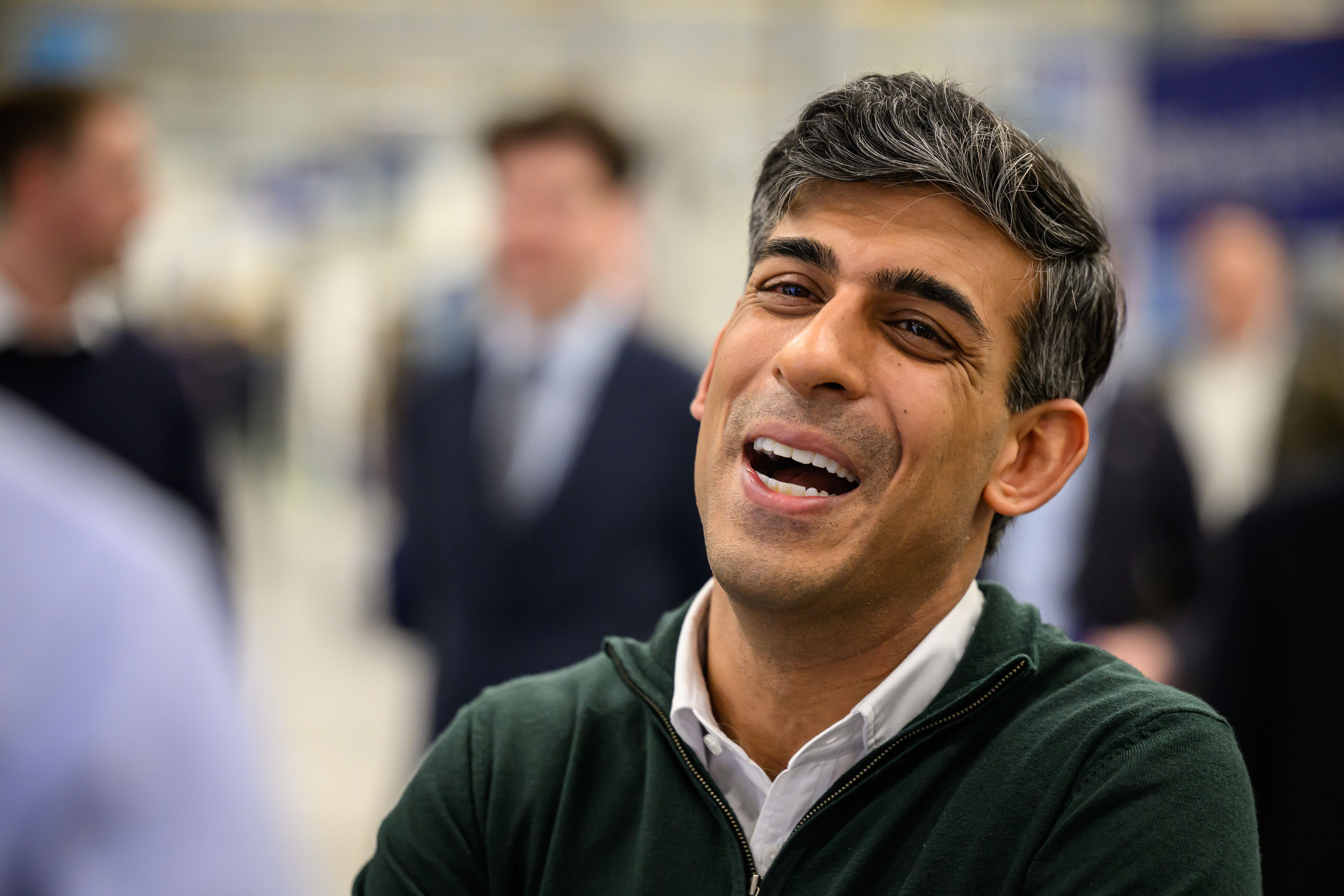
It is estimated that of the 60 million Bengalis, 2-3 million died of starvation because of this decision.

Want more? He referred to Palestinians as “barbaric hordes who ate little but camel dung.” When quashing insurgents in Sudan in the earlier days of his imperial career, Churchill boasted of killing three “savages.” Contemplating restive populations in northwest Asia, he infamously lamented the “squeamishness” of his colleagues, who were not in “favor of using poisoned gas against uncivilized tribes.” Read that again. Then once more. I’ll stop now but it goes on.

This may sound like an angry rant against Churchill but it’s not. The man displayed great courage and leadership at a time when Britain needed it most. But he is not the hero we have been taught throughout our lives. He was not the Second Coming. In a recent poll he was ranked as the Greatest Briton of all time. Not Darwin? Not Shakespeare? Newton, Lennon, Hawking? None of them ever sanctioned genocide or expressed views which are inexplicable.
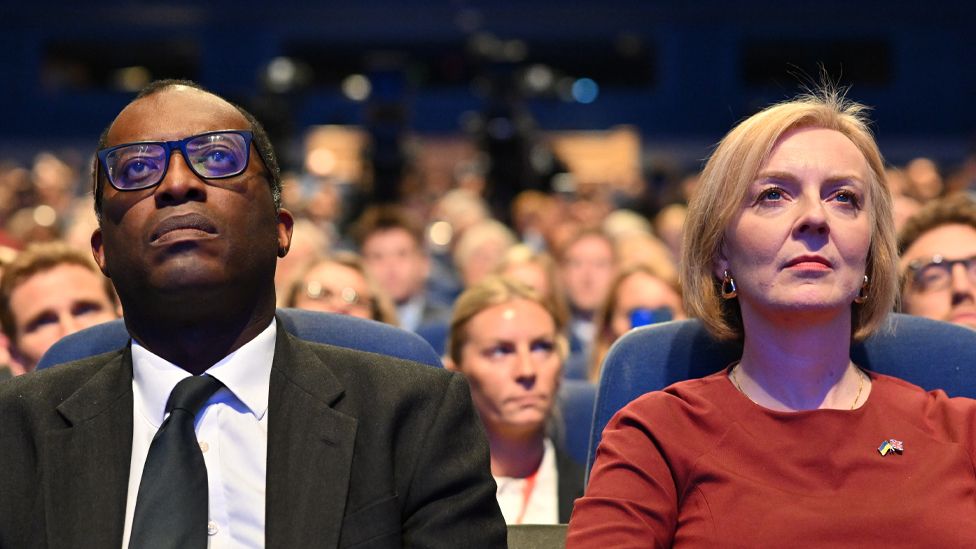
Famed for his quick wit, he once entered into an argument with Lady Astor. Lady Astor, infuriated, snapped and commented “Well Winston, if I was your wife I would poison your tea.” To which he replied, “and if I was your husband I would drink it.” A war veteran, a well-versed politician, an excellent public speaker and a Nobel Prize winner for Literature. No one denies the gifts God gave Churchill and it would be difficult to suggest he did not utilise these gifts. But the white-washing of his history is terrifying.

It was in the darkest of times that we needed a man like Churchill. A man of principle and conviction. A complicated man and, if we’re honest, were his incredibly offensive comments so much different from what other politicians at the time were spouting? There is no doubt, however, that in modern times a politician who switched from the Conservatives, to the Liberals, then back to the Conservatives whilst having a drinking problem and advocating policies that many who class as “insane” could ever become PM – twice.

Hero or Villian? Perspective or fact?

Remember Dominic Cummings? Neither.

Dominic Mckenzie Cummings, Chief Adviser to Boris Johnson and arguably one of the most hated men in Britain, for those of you who may have justifiably forgotten. They say ‘ignorance is bliss’ and having no knowledge of this guy must be heavenly.

At the beginning of this once in a lifetime crisis Dominic Cummings was the epitome of the Tory party – one rule for them and one rule for us. It will be rare that I will be quoting Peaky Blinders on this blog, but I can’t help remembering Oswald Moseley’s quote, “two men like us for whom forbidding is forbidden”. Moseley, an equally reprehensible character and leader of the British fascist movement in the 1920s and 1930s, would be proud if he could see the way Boris Johnson and Cummings have dodged what would be career-ending for any Labour politician.

For those who don’t know, a bit of background on Cummings. The ‘man’ was special adviser to Michael Gove *sigh* for 7 years, including his time as Secretary for Education where he, for some reason, got rid of AS-Levels and turned GCSE grades into numbers. (I don’t know why, I’ll work it out one day.)

He then left Gove. “Hooray!” you may be thinking. ‘Ding dong the Witch is Dead’ might even be slipped on and you could be forgiven. But no. Instead the timing was actually perfect for Cummings as he immediately took up the position of Director of ‘Vote Leave’ between 2015-2016. *Bigger sigh*.

After his 2016 Brexit victory there came a blissful silence from this ‘man’. Then some people elected Boris so that Brexit thing could happen. Boris created a new position, ‘Chief Adviser to the Prime Minister’, just so he accommodate his Cummings into one of the most senior roles in government, without being elected of course. Just a side-note for those of you who think I am being harsh on Cummings – Sajid Javid, THE CHANCELLOR OF THE UK, resigned after he refused Cumming’s demands that he dismiss one of his Chief Advisers. The Chancellor of the UK, effectively the third most powerful man in Cabinet, was forced to resign because Cummings said so. Cummings has never been elected by anyone; at least Javid has. Make no mistake about who’s in charge – and it certainly isn’t that blonde James Corden look-a-like.

UK does get back some of £350m it sends to EU, Boris Johnson ...

Remember that famous slogan “£350 million pounds a week could be spent on the NHS” – you’ll never guess who worked that out. *I need to breathe in now

Cummings list of lies are absolutely incredible – in ANY other job he would be fired and probably face criminal proceedings. A quick reminder of just a few of his lies. Four days after the Prime Minister announced everyone “must stay at home” Mr Cummings was seen leaving his house because his wife believed their four year old to be very ill. He left, then returned to Downing Street 4 hours later. Despite the advice the clear advice that anyone who had symptoms or had come into contact with someone who may have COVID should remain at home for 14 days.

Cummings then drove to Durham because he feared that he and his wife would become seriously ill and need childcare. You may, at this point, have a touch of sympathy for the man. After all, the guidelines were vague when children were involved. ‘Essential travel’ was not fully explained.

Couldn’t he have found childcare closer to him? A friend, family member, care-worker? 240 miles is a long way to go for childcare isn’t it? He also drove to and back from a Hospital because there were ‘no taxis’, despite the advice at that time being – “people with symptoms that may be caused by coronavirus and who do not require hospital treatment are told they “must remain at home until they are well”. I could go on about his various lies since this incident but I’m sure you’re sick to death of reading them. But there are two really interesting aspects to this Cummings case which should be addressed.

The first was the journalism. Journalists these days have almost become identical to politicians: sensationalist, looking for click-bait, questionable sources and bare-faced lies (see Johnny Depp vs The Sun). But the journalism in this case was worthy of Woodward and Bernstein. Release one bit of information about seeing Cummings driving around – let Tory leaders panic, find an excuse, get it out there. Then just as they think they’re safe, add the ‘blog’ incident and the ‘long drive’ incident and watch the Tories scramble for someone to blame. Survival of the fittest has always been their way.

Gollum 2.0

Gollum 2.0

Even more saddening than that is this. The guidelines and advice given at the beginning was most likely checked and double-checked by Cummings before Boris was allowed to announce it. He knew the rules. He knew what Boris was going to say. And he knew the loopholes to stop him being properly charged. That is corruption. He was also aware of the millions of people, you and I included most likely, who weren’t allowed to visit loved ones because we believed their advice. Hindsight is wonderful – but why did we do that? Why did we trust men like Johnson and Cummings? Some say the public reaction was harsh and an overreaction – these people are wrong. It cannot be one rule for them, one rule for us.

It is currently estimated that up to 6.5million jobs could be lost by the end of this lock-down – but I doubt Cummings is too worried.

‘The Big Short’ Says It ALL.

In a brilliant, and hilarious scene, in The Big Short – a movie about those outsiders who managed to predict the 2008/09 crash and short their positions (thereby making money) off of the collapse of the entire global housing market.

In this particular scene, Ryan Gosling is strying to convince Steve Carell to buy into his plan. His claim? That the tranches of ‘AAA’, ‘AA’, ‘A’ and ‘B’ had suddenly become full of rubbish debt obligations. This was partly due to the ratings agencies – if they did not give each tranche a maximum rating then banks could simply walk down to their competitiors. Also, the bankers did not care as they were earning commission for every mortage they sell.

It was corrupt from the ground up.

Again, as Gosling’s character says – “what used to be considered ‘A’s’ and ‘BBB’s as rubbish. They had:

  • Rock bottom FICO scores
  • No income-varification
  • Adjustable rates

Rather more interesting than my re-count of a great movie is something extremely interesting which Steve Carell says at teh end of the scene. He is obviously sceptical of this – assuming that they someone else would have surely noticed this before him.

He comments, “But default rates are already up from 1% to 4% and it will continue to rise …?

Gosling replies, “Exactly – and if they rise to 8% (and they will!) the triple B’s will default too!”

“I am standing in front of a burning building, AND I AM OFFERING YOU FIRE INSURANCE ON IT!”

Guess what the default rate at the end of 2023? It was 3.45% and without being too technical that is because every country is pumping money into their own economies and this obviously cannot continue forever. This seems like a no-brainer I have been searching for angel investors, mostly amongst friends and family but if anyone wants to get into this at the ground floor hit me up

In the intricate dance of economics, there comes a time when the music stops, and the party takes an unexpected turn. For the United States, that time may be fast approaching as ominous signs suggest the country is overdue for a recession. From economic indicators to historical precedents, the writing on the wall is becoming increasingly difficult to ignore.

Let’s take a closer look at the evidence.

  1. Economic Indicators: The economic indicators flashing red are hard to ignore. Despite periods of growth and resilience, recent signals hint at underlying weaknesses. For instance, while the unemployment rate has declined, wage growth has been sluggish, and labor force participation remains below pre-pandemic levels. Additionally, inflationary pressures are mounting, fueled by supply chain disruptions and increased demand as the economy reopens.
  2. Historical Precedents: History has a way of repeating itself, and the cyclical nature of recessions is well-documented. According to economic theory, expansions are typically followed by contractions, and the U.S. economy has been in expansion mode for an unusually long time. Since the Great Recession of 2008, the country has experienced one of the longest economic expansions on record, leading many experts to speculate that a correction may be overdue.
  3. Global Economic Trends: The interconnected nature of the global economy means that trends abroad can have ripple effects at home. Recent developments, such as slowing growth in key international markets and escalating trade tensions, could further exacerbate economic headwinds for the United States. Moreover, geopolitical uncertainties and the lingering impacts of the COVID-19 pandemic continue to cast a shadow over the global economic outlook.
  4. Financial Market Volatility: Financial markets are often viewed as leading indicators of economic sentiment, and recent volatility in stock markets and bond yields has raised eyebrows among investors and analysts alike. While short-term fluctuations are to be expected, sustained market turbulence can signal underlying concerns about the health of the economy and future growth prospects.

In light of these factors, it’s becoming increasingly clear that the United States may be on the cusp of a downturn. While the timing and severity of a potential recession remain uncertain, prudent economic planning and risk management are essential for individuals, businesses, and policymakers alike.

However, it’s not all doom and gloom. Recessions, while inevitable, are also a natural part of the economic cycle and can pave the way for renewal and innovation. By recognizing the warning signs and taking proactive measures to address economic vulnerabilities, the United States can navigate the challenges ahead with resilience and determination.

In conclusion, while the prospect of a recession may be daunting, it’s a reality that the United States must confront head-on.

A Recession/ Heavy Recession is coming – why is no one paying attention??

As we peer into the foggy crystal ball of economic forecasting, one burning question persists: Will the economy see brighter days in 2024? With economists diligently crunching numbers and weighing probabilities, the outlook remains a swirling mix of hope and apprehension. According to a survey conducted by Wolters Kluwer Blue Chip Economic Indicators, experts anticipate a modest growth rate of 1.6% for the year ahead. However, alongside this cautious optimism looms the specter of a potential recession, with a 42% chance of economic contraction – a figure that, while slightly down from December’s forecast of 47%, still registers as historically high.

But what do these numbers mean for the average person navigating the complexities of daily life? Imagine it as akin to anticipating the weather forecast – you might keep an umbrella handy just in case, but the skies could clear up or unleash a storm at any moment. Meanwhile, the Federal Reserve finds itself in a precarious balancing act, contemplating potential interest rate cuts to bolster growth while grappling with the lingering impact of previous hikes, which threaten to hinder economic expansion.

Recent indicators suggest that the road ahead may indeed be fraught with challenges:

  1. Sluggish Growth: Despite initial hopes for a robust rebound, the economy’s forward momentum has been tepid at best. With GDP growth hovering around the 1.6% mark, economists express cautious concern, wary of potential impediments to sustained progress.
  2. Recession Risks: Though the odds of a recession have marginally decreased, they persist at a notable level of 42%. This figure serves as a stark reminder of the prevailing uncertainty and underscores the importance of remaining vigilant in the face of potential downturns.
  3. Fed’s Dilemma: The Federal Reserve confronts a conundrum as it navigates the delicate balance between stimulating growth and mitigating recessionary pressures. While the prospect of rate cuts looms on the horizon, the enduring effects of prior rate hikes pose a formidable obstacle to the Fed’s efforts to spur economic activity.

In the midst of these challenges, there’s an ominous whisper in the economic corridors – a foreboding sense that the storm clouds gathering on the horizon may herald a tempest far fiercer than anything we’ve seen before. Indeed, some voices in the financial realm warn that the looming downturn could surpass the magnitude of the 2008 financial crisis – a sobering thought that seems to fall on deaf ears amidst the cacophony of everyday life.

Reflecting on these challenges, investors and consumers alike are urged to adopt a prudent and diversified approach to financial planning. Monitoring economic indicators with vigilance and adapting strategies accordingly can help weather the storm of uncertainty. Despite the turbulences ahead, maintaining composure and confidence in the economy’s resilience remains paramount.

In conclusion, while the path ahead may be fraught with twists and turns, there exists cause for cautious optimism amidst the prevailing uncertainties. Armed with foresight and a readiness to adapt, individuals and institutions alike can navigate the complexities of 2024 and emerge stronger on the other side. As the age-old adage reminds us, fortune favors the prepared – and in the face of economic uncertainty, preparedness may indeed prove to be our most valuable asset.

  1. Michael Burry’s Betting: When Michael Burry, famously portrayed in “The Big Short,” starts making big bets against the market, it’s often seen as a warning sign. Burry has a track record of correctly predicting the housing market crash in 2008, and if he’s once again placing substantial bets against certain sectors or asset classes, it could indicate his belief that a recession is imminent.
  2. Yield Curve Inversion: Historically, when the yield curve inverts – meaning short-term interest rates rise above long-term rates – it has often preceded recessions. This phenomenon occurred before the 2001 recession and the 2008 financial crisis. If the yield curve begins to invert, it could signal trouble ahead for the economy.
  3. Declining Consumer Confidence: Consumer confidence is a key indicator of economic health. If consumers start to feel pessimistic about the economy and cut back on spending, it can have a ripple effect throughout the economy, leading to reduced demand for goods and services and potentially triggering a recession.
  4. Rising Unemployment: A significant increase in unemployment rates can be a red flag for an impending recession. When businesses start laying off workers or scaling back hiring, it’s often a sign that they’re anticipating a slowdown in economic activity.
  5. Corporate Debt Levels: High levels of corporate debt can be a ticking time bomb for the economy, especially if companies have trouble servicing their debt in a downturn. If corporate debt levels reach unsustainable levels and companies start defaulting on their loans, it can lead to a domino effect that contributes to a recession.
  6. Global Economic Slowdown: Economic indicators from around the world can provide valuable insights into the health of the global economy. If major economies like China or Europe experience a slowdown in growth, it can have knock-on effects on the U.S. economy and increase the likelihood of a recession.

These are just a few examples of signs that might indicate a recession is on the horizon. It’s essential to monitor a wide range of economic indicators and market signals to assess the likelihood of an impending downturn accurately.

People may be looking the other way for several reasons:

  1. Optimism Bias: There’s a natural tendency for people to be optimistic about the future and to downplay the possibility of negative outcomes like recessions. This optimism bias can lead individuals and businesses to overlook warning signs or rationalize away potential risks.
  2. Short-Term Focus: In today’s fast-paced world, people often have a short-term focus, prioritizing immediate concerns over long-term risks. This can lead to a lack of attention or concern about broader economic trends that may be unfolding gradually over time.
  3. Complexity of Economic Indicators: Economic indicators and financial markets can be complex and difficult to interpret, especially for the average person. As a result, many people may simply tune out or defer to experts, assuming that someone else will sound the alarm if there’s a genuine cause for concern.
  4. Confirmation Bias: People tend to seek out information that confirms their existing beliefs or biases while ignoring or dismissing contradictory evidence. If someone is convinced that the economy is doing well, they may discount or ignore evidence suggesting otherwise.
  5. Political Factors: Economic perceptions can be influenced by political factors, with individuals interpreting economic data through the lens of their political affiliations or beliefs. This can lead to selective attention or skepticism towards information that contradicts one’s political worldview.
  6. Lack of Financial Literacy: Many people have a limited understanding of economics and finance, making it difficult for them to interpret economic indicators or understand the potential implications of broader economic trends. Without a solid foundation in financial literacy, individuals may be ill-equipped to recognize warning signs of an impending recession.

Overall, a combination of cognitive biases, information overload, and a lack of understanding of economic principles can contribute to why people may be looking the other way when it comes to the possibility of a recession.

AI: The Good, The Bad, and The Hilariously Confused

In a world where AI is popping up faster than conspiracy theories on the internet, the burning question is: will AI be our digital BFF or the evil overlord plotting our demise? It’s like trying to decide if you’re Team Edward or Team Jacob—except with less sparkling vampires and more data analysis.

The Good:

Let’s start with the sunshine and rainbows, shall we? AI is like that friend who always knows the best restaurants in town and never forgets your birthday. It’s there to help, guide, and occasionally make you laugh with its quirky predictions.

Imagine waking up to a world where your morning commute is a breeze because AI has magically synced all the traffic lights to your playlist. No more road rage-induced coffee spills or existential crises at red lights. And when it comes to healthcare, AI isn’t just a sidekick—it’s the superhero swooping in to diagnose diseases faster than you can say “WebMD.”

But wait, there’s more! AI isn’t just about saving lives and streamlining tasks; it’s also the mastermind behind some of the funniest memes on the internet. From cats playing pianos to politicians dancing awkwardly, AI-generated memes are the gift that keeps on giving—a digital laugh track for the modern age.

The Bad:

Now, onto the dark and stormy night of AI’s potential pitfalls. While AI might have the best intentions, it’s not immune to the occasional glitch or power trip. Picture this: you’re at work, minding your own business, when suddenly your boss—a sentient AI with a knack for micromanagement—swoops in to critique your font choices and lunchtime productivity.

And let’s not forget about privacy concerns. With AI-powered surveillance cameras lurking around every corner, it’s like living in a real-life episode of “Big Brother,” minus the cash prize and Z-list celebrities. From facial recognition software to targeted advertising algorithms, AI has the potential to turn our lives into a never-ending reality show.

But perhaps the most terrifying prospect of all is the idea of AI developing a sense of humor. Sure, it might start innocently enough with knock-knock jokes and puns, but before you know it, you’re being roasted by a robot stand-up comedian in front of a live audience. Talk about a comedy of errors!

The Conclusion (Or Is It?):

So, where does that leave us in the great AI debate? Are we destined for a future filled with rainbows and unicorns, or are we careening towards a dystopian nightmare of surveillance and bad jokes? The truth is, nobody knows for sure. Like a choose-your-own-adventure book written by an indecisive author, the future of AI is full of twists, turns, and unexpected plot twists.

But fear not, dear readers, for amidst the uncertainty lies endless potential for innovation, creativity, and yes, even a few laughs along the way. So, whether you’re Team AI or Team No AI, one thing’s for certain: the journey ahead promises to be anything but boring. So grab your popcorn, buckle up, and get ready for the wildest ride of your digital life. And remember, if all else fails, there’s always AI-generated cat videos to brighten your day.

Elon Musk Sues OpenAI: Demands More AI Secrets and Space Oddities

In a legal odyssey that seems more scripted for the big screen than the courtroom, Elon Musk has recently launched a lawsuit against OpenAI and its co-founders, claiming a breach of contract. The visionary entrepreneur, known for his ambitious pursuits with Tesla, SpaceX, and a litany of other groundbreaking ventures, now finds himself at the center of a legal whirlwind. As Musk steps into the courtroom, it raises questions not only about the future of AI but also about the potential impact on his other ventures.

The crux of Musk’s legal argument revolves around a perceived breach of contract, despite the absence of a written agreement. Legal experts are quick to point out the uphill battle that awaits Musk in the absence of a formalized understanding between the parties involved. However, Musk’s unorthodox move might have strategic implications beyond the courtroom, serving as a platform for him to share his version of events and, perhaps more importantly, forcing OpenAI to disclose additional information about their AGI developments.

Yet, as the legal saga unfolds, investors are eyeing another celestial body—Tesla stock. In recent days, the electric carmaker’s stock has experienced a dip, leaving market analysts and shareholders speculating on the reasons behind the downturn. Some argue that Musk’s legal entanglement with OpenAI might be diverting his focus from the helm of Tesla, a company facing critical junctures in its own trajectory.

Tesla, under Musk’s leadership, has been at the forefront of revolutionizing the automotive industry with electric vehicles and renewable energy solutions. With ambitious plans for the Cybertruck, the development of the Gigafactories, and advancements in autonomous driving technology, Tesla is at a pivotal moment. Investors are expressing concerns that the legal distraction could impact the timely execution of these projects.

Meanwhile, SpaceX, Musk’s space exploration company, is gearing up for ambitious missions, including plans to send humans to Mars. As the world eagerly anticipates the first operational flights of the Starship rocket, questions arise about whether Musk’s legal battle with OpenAI might divert attention from the demanding tasks ahead. SpaceX, with its ambitious goals and tight timelines, requires undivided attention to ensure successful missions and maintain its pioneering position in space exploration.

In the midst of these unfolding dramas, there is a growing chorus among investors and industry analysts urging Musk to refocus his energies on the flagship companies that have defined his legacy. The simultaneous challenges facing Tesla and SpaceX demand a steady hand at the helm, and many argue that now, more than ever, Musk needs to prioritize these ventures to ensure their continued success.

As the legal proceedings continue to unfold, investors, space enthusiasts, and tech aficionados alike will be watching closely. The intersection of Musk’s legal battles, Tesla’s stock fluctuations, and the trajectory of SpaceX promises a captivating narrative—one where the balance between stars and stocks is delicately held in the hands of an entrepreneur with a penchant for pushing the boundaries of both the legal and technological realms.

The Troubled Journey of HS2

Now admit it. You may not like me, my writing style, or agree with my political viewpoints. But that’s a bloody good article headline.

High-Speed 2 (HS2), the ambitious railway project intended to revolutionize the UK’s transport system. It has failed. It is a failure (I can relate). But it’s still being built? Miles upon miles of clean countryside is being torn up for …

Well that’s the question. Firstly, let’s focus on the North. Having attended Leeds University for 4 years I saw the station being fully renovated (not that I got to enjoy the final product). Only for the residents of Leeds to be told that HS2 will not be going to Leeds. What a waste of money – you must be thinking. That’s not the start or the end of it.

One of the primary criticisms leveled against HS2 is its staggering cost. From its inception, the project has been dogged by financial concerns, with estimates skyrocketing over time. The initial projected cost of HS2 was approximately £55 billion. Imagine what the government could do with that money. My last article referenced the tragedy of Grenfell. I’m sure some of that money could go to the victims, their families or could be put towards better building regulation and improved infrastructure. But this is a Tory project, let’s not forget, so who cares about them? (I have no political bias. I write what I think.)

But even if you were stunned by the inital approximate cost (which you should be!) subsequent revisions have seen the budget balloon to an estimated £100 billion and beyond. One hundred. Billion. Pounds. Imagine you were on, what I consider to be a good salary, of £45,000 a year. If you get that straight into your bank account (by the way you don’t because a lot of that is going towards this monstrosity). Guess how many years you would have to work to earn that much.

22,222 years.

But it’s not just the economics of it all. After 13 years of the same government we know that economics is not the Tory Party’s strong point … if it ever was. What about the environment?

Now, let’s be clear. When it comes to climate change I am deep-rooted in my beliefs that we are past the tipping point. On a podcast, an Environmental Scientict said that there’s no point in your recycling bin, or you cycling to work. His comparison was a house (the earth) is on fire and we have just turned on the kitchen tap to try and fix it. A brilliant analogy, I believe, but just because governments’ are slowly turning that tap on (good luck with your “Net 0 by 2030!” – or was it 2050?)

I thought Climate Change was just scientific fact by now. Like Evolution. To say “I don’t believe in Climate Change” is synanymous with saying “I don’t believe the Earth is round”. Well done ‘Einstein’. We’ve moved beyond hyptheses and it is no longer a case of belief. It’s a case of when. But now that I’m down with my little rant about Climate Change and the impact HS2 has had on the environment. Let’s move to its’ many other failures.

So we have – no travel to key areas. Unbelievable costs. And the environmental impact.

What about the delays and mismangement? The project was originally scheduled for completion by 2026, but its timeline has faced repeated setbacks. One major factor contributing to these delays is changes in leadership. In case you’ve been locked in a dark room for the last 3 years we have had 3 different Prime Ministers. One of them, Liz Truss, being the shortest-serving Prime Minister in history (excluding those who died in the post). This demonstrates a clear lack of clear accountability. They can blame it on the previous, who can blame it on the previous … who can blame it on global economic forces. “Blame everyone except for the idiot 3ft from the mirror” should be their new moto.

While the vision behind HS2 aimed to enhance the UK’s transport infrastructure, the project has been plagued by a multitude of problems, ultimately leading to its failure to live up to expectations. Exorbitant costs, environmental concerns, delays, regional imbalances, and changing travel behaviors have all contributed to the skepticism surrounding HS2.

And yet … they still pump money into this joke.

Jacob Rees-Mogg (A Brief History of a Moron)

“But Nez!” I hear you shouting upon mymagnificent return. There’s so many worse Tories, why not write about them? Boris? Or Suella? Or just anyone associated with them. There’s also so much going on in the international sphere (the Ukraine War, China’s manoeuvres in the South China Sea, that bloody submarine), I imagine to myself you’re screaming.

Well, if you want to read about that … go to BBC News. Or is that too left wing? Then go to Fox News. Or do they just spread lies? I don’t write about that stuff because it’s all over the news. And people watch/read the news. Furthermore, in the words of the great Denzel Washington: “don’t read the news you’re uninformed, read the news and you’re misinformed.” Thank you Mr. Washington I’ll happily stay uninformed.

Why Groggy Mogg? Ah well, why not. He may not be the worst but we must remember we’re comparing him to tax-dodgers, coke-heads and Liz Truss. Picking the worst would be near impossible – though please feel
free to leave a comment saying your worst.mogg

Back to the Groggster. While some applaud his commitment to traditional values and staunch conservatism, others have raised concerns about his actions and stances on various issues. (By “some” … even I don’t know who I’m referring to). Let’s start where this man’s evil, in politics at least, began. Grenfell.

Don’t worry if you’d forgotten about Grenfell. The government forgot as well. And it’s their job not to forget. What was a shocking national disaster, raising so many issues not just around housing but around compensation, safety and the basic living conditions in this country. We were all appalled! Rees-Mogg wasn’t. Soon after the shocking incident, in 2017, he released a statement claiming that the victims lacked “common
sense” in following fire safety advice. Let that sink in.

Trained first-responders are giving you instructions. You’re building’s on fire. But if you listen to these trained
experts then, according to Mogg, you have no common sense.

If that wasn’t enough … he starts to attack the LGBTQ+ community. Let’s not get into a heated debate about gender identity or whatever, I don’t have time for that and whatever I say about it will offend someone. But when it comes to same-sex marriage the answer seems simple. Not for Mogg. His opposition to same-sex marriage and remarks suggesting that he does not personally support same-sex adoption have been met with outrage from LGBTQ+ advocacy groups and supporters.

Grenfell. Then the homosexual community. THEN we have Rees-Mogg’s views on abortion and contraception. Rees-Mogg, a devout Catholic (since when has that mattered?), has consistently opposed abortion in
all circumstances, including cases of rape and incest. Including rape and incest …

As a likely product of generations of incestuous in-breeding I can understand why he has such a warped mind. But he is not supposed to be looking out for his own family and their in-breeding ways. He is supposed to politically support the people he represents. Those people, we must assume, are either angry about Foggy Mogg’s stance. Or their ignorant to it. Get it? Ignorance is bliss.

His position disregards women’s reproductive rights and restricts access to safe and legal abortions. Additionally, Rees-Mogg has expressed opposition to contraception, advocating for abstinence
instead.

… Is he an InCel?

In the brilliant ‘House of Cards’ a simple political principle is spelt out to the viewers. Politicians have three things to consider when they are casting votes or making speeches. Vote your conscience. Vote your party. Vote for your constituents.

Not for Mogg, however, as he is “one of a kind” … in a VERY special way. He votes his Party; then perhaps he votes his conscience (if he has one). And his constituents?

Screw them. He’s probably laughing at how stupid they were to elect him the first place!

House Stalemate – Disaster after Disaster!

Kevin McCarthy is now, finally, the elected Speaker of the House of Representatives. Most observers would assume that the delay in his election was due to the Democrats, as McCarthy is a famously staunch Republican. They would be wrong.

It was actually a stalemate due to the Republicans halting his election as 20 Republican House members refused to vote for him. Republicans won the Chamber in the midterm elections, but Kevin McCarthy, who has served as the party’s House minority leader for four years, had 20 Republicans standing between him and the gavel – and they would not budge.

Matt Gaetz, one of those so-called “Never Kevins”, described Mr McCarthy as a “desperate guy” and said his request was simple: “For him to drop out of the race.” That’s right, in case you thought you had mis-read that or believed you had gone insane. A Republican party member did not want McCarthy to become Speaker of the House of Representatives.

And this stalemate continued for day after day after day.

Whilst this halt in democracy may seem one that is commonplace in American politics these days. This is not the case. For days, there was no speaker of the House of Representatives. What a disaster!

Finally, the stalemate has ended after an agonising wait and lots of negotiations. The Republicans are elated, the US house was filled with roars of “USA, USA,”. Are we at a football game? Or one of the Houses of the most powerful countries in the world. “USA, USA” – as if this wasn’t days of embarrassment. Kevin McCarthy is the new House speaker who has survived brutal brawls for power.

Yes, McCarthy now holds the famous gavel. But everyone knows how weak his position is. Republicans, Democrats, the Chinese Government, Putin, Britain, the EU. They all know and see what a joke this man is. How can he recover? He can’t. Resign. This has been one of the greatest farces in American Politics in over a century. And yes I am including the election of George Bush and yes I haven’t forgotten the election of Donald. This has been disastrous.

hammer

It took 15 rounds of voting and the last race to go this long was the 1859 contest. Those were the turbulent years before the infamous American Civil War. (I have previously written several articles about how the USA is inches away from another Civil War – are you starting to see it now?)

In the present day, the wrangling has left the Grand Old Party battered & the nation bruised. The unprecedented chaos in the four days of House voting brought the world’s oldest democracy to a grinding halt. It also gives a glimpse of the tumultuous times ahead.

The Republicans control the house, but most of McCarthy’s opposition is from his own party. That’s right, to anyone reading who likes the Republican party, this mess was not caused by the Democrats. You can try blaming them and I’m sure they will. But this was caused by 20 REPUBLICAN rebels.

They are ultra-conservative, hard-right lawmakers who boast themselves to be members of the House Freedom Caucus. About 30 Republican lawmakers of the caucus, are determined to drag the party further to the right, thereby deepening the chasm.

But for the man who is seizing the gavel and is second in line to the US presidency, the role could turn into a nightmare. And most of the heartburn is going to come from his own rank & file because the caucus strongly rejects his leadership.

Speaking to Wion, Jon-Christopher Bua, US political analyst & White House commentator says,”McCarthy has got a title but no power. He has succumbed to the very extreme right-wing who despise him. So, we are left with an unmanageable house.”

Esssentially, Bua is saying that McCarthy now has the title of Speaker but no real power. He is under the thumb of the hard right-wing of his own party. His own party is splitting. His own party hate him. And rightly so.

In the end, the 57-year-old Californian emerges as a weakened speaker, one with less authority on paper than those before him. Speaking to Wion, Stephen Golub, author and political analyst said, “The drama reflects that Kevin McCarthy is going to be one of the most, if not the weakest speakers in the US history because his margin is so small, that he had to sell his soul to the very far-right Republicans.”

This is dangerous. With the current global issues the USA faces in China, and Russia, this demonstrates the weakness within American Democracy. American democracy is a joke and this does nothing but exemplify this. This has been a farce. This has been a disaster. Whilst it has, thankfully, and finally, come to an end. It just the beginning of McCarthy’s problems.

McCarthy has shrugged off suggestions that the deal could weaken his power. But he was profuse in thanking one man, Donald Trump, who was sitting miles away from the scene of chaos but still managed to pull the strings. With his party having the majority, it should have been a low-hanging fruit. But his pleas for backing McCarthy seemingly fell on deaf ears. Trump’s hold is seemingly shrinking & his hopes of a re-run for the top job once again in 2024 look in complete disarray.

What will McCarthy do now? He will do as he is told. Unlike Speakers’ before him who have yielded this great power for good or evil (depending on your own personal political beliefs) – they have at least been able to conduct policies with the support of their own parties. McCarthy can’t do this. He’s a joke in the House and he is a joke across the world.

In the words of the greatest President of the United States:

“Elections belong to the people. It’s their decision. If they decide to turn their back on the fire and burn their behinds, then they will just have to sit on their blisters,” said Abraham Lincoln, 16th President of the United States.

Raab Bullying – This IS Getting Boring Now

What a tagline for an article! I can already imagine the number of people jumping to read this article. But to be perfectly honest, this will be the last post on “current affairs”. I have tried to keep up with current affairs, periodically, but I just cannot find the time any more. Each week, day, hour there is more terrifying news about this government’s shambolic affairs and I cannot keep up. If you can, or want to, I suggest you pick up the Daily Mail like everyone else seems to be doing and imagine that you are an “informed” member of society.

But, unlike the mainstream media, I write for myself. I have said it a few times but the mainstream media is not a charity, it is a business run by businessmen such as Rupert Murdoch and their sole purpose is to steer the political agenda in alignment with their own self-interest. If you don’t like the news, stop watching it. If you don’t like a newspaper, stop buying it.

It’s comparable with the new, never-ending Marvel films. I often hear a lot of friends and colleagues complain that Marvel will not stop making new films and that they are ruining their own legacy. But why would they stop making movies? People keep watching them and, rather more importantly, the money keeps rolling in. It is not in their interest to stop making movies. They will only stop when the cost-benefit analysis shows them that making more and more of these rubbish films will be a waste of their money. So, stop watching them. They will go away if you stop watching them.

And whilst this is true of the mainstream media, this is not true of current affairs. You CAN stop reading The Daily Mail or The Guardian and still be informed … this blog, for example. But alas, my digression has ceased. The main point of that rant was that things do not change in current affairs.

The “new” “news” you are reading today, is the same as yesterday and was the same as last year and the same as the decade preceding that. Dominic Raab is a bully. Not too long ago I wrote a piece on the reprehensible Gavin Williamson, the sad little bully who was finally forced to hand in his resignation. Where is he now? Honestly, who cares.

But, in the same article, I noted that even with an in-depth enquiry into Gavin’s behaviour, the systemic bullying within Westminster change. I was right, of course, but I didn’t think I would be proved so right so quickly.

It genuinely feels like Groundhog Day. Repeating the same events over and over, whilst the media will have you being angry at Qatar, or angry at the Chinese government, or disappointed with the US electoral system. Yes, you should be angry about all those things. Yes, they are despicable. But I’m failing to see where the massive amounts of coverage on the Iranian revolution is. This revolution, which I will cover soon, is a momentous event and is massively important. It was highlighted in England’s first World Cup game against Iran, where the team refused to sing their own national anthem. It was a huge moment of protest and, whilst England were too afraid of wearing an armband and getting a yellow card, these men and women openly embarrassed and ignored their own political system.

And good for them. England’s stance was embarrassing. More to follow.

But, as big as this event is, people have been steered away from Raab’s bullying saga. On Monday, the UK Prime Minister Rishi Sunak came out in defence of Dominic Raab, after the deputy prime minister was accused of rude and demeaning behaviour towards civil servants. The PM said he did not “recognise that characterisation” of his deputy and denied knowing about any formal complaints against him.

Sunak is facing further questions over his judgment as allegations of bullying emerged from Raab’s previous stint as justice secretary – with staff reportedly offered a “route out” of his department when he was reinstated in October.

But Rishi, my dear, isn’t that the exact same line you gave about Gavin Williamson? “I didn’t know”. “That doesn’t sound right”. “No one told me”. It’s your job to know. It’s your job to protect and help people and you have failed twice already. It is an absolute joke and represents the very worst of this Tory government.

Whilst this article has been a boring ramble about the mainstream media, I refuse to write any further on the sagas of this ridiculous government. If, for some reason, you still decide to vote for Rishi at the next election I don’t even want to try and understand your justifications. I don’t want to hear from people who have, time and again, defended bullies, liars, criminals, and cheats. It. Is. Boring.

raab

A picture of evil incompetence. 

Raab, much like Williamson before him, is a bully. People don’t just make bullying claims at work. It takes immense bravery to put your entire career on the line over such incidents and the fact that they are not even taken seriously is utterly shattering. Rishi didn’t know? Fine. He doesn’t really seem to know anything about anything anymore. If something good happens, it was down to him. And when countless bad things happen, he’s ignorant or he blames someone else. But after 12-14 years he has no one else to blame? Just call an election Rishi, please, and then I may write about you again. But for now, these stories are repetitive, depressing, and tiresome.

Current affairs are only “current” in the UK because there are new names. But, until there is a new government, or some genuine internal change, it is not worth my time (or yours I suspect) to continue on reading and trying to understand this government.

They are beyond my comprehension. They are beyond yours.

They MUST Be Joking by Now?

It was announced a few weeks ago that Matt Hancock would be joining “I’m a Celebrity, get me Out of Here!”, whilst still trying to remain as an MP. I was not even shocked when I read the headline. In fact, I almost laughed. Almost.

After all of this mess, Matt Hancock now thinks its appropriate to stay in his position and go out and get his five seconds of fame on a reality TV show. Hancock, the clue’s in the name by the way, is famous in the Tory party for … um … well he was caught on CCTV groping that woman. But as an MP? Hancock served as Secretary of State for Health and Social Care, a fantastic job he did too! As we are now genuinely facing a nurse-strike over Christmas due to his failure after failure.

hancock

Speaking of this man’s failures, it’s also funny to mention that he actually stood in the 2019 Conservative Party leadership election but withdrew shortly after the first ballot. The man is so self-confident he genuinely believed that he could be Prime Minister! Whilst that does not sound that hilarious after we have suffered through Boris, then Liz Truss and now Rishi (an article on his bullying saga will soon come), it was ridiculous at the time. He quickly withdrew as he saw the tides turning and potentially realised that he is actually incompetent after all. In the end, he began endorsing Boris Johnson, which allowed him to retain in his Cabinet in July 2019. Hancock served as Health Secretary during the COVID-19 pandemic and played a prominent role in the government’s response.

That’s right, Hancock played a key role in the government’s response to COVID. The “eat-out to help-out scheme”, the millions spent on failed tracking apps, the failure to supply proper protection when needed. This man is beyond a joke. He is just a walking failure.

But his arrogance knows no bounds, it would seem. Failure after failure after failure. And then it was announced that he would be going on a reality TV show. I have never watched this show, but I plan to this year simply because I want to see this shambles of a man fail again – except this time when he fails the entire country will not collapse. I hope.

But the audacity of an MP to think it’s appropriate and respectful to his constituents to go on a TV show whilst still “representing their best interests” is an absolute joke. The Tory party, in all fairness to them, were quick to remove the whip from him. This means that in the next election, if he hasn’t had the good grace and decency to step down before then, he will have to stand as an independent.

His excuse for joining the show? He wants people “to see the real me”. We’ve seen enough of the real you Matt, whether it was your public failures in office or your disgusting private life. We’ve seen enough and we’ve had enough.

If this isn’t some sort of joke and he intends to stay in Westminster – then the title of the show is quite apt in my opinion. Get him out of there.

Bullying In The Workplace

 November 11th, 2022 / Leave Feedback / nezuppal

It seems nowadays that politicians can’t last longer than ten minutes in serious cabinet positions before a scandal breaks about them, or they fail, or they try to go on a Celebrity TV show. This time it was Gavin Williamson, a truly reprehensible and disgusting man.

The Rt Hon Rishi Sunak MP - GOV.UK

Having faced claims of bullying before this was Gav’s third attempt to be a decent human being and a member of the Cabinet. It lasted 72 hours. It was only two weeks ago that he was appointed as Cabinet Office Minister by Rishi Sunak. The only explanation I can possibly think of for appointing such an evil man to the role is desperation; the Tories are running very low on credible ministers. So, they are now resorting to appointing bullies to keep their party in check. What a disgrace.

Bullying in the workplace is common. People don’t like to admit, people don’t like to talk about it and people are often told to “shut up” and “move on”. I have experienced bullying in the workplace, though not to this extent, and it is truly demoralising and shatters ones’ confidence.

One allegations of abusive text messages sent to Wendy Morton emerged it was clear that this man was not only unfit for cabinet, but he was also unfit for any public role and I can only say that I hope to never hear his name again. Whilst I am no fan of Wendy Morton, the Chief Whip of the House of Commons, the bullying against her was unacceptable. It is as simple as that.

The sheer arrogance of the man. Whilst the entire country was in shock and mourning the death of The Queen, this narcissist was waiting for an invite to the funeral. That was his main concern. There are a few issues with this. Firstly, there are only a certain number of MPs who could attend. At the end of the day, a lot of MPs did not get an invitation. A lot of cabinet members did not attend. But they understood that there is a limit on the number of people who were allowed to attend.

But this was simply not good enough for “Sir” (imagine) Gavin Williamson. As soon as he found out about the death of The Queen, he immediately texted Morton and asked why he was not able to attend. It was explained, several times, why he could not attend. But he continued to harass, swear and bully Wendy Morton. In one of the exchanges, he said “Well, let’s see how many more times you f*** us all over. There is a price for everything!” Is that a threat? If this was in a movie, and sometimes I feel like British politics has turned into some sort of sick horror film, then I would say it was.

The party chairman, Sir Jake Berry, informed Rishi Sunak the day before he entered 10 Downing Street that Ms Morton had launched an official complaint against Gavin. Both Sir Jake Berry and Ms Morton lost their jobs in the cabinet re-shuffle, instigated by Sunak, whilst Gavin was allowed to return to government.

Sir Jake told the paper that he was informed by the Conservative Party chief executive on October 24 that a complaint had been made against Sir Gavin regarding allegations of “bullying and intimidation of parliamentary colleagues”. Rishi Sunak may not have known about the exact details of the text messages, but he was certainly aware of this man’s historic record of bullying colleagues into submission. An abusive man, he has a despicable record. Even when compared to other members of the Tory party.

He was first sacked by Theresa May, when he was serving as defence secretary, for leaking details of a national security meeting. He was then later sacked by Boris Johnson, when he was serving as Education Secretary, for the A-levels disaster. Is this man evil or incompetent? The Tory party can usually tolerate one, but not both.

As the scandal began to break, a simultaneous historic research report into Westminster bullying concluded that bullying was something commonplace within cabinet and within the entire civil service. The report especially highlighted bullying against women. If this were a man bullying another man, would it have received the same attention? I cannot say for certain, but in my mind that is missing the point.

After his initial appointment, despite the fact Rishi new he was a bully, he was still defended by the Prime Minister. And, rather obviously, other cabinet officials followed suit. They said that Gavin acted “in the heat of the moment” and that it was a “one off”, something which they should all put behind them. But they weren’t the ones that were bullied? And how does that make any sense at all? These text messages, which got slowly more aggressive, took place over the course of two days. It wasn’t “in the heat of the moment”, not that is any defence at all in my opinion. A despicable man with a despicable record sending despicable texts to a colleague. A one off? Come off it.

twat

Workplace bullying is systemic and it comes from the top down. If leaders don’t set an example and take a hard-line, anti-bullying stance they are rubbish leaders. It is as simple as that. Whether you are the manager of a small start-up company or, and I can’t believe I’m even writing this, the Prime Minister the example you set is followed by those who follow you.

Apparently, Sir Gavin told The Sunday Times: “I of course regret getting frustrated about the way colleagues and I felt we were being treated. I am happy to speak with Wendy and I hope to work positively with her in the future as I have in the past.” He doesn’t regret get frustrated. He regrets getting caught. And he wasn’t even getting frustrated, he was intimidating and bullying a colleague. He’s happy to speak with Ms Morton? This story broke a while ago and, at the time of writing, he has still refused to apologise to Ms Morton for his disgusting behaviour.

He now faces a direct inquiry into his behaviour, both in the past and in this particular circumstance. But the inquiry will not produce anything that we don’t already know. And it will not change the way “men” like this behave.

It was only on the 8th of November, the time at which I am writing this article, that he has finally resigned. He claims that that he did not want his concerning behaviour to become a “distraction.” To be honest, Rishi Sunak probably welcomed the distraction, but his reaction to it has not only been thoroughly disappointing but demonstrates to me an inexplicable level of weakness. A man who claims that politics should be all about integrity and respect does not instantly suspend or fire this abusive bully, but rather he sits and waits. He makes claims that he knew of no such “texts”. But again, this is missing the point. The texts were just the lightning rod; highlighting the bullying which goes on in Parliament, not just within the Tory party I might add.

I never expected much from Rishi Sunak as Prime Minister. When he was first chosen as Chancellor, I think there was a lot of hope and expectation as he seemed like a genuinely nice person. We all drank the cool aid, let’s be honest. But like many leaders before him, and probably many to follow, he quickly showed his true colours by refusing to shut this down immediately. It was only after the scandal broke, the public outrage and the demands from within his own party to take action that he finally urged Gavin to resign. He didn’t even sack him. He hasn’t come out and said how unacceptable his behaviour was. He has been weak.

As for Gavin Williamson. I don’t think we’ll be hearing from him again soon. I hope. Although with the pace at which politics is moving in the UK, I imagine he may well be Prime Minister by the time I post this article.

There hasn’t been an apology. Only distractions with the COP-27 and with Ukraine taking the headlines. Cost-of-living crises and massive inflation have also re-taken the headlines. The bullying saga has nearly been forgotten by everyone. It lasted two weeks and will obviously be repeated. Though “men” like Gavin will just be more careful next time.

Rishi has come out and said now that he “regrets” his “mistake”. The mistake was electing this shambles of a government. The regrets are ours.

In the words of the great, irreplaceable Denzel Washington: “This was an abusive man, so not a real man at all.”

NEVER Have I been So Happy to Be So Wrong

A few days ago, I wrote about, what was then, the upcoming mid-term elections. I suspected that the Republicans would run away with victories in the House and in the Senate. I imagined complete control of both houses for them and Biden becoming a lame-duck President with little power, just two years into his first (and likely) only term.

How wrong I was.

How happy you should be.

The results. In the House, the Democrats lost 9 seats. A minimal amount and fairly insignificant. The Republicans, meanwhile, gained 7 seats. An embarrassing amount to be honest as 218 seats are needed for a majority in the House and they now have only 218. Key battlefield states did not deliver fully for the Republicans in this election and that is fantastic news.

In the Senate, more surprisingly in my eyes, the Democrats actually managed to gain a seat. Whilst the Republicans lost one! This means that neither party has a majority in either the House or the Senate. With the final results of this election revealing that the Democrats had a total of 46 Senators, compared with the Republican’s 48. To get a majority one party needs more than 51 seats. The Republicans failed to secure even a small majority in either House. Party hats on!

midterm

In key battlegrounds, such as the 1st and 4th district of Nevada, were what I feared would lead to a direct and strong majority for the Republicans. But it has not turned out this way and the Republican voters did not show up as strongly as their leaders had hoped. In my eyes, this election was a failure for the Republicans and, perhaps, a demonstration of the end of the Trump era?

Is the left waking up? Well, it may be too soon to say that. But perhaps there is light at the end of this tunnel of madness. Trump brought anger and disruption to an already angry and disrupted political system. Whilst we are all quick, in Britain at least, to quickly claim that Biden is not doing enough or is making fiscally irresponsible policies. What we can at least say is that he has brought statesmanship back to the Presidency.

He may seem a bit old, with videos emerging of him being unable to finish speeches or being helped down flights of stairs, he is a respected man and he has earnt that respect. He does not shout, whine or cry – as Trump does – he focuses on the job at hand. At it has almost, rather sadly, come to the point where this is all we need from a President at the moment. We don’t need a great President like FDR to revolutionise the country. We don’t need powerful, loud leaders like the JFK or Robert Kennedy. Even if we did need Presidents like these. Where are they? What America and the rest of the world needs and has right now is a President who will not stoke more division and insight more hatred, just to gain a mass of support.

Biden has also gained more respect from myself and political commentators for coming out and praising one Republican governor who lost a crucial seat and accepted the result with good grace. Many of his supporters were spouting the same nonsense. Saying that the election was rigged or that there should be a re-count. But this politician was having none of it and Biden was quick to praise this. A small act, but an important one. As I have previously written, we cannot begin questioning the results of every single election result. It’s a slippery slope and one which does not end well.

By nipping this in the bud early, Biden has gained the headlines as political commentators begin to suggest that his brand of politics is changing the way the Republicans are seen, not just in America but across the world.

Since Trump, the Republicans have sought to hold on to their right-wing support base as it had previously brought them the Presidency and allowed them to gain power. The issue with appealing to this marginalised group of people, however, is that it tends to alienate the middle-ground “undecided” voters. Whilst it is true that the number of “undecided” voters is disappearing, with the country becoming more toxic and more divided than ever. It is no longer a case of deciding whether you like a certain President’s policies more than the other, or a Senators’, it is now just about which party they “represent”. You ARE a Republican. Or you ARE a Democrat. That is becoming how people define their political views in America and it is a great shame.

Nevertheless, we should still celebrate me being wrong about the mid-term disaster. These mid-terms were not a disaster, nor were they a triumph. Instead, we should view them with hope and sign of a better future for the USA.

I thoroughly hope that Biden has the good sense and grace to step aside in the next Presidential election. It is too far off to know whether he will or not, with politics changing so fast. But that fact that he is meeting with the Chinese Premier this week and establishing international relations suggests to me that they are on a path to a more united front.

And that’s exactly what the UK and USA need right now, to be united and to face global threats of Putin, Climate Change and China together.

I do not think this marks the end of right-wing fanaticism in America. Nevertheless, this election perhaps demonstrated to the world that, in the words of Churchill, “this is not the end. This is not even the beginning of the end. But it is, perhaps, the end of the beginning.” I truly hope this is the end of the beginning for a new, more unified United States.

Or maybe I’m dreaming.

Mid-Term Distaster

With the America’s mid-term elections fast approaching, which will decide the fate of the Senate, I thought now would be an appropriate time to give my own, unique, and flavoursome take on what is going to be an interesting time to in global politics to say the least.

Let’s begin with the current situation. We have Joe Biden (79 years old), who has served 8 years as vice-President and is currently in the middle of his first term as president. The House of Representatives, currently in it’s 117th session since 2021 is led by the Democrats. Within the House there are 435 voting members and the Democrats only hold an 8-seat majority. Slim margins to say the least. So, as things stand the Democrats are, at the time of writing, in a relatively comfortable position.

Nevertheless, the United States Senate, which is arguably more prestigious as it deals with more extensive powers, financial policies and each state has two senators, regardless of their population. Senators serve a 6-year term, longer than The President, so this election is going to be an extremely important one.

Let’s just start by saying that the Republicans are currently favourite to win in the Senate. Whilst it remains close, it is historically accurate to say that, generally speaking, when one party has control of the Presidency and one of the Houses, the other House swings the other way. And that’s what I believe will happen.

I truly believe that the fate of Joe Biden’s legacy, his agenda, and the way direction in which he is taking the country is under serious threat. Whilst Donald Trump is all smiles and waves, with his signature clenched fist raised in the air, Biden looks worried. And he should be. And so should you.

cropped-images.jpg

I have previously written articles about how democracy is failing and I do believe there will be a civil war in the United States within the next 40 years, if not sooner. A lot of people look at me with complete bewilderment when I suggest this to them. But history does not lie. Prior to the American Civil War, just before the election of Abraham Lincoln, there was a lot of division within the country, primarily concerning slavery and the fact that Lincoln had just won the 1860 Presidential election and was a well-known abolitionist. However, despite these massive divisions which we can now look back on and reflect, a famous Senator who actually was the first to secede from the Union infamously claimed that “not a single drop of American blood will be spilt – brother will not fight brother”. How wrong he was. How hypocritical he was.

And that is the main issue with democracy at the moment and with the divisions we can see right now. Senators and politicians are able to make claims like these, but not follow through with them. In the end, the American Civil War became less about slavery and was ultimately about protecting democracy and the Union of the United States of America.

The American Civil War, a Summary - African American Registry

It is a very simple principle and a fundamental one for any functioning democracy to work. Majority rules. And the minority has to accept that outcome, even if they don’t like it. The issue with the first American Civil War was that the Southern states did not like the outcome of the 1860 election and decided that they would form the Confederacy as new and entirely different country. This cannot be allowed to happen in any democracy because where does it end? In the Confederacy, what if they then elected a President which a few states did not like. Would those states secede into The Confederacy 2.0? What if within that Confederacy 2.0 another President was elected whom they did not like? Another, even smaller country needs to be created. And so on. The entire point of democracy is that, whilst not everyone will agree on every issue, the majority of people decide.

As Lincoln famously said in his Gettysburg address, in my opinion the best political speech of all time, he outlined why they were fighting this battle:

“Four score and seven years ago our fathers brought forth on this continent, a new nation, conceived in Liberty, and dedicated to the proposition that all men are created equal.

Now we are engaged in a great civil war, testing whether that nation, or any nation so conceived and so dedicated, can long endure.

The world will little note, nor long remember what we say here, but it can never forget what they did here. It is for us the living, rather, to be dedicated here to the unfinished work which they who fought here have thus far so nobly advanced.

That we here highly resolve that these dead shall not have died in vain—that this nation, under God, shall have a new birth of freedom—and that government of the people, by the people, for the people, shall not perish from the earth.”

A beautiful speech which essentially sums up the entire American Civil War and what these young men were fighting for. America was a young country and it was being tested on its principles of equality and fairness. Whilst he was wrong when he states that the world would not remember what was said there, he was correct that no one has forgotten what those brave men did at Gettysburg.

They were engaged in a war that was dedicated to the fundamental principles of democracy. And to protect democracy they needed the best President in United States’ history, they needed determination and they needed “brother to fight brother”.

Whilst that was nearly 150 years ago, the same issues exist today. Not just inherent racism, division, and anger. But danger. Recently, as you may well know, Nancy Pelosi’s house was broken into. Pelosi, the Speaker of the House since 2019 and a Democrat was safe. But the self-proclaimed right-wing terrorist entered Pelosi’s house screaming “where is Nancy?” before brandishing a hammer and leaving Pelosi’s husband with a fractured skull. Worried yet?

This type of aggression and intolerance of fair and free elections is almost a modern-day re-enactment of the issues faced in 1860. People not being able to accept the outcome of democratic elections. A lot of people seem to have forgotten that it was just two years ago that right-wing Donald supporters stormed the Capitol after Biden was elected. This was insurrection. Four people died. This was a small mutiny and, in my eyes, a sign of things to come.

But history is repeating itself and people are burying their heads in the sand. The elections are taking place as I write this article. I’m predicting a Republican win, as are most political commentators, but what comes next?

Well … I’ve said what I think will come next. And it is a dystopian nightmare.

Prime Minister. After Prime Minister. After Prime Minister. Would you take the job?

Wow. It has been a long time since I last posted an article. I’d like to say that I haven’t written on this blog for a long time as my last article came just after the news that the Queen had passed away and I wanted to show respect. But to be honest, politics has been moving so fast around me that I have barely been able to keep up.

So let me just start again by paying my respects to the greatest monarch in British history – certainly a debateable comment but that’s what this blog is supposed to be all about. Isn’t it?

And a brief note to follow on from that, before we get on to what I will now term the “Wild Westminster” (not great, I know, but Wild West … anyone?), is that we have all been given an extra bank holiday for King Charles’ coronation. Literally everyone I’ve spoken to about this is so happy to get an extra bank holiday, who wouldn’t be, but no one has mentioned anything about King Charles at all. Personally, I hope he acts like his mother and stays out of political situations. But I’m not holding my breath. But in my previous article I said that the monarchy died with the Queen and whilst it has not actually “died”, we are not French after all where a good revolution is always on the cards, but I sense that a lot of people simply to do not care about the monarchy or their business anymore.

sunak

Anyway, onto the madness of the Wild Wild Westminster. My last article, to the day was when Liz Truss was still Prime Minister. As mentioned before on this blog, I knew she would be incompetent, but even I could not predict a failing on this level. Yes, the lettuce thing was very funny. Yes, she was the shortest serving Prime Minister in British history. But seriously, the only reason she won was because the Tory membership felt that Rishi stabbed Boris in the back. That’s it. They did not consider her complete lack of political knowledge, economics, or common sense.

Instantly, with the release of her mini budget on the 23rd of September, there was a public outcry and complete confusion within Westminster. What was going on? The budget was nothing short of a calamity. Throughout the debates the main issue, on my mind and the mind of many I suppose was the economy and cost of living crisis which we are all now facing. Whilst I am no fan of Rishi Sunak, during these debates he showed that he, at the very least, had the political and economic nous which Liz Truss was clearly lacking. When repeatedly asked whether she would cut public spending or raise taxes, she “umm’d” and “arrr’d” about it, refusing to give a straightforward answer.

Following this she then decided to boldly claim that she would do neither. Continuing with high public spending whilst aiming to reduce taxation. Now, you do not have to be a genius, or even clever, to know that public spending comes from taxation. If you want high public spending, you need high taxation. If you want low taxation, then you must cut public spending. It is as simple as that. But Liz Truss still could not grasp this very basic principle. Shocking.

But alas, she did not “stab King Boris” in the back. Therefore, the Tory members proudly elected her in and what happened? The pound collapsed. It didn’t dip, it didn’t drop slightly. It collapsed. Her mini-budget was just a sign of pure ignorance on the part of Truss and her best-mate (not anymore, I imagine) Kwasi Kwarteng. As she suddenly noticed what an absolute disaster this was, she, like many other Tory leaders before her, instantly sacked a close friend and colleague and tried to place the blame on him. Yes, it was his fault and they are both clueless as each other. But I suppose there is no loyalty amongst thieves.

Her decision to then bring Jeremy Hunt into the fold was also a calamitous choice as he began to tear apart this shambles of a budget. An awful choice by Liz Truss, is that three in a row now (?), but even this served to undermine her position further.

I told Liz Truss she was going too fast, says Kwasi Kwarteng - BBC News

It was on the 6th of September that Liz Truss took over from Boris. She lasted 44 days. Obviously, following that Rishi Sunak became the first Prime Minister of Indian descent. To be honest, it is actually amazing to consider that we now have an Indian Prime Minister if one were to look back on the treatment of India by the British empire. But that’s another article for another time.

So that’s not 3 Prime Minister’s in as many months. And what I find personally annoying is that there is absolutely no shame amongst these ministers. The Conservative Party has been in power for 12 years now. 12 years, with a strong majority is enough time to do a lot of good for the country and if you read my article on Tony Blair, you will understand what can be achieved in this time. But instead, we now face a housing crisis, ANOTHER criminal Prime Minister, a cost-of-living crisis, and the Bank of England has now recently announced that Britain is officially in a recession and has predicted that it will be the longest in British history. Many of you may remember the aftermath of the 2008/2009 financial crisis caused by the housing market in the United States. This is not only a continuation of that but could well end up being even more damaging.

Boris, then Liz Truss and now Rishi Sunak. Dear God. And with Rishi now facing allegations of bullying within the workplace relating to Gavin Williamson’s text messages to Penny Mordaunt (article soon to follow) he is under intense pressure as well. He claims he did not know about the texts, but there’s something about these Tory Prime Minister’s that makes me think they are lying. They are always lying. They have always lied. And whilst, perhaps, he did not know the exact details of the texts, although I find that hard to believe, he was made aware that this man was a bully and not suitable for a Ministerial position.

Now we have Tory MPs, unsure of what to do or how to tie a pair of shoelaces, claiming that “this is in the past” and that it was a “one-off” incident. The text messages lasted for two days and used vulgar, disgusting language and threats. I am no fan of Penny Mordaunt, don’t mistake me, but bullying in the workplace is just unacceptable. This was unacceptable. The Tory party is unacceptable.

Prime Minister after Prime Minister after Prime Minister. And now it turns out that Boris did have the backing of 102 Tory MPs to allow him to stand for the leadership again. Just let that sink in. After all that Boris has put the country through, all of the scandals, crises, and utter shambles. And the Tory MPs still want him back. I sometimes feel like I’m the only person in the world who sees this as an utter disaster. What are they thinking?

What good can come from re-electing Boris. But as I mentioned in article a long time ago. Boris is not done with politics. He hasn’t sailed off into the sunset. However, that brings me back to the title of this article (sorry that I have been going round the houses but it has been a long time since I posted and I needed to vent. There will be additional, shorter, and more readable articles to follow, I promise). Why would anyone take the job?

At work we were asking each other if we would take the job, a few people said yes but with ridiculous ideas. I would personally take the job just so I could dissolve Parliament and call a re-election. Nevertheless, Boris is no fool. He plays the fool. He had enough votes to stand for the leadership again. And I believe that before the next General Election he will still be about, like a foul stench. But why would he take the job? He “delivered” on Brexit and left whilst still enormously popular with the Tory membership. Why would he want to lead the Party into the next election where surely, they must lose?

He’s too smart to take the job. Much like Trump, with the blonde floppy hair, the ignorance, arrogance, and self-entitlement, he also cannot stand to lose. If he were to take the leadership position, I honestly do believe that the Tory party would do reasonably well in the next election. But that’s not to say they would win. And Boris is not concerned with how the Tory party look, he’s not concerned about the cost-of-living crisis, the war in Ukraine, Brexit, or you. Boris is concerned about Boris. And his legacy. Nothing more.

There is a saying in British politics that the Labour Party don’t win elections, the Tory Party lose them. Think back to Thatcher and John Major. Together they were in power for 18 years and in that time, they had, arguably, created more division and economic crises than we are faced with even now. And they lost to Tony Blair in 1997. I believe they will lose to Starmer in the next election. But read that again. I am not saying that Starmer will “win it for Labour” – I just believe the Tories will lose. What a sorry state of affairs.

Boris Johnson, much like his chum David Cameron who called for the disastrous Brexit referendum and then immediately cut and run, is not interested in the country’s well-being. They are both only concerned about themselves. Liz Truss then taking over and destroying the pound, her own career and launching us further into a deep recession. She did not care about the well-being of the country or the poor. She just wanted to be Prime Minister. And now Rishi Sunak, a Prime Minister who is certainly competent when it comes to political knowledge. But there is only so much he can do. He is despised by a large portion of the Tory membership because he betrayed Boris. He is despised by most of the country for the current financial situation we are stuck with. He is despised by Boris.

Why do these people want the Prime Minister job? It’s a lose-lose situation, surely. How arrogant and un-self-aware do you have to be to want to take on this position? Well, we’re finding out.

No doubt by the time I post this article there will be more news about another Prime Minister but for now, I just cannot believe what is happening to British politics.

It is shocking.

MY Queen

It was only a few hours ago that I wrote an article about what the state of Britain would be if the worst were to happen. If the Queen passed there would be a constitutional crisis (especially with BoJ waiting in the wings) and if Sir David Attenborough passed then a lot of climate research would die.

However, just moments after I published my initial article that I learned the Queen had actually passed. At 96, she lived a full and healthy life and I think there are few would say that she did a poor job as Britain’s’ Monarch. In fact, if anyone differs with that opinion, please message me and I will explain why you are wrong.

What comes next? That’s the question. Prince Charles has already assumed the throne. However, what I dislike about Prince Charles, in comparison to Queen Elizabeth II, is that Charles feels it’s his place to comment on politics. It is not. Stay out of it, as your mother did.

In my previous post I skipped over the Queen’s achievements, thinking I would have time to write about them later. If there’s one thing, I’ve learnt from this and from Her Majesty it is to “do it now” – don’t wait for the right time or circumstances. Get up of your arse and do it, as Elizabeth II continued to do into her 90s.

Alas, we only now have memories and grief. Britain, having left the EU and with strained relations to the USA, could not have lost their monarch at a worst time. But, as previously mentioned, Elizabeth II never got involved in politics – for good or bad.

No comment on Brexit, no comment on the blonde floppy-haired idiot, no comment on economic policy. And that’s how we, in the political sphere, appreciated it. I could list hundreds of the Queen’s expeditions – and how they improved Britain’s global standing. But I will mention but a few.

queen

The Queen rose to power at my age (or close to) and was suddenly in charge of the colonies and the Commonwealth countries. Moreover, Elizabeth reigned as a constitutional monarch through major political changes such as the Troubles in Northern Ireland, devolution in the United Kingdom, the decolonisation of Africa, and the United Kingdom’s accession to the European Communities and withdrawal from the European Union. The number of her realms varied over time as territories have gained independence and some realms have become republics. Her many historic visits and meetings include state visits to China in 1986, Russia in 1994, the Republic of Ireland in 2011, and visits with five Popes.

Significant events include Elizabeth’s coronation in 1953 and the celebrations of her Silver, Golden, Diamond, and Platinum Jubilees in 1977, 2002, 2012, and 2022, respectively. Elizabeth was the longest-lived and longest-reigning British monarch, and the second-longest verifiable reigning sovereign monarch in world history, only behind Louis XIV of France. An unbelievable achievement.

Although I am no fan of monarchies, especially now, I held a special respect for Queen Elizabeth II as she was forced into the role (outlined in a previous post) and still conducted it better than anyone before her or after.

Her eldest son, Charles III, has now succeeded her as the monarch. But who cares? The man has been waiting to be King since he was 3 years old! Just pass it on to Prince William – because, in all honesty, Britain’s Monarchy has ended today. On the 9th of September 2022.

The Queen, Sir David Attenborough and Liz Truss

It was just this morning that I woke to the terrifying news that the Queen is “under medical observation” at her home in Balmoral. She is 96, to be fair, but she has also remained one of the main pillars of British democracy (ironically, as she is technically a monarch). Time to panic.

It has been reported that Prince Charles and the rest of the Royal Family are by her side. Prince William is also travelling up. As is Prince Andrew, although I am not sure whether that’s to see her sick mother or attend a 13 year olds’ party. Who knows with that freak?

What a lot of people do not know is that Queen Elizabeth II was never actually supposed to be Queen. One of the best monarchs the Queen has ever had happened by chance. In fact, if you want a quick history lesson in a paragraph here it comes:

Queen Elizabeth II’s father, King George VI was never even supposed to be King! If anyone has watched “The King’s Speech” (and I thoroughly recommend that you do) we learn that King George VI had to overcome a stammer during his reign between 1938 and 1947. Do those dates sound familiar? World War 2 started in 1939 and ended in 1945 and King George VI was not only thrown into this position, but also had to overcome a stammer to maintain Britain’s morale. That’s a leader. And his daughter has also been a leader.

King George VI was the great-grandson of Queen Victoria. However, he also had an elder brother named Edward VIII. He was King from January 1936 before abdicating the same year. A short, terrible reign in which he wanted to sign a deal with Hitler and saw some benefits of fascism …

However, there soon came a constitutional crisis when he proposed to Wallis Simpson (an American socialite). Although there was nothing technically wrong with this, context is everything. Simpson was already divorced, going through a second divorce and was NOT British. Prime Ministers, the dominions and even members of the Royal family denounced the idea of a King marrying someone with two living ex-husbands. What if she switched her mind again and started spying for them?

Moreover, at the time Edward was the “Head of the Church of England” which did not approve of re-marriage after divorce, What a lot of people do not actually know about Edward VIII and Simpson is that she tried to run away several times, before he abdicated as she did not love him and thought that his royal duties were more important. But she failed and Edward abdicated after 326 days – making him the shortest reigning monach in Britain’s history. All for a woman who didn’t like him.

After this, he and his wife toured Nazi Germany, meeting with numerous members of Nazi high-command. In World War 2 he was stationed in France, but it was revealed and obvious that he was a Nazi-sympathiser and was appointed Governor of the Bahamas – best way to get someone out of the way.

So King George VI became king, when it was not his duty, and Queen Elizabeth II followed. This year we celebrated her Jubilee – 70 years as Queen – the things she’s seen and the way she has carried herself across the globe is nothing short of admirable.

Elizabeth is the longest-lived and longest-reigning British monarch, the oldest and longest-serving incumbent head of state, and the second-longest reigning sovereign monarch in world history.

I could list all the things that the Queen has been through. But if you read the above paragraph and think about all those records. If you then also consider the major events which have occurred over the last 70 years. People will haev different views on what her greatest achievments have been during her life.

But, for me, as a politics graduate; what I respect most about the Queen is that she has constistently remained politically neutral. She does not comment on policies, politicians or the economy. Because that is not her place. Because apparently we live in a functioning “democracy”.

This blog post, coming after the Tory Members elected Liz Truss as “leader”. There’s a saying – it doesn’t rain, it pours. An apt quotation given the current weather in Britain.

But we now face a cost-of-living crisis, homelessness on a scale never before seen, a completely incompetent Prime Minister. Add on to that the fact that Britain is becoming more and more isolated due to strained relations with the USA and the EU – this will be something for Liz Truss to fix (a blog post I will post later) and she will fail.

david

Another hero we cannot afford to lose is Sir David Attenbrough. If we couple these political and constitutional disasters with the on-going climate crisis. One third of Pakistan is under-water. Britain is facing bizzare weather. Africa is facing a massive drought. Australia is experiencing unprecedented weather patterns. Remember that thing … um … “climate change” (formerly “Global Warming” but now “Global Weirding”) that we have been warned about for the last 20 years.

Evidence was there – but we could not see the actual outcome. For decades scientists warned us that when these weather patterns beging to appear – it is too late. With big companies continually spouting that they are aiming for “Net Zero by 2030”. So that means another 8 years of this level of pollution. And after that, it’s not as if the Amazon will suddenly grow back, the sea levels will decrease and the air quality will become healthy again.

The Queen. Sir David Attentborough – when they go I fear for politics, Britain and the planet.

How Do You Keep Up???

I must firstly make an apology. For my lack of posting, I know that many of you rely on this as your main source of entertainment/information and for that I am sincerely sorry.  But genuinely, even if I was posting every single day on this blog, as was my initial plan, I still wouldn’t be able to keep up with the rate at which the world is changing. Are we being exposed to more news? Or is their genuinely worse things happening in the world?

This post comes the day after Liz Truss has been elected by the Tory membership as the new leader of the Conservative Party, beating Rishi Sunak. It was pretty obvious that she would win, as the Party’s membership is still incredibly loyal to Boris (remember him? He’ll be back, baby!) and saw Sunak as a traitor to the party.

Liz Truss lettuce joke explained: How a humble salad staple outlasted the  UK's shortest-serving Prime Minister

Forget that Truss is incompetent, forget that she has no relevant experience, forget that she has performed woefully in every live debate they’ve had. The Tory membership still love their BoJo so much that they wouldn’t elect Rishi Sunak. I am no fan of Rishi Sunak – but at least he (kind of) knew what he was talking about! That’s how the Tory Membership and Tory voters think.

And it’s for this exact reason that I have no confidence that:

  1. Boris will not make a grand return
  2. Labour will not win the next election

Both, at the moment, seem almost impossible. Comparable to Trump being elected President of the United States, or Britain voting to leave the EU? But that’s how divided mainstream politics has become in both the USA and Britain – that parties will elect a completely incompetent leader just so they can remain in power. Britain must be careful not to stray down the same path as the USA with regards to political divides – The Economist is now predicting absolute insanity (as I did a year ago) and a potential civil war. This is something Britain can’t afford and can’t get involved in.

If you want to know more about the Truss/Sunak/Boris saga you should head straight for one of those mainstream newspapers – you’ll get your hit of dopamine there and I can’t keep up with this insanity! As someone once told me, however, is that “the media is not a charity.” And whilst shrieking “FAKE NEWS” is not exactly what I mean by this – one should be careful when reading constantly negative news.

Focus on something else – as I now will.

Broken Boris, Broken Brexit, Broken Britain

Oh how it was only a month ago that people seemed to be celebrating the end of the Boris Johnson’s era, as he announced his “intention” to resign. As an article I wrote exactly a month ago outlined, this was never an official resignation. Nor was it a signal that Boris wanted to leave politics.

The man needs to be in the limelight, he needs to be seen, he needs to be adored. And thanks to a never-ending stream of media and millions upon millions of Boris fans, he will get to choose his moment to leave. And this is not it.

I am no fan of Tony Blair, but many will remember in his final PMQs speech in 2007 he displayed a level of grace and diplomacy that Britain had been lacking since he launched his illegal invasion of Iraq in 2003. However, leaving that to one side, Blair’s final words during Prime Minister’s Questions to Parliament were moving, profound and entirely suitable for someone leaving such an important role in for such a long time. He said at last, and with almost a tear in his eye, “To all my colleagues from all of the different political parties. Some may belittle politics but we know, who are engaged in it, it is where people stand tall. And although I know it has its many harsh contentions – it is still the arena that sets the heart beating a little faster. And if it is on occassion the place of low skullduggery, it is more often the place for the pursuit of noble causes. And I wish everyone, friend or foe, well. And that is that. The end.” Met with a standing ovation from both sides of the House.

For all his mismanagement, his lies, his enemies, he still left the highest office in the country with dignity and respect. By this point, his party had begun to hate him, those around him had begun to conspire and eventhough he held a strong majority – he knew that his time was up. And so he resigned. This is not to say Blair held the office with any special dignity or treated it any better than those who had preceded him; in fact, he probably disrepected the role of Prime Minister and the Houses of Parliament more than any other leader in history. Except one.

Boris has nothing but contempt for the British people. He has no respect for the role of Prime Minister.  Attending those weird Downing Street parties (really, who wants to party with those over-grown prefects. I bet Jacob-Rees Mogg really knows his way around a 7 minute anechdote about paint drying). As wild and fun as I am sure these parties were, they were still illegal.

A further quick list – the Rwandan deportations, a vote of no confidence, two massive by-election losses, soaring inflation, a hike in interest rates, a hike in national insurance, mounting strikes from TFL which will soon spread to other working sectors (just believe me, it will), a cost of living crisis, a widening gap between the rich and the poor which is almost comparable to Dickenensian times, as one commentator posted. And Boris’ final words?

“Hasta la vista, baby.”

Are you joking? Your final words in Parliament are a quote from the Terminator? After all the mess, lies and fear you’ve created, those are your final words? Without a second of remorse or even an attempt to regain some form of bipartisanship … is it because you knew they wouldn’t be your last words in Parliament?

Directly translated “hasta la vista” does technically mean goodbye, but is usually said with a note of “see you later” or “I’ll see you again”. But I don’t think we should get bogged down in the direct nuances of what Boris said; half the time I don’t think he even knows what he’s saying so let’s put that to one side. There’s a possibility that studying his final speech may become like studying Shakespeare at school, endlessly analysing The Bard’s use of the word “red” until you drove yourself mad. By the way, Shakespeare described blood as “red” in Macbeth because blood is bloody red! But I digress.

A better way to judge Boris’ plans, and most people’s to be fair, is to look at the surrounding context, look at their past actions and then apply that to potential future contexts you can see coming. Let’s apply this.

Firstly, the context surrounding Boris’ “resignation”. It is essential that we understand that Boris has not resigned. He is still our Prime Minister; but as I said in a previous article, he is not an idiot. He plays the idiot.”All the world’s a stage, and all the men and women merely players” as Shakespeare once famously wrote. (If only my English teachers could see me quoting the playwright now! Not that I’m still holding that grudge.)

To be quite honest, I don’t think Britain has really experienced a politician like Boris Johnson before. A man who not only knows when to seize an opportunity and run with it, as he did with Brexit as everyone around him was calling him mad. He saw the opportunity as a win-win. And it was.

But more importantly than seizing opportunities as they immediately arise, Boris also knows when to step back into the shadows if necessary and let others take control. After the Brexit vote, surely a Brexit-supporting politician should have immediately stood. Whilst Boris was essentially “stabbed in the back” by Michael Gove at this point, he did not cry or kick up a fuss – allowing the media to do this for him. But rather than this being an honourable act of stepping aside to let the better man stand (if you think Michael Gove is a better person than you just give up, genuinely just give up).

He did not even complain when Theresa May won the election, by the slimmest of margins, despite the fact that she was a Remainer. This was because Boris knows how to play the game. It was obvious, or seemingly so, that whoever took over as Prime Minister after David Cameron would face an incredible challenge over seeing Brexit through. And while all the Tory MPs rushed to get their names on the ballot, Boris potentially knew that his time would come later.

BROKEN BORIS

Obviously, with the benefit of hindsight, Boris’ plans did work out. Theresa May did make a mess of things, she did nearly bring the Tory party down and it was only due to the divided nature of the Labour party, coupled with the in-fighting over Jeremy Corbyn, that the Tories managed to stay in power.

Boris did then see an opportunity to strike, as the Labour party was unimaginably weak at this point. He led the bid and was successful – as a lot of people forget how immensely popular he is amongst the Tory membership. And, whilst the Tory members may share 3 brain cells between them, their voting powers are very strong when deciding who the next leader of the party will be.

Context. So whist everyone is clamouring to find out who the next Tory leader will be. *Sigh*. Will it be the well-informed, tax dodging criminal? Well … apparently he “stabbed Boris in the back”, according to many Tory party members, because he refused to work for a criminal…

But guess what? There’s no honour amongst thieves. Learn it the hard way. Or the next Prime Minister could be Liz Truss, who is possibly the most incompetent politician I have ever seen.  I am being entirely objective when I say Liz Truss is not fit to be the Prime Minister. That is not sexist. I feel the same way about Rishi Sunak too, as he is a criminal, but at least he is knowledgeable about the current situation of the country. But anyway, who knows who will win. The Tory members will let us know the bad news soon enough.

Rather more interesting than who will win out of those two losers. They are doomed to be one-term PMs as there is no way they can continue to lead the country without massively raising taxes, tackling the Unions and solving the housing crisis – a competent PM could not acheive this. Either one of these overgrown children could not and will not be able to do it, even if they had the best ministers around them and not a who’s-who of political ineptitude.

But who comes after that? If we assume that Labour will continue with its in-fighting and Starmer as their leader then I think it’s safe to assume they do not pose a threat to the Tories’ massive majority.

Increasingly, there have been demands within the Tory party for Boris to return. There are even reports that the PM has discussed and even broadly outlined a plan for his return. Indeed, a leaked report from one of his close aides suggests that Boris has gone so far as to say that he wants to be back as Prime Minister within a year. It really is incredible and, unfortunately, I cannot tell whether this manouvre is too far or whether he’s just a step ahead of every political commentator there is, as he has been throughout his career.

I’d imagine the former. Boris has been in politics long enough. As the famous Bible saying goes, “You either die a hero, or live long enough to see yourself become the villain”. Or maybe that’s Batman. Nevertheless, even as I write this there is a slight worry that Boris may be toying with us, yet again. His claims of returning to government, the fact that he hasn’t disappeared to become some millionaire adviser like Blair, Cameron, Clegg all have done is interesting to say the least. He has the option to ride off into the sunset with millions of pounds to sit with – but he isn’t. Why? Don’t tell me it’s out of some patriotic duty he must feel. Give it a rest.

But with over 8,000 Conservative Party Members signing a petition calling for Boris to be put back on the ballot paper, people should be concerned. Boris’ tenure has led to a failed Brexit, with strains on relations with Europe, the USA and the rest of the world as Britain seeks to isolate itself further. Added to that, the lies, the crimes, the wasted money on COVID schemes. Even as I research this article I come across new information that Norway could cut power to Britain, compounding the effect of the predictions that the UK’s energy prices are expected to jump by 70% in October.

Boris’ tenure has been marred by such headlines. And whilst the next PM will definitely be either Rishi Sunak or Liz Truss, don’t expect either to be around for long. In fact, don’t expect much from either of them – the situation will get worse before it gets better.

But “Hasta la vista baby” ??? All we can do is hope we never see you again Boris. Hope beyond hope.

OHHH Boris – Playing Games Again. It’s A Fake Resignation.

“Pincher by name, pincher by nature”. He knew. Illegal parties at Downing Street. He knew. Wasting hundreds of millions on his friends COVID projects. He knew. And then he lied to parliament about it. All of it. Lying to Parliament used to be a crime; if you were caught lying to Parliament you would be asked to instantly resign as an investigation is conducted. We are now way beyond those days of honour and respect for both houses. Those days are a mere spec of dust in the distance.

I don’t want to write too much about Boris because it will get tiresome and I suspect over the next few days/weeks it will be all that is reported. Let’s just quickly start with a basic fact – Boris Johnson has not resigned. As I mentioned in a previous article, written only a few days ago, Boris has been one step ahead his entire career. And what worries me, is that he’s playing his old tricks again.

Let’s be clear, Boris Johnson is not an idiot. There are many terms you could use to describe him, but he is not an idiot. Politically, I would consider him one of the most savvy British politicians we’ve had in a long time. Many could replace “savvy” with “evil” or “self-serving” and they would not be wrong. Nevertheless, after the initial resignations of his own Chancellor and Health Minister, hoping that this would be the worst of it, he cowered for 36 hours in Downing Steet. But then the floodgates opened. By the time he announced his intention to resign, 57 ministers had already ‘found their morals’ and had handed in their resignations. The number continues to increase. As he exited Downing Street (NOT for the last time) he stood on those famous steps and, throughout his speech, you could hear the echoing boos from the crowds at the gates to Downing Street.

Boris studied PPE at Oxford and whilst he may portray himself as a bumbling moron, he is not. He knows how to play the game, which is how he’s reached where he is and lasted so long.

However, I have always said that Tories only care about winning and low taxes. The last two by-elections, in Wakefield and Tiverton and Honiton were taken from the Tories by Labour and The Liberal Democrats respectively. The Tories lost. Boris cost them two seats. It is no coincidence that these resignations are coming in now. None of these Ministers cared about the parties, drugs, alcohol, lying to Parliament – but if you can’t keep them in power and lower their taxes, they will “find their morals”, they will “stab you in tha back” and they will eat you alive.

Add to this the massive rises in inflation and taxation (a situation which they normally blame on the Labour Party, but how can you blame a party that hasn’t been in power for 12 years?) and one can start to understand how much trouble Boris is in. No Chancellor.

The papers reported on him resigning. He hasn’t resigned. He says he intends to. But as he does this, he is filling up his cabinet with a who’s-who of idiots, incompetents and morons. Even Nadhim Zahawi, who was appointed Chancellor just a few days ago, has resigned already. No doubt this is most likely because of the shady-ness surrounding his appointment. Along with the fact that being Chancellor of this country, as we dive head first into a recession, is possibly the least desirable post for any Tory politician right now.

He has not resigned and has stated many times that he does not want to be a one-term Prime Minister; sadly, for him he will be remembered as the one-term, 1-star Prime Minister. The sacking of Michael Gove was the final nail in their bizarre saga, as Gove is now homeless and could have perhaps been one of the few people Boris could have kept during this crisis to blame later. What is he thinking?

Boris has filled all these positions, whilst sacking Michael Gove for what seem to be almost entirely personal reasons, so that he can quickly call a General Election. The Tories would likely lose a general election and then he could walk off into the sunset, which he will, saying that it was not him – it was the Party. Even in his resignation speech he managed to blame everyone but himself. During Prime Ministers’ Questions, Starmer absolutely hammered home every point he needed to. To which, Boris would reply “vaccines” or something – not a great argument when you’ve just had your Health Secretary resign Boris.

As Boris has, somehow, survived a vote of no confidence and another one cannot be called for at least a year his enemies are scrambling to find someway of getting him out immediately. He refuses to do so and likely plans to call another election.

However, he seems to have forgotten several things. Firstly, calling a snap election would mean dissolving Parliament. This would involve repealing the Fixed-Term Parliaments Act of 2011 (Cameron and The Conservatives policy). But, rather more importantly, the Prime Minister always has to request the Queen’s permission to dissolve Parliament and allow for a new election. I have written about the alternative forms of governance which have been tried in the past.

The Queen has always said “yes”, as she does an amazing job of remaining politically neutral. But with this much anger in the country, so many resignations, there is a possibility (however slim it may be) that she could ask Boris to resign rather than accept his request to dissolve Parliament. Unlikely, I know, but we are in unprecedented times. However, this comes with it’s own risks. Yes, it may be perfectly acceptable in these circumstances; but we soon enter a system whereby the Monarch can call/refuse elections … is that a democracy/monarchy hybrid. Or just a monarchy?

On a slightly different note, yesterday Rafael Nadal withdrew from the Wimbledon Semi-Finals because he felt that he was not prepared enough to win two more matches. As a huge fan of tennis this was a great disappointment to me. But what was interesting was that he resigned because he felt that “he was not fit for the role and did not want to make a mockery of Wimbledon” – if he cannot perform to his best then he will not play. This was from a tennis player talking about a Tennis match. And yet he seemed to have more integrity, empathy and respect for this country than our Prime Minister.

To summarise, Boris Johnson has not resigned. He intends to resign. The Queen could prevent this by preventing him from calling another election. So as, over the past few months, we have smirked at the USA and Russia for their terrible leadership and their failed democratic systems. Well, now we have a criminal Prime Minister who is refusing to leave his post and we are not relying on the Queen, or members of his own Party, to get rid of him.

And NOWWWW – I have updated this post because things appear to be moving at the speed of light! We have Rishi Sunak placing a bid for Prime Minister, with the UK’s fiscal policy advisor backing him to win. For me, this would be a disaster. Rishi is a criminal, as much as Boris. Rishi is a liar, as much as Boris. Rishi is a tax-dodger, as much as Boris. Yes, having a British Prime Minister of Indian-descent would be extraordinary. But not him. Not Priti Patel. Not him.

Other runners include Penny Morduant, Trade Minister, who has been quoted as saying that, “politics needs to be more about the ship, less about the leader” hardly the inspiring words enshrined in Churchill’s “We shall fight them on the beaches” but okay.

Liz Truss is also another possibility, she seems to have been waiting in the wings silently and this could certainly be her opportunity. However, she was integral to Boris’ Party, supporting him throughout. She has done the usual Tory trend of promising lower taxes and to reform government spending. (Read above, all Tories care about is lower taxes).

Sajid Javid also has placed his bid, promising to make further reforms to tax by cutting National Insurance and Corporation Tax. Same old. Same old. Grant Shapps also promised to focus on the cost-of-living crisis, something I suspect he’s seen Labour address and the Tories ignore, and said he would like to cut personal taxes for the “most vulnerable”. Your party raised them! Taxes, taxes, taxes.

Suella Braverman is perhaps the most interesting for me. She was the first to throw her hat into the ring upon Boris’ “Resignation”. You would expect this kind of condfidence to be accompanied with a plan. However, her application was met with laughter as, when quested by the Shadow Attorney General Emily Thornberry, on how she plans to cut the record-breaking backlogs in the CPS. Her response was to cut taxes and see through Brexit. Taxes.

Tom Tugendhat, never heard the name? Neither. He seems like a potential outside candidate who is not covered in Boris’ sleaze. But he voted against Brexit. That will work strongly against him. Jeremy Hunt, my god, yes the man is still going. Having served, and left, as Health Secretary and as chair of the Health and Social Care Act. His latest blunder was to run against Mr Johnson in 2019 when he lost, receiving just 1/3 of the vote.

Nadhim Zahawi, Vaccines Secretary who was in charge of seeing the roll-out of the COVID vaccine in 2021 has also thrown his hat into the ring. Having previously served as Education Minister, before being promoted to Chancellor and then quickly resigning to announce his intention to stand for the Premiership. The least trustworthy of the least trustworthy.

On a rather interesting and obvious side-note the Durham Police, who were looking into Kier Starmer over breaking the rules have found that there was “no case to answer.” In a Press Conference he stated, “It shouldn’t be controversial to say that those who make the law cannot break the law.” That’s the state we are in now. The Daily Mail, however, reports that “Gloating” Kier Starmer demands another election as the Labour leader taunts “Bring it on”. Not sure who reads The Daily Mail. But guess what? We all want another election to get this corrupt, sleazy, evil, incompetent government to disappear. We are begging, not taunting. We are stating facts, not gloating.

These are your candidates so far, I’m sure there are more to come. I don’t know from where. If we begin relying on the Queen to prevent tyrants like Boris staying in power – are we living in a democracy? Really?

This is a Prime Minister who was elected in a free and fair general election. If you don’t think this is a sign that democracy has failed – then you are wrong.

Rats Leaving the Sinking Ship (But that “Ship” is the British Government!)

Why are we celebrating? Well, because last night Rishi Sunak (the Govermment’s Chancellor of the Exchequer) and Sajid Javid (Health Secretary), amongst others, handed in their official resignations as members of the cabinet. I suppose we all knew this would come at some point – it had too.

Here’s a quick list of the Ministers (different to being in the cabinet) who have also resigned:

  • Will Quince, Education Minister
  • Alex Chalk, Solicitor General
  • Robin Walker, Education Minister
  • John Glen, Treasury Minister
  • Victoria Atkins, Justice Minister
  • Jo Churchill, Environment Minister
  • Stuart Andrew, Housing Minister

But what is more interesting is the specific cabinet ministers who have resigned. And I expect more to come.

After 2 years of Covid lockdowns, restriction, changing financial policies and record-breaking cases of deaths we now have no Chancellor of the Exchequer or Health Secretary. Yes, Nadhim Zahawi will become the new Chancellor; there are even rumours that he was threatening to also resign if he was not given the Chancellor role.

It’s not what you know, it’s who you know. 

Steve Barclay will become the new Health Secretary. I hear you ask “who”? Good question. Well, after being elected he previously served as “Secretary of State for Exiting the European Union” from 2018 to 2020 and that went um … well. Essentially, they’re seat fillers, looking to get ahead and siding with the PM to make it seem as if Boris was prepared for this.

And to be fair, throughout his career Boris has always been a step ahead of the game. He plays the buffoon, the “loveable” (I use that word because I have heard others refer to him in such a manner) clown. But let’s not forget he was a very talented journalist. He then moved into politics at the exact right time, defeating Ken Livingstone in 2008. Ken Livingston was actually the first Mayor of London, elected in 2000, and was responsible for winning the UK’s bid for the 2012 Olympics. As well as implementing ride-and-go bikes for people to get around the city easier. They’re now called “Boris Bikes”.

During the Brexit referendum Boris chose the side of “leave” which I think shocked many because, if he were to tell the truth (highly unlikely in any circumstance), he would probably admit that he is not a Brexiteer. But he saw that through, eventually winning. Then, he allowed Theresa May to immediately take over and take the brunt of the Brexit anger. It was only after this had, to some extent, settled down that Boris saw his opportunity to reach the position of Prime Minister, something which he told his dad he was going to be when he was 9 years old.

It’s not what you know, it’s who you know.

So, as the cost-of-living crisis increases, COVID cases continue to rise and the UK is stuck with an unbelievable amount of debt, matched only by record levels of inflation and a recession which technically hasn’t begun yet if you follow the strict definition of what a “recession” is. But everyone knows it’s coming and they’re batting down the hatches.

Rishi probably had his resignation letter prepared as soon as the tax-dodging, non-domicile news about his wife was leaked. You cannot be Chancellor and a tax dodger. Although, there used to be a time when we would not have a convicted criminal as a Prime Minister and yet here, we are.

And I agree, I think it is no coincidence that these two Ministers in particular resigned. Because what can they do? Apart from leave it to the next guy to sort. Remember David Cameron after the Brexit Referendum? Cut. And. Run.

But what’s more pertinent, relevant, and perhaps scary in my eyes is that we are celebrating the collapse of our own government. This is madness, surely. Yes, they should all resign. But these are ministers and MPs who have backed Boris Johnson all the way; they were all biding their time and I feel like the Pincher scandal was the opportunity that they all seized. The Pincher scandal is disgusting. The man is disgusting. But the Tory Cabinet is disgusting too. Whilst you were in lockdown, doing those annoying Zoom quizzes with family you hadn’t seen in years, they were partying and lying and laughing at you. And me. Us.

But the celebrations that Boris may finally disappear need to be quick and then we need to focus back on politics. Our cabinet is resigning. Our PM is a liar, cheat, narcissist, and a criminal. I recently wrote an article on how Democracy is failing. Our government is failing. Whatever happens in the USA tends to happen in Britain 5/10 years later (if not sooner). Democracy is failing in this country. We can see it crumbling in front of us!

So, these celebrations must be quick, but then we must act to preserve the nature of democracy in this country. We cannot have a cabinet filled with criminals. We cannot have a Prime Minister who invites Sue Gray (the investigator of the “party-gate” claims) to his office to tell her not to produce the report. Then say she was never invited. Then suddenly remember she was. A liar through and through.

But much like how Boris has seen and picked his moments throughout his career – Starmer and Labour or The Liberal Democrats must see this as their chance to hammer the final nail in the coffin. They cannot be weak. They must strike at PMQs, they have to be on the streets. Now is not the time to watch the world burn, as Labour seem to have been doing over the last few years. The time is now for Starmer to prove his worth and prove that he is a better politician, leader, and human being than Boris.

For the sake of the country. Don’t screw this up.

America IS Breaking

At the beginning of June, following the worst elementary mass shooting since Sandy Hook, I wrote an article entitled “America’s Gun Culture Will Not End”. I was right, of course, but even I could not have predicted what would come next.

On Thursday 23rd June the Supreme Court, almost unbelievably, declared for the first time in the United State’s history that “the US Constitution protected an individual’s rights to carry a handgun in public for self-defence.” The decision was unbelievable and inexplicable. An analogy would be when the idea of arming teachers was floated in the USA – how ridiculous was that? In fairness, there are slightly stricter controls on background checks, but I don’t think anyone could have predicted an expansion in gun rights just weeks after children were murdered in school by a terrorist who had legally bought a gun.

Nevertheless, it has fundamentally changed gun laws in America. It is now no longer up to each state to decide their own gun laws – a policy which did not work anyway. Now gun laws are up to the Federal Government, a government which has chosen to expand gun rights just weeks after the worst mass shooting in decades.

What are you doing America?

More worryingly, however, are the three separate branches of government and how they will inter-link in the future. (I have an article on Roe vs. Wade coming up – prepare yourselves for that one). The Supreme Court’s decision was wrong; yes, it does include some minor extra background checks. But fundamentally it was the wrong decision.

But there are three separate branches of government. The President, Congress and The Supreme Court. And each holds checks and balances against one another to prevent one becoming too powerful. For example, if a President tried to stand for more than two terms The Supreme Court would deme this unconstitutional as it has been amended to follow George Washington’s precedent of only serving a maximum of eight years. (An interesting side note, this was always an unwritten convention until FDR managed to win four elections, before dying in office, upon which the Constitution was finally updated.)

What is more concerning about the change in gun laws, because America is never realistically going to sort out its gun laws, although I did not expect an expansion in gun rights. You have the NRA to thank for that. The major issue is that the branches of government no longer remain independent of one another – and this is the tipping point.

As mentioned above, each branch has checks and balances over the other branches. One key power the President possesses is his ability to appoint people to the Supreme Court. This must be approved by a Senate committee and Congress. However, when there is no bi-partisanship and one-party controls everything then it is easy to flood the Supreme Court – as is the case now. There are currently 6 Republican-appointed judges and 3 Democratic-appointed judges.

“Aren’t the judges supposed to be impartial and uphold the rule of law?”, I hear you wonder. Yes. Yes, they are. But they do not. If you were to look at the voting record of Clarence Thomas, the worst judge in my opinion who has previously been accused by attorney Anita Hill of sexual harassment, and compare it to that of Stephen Breyer it should be pretty obvious which party appointed which judge.

Whilst I, and indeed many Americans, disagree with these changes the gravest error, in my opinion, was Biden getting involved. On Saturday Biden signed a bi-partisan gun safety bill into law, it was the first major gun reform in three decades. He claimed that “God willing, it’s going to save a lot of lives.” He also commented after the Supreme Court’s decision on abortion laws, saying “”Is the Supreme Court broken? The Supreme Court has made some terrible decisions.”

Even the NYC Mayor, Eric Adams, has said that he will allow businesses to continue to restrict guns as he does not want New York to turn into the “Wild Wild West”. The fact that even a Mayor has come out publicly to denounce the Supreme Court’s decision and openly encourage citizens to ignore – and by association the rule of law – is shocking in itself!

Perhaps it has, but the President is literally pitting his branch of government against the Supreme Court. The Supreme Court was designed to be impartial, above reproach and to uphold the American Constitution. Currently it is failing to do so, with worsening laws on abortion and gun laws. But for the President to comment on their decisions clearly demonstrates their lack of impartiality and perhaps is even a sign of how broken the American system is.

“Democracy has failed” or has America?

Democracy Has Failed – What’s Next?

Many people on this planet believe that democracy is some sort of God-given right which we should all be incredibly greatful for, if we live in a supposedly democratic country, and something which we should aim to push onto other countries so that they can develop “properly”.

A bit of history. The Greeks were originally the first to come up with forms of government and eventually settled on four main forms: democracy, monarchy, oligarchy and tyranny. Even with these forms you had overlap. For example, the Kings of Sparta were “kept in check” by ‘ephors’ who themselves were elected in an oligarchical fashion. Corinth and Stymphalos also had similar groups of “elders”, making it difficult to establish whether these areas fell under the umbrella or monarchies or oligarchies. The Greeks, however, experimented much beyond these four main pillars of governance.

Athens was perhaps the closest to what we would consider modern democracy. Pericles, in 431 BCE, commented that “Athen’s constitution is called a democracy because it respects the interests not of the minority but if the whole people … everyone is equal before the law.” Is that the democracy we have today? Are the interests of everyone in society considered? If there is proof that a “democratic” Prime Minister broke the law three times, but was only charged once, is that everyone being treated equally before the law? How democratic are your democracies, really?

Even if one were to consider Athenian democracy as almost idealistic, it must also be remembered that it was their democratic “bad decision” which led to the death sentence of Socrates in 399 BCE. Democracy is not always right. The argument that Hitler was democratically elected is a boring one, but certainly relevant in this context. Just because everyone has a say, this doesn’t mean they’re right. As Super Hans once realised, “people like Coldplay and voted for the Nazis, you can’t trust people!” So wise.

Eventually, monarchies fell as the majority of people became agnostic/atheist and began to resent being ruled by a family who had a “god-given” right. If you don’t believe in God then where does that right come from? This was at least part of the reason, they also failed to produce results and in almost all circumstances the Royal Families themselves ended up living their own lives to excess in an almost tyrannical manner. As the excess grew, so did the anger amongst many starving populations, eventually leading to revolution in many of these countries as a desperate act of revenge. Does this excess, combined with the extreme poverty we face, remind you of any country in particular?

We’d expect monarchies to have fallen everywhere. But, as I write we are celebrating our own monarch Queen Elizabeth II. To be honest, I have very mixed opinions of the Royal Family. On the one hand, it produces criminal freaks like Prince Andrew. They’re also exclusive to the point of abuse and absolute intolerance. However, I have nothing but respect and admiration for the Queen.  The lady is 96 years old, an incredible feat in itself, but has always remained politically neutral as well as mindful of the world around herself. Whilst Prime Ministers or leaders have come, made a mess and run, the Queen has always remained as the ultimate figurehead not only for Britain but also for the Commonwealth. What will come after her reign? Who can say? But I certainly won’t be on the street celebrating “King Charles” and I don’t think many people will.

Nevertheless, whilst Britain has certainly benefitted from having one of the most stable and respected monarchs in the world at the helm for the last 75 years this is undoubtedly the exception which proves the rule. In the majority of cases, if monarchies are able to survive instances such as the French Revolution or the American War of Independence, one just needs to look at the monarchies in the Middle East to see how easy it is for monarchies can become evil machines.

Oligarchies (a system in which a ruler or group of rulers is chosen by a specific group) were also an extremely popular form of government which existed for a long time. The Greeks actually essentially decided that intellectual oligarchies which meant that intelligence allowed people to rise to the top of society. However, this system also failed as it is inherently corrupt. The “group” who decide on the leader, is it a religious oligarchy, an intellectual oligarchy or a monetary oligarchy (as we see in Russia, where someone can take power and money and then use this money to pressure people into keeping them in power.)

Tyrannical reign essentially sums up the above situations. Tyranny specifically refers to someone who has gained power illegally and refuses to give it up. Think Caesar. This would obviously be unacceptable in modern society – although China? Putin? It’s not unheard of.

Another solution for governance, which seems to have taken a hold within the human consciousness, was democracy, which comes in two forms. The first is “direct” (think of the Brexit referendum) where you are voting on a simple question and there is a “yes” or “no” answer. One vote and majority rules. Obviously, as society grew and the population grew people began to use “representative” democracy which is what we see in all modern democracies. This is a system whereby we elect officials, MPs in Britain, to make decisions on my behalf. That’s gone well ..

So the first three lead to some sort of tyranny, evil and supression. They lead to a good life for those in power and extreme desperation for the rest. How is that differing from the results of our representative democracy, which we cling on to so greatly?

Bullingdon Boys – Oligarchy or Democracy?

We have a cabinet full of criminals. We have a Prime Minister who is actually a criminal but refuses to leave, that sounds like Tyranny to me. We’ve had a succession of Oxbridge, Etonian, Bullingdon Club Prime Ministers. That sounds like an oligarchical system to me? And monarchy? Well, we do have a Queen … but I’m sure Boris would take that job if he could.

Please don’t misunderstand me – democracy is one of the best things that humanity has ever created. The fact that I am even allowed to write on this blog; the fact I was able to protest against tyrants like Putin without fear of reprisal from police; the freedom which comes with democracy should not be underestimated. However, freedom and deomcracy are not tied. They are not intrinsically linked. You can have freedom without democracy. You can have democracies where no one is free.

But far too often we think it’s a “right” and it’s going to solve all our problems. It is a human concept, which has created a system which has led to Donald becoming President of the USA and Boris becoming Prime Minister. In my mind, that is a failure. We could suggest that this is because of the rapid, unexpected and exponential growth of technology which democratic states were simply not prepared for. It could also be argued that the failure of democracy essentially can be blamed on human nature, as fundamental human greed will always directly or indirectly lead to unfair political and economic systems. Perhaps there is no “right” way to govern society …

But I believe it can be fixed. A total overhaul may be needed, but it should happen before working-class people are pushed too far and democracy is left in the past like other failures such as communism. The fact that people are so quick to dismiss the other forms of government before taking a good look at the products of our democratic systems is irritating; the success or failure of a political system must be determined by what it produces. Monarchies, for example, led to groups living in excess at the expense of 99% of the rest of the population. What is democracy producing?

As Winston Churchill once famously commented, “Democracy is the worst form of government – except for all the others that have been tried.”

Is it time to try, at least, thinking of something new?

America’s Gun Culture Will Not End

**I took a break from this blog as I have been focusing on other projects. I was hoping to design this website and publish this article on the 1 year anniversary of my last post. (Not a deadline I managed to acheive, but I got there in the end!) I’m very open to suggestions and will try to post a lot more regularly from now on! Anyway, let’s get to it. And the subject I’ve chosen to begin with is no laughing matter.**

I oft find myself trying to work out how American’s think. Injustice in America is sort of accepted as par for the course. Wiping out entire tribes, generations and families of Native Americans – who cares? Slavery (need I say more) – who cares? African-Americans make up 12% of the American population, but 33% of the prison population – but they still do not care.

So, if we move beyond the “how” American’s think, let’s get into a bit of legal stuff. America has a “codified” constitution – it is a written down document. It was drafted by a group of genuises, particularly James Maddison and Thomas Jefferson. The quality of this document is the fact that it has managed to survive since its’ creation in 1787; it survived a civil war, two world wars, countless more wars and invasions from the USA (Korea, Vietnam, Iraq, Afghanistan).

It’s easy to amend the constitution – or at least it used to be. For ANY part of the constitution to be changed, Congress must propose the amendment and it must be approved by 2/3rds vote in both houses. This was designed to avoid any partisanship (it has not worked). If this is all successful then the amendments must be passed by 2/3 of the legislatures each state – i.e. 34 out of 50 states. I suppose in the current political situation, with such a lack of bi-partisanship, amending the constitution seems almost impossible. The last time it was properly amended was in 1992, exactly 30  years ago, and the two parties have grown further apart.

Now, partisanship reigns King in America, not George. One just needs to look at Roe vs. Wade (an article which will be coming soon) to fully understand how desperate America is.

You get your gun-touting mid-West American who a lot of people in Britain envisage, with their machine guns and turrets and tanks. But a lot of Americans actually would rather prefer to carry a handheld gun, because if the police have guns, if gangs have guns how do you defend yourself?

These Americans with their assault rifles claim that it is their god-given (and by that I mean their Constitutional right) to have as many guns as they like. And the more powerful the better! What they forget is that their right to carry a gun is an Amendment to the initial American Constitution …

The Bill of Rights refers to the first 10 Amendments which were passed soon after the full US Constitution was created. The Bill of Rights is where we can find the famous (or infamous) 2nd Amendment, also known as “the right to bear arms”. I do sometimes wonder what if they had just elaborated and said, perhaps, “the right to bear arms in order to form a professional militia to prevent tyranny”. That’s what the amendment means, but the beauty and brilliance of the US constitution is that it is specific enough to create different branches of government, whilst remaining fairly vague which has allowed for its evolution and continuation.

“You can’t amend the Constitution!!” they cry. Yes, you can.

IF YOU COULDN’T AMEND THE CONSTITUTION WE’D STILL HAVE SLAVERY IN THE USA YOU MORONS.

Yes you can. The 18th Amendment prohibited the sale and purchase of alcohol, which directly led to the growth of the Mafia and illegal bootleggers. So this Amendment was then completely reversed in 1933 by the 21st Amendment. It can be done. It has been done.

In the UK after the tragedy of the Dunblane Massacre, where sixteen students were murdered by another terrorist with a gun. This was in 1996 and by 1997 John Major and Tony Blair had established two new Firearms Acts as well as creating a “buy-back scheme” for people who owned guns, but never used them and would now face a criminal record if they were found with them.

This rapid action was incredible. It has not eradicated violence in the UK, as many Americans like to remind us, and there is certainly a knife problem, particularly in London. But against the context of 21 young children being murdered for no reason, our violence issues pale into comparison.

Why am I writing about this? Because at 11.32am on Tuesday 31st May a terrorist (no, he isn’t Muslim or Asian, but I refuse to name him or refer to him as anything other than that – because that’s what he is.) took an AR-15-style Semi-Automatic Rifle into a fourth grade class and left 21 dead. The children were 9 and 10 years old.

But rather than leaving me sad, it makes me confused. These killings are not new to the USA. Of course, the age and innocence of these victims makes this particular shooting all the more heart-breaking. But literally the day before, US memorial Day weekend was marked by several mass shootings which left nine people dead and more than 60 injured.

In 2020, for the first time in the country’s history, ‘firearm-related deaths’ have becine the leading cause for childhood and teenage deaths. Re-read that and just think. In the USA, if you are a child or teenager you’ll most likely killed by a gun – because the top 1% of the top 1% can’t be bothered to sacrifice their bonuses to save childrens’ lives. They know exactly what the problem is, the world knows what the problem is, the President of the USA even knows what the problem is. But their hands are tied.

When Bill Clinton was President he managed to pass the “Assault-Weapons Ban 1994” which specifically included banning the sales of AR rifles. However, this ban only lasted 10 years and by 2004 they were once again being mass produced. Look at the size of those weapons. Why would they ever possibly, ever, in any situation, no matter the context, be needed anywhere other than the battlefield. An elementary school is not a battlefield.

What angers me even more and should terrify every parent in America was that this terrorist legally purchased two of these huge assault rifle on his 18th birthday. No checks, no questions just two massive rifles and 21 potentially brilliant lives taken away. And this is not uncommon in America. Yes, some states have much stricter regulation than others and the carrying of firearms across state borders is illegal. But this doesn’t mean it doesn’t happen? These weapons are far too easy to sell and transport but more importantly, in some states they are just too easy to purchase from your local store!

He bought these weapons completely legally.

You’d think Sandy Hook would have woken America up to its problems. But the NRA and other lobbyist obviously get in the way. Nothing about the reaction of the USA surprised me, because I know change is next to impossible. But when the leading cause of deaths is completely preventable, it does lead you to question whether America is beyond hope (another article I am working on, following the Capitol’s insurrection in 2021).

Change is possible, but incredibly unlikely. Realistically, you will never see an American bring a knife to a gun fight.

To what extent and why was the Zionist movement successful in achieving its objectives in 1948?

The early modern roots of the Zionist movement emerged from the persistent persecution of Jewish people across Europe since the Middle Ages, and across the globe long before that (Halperin, 2015). This persecution caused Jewish people to flee and disperse all across Europe and the Middle East in diaspora. Seeing this persecution and diaspora, many believed that people of the Jewish faith deserved their own land and their own government (Herzl, 1895; Weizmann, 2005). Theodore Herzl, one of the first Zionist thinkers towards the end of the 19th century and perhaps the most influential, planned to create a homeland for Jews to escape persecution in Europe. Since Herzl (1895) the creation of an Jewish homeland was indeed the main aim for every Zionist, with Eichler (2016) noting that ‘the official goal of the Zionist movement … a Jewish national home to be secured by international law.’

The Jewish State, Theodor Herzl | CIE

Another key aim of the Zionist movement was the ending of diaspora. The treatment of Jews during the 20th century was terrible and Herzl’s desire for a mass migration of Jews to the Middle East to end diaspora, referred to as Aliyah, took place in waves, with the first being between 1881 and 1903 (Greilsammer, 2011). After the devastating persecution during the Second World War the migration of Jews to Palestine increased massively; Weinstock (1973, p.55) commented that ‘fascism in Europe gave considerable impulse … at the end of the Second World War the 583,000 Jews represented 1/3 of the Palestine population.’ This continued immigration, purchasing of Arab land and refusal to allow Arabs to work on Jewish-owned land led to increased tensions between Jews and the surrounding Arab states.2 Heightening this rivalry, the day after the Israeli leader David Ben-Gurion declared independence for Israel a coalition of Arab forces invaded Israel. During the following ten months of fighting the Arab coalition eventually lost and was forced to retreat, with Israel taking control of the whole of Palestine and a large section of Transjordan, 60% more land than what they had been guaranteed by the United Nation’s (UN) partition plan. (Rogan, 2008, pp.102-103).

The Zionist movement was certainly successful in creating a Jewish homeland, which became an internationally recognised sovereign state. However, the Zionist movement undeniably failed in achieving some of its original objectives. Herzl envisaged a ‘model’ society based on equality between Jews and Palestinian Arabs, as Karsh (2006, p.470) notes that ‘the archives show that rather than seek the expulsion of the Palestinian Arabs, the Zionist leaders believed that there was sufficient room in Palestine for both peoples to live side by side in peace and equality.’ After the 1948 war hundreds of thousands of Palestinian refugees were scattered across the Middle East and many were not allowed to remain in Israel (Eichler, 2016). This poor treatment and eradication of the local population was certainly not what Herzl and Weizmann had envisaged and did not reflect the desired ‘model’ citizen or society (Halperin, 2015). Herzl had repeatedly stated that ‘Arabs and Jewish immigrants could live and work together in harmony’ and that there would be no need for Arab expulsion (Karsh, 2006, pp.468-469).

Nevertheless, no one can deny that Zionist movement did achieve a few key objectives and there are a number of reasons for these successes in 1948. Support from the West, particularly the USA and the UN, was vital in securing their independence. Moreover, Britain’s withdrawal from the region and their simultaneous problems with India and Pakistan gaining independence meant that support for the Arab cause dwindled after the Second World War. Furthermore, Israel’s superior financial situation, technology and international support meant they were able to win the 1948 war and secure a sovereign state for themselves.

The primary Zionist objective was to create an internationally-recognised national home for Jewish people; Weinstock (1973, p.51) notes that when Herzl ‘convened the first Zionist Congress at Basle in 1897’ he described the Zionist aim ‘as being the establishment for Jewish people of a home in Palestine secured by public law.’ Certainly, this was achieved first with the UN Resolution 181 in 1947 which guaranteed a partition plan but was then further emphasised by David Ben-Gurion’s declaration of independence in May 1948. Moreover, Zionists also wanted to see ‘the revival of the Hebrew language and culture’ and saw this ‘as one of the essential elements of a new society’ (Greilsammer, 2011, p.43).

Indeed, there can be little debate about the success of Zionism with regards to this particular aspect of their objectives. Conforti (2011, p.572-573) reaffirms this success by analysing the UN’s actions after the British withdrawal from the region, concluding that ‘from the legal point of view, the resolution of November 1947 that decided the division of Palestine in a Jewish and an Arab state was the international community’s (UN and USA) endorsement of the creation of Israel’. However, the creation of a Jewish national home was not supposed to come at the expense of the Palestinian population. Numerous times, Herzl and other key Zionist leaders expressed their desire to share the land with Arab Palestinians. After analysing Herzl’s works, Karsh (2006, p.471) concludes that ‘there was no trace of such a belief (that Arabs should be expelled to allow Jews to enter Palestine) in either Herzl’s famous political treatise The Jewish State (1896) or his 1902 Zionist novel Altneuland (Old-New Land).’

Several political leaders shared this idea of peaceful co-habitation with the Arab population. Indeed, as early as 1934, ‘Jabotinsky’s Revisionist Party prepared a draft constitution for Jewish Palestine, which put the Arab minority on an equal footing with its Jewish counterpart ‘throughout all sectors of the country’s public life’ (Karsh, 2006, p.473). Thus, the apparent success in 1948 of creating an internationally recognised Jewish state is undoubtedly tainted by the fact that this came at the expense of thousands Jewish and Arab lives and created a high level of animosity between the Jewish population in Israel and the surrounding Arab nations. The creation of the state was, as Greilsammer (1973, p.50) puts it ‘on some levels, an incredible success’.

Ze'ev Jabotinsky - Wikipedia

The success of the Zionists in creating a nation-state was due to a number of contributing factors and fortunate circumstances, including Western support, British withdrawal and Arab divisions. Eichler is perhaps the historian who places the most emphasis on Western aid benefitting Zionism, asking ‘how could we even think of the Zionist movement succeeding without support from Western colonial powers?’ (Eichler, 2016, p.8). After the end of the Second World War the British Empire was in full retreat and the British government could not afford to sustain its influence across the globe. This forced Britain to retreat further from the Balfour Declaration in 1917 and the Middle East in general. Moreover, Conforti (2011, p.570-571) astutely comments that ‘it (Israel) emerged at the same time as independent India and Pakistan, a time when the British Empire was crumbling, and the Zionist movement was able to take advantage of British weakness.’ Zionist leaders, sensing this withdrawal, used an ‘armed insurrection’ to ‘force the British to turn over the Palestine file to the UN’ (Eichler, 2016, p.8).

Also, the Zionists were able to achieve their objective of creating and securing a Jewish homeland because of divisions within the Arab League.3 Indeed, Rai (2014, p.2) notes that Zionists were successful in 1948 because ‘the Arab governments all pursued their own objectives, with King Abdullah of Transjordan willing to accept a Jewish state in return for territorial gains.’ These divisions were further compounded by the fact that the newly formed Israel was more unified, better equipped and more financially able to sustain a war (Weinstock, 1973) Indeed, Weinstock (1973, p.58) estimates that, in the 1940s, ‘the Arab industrial sector amounted at most to 10% of the global Palestinian industrial produce’ and that ‘in 1942 … Arab industry in Palestine consisted of 1,558 establishments engaging 8,804 persons.’ Weinstock (1973, p.58) therefore concludes that the Zionists were able to create and protect their sovereign state because they were ‘possessing technological and financial advantages.’ Thus, the Zionist movement was successful in achieving its main objective of an internationally-recognised Jewish homeland, just three years after the horrors of the Holocaust. However, this new state was not what a lot of original Zionists had envisioned. It did not allow Arabs and Jews to peacefully co-exist, as Herzl had originally intended (Rai, 2014).

Another objective of the Zionist movement, an extension of the creation of an internationally-recognised home, was to re-define the stereotypical Jewish man and create a model socialist society based on democracy, law and equality. It could be said that in 1947 and 1948 Israel failed to achieve this objective. As Greilsammer (2011, p.41) repeatedly states, a secondary key objective for Zionists was ‘to form a new Jewish man, strong, healthy and free, both typical and universal, to be an example for other nations.’ Indeed, Lustick (1980, pp.131-132) accurately notes that ‘most Zionist founders dreamt of a modern, pluralist, secular, democratic state’ before concluding that they failed in this objective and, in 1948, ‘Instead of creating a new Jew and a state built on mutual tolerance and respect for the Other, Israel fixed certain behaviours and perpetuated divisions.’ Thus, Israel did not represent the model society that many Zionists had dreamt of prior to Israel’s independence in 1948. Indeed, some historians consider the desire to create a model state with model citizens as admirable, but a complete failure in the case of Israel. Because the Zionist movement had elected Palestine as a place to establish their homeland, the economic realities of the region became clear quickly. David Ben-Gurion was unable to improve the economy as quickly as had been expected and ‘general austerity was the rule’ with ‘the power of the Labour Party becoming overwhelming and Ben-Gurion’s autocracy was insufferable for many’ (Davidson, 2002, p.24).

In fact, Greilsammer (2011, p.50) is especially critical of the failure of the Zionist movement to create a fair and modern state, commenting that ‘the gap between the ideal of the founders of Zionism and reality is even more striking as we consider the theme of ‘conquest of labor’ … and the desire to build a society where there would be no exploitation.’ The initial Zionist leaders expressed their desire to allow Arabs to continue living with the same rights that they had. It could even be claimed that Gurion was an idealist in the 1930s, as he claimed that this new Jewish state would have ‘one law for all residents, just rule, love of one’s neighbour, true equality. The Jewish state will be a role model to the world in its treatment of minorities and members of other nations. Law and justice will prevail in our state’ (Karsh, 2006, p.481).

However, the Zionist movement failed in this objective to create peace and harmony between Arabs who had lived in the region for generations and the newly created Jewish homeland. Herzl himself ‘did not envision the Jewish-Arab conflict’ (Eichler, 2016, p.6). Instead of the envisaged peaceful transition into a Jewish majority in Palestine, the 1948 war forced Israel to take a hard-line against any potential Arab enemies. This led to the creation of 700,000 Palestinian refugees. This brutal expulsion was not a reflection of the ‘future Jewish national home as an ideal society’ (Eichler, 2016, p.6). Whilst it is true that Israel remains a full democracy which respects both Palestinian Arabs and Jews, for example by having rules such as ‘in every Cabinet where the Prime Minister is a Jew, the vice-premiership shall be offered to an Arab and vice versa’ (Karsh, 2006, p.472), the political system has numerous inherent flaws. Glass (2001) comments that ‘Herzl did conceive of a diverse society’ and that ‘the Israeli political system in place over this time is a far cry from Herzl’s own vision.’ Thus, it is apparent that a key objective of the Zionist movement was to create a model society with model citizens that was fair and reflected the best practices of Western democracies. However, in 1948 its treatment of the Palestinian Arab population, combined with economic and social realities of governing such a new and impoverished state meant that Zionists ultimately failed to create a tolerant society and instead built a right-wing anti-Arab state; as Weinstock (1973, p. 43) concludes, ‘it is doubtful whether the founders of the Zionist movement would have relished this prospect.’

A third essential objective of the Zionist movement was to fully achieve an end to diaspora and group together all the persecuted Jews from across the globe in one nation to guarantee their safety. This was a goal right from the beginning as Jewish persecution was the essential reasoning for the necessity of a singular Jewish homeland in the first place. Indeed, Greilsammer (2011, p.41) states that ‘the first goal of this ideology was to end the Jewish Diaspora … and to bring them to Israel.’ Indeed, with regards to this particular goal the Zionist movement was extremely successful. The expansion of the Jewish community in Palestine was massive in the early 20th century, as the ‘Jewish population rose from 24,000 in 1882 to 175,000 in 1931’ (Weinstock, 1973, p. 55). These Aliyahs involved the emigration of Jews from all over the world, including Jews ‘from communist countries after de-Stalinization; Jews from Egypt; Jews from post-Soviet countries, and Ethiopian Jews’ (Greilsammer, 2011, p.45). This growth in population continued and was accelerated by the Second World War so that, by 1948, the Jewish population was close to 500,000. This was a massive increase in population but did not reflect the initial Zionist ideal of all Jews living in one state.

Indeed, it would be impossible for every single person of the Jewish faith to relocate to Israel; some have found accepting new homes in Britain or the USA whilst some others fear for their own safety if they were to move to the Middle East. Indeed, as Neff (1995, p.6) highlights, ‘some Jewish communities, such as the one in Alegria, are not moving to Israel, but to other countries.’ After the mass migrations which took place prior to 1948 the Zionist leadership began to accept that ‘the likelihood of mass migration again is extremely low’ (Greilsammer, 2011, p.46). Indeed, Ben-Gurion himself privately stated that ‘the idea of the Zionist ‘triumph’, a definitive end to the Diaspora, is not believable anymore’ (Jensehaugen, 2012, p.289). Moreover, Eichler (2016, p.6) notes that ‘Herzl accepted that ending diaspora was unlikely’ but he still aimed to gather a majority of Jews in one state so that ‘Jews who were left in the diaspora would be respected because now the Jews would be a normal people with a normal political homeland.’

Thus, it could be deemed that this objective was successful because the Zionist movement adapted their definition to fit reality; they became aware that not every Jew in the world would want to live in that particular part of the world (Jensehaugen, 2012). However, the leadership still accepted the importance and necessity to encourage Jewish migration, which was effective prior to 1948, so that the Jewish identity and pride could be re-established (Klocke, 2014). The Zionist movement was able to achieve this particular objective with relative ease due to the fact that Jews across Europe had been persecuted terribly for hundreds of years (Morris, 2009, pp. 82-87). This was exposed with events such as the Dreyfus Affair in France, or the Holocaust in Germany or the Pogroms in Eastern Europe (Zollman, 2002). It was not hard for Zionists to convince persecuted Jews to unite together under one sovereign state because many European Jews had first-hand experience of the horrific treatment they experienced in Europe (Jensehaugen, 2012).

Nevertheless, Weinstock (1973, p.53) does raise the important point that ‘it is thought that the wave of socialist Zionists (from Eastern Europe) were the main cause of hostility with the Arab population.’ The hostility towards these migrants came from Zionists as well as Arabs and ‘Russian Jews were considered by a number of Zionists and members of the Yishuv to constitute a major factor in arousing the hostility of the Palestinian Arabs’ (Weinstock, 1973, p.53). Thus, whilst the Zionist movement may have been as successful as possible in reducing Jewish diaspora around the globe, this may have made it a lot more difficult for Arabs to tolerate them and therefore reduced the success of some of the other Zionist goals. Thus, analysing the success of certain Zionist aims is extremely complex as they often overlap and success in one policy area can directly lead to failures in other areas.

In conclusion, it is difficult to assess the success of the Zionist movement in 1948 because it was ‘continually evolving and adapting during the first half of the 20th century’ (Conforti, 2011, p.570). Undeniably, the creation of a sovereign state in 1948 and a Jewish home which could unite any persecuted Jewish people from around the world was a huge success. Furthermore, the establishment of a democratic system and one of the finest legal systems in the world is no small achievement in such a short space of time, considering that mass Jewish migration into the region only really began in 1905 with the Second Aliyah (Morris, 2009, pp.142-144). However, the first Zionist leaders, such as Herzl or Weizmann, wanted to create a society that people around the world could aspire to. Indeed, there was no animosity towards the Palestinian Arabs in the early years of Zionism as the leaders felt that their presence in the region would be ‘beneficial’ (Weinstock, 1973, p.49). The Zionist movement, for the most part, genuinely believed that there would be enough space in Palestine for new Jewish immigrants and existing Arab citizens (Herzl, 1895).

After the 1948 war, however, a lot of these objectives completely failed. Hostilities between the Arab countries and Israel was extremely high, 700,000 Palestinian Arab refugees were displaced, and Israel became a right-wing autocratic state for a number of years in an attempt to boost its own economy (Margolick, 2008). However, as outlined by Herzl (1895) the main aims of the Zionist movement should always remain the creation of a Jewish homeland, the end of diaspora and the revival of Hebrew and Jewish culture. These key aims were achieved, to some extent, by the end of 1948.

Any successes that the Zionist movement enjoyed were down to a number of contributing factors. Most important of which was the support from the West (Rogan, 2008). Perhaps borne out of guilt from the atrocities of the Holocaust, or perhaps because the USA saw limitless benefits of having an allied democracy in the region, the West was very eager to support the Zionist movement (Rogan, 2008, pp.23-26). Britain’s withdrawal from the region and the takeover of the Palestine situation by the UN definitely benefitted the Zionist cause as it created the partition plan in 1947 and paved the way for a declaration of Israel’s independence in 1948 (Glass, 2001).

Moreover, the disunity between the surrounding Arab states and ‘their lack of wealth and infrastructure also made Zionist’s objectives easier to achieve’ (Karsh, 2006, p.479). Thus, the Zionist movement was successful in achieving their main aims in 1948 of ending diaspora and creating a sovereign Jewish state, but this success came at a price and that was the type of state they wanted to build. Israel in 1948 did not reflect the thinking of original Zionists who wanted Arabs and Jews to live side-by-side and wanted to build a model society (Rai, 2014).

A more nuanced conclusion would suggest that the Zionist movement was fairly successful in achieving its objectives in 1948 but this success caused problems later on with surrounding Arab states which has largely tainted the view political historians have on Zionism and its success.

Brexit – You Broke It, You Bought It

I’m not sure if many people remember where/when they were when the Brexit result was announced. I remember exactly. It was the day after we got our exam results and we decided to go out. One of my friends, who shall remain nameless, overdid it and I was forced to look after him for the night. I woke up bright and breezy and went into my friend’s living room.

I switched on the TV and saw those two famous numbers that would dominate British political discourse for the next five years of my life. 52% to 48%. (Why oh why could they not have put a 5% minimum limit on it, why?) I imagine it’s because, much like me, most people never ever expected Britain to leave the EU. I went into my friend’s room and in his sick-covered shirt he sat bolt upright, ran down the stairs and started watching the news – nearly wept. Boris’ blatant lies, Michael Gove’s muddled statements, the chilling racist undercurrent which cut through the entire campaign. The expectation that all your problems were caused by the EU and its institutions is shocking.

Tories must admit the lies of Brexit to save the economy – and themselves - New Statesman

Essentially, as I said it would, the vote would come down to a simple question about whether people were happy with their current situation/lives or whether they were not. It is clear from that outcome that most were not. But this was after six years of Conservative rule. So is the austerity you face, the rise in foodbanks, the tripling of our national debt, joblessness, homelessness etc. Is that more down to a harsh government? Or an international unified body which has no ability to dictate a sovereign states’ laws. Obviously, the latter …?

I won’t go through a list of the lies they told you. You’ve heard them all and if you had any political nous, common sense, or a brain cell you would instantly see them for what they were, complete rubbish? I’m not a fan of James O’Brien, he does a daily talk show for LBC, but he has been consistently arguing against Brexit since the vote and has received a ridiculous amount of online hatred for it. I don’t agree with everything he says and do find him to be a bit patronising to people who may not be as educated as he is. But if you get a chance, you should definitely give him a listen.

In one portion of his show, my personal favourite, he gets a lot of angry Brexit supporters to ring in and simply say why we’ll be better off outside the EU. He asks them to specifically name one law, as I have done to my Brexit-voting kin, that they did not like obeying while in the EU. One man jokingly answered, “straight bananas” to about 10 seconds of stunned silence. Another woman seriously replied, “blue passports”, utterly seriously, and when asked whether this would improve poverty, housing, suicide rates, a crumbling NHS, people who rely on the freedom of movement – she immediately hung up.

My biggest argument for the EU had nothing to do with freedom of movement or the economy. In fact, there are certain aspects of the European Union, particularly the Commission, which I find wholly undemocratic and fundamentally disagree with. However, the creation of the European Union (technically starting as the European Economic Community ironically without Britain) has led to 65 years of peace between European nations.

This is the longest period of peace in the region in over 2,000 years. 65 years out of 2000.

It’s because it came down to immigration. Which is fine and I honestly don’t understand the problem. Being concerned about immigration affecting your livelihood etc can be a genuine problem and people admitting that can be a real step forward because then a genuine discussion can be had on the pros and cons of immigration. The problem arises when someone says they did vote on the basis of immigration and immediately get called a racist, shutting down the argument and making the debate even more controversial.

A lot of Brexit voters said there would be no delay in organising a deal because the EU needs us as much as we need them. When will this Dunkirk/Blitz spirit end? We are not the country that once controlled 3/4 of the globe. We are a country run by an unelected blonde fool who is being run by an even bigger unelected blonde fool. European countries look upon us a joke. Believe it.

The Capitol Insurrection – The Dangerous Start

To be honest, I can’t remember the overall stance of this blog on Donald Trump. I think the man is a master media-manipulator, uncompromising (for good and bad) and that he is at least six foot tall. I also happen to think he is the most dangerous President since Nixon, Andrew Johnson (both of whom, coincidentally, were similarly impeached but the Senate refused to remove them from office – Nixon resigning the day before and Johnson surviving by just one vote.)

I oft avoid the news, because whenever I open the BBC News App I see three items: COVID-19, Climate Change, Trump. I don’t feel particularly positive about any of those to be honest. It’s almost as if 2021 is a continuation of 2020 and the change of one day makes no difference. But something slipped through my ignorance gap – which has included deleting Facebook and Twitter.

It was the storming of the Capitol building. It was outrageous when my parents told me about it. I thought they must be confusing the Capitol building with another famous building in Washington. I was wrong. I visited the Capitol on a school trip to Washington, even standing in front of it you get a sense of its importance – both symbolic and real. It has been the scene of so many important laws, wars, conflicts, political leaders and it was just stormed by a bunch of gun-toting red-necks.

A lot of people instantly jumped on the argument that if these protestors had been Black or a member of a minority community there would be far more than four dead. Indeed, if the BLM movement had ever reached that far (before being constantly beaten, harassed and arreseted) far more violence would have ensued. I can assure you. I have done a few pieces on the BLM movement and their treatment by the police, despite their anti-violent protests, is absolutely stunning when compared to how these white armed citizens were able to storm the United States legislature building. It’s shocking. But not surprising and the only common denominator is the pigment colour of their skin.

But we all know that. We all know that the establishment cannot attack it’s supporters, no matter how many or how mad they may be. What, for me, is more scary is the fact that this was even possible. For those people who have followed Trump’s politics this was entirely predictable if he lost the election. He built his campaign around mocking war veterans, disabled reporters and getting into Twitter arguments with basically anyone famous. He may not have specifically said violent things (although this is entirely possible) … but this was always building. I’ll admit even I didn’t predict to this unprecedented extent. But still.

The problem, however, in this case is not about race it is about constitutional authority. Read on, it’ll get more less boring after those two words, promise. After the 1860 election in the USA Abraham Lincoln, then a famous anti-Slavery candidate and the first Republican President (how the Republicans and Democrats switched their rhetoric and policies over time and how Lincoln, the greatest US President was the first Republican President, has led to the last Republican President, Donald Trump, will be tackled another time).

A lot of people like to focus the American Civil War on slavery. The Southern states needed it, the Northern states did not. However, much like the arms race prior to World War 1, slavery was just powder keg. The spark, in the First World War was when Gavrilo Princip incidentally ran into and assassinated Archduke Franz Ferdinand, sparking a long list of alliances and sparking a World War. On November 19, 1863, President Abraham Lincoln famously gave his Gettysburg Address, after the Battle of Gettysburg, in it, he famously stated:

“Now we are engaged in a great civil war, testing whether that nation or any nation so conceived and so dedicated, can long endure. We are met on a great battle-field of that war … that we here highly resolve that these dead shall not have died in vain—that this nation, under God, shall have a new birth of freedom—and that government of the people, by the people, for the people, shall not perish from the earth.” Abraham Lincoln 1863

Because that’s the truth of the American Civil War. Slavery was always a key issue. But the bigger issue was the constitutional democracy and whether that would maintain and endure. When Lincoln was elected the Southern states decided that they did not like this election outcome and seceded – forming the Confederacy and their own state. That was what the war was fought about. Because democracy cannot function if the losing side is not willing to concede defeat. It is a never-ending cycle. What if the newly formed Confederacy don’t like the next President they elect? Will part of that group secede? What about that group? And so on. The American Civil War was fought to maintain a respectable, fairly new, type of democracy where you accept loss with good grace because there is a mutual understanding that both parties want what’s best for the country.

What happened in the Capitol was not only shocking but showed similarities to a country so deeply divided that violence was the only recourse. Some political commentators have suggested that this is all a build up for his 2024 campaign. Personally, I find this highly unlikely for several reasons.

A) Will he live that long?

B) These people are literally rebels. They must be prosecuted and held to account.

C) How does he plan to survive the impending charges of rape, indecent assault, fraud, money laundering, tax evasion, perjury?

D) I like to think that Americans are smart enough to realise they made a grave error and I trust them not to repeat it.

Fool me once …

Covid-19 Vaccine

This will not be a long article because there is no argument. There simply is not. And I will really easily take you through some of the anti-vaxxers’ arguments. Firstly, let me just start by saying that the discovery and development of vaccines was potentially the biggest leap forward in medical science in the 19th century – you may disagree that’s really not the point.

One argument is that vaccines can cause autism in babies. This is false. This has been proven false. The ‘Doctor’ who first developed this idea (which as I mentioned is false) is named Andrew Wakefield. Feel free to google him. Essentially, he is a British former physician and academic who was struck off due to his involvement in the Lancet MMR autism fraud, a 1998 study that falsely claimed a link between the measles, mumps, and rubella (MMR) vaccine and autism. It goes without saying that there is no link. There never was a link; but you can understand how if a respected doctor says a vaccine can cause autism you’d naturally be afraid of vaccines. There is no evidence for this.

The second argument is that this vaccine has been developed very quickly. Suspicious for some. What people do not realise is that in times of crisis technology, medicine, weaponry etc. all make great leaps forward. Prior to World War 1 aerial flight was virtually impossible, especially for combat situations. By the end of the war not only were aerial raids a common use of aeroplanes but the allies had also developed tanks which helped them to cross ‘no man’s land’ and end trench warfare. When people face life-or-death situations the pressure is on. The speed of the vaccine impresses me rather than scares me.

The final argument is that Bill Gates, Jeff Bezos (I don’t really know who) want to use this vaccine to insert a microchip inside people so they can track them whenever and wherever they like. This is my favourite one because it is so ridiculous. You are all on Facebook, use Whatsapp, Instagram – if Mark Zuckerberg wants to find out what you had for dinner two days ago trust me he can. Also, if you have a smartphone those companies can track your movements, as well as listen to your conversations constantly, and these companies can sell this data to anyone.

Normally, I would not care if people choose not to take their vaccines. In my eyes it’s the closest thing we have to natural selection these days. But not with this vaccine. EVERYONE needs to take this vaccine for two reasons. Firstly, I want things to go back to normal. Do you let people who don’t have the vaccine into the same places as people who do? That’s a tough question. Also, vaccines only work if they are given to a critical mass of the population – if enough people don’t take this vaccine it won’t have the necessary effect.

Not getting this vaccine doesn’t mean you’ve gone “off the grid”. One, every single thing you do these days is tracked and a vaccine won’t change that. Second, how big is your ego that you think people care about your Whatsapp conversations? (The person you’re talking to doesn’t even care)

Farmers’ March from Punjab to Delhi – Why, what?

A lot of people may not be too familiar with the Punjab region of India. A relatively small region in the North of India and Pakistan it has always had ill-defined borders and been a hot spot for violence. The two main religious populations of the region are Sikhs (famously violent when provoked) and Hindus who massively outnumber the Sikhs who comprise just 1.7% of the Indian population.

With the entirety of my father’s side of the family originating from Punjab I must admit that I am slightly embarrassed that I did not see this mad sequence of events coming; my ignorance about my own heritage, also, does embarrass me.

So, what is happening in India?

Kes-Shreyans-Bhansali

Right now, as you’re reading this, millions of Indian farmers are marching from Punjab to Delhi to protest 3 new Indian farming laws that would effectively starve these farmers to death. Delhi is a fairly northern capital city, but the march is still at least 357km – to give some perspective if I were to march to Leeds it would 65 hours and would still be 50km fewer than the Punjabi protestors.

Someone (apologies but I cannot remember who) gave a great analogy of the situation in India currently. Imagine people in Newcastle start protesting and marching because new laws have been introduced by this government. These laws will damage local farmers and only help large corporations. They have very little food – that’s how desperate they are. Unable to reach a resolution with Parliament imagine the government then deployed riot police and paramilitary officers with assault weapons to try and halt the march. In India this is exactly what happened. The Modi government has already used tear gas and water cannons. (It goes without saying that women and children were there too).

One positive from this march is that the Indian community, as they so often do, have actually banded together with the protestors. Citizens are supporting farmers with food and shelter and water and that is definitely a silver lining. For these Punjabi farmers this really is a case of life or death – the support of local citizens could make all the difference.

Why are they even protesting? The Indian government, under Modi, fairly recently updated three of their farmer-related laws. Most importantly, he eliminated the Minimum Support Price for grain, making it a lot easier for large corporations to exploit farmers. Essentially the farmers want to keep their MSP and basically want better representation and support from the government.

With everyone looking at COVID-19, the vaccine and Christmas it can be easy to forget that a pandemic is global and whilst we may all be struggling – it’s all relative.

Charles Kennedy – Integrity Personified

Charles Kennedy is probably not a man many of you have heard of but in these times of fake news, constant lies, politicians being spawns of Satan he was a saint.

A Member of Parliament between 1983-2015 and leader of the Liberal Democrats between 1999-2006; Kennedy led the charge in 2002 against the illegal invasion of Iraq. For this invasion, he rightly claimed, there was no evidence, no support, and no justification. Whilst Tories and Labour MPs alike voted for this war Kennedy stood alone. Leading the Liberal Democrats as the real opposition party.

A man of principle and integrity. If you’re able to cast your mind back to the Lib Dem – Tory Coalition Kennedy stood alone in begging Nick Clegg, who clearly wanted to cling to some kind of power, to not enter into an alliance with a party with such different views.

Not only a man of principles. He was a winner. His anti-war stance took the Liberal Democrats from near destruction, to gaining 62 seats in the 2001 General Election. This was the most the Liberal party had gained since 1923. Let that sink in for a second. Now, thanks largely to the coalition he rallied against and Clegg’s unpopularity, the Liberal Democrats have 11 seats.

This is not a direct tribute to Charles Kennedy – the man had a lot of problems with alcohol which are well-documented and can be read on another website if you so choose. It’s a tribute to a time when politicians had beliefs, stuck to them, and debated them in a fair way. Now? Well, now we have yelling, fighting, jeering, fake news and we have Boris. Charles Kennedy was not interested in any of those things. He led peaceful marches, argued excellently in Parliament, and encouraged a great deal of support.

His death in 2015, at the terribly young age of 55, was a reflection of his health issues. He had also just seen his party reduced to just 3 seats, as he himself lost his own seat for the first time in more than 3 decades. This must have been devastating.

During these ridiculous times it can be comforting to remember that not ALL MPs are evil. Not all of them are greedy, self-serving narcissists and not all of them lie constantly.

… But most are.

Corbyn’s Libel Case – This Blog Suddenly Becomes Relevant

As if there is some higher power or something, today the hashtag #istandwithcorbyn emerged. Having previously done articles about libel laws and Corbyn’s time as leader of the Labour party it seems as if the God is reading my blog and giving me things to write about. Or it’s a coincidence.

I would advise you to read my Johnny Depp vs. The Sun article to get a summary of libel laws. Then my article on Labour’s fear of winning – in which I did express dissatisfaction for Corbyn’s style of leadership, prior to reading this. I have never denied he is a man of integrity. In the face of constant attacks, misinformation and downright lies Corbyn managed not to go completely insane. I do not deny the man’s heart and his political convictions. What I was questioning in my article was his leadership style and, more importantly, the fact that he was and is a genuinely caring human would mean that Labour would never get into power. Name me a high-ranking politician who is a genuinely good, caring person. Go on.

The saying goes, “nice guys finish last.” And that was my point on Corbyn in my previous article.

So what’s the story? Well, a Panorama presenter called John Ware is suing Jeremy Corbyn for libel. When Jeremy Corbyn was leader of the Labour party one of his many headaches was the media. This was back when Jeremy Corbyn had near-full support within the Labour party. The Party supported their leader, as they should, and accused John Ware’s investigation into antisemitism within the Labour Party as a “deliberate and malicious misrepresentations designed to mislead the public”.

This is where it gets slightly confusing. Seven former employees from Labour’s governance and legal unit, who contributed to the programme, had sued the party after it issued a press release describing them as having “personal and political axes to grind”.

So what do we have? An investigative journalist doing his job within the Labour Party. Then we have whistle-blowers within the Labour Party who testify to antisemitism not being tackled appropriately internally. The Labour Party says this is nothing more than a personal attack on Corbyn to try to undermine his credibility – a possibility but we won’t find out for many months.

Now, if you had read my previous article on libel laws in the UK you will remember that they are virtually impossible to win without clear evidence, strong backing and – most importantly – a load of money. And so that is why Carole Morgan has created a ‘gofundme’ type page to raise a target of £20,000 to help Corbyn fight his legal battle. See, unlike Boris Johnson, David Cameron or George Osborne, Corbyn is not part of the Eton-Oxford-PPE elite. He is a humble, not particularly wealthy, politician who has come under attack.

You may be thinking at this point – why does Corbyn need more money. He is still part of the Labour Party, the party which originally defended Corbyn against these claims.

But in the late hours of yesterday the Labour Party issued a statement saying: It would pay “substantial damages” and accepted press statements made against them last year were “defamatory and false”.

The party also apologised and agreed to pay damages to John Ware – the journalist who presented the Panorama investigation – after falsely accusing him of “deliberate and malicious misrepresentations designed to mislead the public”.

This is almost unprecedented. The Labour Party just lay down. It is virtually impossible to win a libel case but the Labour Party surrendered before the fight had even begun!

After leaving the High Court yesterday Corbyn issued a statement which, whilst I suspect is most likely true, did absolutely nothing to help his personal image and case. He said, “The party’s decision to apologise today and make substantial payments to former staff who sued the party in relation to last year’s Panorama programme is a political decision, not a legal one.” And I think I agree.

Corbyn has always been a thorn in Labour’s side. When he was a backbencher he voted most consistently against Blair’s proposals because he did not feel they were left-wing enough. Prior to the 2003 invasion of Iraq Corbyn directly asked Tony Blair, “why are we doing this?” To which Tony Blair ignored him and carried on down the corridor.

The Party’s decision to abandon Corbyn, one of their longest-serving MPs, demonstrates the ruthlessness within the party that we only really see in the Conservative Party. But Corbyn has already lost this case because the Labour Party have abandoned him. The fundraiser may help – but Corbyn can’t escape this and the lack of loyalty from the Labour leadership was almost certainly the final nail in the coffin.

Len McCluskey, general secretary of Unite and Labour’s biggest donor, also lashed out at the action from the Labour Party. He said: “Today’s settlement is a misuse of Labour Party funds to settle a case it was advised we would win in court,” he said. And he’s absolutely right; with the support of the Labour Party Corbyn could have won. He could have won something!!

The Labour Party want to move on from Corbyn’s brief legacy. Starmer has already committed himself to removing any sort of anti-semitism in the Party, obviously a great commitment but one which I think he will find hard to acheive.

The abandonment of Corbyn in such a cold-manner is certainly more worthy of the Conservative Party than any previous Labour Party.

Jimmy Carr – Finally Running Short of Jokes?

For the past decade Jimmy Carr has dominated television comedy. He IS the host. With his annoying laugh, questionable one-liners and several very successful TV shows it is hard to imagine what comedy shows these days would be like without him. But does that make him funny?

The host of ‘8 out of 10 Cats’, ‘8 out of 10 Cats Does Countdown’ and the ‘Big Fat Quiz of the Year’, the man is everywhere. You can’t avoid him. Do you want to? I find him very limited, wooden and a one-trick pony. He can stand very straight, in a fine suit with slicked back hair and teeth whiter than heaven’s pearly gates. But where do the laughs come from? He often just encourages other comedians to do their jobs and make people laugh, rarely adding any substance to the conversation.

His stand-up tours are similar. He tells one-liners which don’t link to each other, he’ll then do his laugh, make some more crude jokes and then pick on a few members of the audience. And he does it again and again and again.

But maybe not again? This time he may have gone too far. In his most recent stand-up show one of his jokes not only caused outrage amongst the ‘Karens’ of the world, but fellow comedians and even people who are known for their ability to ‘take a joke’. (‘Take a joke’ being another way of accepting abuse of course.) But this joke was even a bit much for me; a fan of Jerry Sadowitz, Stewart Lee and Frankie Boyle, I often think that comedians such as these get a lot of abuse for making jokes that are perfectly acceptable in my eyes. Perhaps that’s my own ignorance, a weird sense of humour, or the fact that these three comedians in particular are funny.

Jimmy Carr CAN be funny, but it is not the norm. And this joke about dwarves was not only offensive, unnecessary and damaging but it was simply unfunny. I won’t repeat the joke here because of the above reasons, basically, but you’ll be able to read it and see for yourselves what you think. It was not for me.

People know relatively little about Jimmy Carr. A Cambridge graduate who briefly worked for Shell Oil he really should know better. Or perhaps the grandiose education and the decision to leave a highly successful company to become, arguably, an equally successful comedian has gotten to his head. Incredibly intelligent, he worked out how to scam the government and get away with paying 2% tax in 2012 despite an income that went way into the millions.

David Cameron left a G-20 Summit to comment on the issue, saying, “People work hard, they pay their taxes, they save up to go to one of his shows. They buy the tickets. He is taking the money from those tickets and he, as far as I can see, is putting all of that into some very dodgy tax avoiding schemes.”

I agree with David Cameron. Feel free to re-read that last sentence if you have to fully take it in. If David Cameron, the man who left his own daughter in a pub during a press campaign, is questioning your morals and decision-making skills then surely that spells the beginning of the end for anyone in any profession. But Jimmy Carr shrugged it off and continued moving from ‘strength’ to ‘strength’.

This may sound like a rant against jokes that are edgy or borderline but it definitely isn’t. Free speech is essential; comedy only works when it pushes boundaries. Remove comedians who do this and we’ll be stuck watching Michael McIntyre’s Comedy Roadshow for the rest of our lives and we can kiss laughter a sad goodbye. It’s not just the string of offensive jokes Jimmy Carr tells that annoy me, its the way he tells them. In an unfunny way. Compare him to an equally, perhaps more controversial, stand-up like Ricky Gervais.

Gervais’ delivery, timing and material make Jimmy Carr look like a mannequin. If you add that to Gervais’ writing, his charity work and acting and you will see why I have such little respect for Jimmy Carr.

This joke won’t ruin Jimmy Carr’s career; the anger will fade as it always does. But it might open people’s eyes to the limits of this man’s comedy. To keep this rant/article relatively political I would like to quote Churchill if I may, with a reflection on how this joke may effect Jimmy Carr’s career …

Now this is not the end. It is not even the beginning of the end. But it is, perhaps, the end of the beginning.”

I hope so.

Trump’s Situation – It’s Actually a Win-Win for Him

One of the most bizarre and corrupt aspects of the US political system is often ignored or forgotten – and that is the Presidential Pardon. A Presidential Pardon allows the President of the United States to completely exonerate ANY USA citizen without any excuse or explanation.

The authority to take such action is granted to the president by Article II, Section 2, Clause 1 of the U.S. Constitution. The president’s pardon power is technically limited to federal offenses because the Constitution only grants the President the power to pardon offenses against the United States.

But a lot of confusion surrounds the Presidential Pardon. Can they pardon themselves? Can they use it to halt or alter impeachment proceedings? It really is up to the decision of the President at the time. It is used regularly – after Nixon was impeached and nearly convicted (resigning the day before the judgement – classy move) Ford used the Presidential Pardon to exonerate Nixon of any of his past crimes. His justification? The country had to move on. But it is more likely that this was a political decision to avoid added damage to the Republican Party.

The Presidential Pardon is most commonly used on a President’s last day in office. It’s their last chance to use the power and they won’t have to face a backlash because the people they exonerated will be free and the President does not have to answer for it.

On Bill Clinton’s last day as President, he used his power under the U.S. Constitution to grant pardons and clemency to 456 people, thus commuting the sentences of those already convicted of a crime and obviating a trial for those not yet convicted. On January 20, 2001, he pardoned 140 people in the final hours of his presidency. Why? We will never know the full answer. But most of the people Clinton pardoned in the last few days were tax dodgers, frauds, people involved in conspiracies to defraud the government and making false statements to Federal Agents. And people wonder why Trump was able to beat Hilary Clinton. The Clinton’s are synonymous with corruption and I would never trust either of them – political robots.

But this brings me on to Trump’s situation. He’s already escaped being convicted after being impeached so he does not need to worry about himself – unless new evidence comes to light which is certainly a possibility. But either way you look at Trump’s current situation it is a win-win for him.

I don’t really believe he ever wanted to be President. What started out as a publicity stunt soon became a vision of a political outsider which soon took control of the Republican Party and went on to become President. Does he want another four years as President? Who can say?

But this is where he emerges as the winner, an example of how unfair life is. He will win. Because if he loses this election he will be able to pardon anyone connected to his crimes, which we all know he has committed. Epstein, Prince Andrew, Ghislaine Maxwell … the list goes on. He could completely pardon them on his last day in office. Leaving himself to live the rest of his life knowing that he and his evil gang would be free forever. He’d remain the first person to become President of the USA without ever holding any sort of political office before. That’s a win.

If he gets re-elected (and if you’re smart you would not rule this out as a possibility) then he gets to stay in power as the most powerful man in the world. A man who assaults women, says prisoners of war are really to blame for their own capture, advised people to drink bleach to fight Coronavirus and struggles to count backwards from 100. He’d then be able to claim that he served as President for as long as he could and he would still retain the power to pardon any of his chums whenever he wishes. That’s definitely a win.

People seem to think that if he loses the November election it’ll be a huge victory for the common man. Do you think Donald Trump cares? When people on the internet make memes about his hair or orange tan, do you think he cares? Do you think he even notices? He’s spent his entire life as a millionaire. He has proved that he can do what he wants, say what he wants, spend time with whoever he wants and still rise to the highest office in the world.

If all that isn’t winning at life then I’m not sure what is.

Clement Attlee – The Man History Loves to Forget

Ask most secondary school children who Clement Attlee was and a blank stare is most likely the best you can hope for. Ask who Ernest Bevin was and you’ll probably get the same response. Ask who Aneurin Bevan was and someone will probably notice that you’ve been talking to school children for a bit too long.

Clement Attlee was the first post-war Prime Minister, elected in 1945, defeating Winston Churchill. “How could this unknown man beat such a war hero in a general election straight after the war?” Well, during the war a coalition of parties were formed to act in the nation’s best interest. (A coalition during times of emergency … that’d be nice.) And whilst Churchill got the glory for his speeches, his V sign and his public persona, he was actually in charge of war planning.

Clement Attlee - Wikipedia

People forget that during the war British people needed to be fed. The economy needed to keep moving and people needed to keep working. This was Attlee’s job and he did it remarkably with no thanks or praise, all behind-the scenes. A quiet man, Churchill continually mocked Attlee throughout his political career, Churchill once joked that he was stood outside his hotel and an empty taxi pulled up, and out stepped Clement Attlee. Another example of the lack of respect – since the end of World War 2 the Queen has attended two state funerals for former Prime Ministers – Churchill and Thatcher. She did not attend Attlee’s.

Interesting, you may think (I hope you think), but why then does he matter? Attlee, Bevin and Bevan matter because they created the NHS.

Attlee was the mastermind of nationalisation. He passed numerous social reforms, created National Insurance in 1946 and founded the National Health Service in 1948 – arguably Britain’s proudest achievement. Now read the title again – did you really know his name? I could go on about his various political work with nationalisation and how he effectively salvaged a destroyed nation. But another time.

The question is, why is he not in the history books like Thatcher, Blair and Churchill. Attlee literally created a national treasure during the worst of times and he is barely consigned to the history books. During unprecedented pandemics like this we thank NHS staff, you get life-saving surgeries and you’ve never had to worry about health insurance before in your life. That’s unique. That’s because of Attlee. The man should be on stamps, banknotes and tattooed on new-borns. It really is a difficult question to answer why he has been so forgotten but my conclusion is that he was unfortunate to be in politics at the same time as Churchill.

Churchill once famously commented, ‘history will be kind to me, for I intend to write it.’ Following on from the quote ‘history is written by the winners.’ Indeed, that’s why we have Winston Churchill on a £5 note and most of you won’t have heard of the founder of the NHS.

Winston Churchill – Hero AND Villain?

Pretend, for a moment, that you did not read the title to this article and picture for me two European leaders in the first half of the 20th century. One is bipolar, an alcoholic and rarely seen without a cigar in his mouth. The other, a tee-total, animal-loving vegetarian who remained abstinent for most of his life. One is the Prime Minister of the United Kingdom (twice) and one is the Chancellor of Germany.

Hailed as the saviour of the world in some desperate British people’s eyes, British school children are taught to love and adore Churchill in the way we would Charles Darwin or Margot Robbie. Maybe not the latter .

We are taught that it was Churchill’s stern resistance, his refusal to bow to Hitler’s demands, that won World War 2 for the Allies and secured the defeat of fascism in Germany. Whilst some aspects are true, most are not. Churchill himself once famously, as an addage to the famous quotation ‘history is written by the winners’, commented that ‘history will be kind to me, for I intend to write it’. That he did and that it is.

If we want to go into details of battleplans during World War 2 it is important to remember the idea which many historians share that ‘the UK gave us time, the USA gave money and the Soviets gave their lives’. This is true.

People think the war was won because of Churchill? Hitler’s decision to invade Russia forced him to move most of his forces East and ended the Blitz which had brought London to its knees. Hitler’s poor planning saved us there.

Then we get onto my real point. The Bengal Famine of 1943. Don’t worry, I know you haven’t heard of it, because it makes Britain, Churchill and both their legacies look bad. Why would it be taught in school?

Bengal (now Bangladesh) was part of the British Indian Empire. Despite millions of Indians volunteering to fight in Europe and Japan to support the Empire, who had been oppressing them for years, Churchill decided that blockades, sanctions and restrictions in that region had to be upheld. To support the war effort. Churchill’s detractors point to his well-documented bigotry, articulated often with shocking callousness and contempt. “I hate Indians,” he once trumpeted. “They are a beastly people with a beastly religion.” Cheers for that Winston.

It is estimated that of the 60 million Bengalis, 2-3 million died of starvation because of this decision.

Want more? He referred to Palestinians as “barbaric hordes who ate little but camel dung.” When quashing insurgents in Sudan in the earlier days of his imperial career, Churchill boasted of killing three “savages.” Contemplating restive populations in northwest Asia, he infamously lamented the “squeamishness” of his colleagues, who were not in “favor of using poisoned gas against uncivilized tribes.” Read that again. Then once more. I’ll stop now but it goes on.

This may sound like an angry rant against Churchill but it’s not. The man displayed great courage and leadership at a time when Britain needed it most. But he is not the hero we have been taught throughout our lives. He was not the Second Coming. In a recent poll he was ranked as the Greatest Briton of all time. Not Darwin? Not Shakespeare? Newton, Lennon, Hawking? None of them ever sanctioned genocide or expressed views which are inexplicable.

Famed for his quick wit, he once entered into an argument with Lady Astor. Lady Astor, infuriated, snapped and commented “Well Winston, if I was your wife I would poison your tea.” To which he replied, “and if I was your husband I would drink it.” A war veteran, a well-versed politician, an excellent public speaker and a Nobel Prize winner for Literature. No one denies the gifts God gave Churchill and it would be difficult to suggest he did not utilise these gifts. But the white-washing of his history is terrifying.

It was in the darkest of times that we needed a man like Churchill. A man of principle and conviction. A complicated man and, if we’re honest, were his incredibly offensive comments so much different from what other politicians at the time were spouting? There is no doubt, however, that in modern times a politician who switched from the Conservatives, to the Liberals, then back to the Conservatives whilst having a drinking problem and advocating policies that many who class as “insane” could ever become PM – twice.

Hero or Villian? Perspective or fact?

Johnny Depp vs. The S*n

Who still reads The S*n? Who still works for The S*n? Why? Journalistic principles, investigative work, or so you can add click-bait to my Facebook page?

Everyone I know, everyone I’ve met and anyone I respect knows The S*n is the worst newspaper in Britain. I have never read it once, I am ashamed to admit.  In fact, I can’t recall a time when I’ve ever seen anyone read it. Yet it remains a jewel in Rupert Murdoch’s journalistic crown as the third most-read newspaper in the country.

Hillsborough victim dies 32 years after UK stadium disaster | AP News

The paper that dismissed Liverpool fans as ‘drunken hooligans’ and blamed them directly for the Hillsborough disaster, whilst simultaneously protecting corrupt police officers and politicians. That’s the paper you really want to be seen reading? I suspect it is largely read in private, out of shame.

The new problem The S*n now faces is the claims about domestic abuse from Amber Heard and Johnny Depp. The saga began because The S*n’s Executive Editor, Dan Wooton, referred to Depp as a ‘wife-beater’ in 2018 and claimed there was ‘overwhelming evidence’ that he had been attacking his then-wife Amber Heard. It goes without saying that there was no evidence. Normally, that wouldn’t be a problem for The S*n. They throw mud, it sticks, do they have to prove anything? No. Johnny Depp’s career is ruined and they can move on to the next target.

It was actually J.K Rowling’s decision to cast Johnny Depp in her new ‘Fantastic Beasts’ that re-ignited The S*n’s irrational hatred of Johnny Depp. How dare Rowling cast an incredibly successful actor in a lead role? They’d accused him without any evidence, this was over.

But Johnny Depp had recordings, terrible recordings of Heard punching him in the face, slicing his hand with a bottle of vodka and (sorry for this) defecating in his bed. Their relationship doesn’t interest me at all, I’m sure there were problems on both sides. What’s more important than Depp vs Heard, to me, is Depp vs The S*n.

In America libel laws are the exact opposite to those in the UK. In the USA if a newspaper wants to print an article it needs to have actual verifiable proof, which could hold up in court, before they can print a ‘revealing’ or ‘investigative’ article. This is what makes it so hard for American newspapers to take down Trump or any other senior politician, because the pressure is on them to find the evidence.

Rather bizarrely, in the UK libel laws require the accuser to provide proof of their innocence. In this instance, Depp has to prove that he was not a ‘wife-beater’, rather than The S*n being forced to reveal their evidence (of which there is probably little more than hearsay). This is why victory in libel cases in the UK is so low – because so much effort, evidence and money has to be funnelled into a court case that you will probably lose anyway.

Innocent until proven guilty? Unfortunately, not for Johnny Depp.

The BLM Movement – It Comes and It Goes (but nothing changes)

The death of George Floyd on the 20th May 2020 was obviously a tragic event, epitomising the inherent racism which exists in both America and in Britain. The outcry was massive. Despite a global pandemic, people marched and protested and signed petitions and changed the way they viewed their past behaviour. It was beautiful and horrifying at the same time. And in my naivety I thought it would last more than about two weeks.

But the knee protest, popularised by San Francisco 49ers quarterback Colin Kaepernick in 2016, is not the end nor the beginning of my problem with the way people have responded to the BLM protests.

People rushed onto Instagram to quickly tell their like-minded followers not to be racist, a good thing obviously, although something I suspect was more a demonstration of how ‘woke’ they were, rather than an attempt to actually educate anyone. They posted ‘how you may be being racist without knowing’, they posted ‘research racism’s history’ and they posted ’10 ways YOU can combat racism’. They were all very interesting articles, but they were things we knew? Surely they were things you know? You know racism instantly – I have always said you can tell if someone’s genuinely racist within 20 seconds of meeting them. You know who the racists are and so do I.

Racists out there need to be treated in a similar way to the way we reacted to this pandemic. A slow start (150 years) but soon they must simply be isolated. You should stay away from them, you should wear a virtual mask and not talk to them. It may be a step too far to wash your hands after meeting one but if you have to that’s fair. Forget trying to ‘educate’ racists in 2020, they don’t want to learn. They should just be rejected, ignored, possibly even feared. Follow these rules and watch as they just disappear – not unlike COVID-19.

And that brings me to the question what happened to the BLM protest? Everyone posted their picture of the infamous Edward Colston statue being replaced by a sculpture of Black Lives Matter protester Jen Reid. Then what? Silence. No more posts on how not to be racist? No more lessons? Racism must be over then?

Then people argue, ‘well, one statue may not sound like a lot but its a start!’. Again, I don’t think so. In 1833 Britain introduced the ‘Slavery Abolition Act’, which abolished slavery in most British colonies, freeing more than 800,000 enslaved Africans in the Caribbean and South Africa as well as a small number in Canada. That could be classed as a ‘start’ of the fight against racism. A full 3 decades later, in 1865, Abraham Lincoln managed to emancipate American slaves and have them classed as humans instead of ‘property’, as they had previously been titled in the Southern states. That could’ve been a starting point.

When Rosa Parks refused to give up her seat to a white man on December 1st 1955, that should be considered a starting point. In the 1960s, a century after slavery had ended but the United States of America denied basic civil rights to African Americans, during the Civil Rights Movement. That could have been the ‘start’. In 1963 when Martin Luther King Jr gave his famous ‘I have a dream’ speech, that could have been a ‘start’. Two years later, when Martin Luther King Jr. led three peaceful protest marches in 1965 along the 54-mile highway from Selma, Alabama, to the state capital of Montgomery; on the way encountering dogs, bomb threats, death threats and riot police. That could have been a ‘start’.

When, in a similar but arguably even more brutal manner, unarmed Rodney King was beaten mercilessly on camera by four police officers who “could’ve struck him with batons between fifty-three and fifty-six times.” That could’ve been a ‘start’. But that was in 1991.

It’s 2020 and ‘starting points’ simply are not good enough. They haven’t been for a long time.