Winston Churchill – Hero AND Villain?

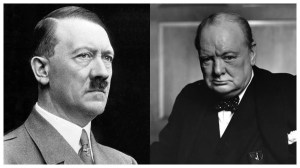
Pretend, for a moment, that you did not read the title to this article and picture for me two European leaders in the first half of the 20th century. One is bipolar, an alcoholic and rarely seen without a cigar in his mouth. The other, a tee-total, animal-loving vegetarian who remained abstinent for most of his life. One is the Prime Minister of the United Kingdom (twice) and one is the Chancellor of Germany.
Hailed as the saviour of the world in some desperate British people’s eyes, British school children are taught to love and adore Churchill in the way we would Charles Darwin or Margot Robbie. Maybe not the latter .

We are taught that it was Churchill’s stern resistance, his refusal to bow to Hitler’s demands, that won World War 2 for the Allies and secured the defeat of fascism in Germany. Whilst some aspects are true, most are not. Churchill himself once famously, as an addage to the famous quotation ‘history is written by the winners’, commented that ‘history will be kind to me, for I intend to write it’. That he did and that it is.

If we want to go into details of battleplans during World War 2 it is important to remember the idea which many historians share that ‘the UK gave us time, the USA gave money and the Soviets gave their lives’. This is true.

People think the war was won because of Churchill? Hitler’s decision to invade Russia forced him to move most of his forces East and ended the Blitz which had brought London to its knees. Hitler’s poor planning saved us there.

Then we get onto my real point. The Bengal Famine of 1943. Don’t worry, I know you haven’t heard of it, because it makes Britain, Churchill and both their legacies look bad. Why would it be taught in school?

Bengal (now Bangladesh) was part of the British Indian Empire. Despite millions of Indians volunteering to fight in Europe and Japan to support the Empire, who had been oppressing them for years, Churchill decided that blockades, sanctions and restrictions in that region had to be upheld. To support the war effort. Churchill’s detractors point to his well-documented bigotry, articulated often with shocking callousness and contempt. “I hate Indians,” he once trumpeted. “They are a beastly people with a beastly religion.” Cheers for that Winston.

It is estimated that of the 60 million Bengalis, 2-3 million died of starvation because of this decision.

Want more? He referred to Palestinians as “barbaric hordes who ate little but camel dung.” When quashing insurgents in Sudan in the earlier days of his imperial career, Churchill boasted of killing three “savages.” Contemplating restive populations in northwest Asia, he infamously lamented the “squeamishness” of his colleagues, who were not in “favor of using poisoned gas against uncivilized tribes.” Read that again. Then once more. I’ll stop now but it goes on.

This may sound like an angry rant against Churchill but it’s not. The man displayed great courage and leadership at a time when Britain needed it most. But he is not the hero we have been taught throughout our lives. He was not the Second Coming. In a recent poll he was ranked as the Greatest Briton of all time. Not Darwin? Not Shakespeare? Newton, Lennon, Hawking? None of them ever sanctioned genocide or expressed views which are inexplicable.

Famed for his quick wit, he once entered into an argument with Lady Astor. Lady Astor, infuriated, snapped and commented “Well Winston, if I was your wife I would poison your tea.” To which he replied, “and if I was your husband I would drink it.” A war veteran, a well-versed politician, an excellent public speaker and a Nobel Prize winner for Literature. No one denies the gifts God gave Churchill and it would be difficult to suggest he did not utilise these gifts. But the white-washing of his history is terrifying.

It was in the darkest of times that we needed a man like Churchill. A man of principle and conviction. A complicated man and, if we’re honest, were his incredibly offensive comments so much different from what other politicians at the time were spouting? There is no doubt, however, that in modern times a politician who switched from the Conservatives, to the Liberals, then back to the Conservatives whilst having a drinking problem and advocating policies that many who class as “insane” could ever become PM – twice.

Hero or Villian? Perspective or fact?
NEVER Have I been So Happy to Be So Wrong

A few days ago, I wrote about, what was then, the upcoming mid-term elections. I suspected that the Republicans would run away with victories in the House and in the Senate. I imagined complete control of both houses for them and Biden becoming a lame-duck President with little power, just two years into his first (and likely) only term.

How wrong I was.

How happy you should be.

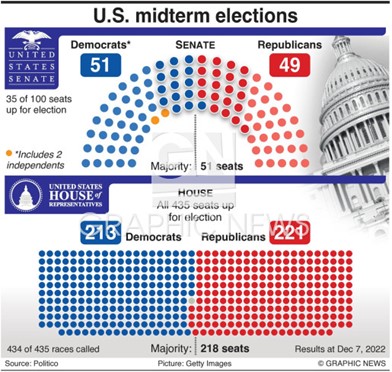
The results. In the House, the Democrats lost 9 seats. A minimal amount and fairly insignificant. The Republicans, meanwhile, gained 7 seats. An embarrassing amount to be honest as 218 seats are needed for a majority in the House and they now have only 218. Key battlefield states did not deliver fully for the Republicans in this election and that is fantastic news.

In the Senate, more surprisingly in my eyes, the Democrats actually managed to gain a seat. Whilst the Republicans lost one! This means that neither party has a majority in either the House or the Senate. With the final results of this election revealing that the Democrats had a total of 46 Senators, compared with the Republican’s 48. To get a majority one party needs more than 51 seats. The Republicans failed to secure even a small majority in either House. Party hats on!

midterm

In key battlegrounds, such as the 1st and 4th district of Nevada, were what I feared would lead to a direct and strong majority for the Republicans. But it has not turned out this way and the Republican voters did not show up as strongly as their leaders had hoped. In my eyes, this election was a failure for the Republicans and, perhaps, a demonstration of the end of the Trump era?

Is the left waking up? Well, it may be too soon to say that. But perhaps there is light at the end of this tunnel of madness. Trump brought anger and disruption to an already angry and disrupted political system. Whilst we are all quick, in Britain at least, to quickly claim that Biden is not doing enough or is making fiscally irresponsible policies. What we can at least say is that he has brought statesmanship back to the Presidency.

He may seem a bit old, with videos emerging of him being unable to finish speeches or being helped down flights of stairs, he is a respected man and he has earnt that respect. He does not shout, whine or cry – as Trump does – he focuses on the job at hand. At it has almost, rather sadly, come to the point where this is all we need from a President at the moment. We don’t need a great President like FDR to revolutionise the country. We don’t need powerful, loud leaders like the JFK or Robert Kennedy. Even if we did need Presidents like these. Where are they? What America and the rest of the world needs and has right now is a President who will not stoke more division and insight more hatred, just to gain a mass of support.

Biden has also gained more respect from myself and political commentators for coming out and praising one Republican governor who lost a crucial seat and accepted the result with good grace. Many of his supporters were spouting the same nonsense. Saying that the election was rigged or that there should be a re-count. But this politician was having none of it and Biden was quick to praise this. A small act, but an important one. As I have previously written, we cannot begin questioning the results of every single election result. It’s a slippery slope and one which does not end well.

By nipping this in the bud early, Biden has gained the headlines as political commentators begin to suggest that his brand of politics is changing the way the Republicans are seen, not just in America but across the world.

Since Trump, the Republicans have sought to hold on to their right-wing support base as it had previously brought them the Presidency and allowed them to gain power. The issue with appealing to this marginalised group of people, however, is that it tends to alienate the middle-ground “undecided” voters. Whilst it is true that the number of “undecided” voters is disappearing, with the country becoming more toxic and more divided than ever. It is no longer a case of deciding whether you like a certain President’s policies more than the other, or a Senators’, it is now just about which party they “represent”. You ARE a Republican. Or you ARE a Democrat. That is becoming how people define their political views in America and it is a great shame.

Nevertheless, we should still celebrate me being wrong about the mid-term disaster. These mid-terms were not a disaster, nor were they a triumph. Instead, we should view them with hope and sign of a better future for the USA.

I thoroughly hope that Biden has the good sense and grace to step aside in the next Presidential election. It is too far off to know whether he will or not, with politics changing so fast. But that fact that he is meeting with the Chinese Premier this week and establishing international relations suggests to me that they are on a path to a more united front.

And that’s exactly what the UK and USA need right now, to be united and to face global threats of Putin, Climate Change and China together.

I do not think this marks the end of right-wing fanaticism in America. Nevertheless, this election perhaps demonstrated to the world that, in the words of Churchill, “this is not the end. This is not even the beginning of the end. But it is, perhaps, the end of the beginning.” I truly hope this is the end of the beginning for a new, more unified United States.

Or maybe I’m dreaming.

Democracy Has Failed – What’s Next?

Many people on this planet believe that democracy is some sort of God-given right which we should all be incredibly greatful for, if we live in a supposedly democratic country, and something which we should aim to push onto other countries so that they can develop “properly”.

A bit of history. The Greeks were originally the first to come up with forms of government and eventually settled on four main forms: democracy, monarchy, oligarchy and tyranny. Even with these forms you had overlap. For example, the Kings of Sparta were “kept in check” by ‘ephors’ who themselves were elected in an oligarchical fashion. Corinth and Stymphalos also had similar groups of “elders”, making it difficult to establish whether these areas fell under the umbrella or monarchies or oligarchies. The Greeks, however, experimented much beyond these four main pillars of governance.

Athens was perhaps the closest to what we would consider modern democracy. Pericles, in 431 BCE, commented that “Athen’s constitution is called a democracy because it respects the interests not of the minority but if the whole people … everyone is equal before the law.” Is that the democracy we have today? Are the interests of everyone in society considered? If there is proof that a “democratic” Prime Minister broke the law three times, but was only charged once, is that everyone being treated equally before the law? How democratic are your democracies, really?

Even if one were to consider Athenian democracy as almost idealistic, it must also be remembered that it was their democratic “bad decision” which led to the death sentence of Socrates in 399 BCE. Democracy is not always right. The argument that Hitler was democratically elected is a boring one, but certainly relevant in this context. Just because everyone has a say, this doesn’t mean they’re right. As Super Hans once realised, “people like Coldplay and voted for the Nazis, you can’t trust people!” So wise.

Eventually, monarchies fell as the majority of people became agnostic/atheist and began to resent being ruled by a family who had a “god-given” right. If you don’t believe in God then where does that right come from? This was at least part of the reason, they also failed to produce results and in almost all circumstances the Royal Families themselves ended up living their own lives to excess in an almost tyrannical manner. As the excess grew, so did the anger amongst many starving populations, eventually leading to revolution in many of these countries as a desperate act of revenge. Does this excess, combined with the extreme poverty we face, remind you of any country in particular?

We’d expect monarchies to have fallen everywhere. But, as I write we are celebrating our own monarch Queen Elizabeth II. To be honest, I have very mixed opinions of the Royal Family. On the one hand, it produces criminal freaks like Prince Andrew. They’re also exclusive to the point of abuse and absolute intolerance. However, I have nothing but respect and admiration for the Queen.  The lady is 96 years old, an incredible feat in itself, but has always remained politically neutral as well as mindful of the world around herself. Whilst Prime Ministers or leaders have come, made a mess and run, the Queen has always remained as the ultimate figurehead not only for Britain but also for the Commonwealth. What will come after her reign? Who can say? But I certainly won’t be on the street celebrating “King Charles” and I don’t think many people will.

Nevertheless, whilst Britain has certainly benefitted from having one of the most stable and respected monarchs in the world at the helm for the last 75 years this is undoubtedly the exception which proves the rule. In the majority of cases, if monarchies are able to survive instances such as the French Revolution or the American War of Independence, one just needs to look at the monarchies in the Middle East to see how easy it is for monarchies can become evil machines.

Oligarchies (a system in which a ruler or group of rulers is chosen by a specific group) were also an extremely popular form of government which existed for a long time. The Greeks actually essentially decided that intellectual oligarchies which meant that intelligence allowed people to rise to the top of society. However, this system also failed as it is inherently corrupt. The “group” who decide on the leader, is it a religious oligarchy, an intellectual oligarchy or a monetary oligarchy (as we see in Russia, where someone can take power and money and then use this money to pressure people into keeping them in power.)

Tyrannical reign essentially sums up the above situations. Tyranny specifically refers to someone who has gained power illegally and refuses to give it up. Think Caesar. This would obviously be unacceptable in modern society – although China? Putin? It’s not unheard of.

Another solution for governance, which seems to have taken a hold within the human consciousness, was democracy, which comes in two forms. The first is “direct” (think of the Brexit referendum) where you are voting on a simple question and there is a “yes” or “no” answer. One vote and majority rules. Obviously, as society grew and the population grew people began to use “representative” democracy which is what we see in all modern democracies. This is a system whereby we elect officials, MPs in Britain, to make decisions on my behalf. That’s gone well ..

So the first three lead to some sort of tyranny, evil and supression. They lead to a good life for those in power and extreme desperation for the rest. How is that differing from the results of our representative democracy, which we cling on to so greatly?

Bullingdon Boys – Oligarchy or Democracy?

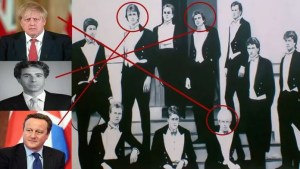
We have a cabinet full of criminals. We have a Prime Minister who is actually a criminal but refuses to leave, that sounds like Tyranny to me. We’ve had a succession of Oxbridge, Etonian, Bullingdon Club Prime Ministers. That sounds like an oligarchical system to me? And monarchy? Well, we do have a Queen … but I’m sure Boris would take that job if he could.

Please don’t misunderstand me – democracy is one of the best things that humanity has ever created. The fact that I am even allowed to write on this blog; the fact I was able to protest against tyrants like Putin without fear of reprisal from police; the freedom which comes with democracy should not be underestimated. However, freedom and deomcracy are not tied. They are not intrinsically linked. You can have freedom without democracy. You can have democracies where no one is free.

But far too often we think it’s a “right” and it’s going to solve all our problems. It is a human concept, which has created a system which has led to Donald becoming President of the USA and Boris becoming Prime Minister. In my mind, that is a failure. We could suggest that this is because of the rapid, unexpected and exponential growth of technology which democratic states were simply not prepared for. It could also be argued that the failure of democracy essentially can be blamed on human nature, as fundamental human greed will always directly or indirectly lead to unfair political and economic systems. Perhaps there is no “right” way to govern society …

But I believe it can be fixed. A total overhaul may be needed, but it should happen before working-class people are pushed too far and democracy is left in the past like other failures such as communism. The fact that people are so quick to dismiss the other forms of government before taking a good look at the products of our democratic systems is irritating; the success or failure of a political system must be determined by what it produces. Monarchies, for example, led to groups living in excess at the expense of 99% of the rest of the population. What is democracy producing?

As Winston Churchill once famously commented, “Democracy is the worst form of government – except for all the others that have been tried.”

Is it time to try, at least, thinking of something new?

Clement Attlee – The Man History Loves to Forget

Ask most secondary school children who Clement Attlee was and a blank stare is most likely the best you can hope for. Ask who Ernest Bevin was and you’ll probably get the same response. Ask who Aneurin Bevan was and someone will probably notice that you’ve been talking to school children for a bit too long.

Clement Attlee was the first post-war Prime Minister, elected in 1945, defeating Winston Churchill. “How could this unknown man beat such a war hero in a general election straight after the war?” Well, during the war a coalition of parties were formed to act in the nation’s best interest. (A coalition during times of emergency … that’d be nice.) And whilst Churchill got the glory for his speeches, his V sign and his public persona, he was actually in charge of war planning.

Clement Attlee - Wikipedia

People forget that during the war British people needed to be fed. The economy needed to keep moving and people needed to keep working. This was Attlee’s job and he did it remarkably with no thanks or praise, all behind-the scenes. A quiet man, Churchill continually mocked Attlee throughout his political career, Churchill once joked that he was stood outside his hotel and an empty taxi pulled up, and out stepped Clement Attlee. Another example of the lack of respect – since the end of World War 2 the Queen has attended two state funerals for former Prime Ministers – Churchill and Thatcher. She did not attend Attlee’s.

Interesting, you may think (I hope you think), but why then does he matter? Attlee, Bevin and Bevan matter because they created the NHS.

Attlee was the mastermind of nationalisation. He passed numerous social reforms, created National Insurance in 1946 and founded the National Health Service in 1948 – arguably Britain’s proudest achievement. Now read the title again – did you really know his name? I could go on about his various political work with nationalisation and how he effectively salvaged a destroyed nation. But another time.

The question is, why is he not in the history books like Thatcher, Blair and Churchill. Attlee literally created a national treasure during the worst of times and he is barely consigned to the history books. During unprecedented pandemics like this we thank NHS staff, you get life-saving surgeries and you’ve never had to worry about health insurance before in your life. That’s unique. That’s because of Attlee. The man should be on stamps, banknotes and tattooed on new-borns. It really is a difficult question to answer why he has been so forgotten but my conclusion is that he was unfortunate to be in politics at the same time as Churchill.

Churchill once famously commented, ‘history will be kind to me, for I intend to write it.’ Following on from the quote ‘history is written by the winners.’ Indeed, that’s why we have Winston Churchill on a £5 note and most of you won’t have heard of the founder of the NHS.

Winston Churchill – Hero AND Villain?

Pretend, for a moment, that you did not read the title to this article and picture for me two European leaders in the first half of the 20th century. One is bipolar, an alcoholic and rarely seen without a cigar in his mouth. The other, a tee-total, animal-loving vegetarian who remained abstinent for most of his life. One is the Prime Minister of the United Kingdom (twice) and one is the Chancellor of Germany.

Hailed as the saviour of the world in some desperate British people’s eyes, British school children are taught to love and adore Churchill in the way we would Charles Darwin or Margot Robbie. Maybe not the latter .

We are taught that it was Churchill’s stern resistance, his refusal to bow to Hitler’s demands, that won World War 2 for the Allies and secured the defeat of fascism in Germany. Whilst some aspects are true, most are not. Churchill himself once famously, as an addage to the famous quotation ‘history is written by the winners’, commented that ‘history will be kind to me, for I intend to write it’. That he did and that it is.

If we want to go into details of battleplans during World War 2 it is important to remember the idea which many historians share that ‘the UK gave us time, the USA gave money and the Soviets gave their lives’. This is true.

People think the war was won because of Churchill? Hitler’s decision to invade Russia forced him to move most of his forces East and ended the Blitz which had brought London to its knees. Hitler’s poor planning saved us there.

Then we get onto my real point. The Bengal Famine of 1943. Don’t worry, I know you haven’t heard of it, because it makes Britain, Churchill and both their legacies look bad. Why would it be taught in school?

Bengal (now Bangladesh) was part of the British Indian Empire. Despite millions of Indians volunteering to fight in Europe and Japan to support the Empire, who had been oppressing them for years, Churchill decided that blockades, sanctions and restrictions in that region had to be upheld. To support the war effort. Churchill’s detractors point to his well-documented bigotry, articulated often with shocking callousness and contempt. “I hate Indians,” he once trumpeted. “They are a beastly people with a beastly religion.” Cheers for that Winston.

It is estimated that of the 60 million Bengalis, 2-3 million died of starvation because of this decision.

Want more? He referred to Palestinians as “barbaric hordes who ate little but camel dung.” When quashing insurgents in Sudan in the earlier days of his imperial career, Churchill boasted of killing three “savages.” Contemplating restive populations in northwest Asia, he infamously lamented the “squeamishness” of his colleagues, who were not in “favor of using poisoned gas against uncivilized tribes.” Read that again. Then once more. I’ll stop now but it goes on.

This may sound like an angry rant against Churchill but it’s not. The man displayed great courage and leadership at a time when Britain needed it most. But he is not the hero we have been taught throughout our lives. He was not the Second Coming. In a recent poll he was ranked as the Greatest Briton of all time. Not Darwin? Not Shakespeare? Newton, Lennon, Hawking? None of them ever sanctioned genocide or expressed views which are inexplicable.

Famed for his quick wit, he once entered into an argument with Lady Astor. Lady Astor, infuriated, snapped and commented “Well Winston, if I was your wife I would poison your tea.” To which he replied, “and if I was your husband I would drink it.” A war veteran, a well-versed politician, an excellent public speaker and a Nobel Prize winner for Literature. No one denies the gifts God gave Churchill and it would be difficult to suggest he did not utilise these gifts. But the white-washing of his history is terrifying.

It was in the darkest of times that we needed a man like Churchill. A man of principle and conviction. A complicated man and, if we’re honest, were his incredibly offensive comments so much different from what other politicians at the time were spouting? There is no doubt, however, that in modern times a politician who switched from the Conservatives, to the Liberals, then back to the Conservatives whilst having a drinking problem and advocating policies that many who class as “insane” could ever become PM – twice.

Hero or Villian? Perspective or fact?