Iran’s Attacks on Israel, Nuclear Ambitions, and the Crisis in Gaza and Palestine

In the ever-volatile landscape of the Middle East, recent escalations between Iran and Israel have once again ignited international concern and prompted debates over appropriate responses and global allegiances. Central to this discourse are the historical contexts, nuclear ambitions, and the ongoing crisis in Gaza and Palestine, adding layers of complexity to an already intricate geopolitical puzzle.

Iran’s relationship with Israel has long been marked by tension and hostility, rooted in ideological differences, historical grievances, and regional power struggles. Iran’s support for militant groups like Hamas and Hezbollah, coupled with its anti-Israel rhetoric and calls for the destruction of the Jewish state, have fueled animosity and sporadic bouts of violence.

Meanwhile, Israel, wary of Iran’s nuclear ambitions and hostile proxies, has adopted a policy of strategic ambiguity regarding its own nuclear capabilities. While neither confirming nor denying the possession of nuclear weapons, Israel maintains a formidable military deterrent, underscoring its commitment to ensuring its security and survival in a volatile neighborhood.

The specter of nuclear proliferation further complicates the dynamics between Iran and Israel. Iran’s pursuit of nuclear technology, ostensibly for peaceful purposes but met with suspicion by the international community, has raised alarms in Israel and beyond. Fears of a nuclear-armed Iran, coupled with inflammatory rhetoric from Iranian leaders, have heightened tensions and fueled speculation about preemptive strikes and military interventions.

Conversely, Israel’s alleged nuclear arsenal, though officially undeclared, adds a layer of deterrence and uncertainty to the equation. The mere possibility of a nuclear response from Israel in the event of a significant threat has tempered aggression from adversaries and shaped strategic calculations across the region.

Amidst these geopolitical tensions, the crisis in Gaza and Palestine serves as a poignant reminder of the human cost of conflict and the urgent need for a peaceful resolution. Decades of occupation, displacement, and violence have left the Palestinian territories in a state of perpetual turmoil, with Gaza bearing the brunt of the humanitarian crisis.

The recent escalation in violence, triggered by clashes in East Jerusalem and the forced eviction of Palestinian families from their homes, has reignited simmering tensions and sparked waves of protests and retaliatory attacks. The indiscriminate rocket fire from Gaza into Israeli territory and the subsequent airstrikes by the Israeli military have resulted in civilian casualties on both sides, exacerbating the suffering of innocent civilians caught in the crossfire.

In the face of Iran’s attacks on Israel and the crisis in Gaza and Palestine, the dilemma of retaliation looms large, with implications that extend far beyond the immediate conflict zone. While Israel has the right to defend itself against aggression and protect its citizens, the prospect of escalation and unintended consequences cannot be ignored. A tit-for-tat cycle of violence risks spiraling out of control, exacerbating instability and endangering innocent lives on all sides.

Moreover, the international community faces a delicate balancing act, torn between competing interests, alliances, and moral imperatives. While some nations may rally behind Israel, citing shared values and security concerns, others may urge restraint and advocate for diplomatic solutions to avoid further bloodshed and regional destabilization.

Amidst the complexities and competing narratives, the imperative for peace and stability remains paramount. Rather than succumbing to the allure of military brinkmanship or the temptation of retaliatory strikes, all parties must prioritize dialogue, de-escalation, and diplomacy. The specter of nuclear annihilation looms large, serving as a stark reminder of the catastrophic consequences of miscalculation and unchecked aggression.

In conclusion, the tensions between Iran and Israel, exacerbated by historical animosities, nuclear ambitions, and the crisis in Gaza and Palestine, pose a formidable challenge to global peace and security. As the world watches with bated breath, the imperative for restraint, dialogue, and negotiated settlements has never been more urgent. Only through concerted efforts to bridge divides, build trust, and uphold the principles of international law can lasting peace be achieved in the Middle East and beyond.
Putin’s “Election Victory”: A Global Comedy of Errors as West Clutches Pearls, China and India Applaud

In the recent culmination of political theatrics in Russia, where the notion of a fair and democratic election seems as mythical as a unicorn, Vladimir Putin once again emerged triumphant, extending his reign over the Russian political landscape. However, what followed was not merely a display of political power but rather a spectacle of international relations, replete with ironic endorsements, diplomatic nuances, and the subtle dance of geopolitics.

As ballots were cast and counted across Russia, the global community watched with a mixture of skepticism and resignation. Western leaders, quick to pounce on any perceived breach of democratic norms, were predictably swift in their condemnation of the electoral process. “The Russian people deserve better,” they intoned solemnly, as if they were the guardians of democratic virtue in a world beset by autocratic tendencies.

In a statement reminiscent of a political slapstick routine, Chinese Premier Xi Jinping offered his congratulations to Putin on his “resounding victory,” praising the stability and continuity that his leadership brings to Russia. The irony of China, a nation notorious for its authoritarian grip on power, endorsing the electoral process of another autocratic regime, was not lost on observers. However, geopolitics, like comedy, often thrives on irony.

India, under the leadership of Prime Minister Narendra Modi, struck a more cautious note, stopping short of outright endorsement but refraining from any criticism of the electoral process. With India’s own complex relationship with democracy and authoritarianism, Modi’s silence spoke volumes, signaling a pragmatic acceptance of the status quo rather than a principled stand against electoral malpractice.

Meanwhile, the turnout for the election, touted by Russian authorities as a testament to the legitimacy of the process, raised eyebrows among international observers. With reports of voter coercion, manipulation, and irregularities circulating widely, the credibility of the turnout figures remains questionable at best. Yet, in the grand theater of geopolitics, perception often trumps reality, and the narrative of a united Russian electorate rallying behind Putin’s leadership persists, albeit with a healthy dose of skepticism from the global community.

In the corridors of power, where pragmatism reigns supreme, the reactions to Putin’s “victory” underscore the complex interplay of interests and alliances that shape the geopolitical landscape. While the West expresses concern over the erosion of democratic norms, China and India weigh their strategic calculations, mindful of the delicate balance between stability, sovereignty, and self-interest.

However, beyond the immediate diplomatic ramifications, Putin’s continued grip on power fuels speculations about Russia’s regional ambitions, particularly concerning smaller neighboring countries such as Ukraine and Taiwan. With Putin’s government demonstrating a brazen disregard for international norms and sovereignty, there are concerns that Russia may embolden similar authoritarian impulses in other nations, thereby destabilizing the global order.

For China, Putin’s strongman tactics may serve as a model for asserting dominance over regions like Hong Kong and Taiwan, where Beijing’s authority is contested. By cozying up to Russia, China sends a clear message to the world: autocracy is not only acceptable but also effective in achieving geopolitical goals, even at the expense of democratic principles and human rights.

Similarly, India, with its own territorial disputes with neighboring countries like Pakistan and China, may view Putin’s consolidation of power as a blueprint for strengthening its own grip on contested regions. Modi’s government, known for its muscular approach to foreign policy, may find inspiration in Putin’s playbook, using authoritarian tactics to assert dominance in regions where India’s influence is challenged.

As the curtain falls on yet another chapter in Putin’s political saga, one thing remains abundantly clear: the world of geopolitics is a stage, and its actors, whether applauding or aghast, are bound by the rules of the game. Whether Putin’s victory is celebrated or condemned, the show must go on, with each twist and turn in the plot serving as a reminder of the enduring absurdity of international relations in the 21st century.

Johnny Depp vs. The S*n

Who still reads The S*n? Who still works for The S*n? Why? Journalistic principles, investigative work, or so you can add click-bait to my Facebook page?

Everyone I know, everyone I’ve met and anyone I respect knows The S*n is the worst newspaper in Britain. I have never read it once, I am ashamed to admit.  In fact, I can’t recall a time when I’ve ever seen anyone read it. Yet it remains a jewel in Rupert Murdoch’s journalistic crown as the third most-read newspaper in the country.

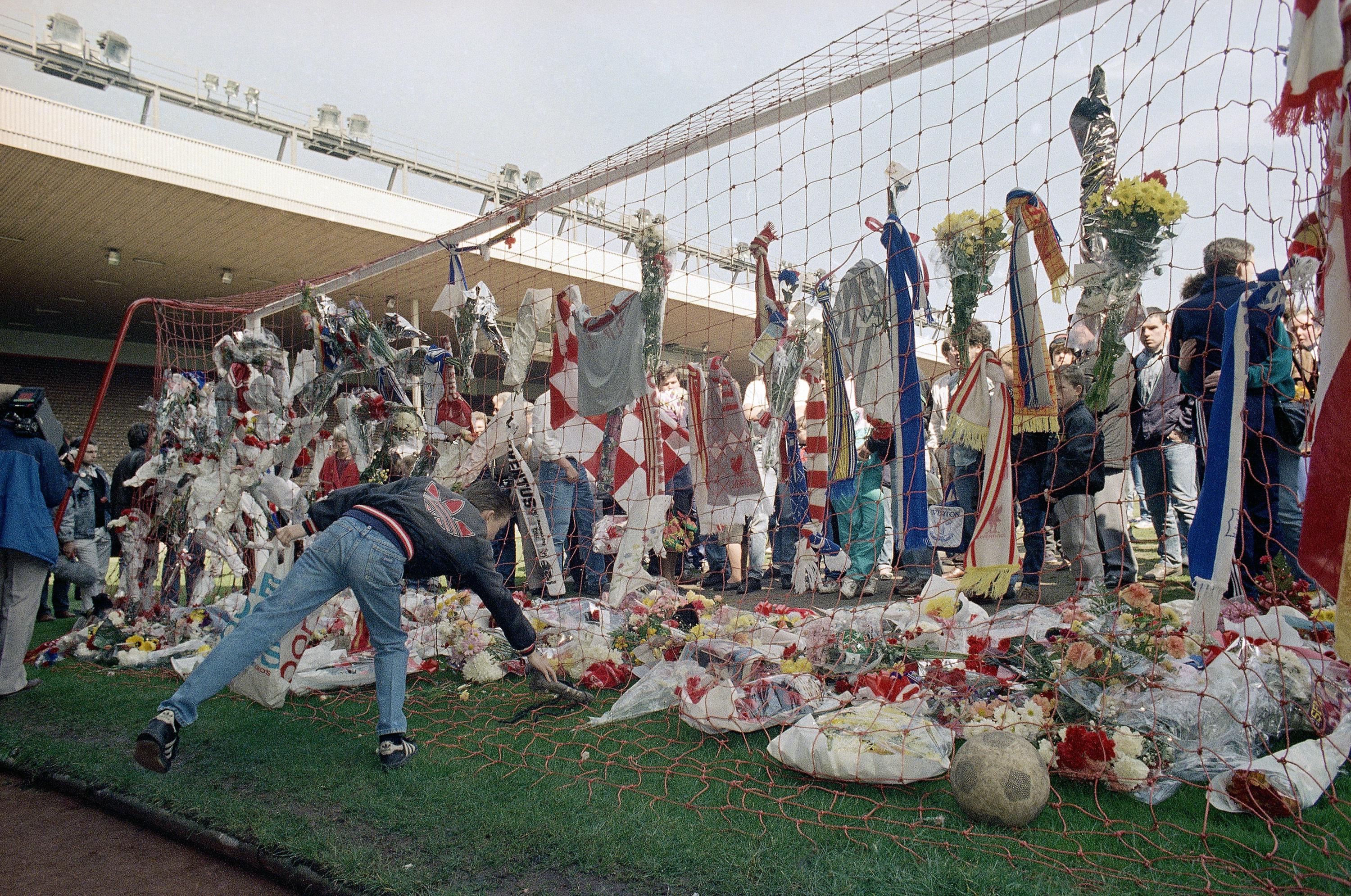
Hillsborough victim dies 32 years after UK stadium disaster | AP News

The paper that dismissed Liverpool fans as ‘drunken hooligans’ and blamed them directly for the Hillsborough disaster, whilst simultaneously protecting corrupt police officers and politicians. That’s the paper you really want to be seen reading? I suspect it is largely read in private, out of shame.

The new problem The S*n now faces is the claims about domestic abuse from Amber Heard and Johnny Depp. The saga began because The S*n’s Executive Editor, Dan Wooton, referred to Depp as a ‘wife-beater’ in 2018 and claimed there was ‘overwhelming evidence’ that he had been attacking his then-wife Amber Heard. It goes without saying that there was no evidence. Normally, that wouldn’t be a problem for The S*n. They throw mud, it sticks, do they have to prove anything? No. Johnny Depp’s career is ruined and they can move on to the next target.

It was actually J.K Rowling’s decision to cast Johnny Depp in her new ‘Fantastic Beasts’ that re-ignited The S*n’s irrational hatred of Johnny Depp. How dare Rowling cast an incredibly successful actor in a lead role? They’d accused him without any evidence, this was over.

But Johnny Depp had recordings, terrible recordings of Heard punching him in the face, slicing his hand with a bottle of vodka and (sorry for this) defecating in his bed. Their relationship doesn’t interest me at all, I’m sure there were problems on both sides. What’s more important than Depp vs Heard, to me, is Depp vs The S*n.

In America libel laws are the exact opposite to those in the UK. In the USA if a newspaper wants to print an article it needs to have actual verifiable proof, which could hold up in court, before they can print a ‘revealing’ or ‘investigative’ article. This is what makes it so hard for American newspapers to take down Trump or any other senior politician, because the pressure is on them to find the evidence.

Rather bizarrely, in the UK libel laws require the accuser to provide proof of their innocence. In this instance, Depp has to prove that he was not a ‘wife-beater’, rather than The S*n being forced to reveal their evidence (of which there is probably little more than hearsay). This is why victory in libel cases in the UK is so low – because so much effort, evidence and money has to be funnelled into a court case that you will probably lose anyway.

Innocent until proven guilty? Unfortunately, not for Johnny Depp.

The BLM Movement – It Comes and It Goes (but nothing changes)

The death of George Floyd on the 20th May 2020 was obviously a tragic event, epitomising the inherent racism which exists in both America and in Britain. The outcry was massive. Despite a global pandemic, people marched and protested and signed petitions and changed the way they viewed their past behaviour. It was beautiful and horrifying at the same time. And in my naivety I thought it would last more than about two weeks.

But the knee protest, popularised by San Francisco 49ers quarterback Colin Kaepernick in 2016, is not the end nor the beginning of my problem with the way people have responded to the BLM protests.

People rushed onto Instagram to quickly tell their like-minded followers not to be racist, a good thing obviously, although something I suspect was more a demonstration of how ‘woke’ they were, rather than an attempt to actually educate anyone. They posted ‘how you may be being racist without knowing’, they posted ‘research racism’s history’ and they posted ’10 ways YOU can combat racism’. They were all very interesting articles, but they were things we knew? Surely they were things you know? You know racism instantly – I have always said you can tell if someone’s genuinely racist within 20 seconds of meeting them. You know who the racists are and so do I.

Racists out there need to be treated in a similar way to the way we reacted to this pandemic. A slow start (150 years) but soon they must simply be isolated. You should stay away from them, you should wear a virtual mask and not talk to them. It may be a step too far to wash your hands after meeting one but if you have to that’s fair. Forget trying to ‘educate’ racists in 2020, they don’t want to learn. They should just be rejected, ignored, possibly even feared. Follow these rules and watch as they just disappear – not unlike COVID-19.

And that brings me to the question what happened to the BLM protest? Everyone posted their picture of the infamous Edward Colston statue being replaced by a sculpture of Black Lives Matter protester Jen Reid. Then what? Silence. No more posts on how not to be racist? No more lessons? Racism must be over then?

Then people argue, ‘well, one statue may not sound like a lot but its a start!’. Again, I don’t think so. In 1833 Britain introduced the ‘Slavery Abolition Act’, which abolished slavery in most British colonies, freeing more than 800,000 enslaved Africans in the Caribbean and South Africa as well as a small number in Canada. That could be classed as a ‘start’ of the fight against racism. A full 3 decades later, in 1865, Abraham Lincoln managed to emancipate American slaves and have them classed as humans instead of ‘property’, as they had previously been titled in the Southern states. That could’ve been a starting point.

When Rosa Parks refused to give up her seat to a white man on December 1st 1955, that should be considered a starting point. In the 1960s, a century after slavery had ended but the United States of America denied basic civil rights to African Americans, during the Civil Rights Movement. That could have been the ‘start’. In 1963 when Martin Luther King Jr gave his famous ‘I have a dream’ speech, that could have been a ‘start’. Two years later, when Martin Luther King Jr. led three peaceful protest marches in 1965 along the 54-mile highway from Selma, Alabama, to the state capital of Montgomery; on the way encountering dogs, bomb threats, death threats and riot police. That could have been a ‘start’.

When, in a similar but arguably even more brutal manner, unarmed Rodney King was beaten mercilessly on camera by four police officers who “could’ve struck him with batons between fifty-three and fifty-six times.” That could’ve been a ‘start’. But that was in 1991.

It’s 2020 and ‘starting points’ simply are not good enough. They haven’t been for a long time.