To what extent was the Zionist movement successful in achieving its objectives in 1948?

**For those of you who do not know. I did a Master’s Degree in ‘International History and Politics’ at The University of Leeds and graduated in 2020. I got a Distinction. I was good. **

I haven’t posted on this blog in over a year (a surprise to myself)! I remember stopping because ChatGPT started to become regularly used and people were suspecting that I was using it to write my articles. I never have for my blog posts; I’ve never seen the point and I’ve never even thought ChatGPT is even that good. It is NOT AI. It is, what I like to call, ‘advanced Googling’.

But with the genocide currently going on in Gaza, conducted by Israel (let’s just call it what it is), I remembered this morning that I actually did a very long module on ‘The Israel-Palestine Conflict’ and completed it in 2019. This essay got 81/100 – so it’s bloody good. Of course, I was writing it 6 years ago so my views where tempered quite a lot compared to how they are now. But I thought I would share this, just as a brief history lesson of such a messy conflict.

I have a lot I could write here about Netanyahu being one of the worst dictators of the modern age. I could write about how Israel’s nuclear regime is suspect, with not even top cabinet members having knowledge of how many nukes they possess.

I just want to quickly recount Mehdi Hasan’s (a genius) debate with Danny Ayalon (former Israeli Cabinet Minister), in which Ayalon himself says that he has no idea how many nukes Israel has. Hasan points out the hypocrisy of this by stating: “Imagine if an Iranian Ambassador came onto this show and I asked how many nukes they had and he just shrugged and said, ‘I dunno’, would you not be outraged? Can you not see the blatant hypocrisy?”

Ayalon admits yes! Hassan then beautifully reminds Ayalon that Iran, and its’ surrounding Arab nations had subscribed to UN Resolution 487. Ayalon insists there is no such resolution concerning Israel’s nuclear capabilities; to which Hassan responds, quoting the resolution, stating that “This board furthermore notes that Israel has not adhered to the Treaty on the Non-Proliferation of Nuclear Weapons. Making the area deeply concerned about the danger to international peace and security created by the premeditated Israeli air attack on Iraqi nuclear installations on 7 June 1981.”

I do not ignore the events of October 7th, horrific and monstrous as they were, but I ask – what about the events on October the 6th? What about the events on October the 8th, or 9th … or 10th? Or YESTERDAY? The essay beneath is an extremely tempered version of my views now, not only because the situation was vastly different 6 years ago, but also because (and I won’t lie about this) I wanted to secure a good grade in this module.

But for those of you who do not want to read the entire essay, here’s a summary: No, the Zionist movement WAS NOT WHOLLY successful in achieving its objectives in 1948. Zionists wanted to escape Europe and find a peaceful homeland. They wanted to escape the horrors placed upon Jewish people by the Holocaust and the Soviet Union.

Leaders of the Zionist movement even considered Argentina as a ‘homeland’ to be safe, they just wanted a recognised state that was AWAY from Europe! If leading Zionist thinkers, such as Theodore Herzl, could see what Israel is conducting today they would be appalled, ashamed and embarrassed by the horrific scenes they had created. There is a difference between being anti-Israel and antisemitic. Israel is a rogue, fascist, murdering state. Jewish people are Jewish people, from different places all over the world, most of whom, to their credit, have renounced the actions of Israel.

And that is why I have finally decided to post this essay, as I am reminded of Martin Niemöller’s brilliant poem (rather ironically, written by an initial supporter of Hitler, until he began to see how the Nazis were treating minorities withing Germany): “First they came for…”:

First they came for the Communists
And I did not speak out
Because I was not a Communist
Then they came for the Socialists
And I did not speak out
Because I was not a Socialist
Then they came for the Trade Unionists
And I did not speak out
Because I was not a Trade Unionist
Then they came for the Jews
And I did not speak out
Because I was not a Jew
Then they came for ME
And there was no one left
To speak out for me
.

And SO … (FINALLY) … MY ESSAY FROM 2019:

Candidate Name: Nesaar Uppal  
Candidate Number: ############
Module Name: The Israel-Palestine Conflict
Module Code: PIED5501M

The early modern roots of the Zionist movement emerged from the persistent persecution of Jewish people across Europe for hundreds of years (Halperin, 2015). This persecution caused Jewish people to be spread all across Europe and the Middle East in diaspora.[1] Seeing this persecution, diaspora and finding a religious right to create a Jewish homeland many believed that people of the Jewish faith deserved their own land and their own government (Herzl, 1895; Weizmann, 2005). Theodore Herzl, one of the first Zionist thinkers and perhaps the most influential, planned to create a homeland for Jews to escape persecution in Europe. The creation of an internationally recognised Jewish homeland was indeed the main aim of the Zionist movement, with Eichler (2016) noting that ‘the official goal of the Zionist movement … a Jewish national home to be secured by international law.’ However, a number of other Zionist objectives emerged causing divisions within the Zionist movement about which aims to pursue first. Along with creating a Jewish homeland and ending diaspora, Herzl genuinely wanted to also bring economic prosperity to the region, with better infrastructure and more finance Herzl hoped that Jewish immigration would ‘help them (Arabs) raise their own economic standard’ (Weinstock, 2011, p.50).

Herzl’s desire for a mass migration of Jews to the Middle East to end diaspora, referred to as Aliyah, took place in waves, with the first being between 1881 and 1903 (Greilsammer, 2011). However, as the third and fourth Aliyah’s took place in the 1920s and 1930s more and more communist Jews from Eastern Europe brought their communist ideas to the Jewish homeland, hoping to create a communist state (Greilsammer, 2011). After the devastating persecution which occurred during the Second World War the immigration of Jews to Palestine increased massively; Weinstock (1973, p.55) commented that ‘fascism in Europe gave considerable impulse … at the end of the Second World War the 583,000 Jews represented 1/3 of the Palestine population.’ This continued immigration, purchasing of Arab land and refusal to allow Arabs to work on Jewish-owned land led to increased tensions.[2] These tensions came to a helm in 1947 and 1948. In 1947 the United Nations issued resolution 181 which called for a partition plan of Palestine, effectively granting a Jewish homeland in the region and greatly angering the Arab League (Greilsammer, 2011, p.44). Following this, in 1948 a coalition of Arab forces invaded Israel in 1948, the day after the Israeli leader David Ben-Gurion declared independence for Israel. During the following ten months of fighting the Arab coalition eventually lost and was forced to retreat, with Israel taking control of the whole of Palestine and a large section of Transjordan, 60% more land than what they had been guaranteed by the UN (Rogan, 2008, pp.102-103).

In a number of ways, it could be contended that the Zionist movement was very successful in achieving its objectives in 1948. It became an internationally recognised sovereign state which was indeed the key aim of Zionism; it was also able to provide a safe homeland for persecuted Jews and whilst diaspora was never fully achieved and later referred to as ‘idealistic’ it still provided refugee for hundreds of thousands of Jews. However, in a number of other ways it failed in achieving its original objectives. Herzl envisaged a model society based on equality with Arabs, as Karsh (2006, p.470) demonstrates that ‘the archives show that rather than seek the expulsion of the Palestinian Arabs, the Zionist leaders believed that there was sufficient room in Palestine for both peoples to live side by side in peace and equality.’ This failure to assimilate with Palestinian Arabs was further compounded by Jewish settler’s hoarding land and wealth from Arabs, creating a Jewish elite and not an equal society. There are a number of reasons for the success of the Zionist movement in 1948. Support from the West, particularly the USA and the UN, was vital in securing their independence. Moreover, Britain’s withdrawal from the region and their simultaneous problems with India and Pakistan gaining independence meant that support for the Arab cause dwindled after the Second World War. Furthermore, Israel’s superior financial situation, technology and international support meant they were able to win the 1948 war and secure a sovereign state for themselves.

The primary Zionist objective was to create an internationally-recognised national home for Jewish people; Weinstock (1973, p.51) notes that when Herzl ‘convened the first Zionist Congress at Basle in 1897’ he described the Zionist aim ‘as being the establishment for Jewish people of a home in Palestine secured by public law.’ Certainly, this was achieved first with the UN resolution 181 in 1947 which guaranteed a partition plan but was then further emphasised by David Ben-Gurion’s declaration of independence in May 1948. Moreover, Zionists also wanted to see ‘the revival of the Hebrew language and culture’ and saw this ‘as one of the essential elements of a new society’ (Greilsammer, 2011, p.43). Indeed, there can be little debate about the success of Zionism with regards to this particular aspect of their objectives. Conforti (2011, p.572-573) reaffirms this success by analysing the UN’s actions after the British withdrawal from the region, concluding that ‘from the legal point of view, the resolution of November 1947 that decided the division of Palestine in a Jewish and an Arab state was the international community’s (UN and USA) endorsement of the creation of Israel’. However, the creation of a Jewish national home was not supposed to come at the expense of the Palestinian population. Numerous times, Herzl and other key Zionist leaders expressed their desire to share the land with Arab Palestinians. After analysing Herzl’s works, Karsh (2006, p.471) concludes that ‘there was no trace of such a belief (that Arabs should be expelled to allow Jews to enter Palestine) in either Herzl’s famous political treatise The Jewish State (1896) or his 1902 Zionist novel Altneuland (Old-New Land).’ Numerous political leaders shared this idea of peaceful co-habitation with the Arab population. Indeed, as early as 1934, ‘Jabotinsky’s Revisionist Party prepared a draft constitution for Jewish Palestine, which put the Arab minority on an equal footing with its Jewish counterpart ‘throughout all sectors of the country’s public life’ (Karsh, 2006, p.473). Thus, the apparent success in 1948 of creating an internationally recognised Jewish state is undoubtedly tainted by the fact that this came at the expense of a lot of Jewish and Arab lives and created a high level of animosity between the Jewish population in Israel and the surrounding Arab nations. The creation of the state was, as Greilsammer (1973, p.50) ‘on some levels, an incredible success’.

The success of the Zionists in creating a nation-state was due to a number of contributing factors and fortunate circumstances, including Western support, British withdrawal and Arab divisions. Eichler is perhaps the historian who places the most emphasis on Western aid benefitting Zionism, asking ‘how could we even think of the Zionist movement succeeding without support from Western colonial powers?’ (Eichler, 2016, p.8). After the end of the Second World War the British Empire was in full retreat and the British government could not afford to sustain its influence across the globe, it had also become heavily indebted to the USA who were very anti-imperialist. These factors forced Britain to retreat further from the Balfour Declaration in 1917 and the Middle East in general. Moreover, Conforti (2011, p.570-571) astutely comments that ‘it (Israel) emerged at the same time as independent India and Pakistan, a time when the British Empire was crumbling, and the Zionist movement was able to take advantage of British weakness.’ Zionist leaders, sensing this withdrawal, used an ‘armed insurrection’ to ‘force the British to turn over the Palestine file to the UN’ (Eichler, 2016, p.8).  Also, the Zionists were able to achieve their objective of creating and securing a Jewish homeland because of divisions within the Arab League.[3] These divisions were exploited by the Israeli armed forces. Indeed, Rai (2014, p.2) notes that Zionists were successful in 1948 because ‘the Arab governments all pursued their own objectives, with King Abdullah of Transjordan willing to accept a Jewish state in return for territorial gains.’ These divisions were further compounded by the fact that the newly formed Israel was more unified, better equipped and more financially able to sustain a war (Weinstock, 1973) Indeed, Weinstock (1973, p.58) estimates that, in the 1940s, ‘the Arab industrial sector amounted at most to 10% of the global Palestinian industrial produce’ and that ‘in 1942 … Arab industry in Palestine consisted of 1,558 establishments engaging 8,804 persons.’ Weinstock (1973, p.58) therefore concludes that the Zionists were able to create and protect their sovereign state because they were ‘possessing technological and financial advantages.’ Thus, the Zionist movement was successful in achieving its main objective of an internationally recognised Jewish homeland, to some extent. This new state did not allow Arabs and Jews to peacefully co-exist, as Herzl had originally intended, because of the nature in which Israel declared its own independence and sided with Western powers, who many Arabs saw as the enemy (Rai, 2014). Nevertheless, the creation of a safe Jewish homeland just three years after the Holocaust in Europe was an enormous success. The movement was also so successful in achieving this particular objective because of the extremely poor and divided Arab opposition and a large amount of political and economic support from the West.

Another objective of the Zionist movement, an extension of the creation of an internationally recognised home, was to re-define the stereotypical Jewish man and create a model socialist society based on democracy, law and equality. It could be said that in 1947 and 1948 Israel failed to achieve this objective. As Greilsammer (2011, p.41) repeatedly states, a secondary key objective for Zionists was ‘to form a new Jewish man, strong, healthy and free, both typical and universal, to be an example for other nations.’ Indeed, Lustick (1980, pp.131-132) accurately notes that ‘most Zionist founders dreamt of a modern, pluralist, secular, democratic state’ before concluding that they failed in this objective and, in 1948, ‘Instead of creating a new Jew and a state built on mutual tolerance and respect for the Other, Israel fixed certain behaviours and perpetuated divisions.’ Thus, Israel did not represent the model society that many Zionists had dreamt of prior to Israel’s independence in 1948. Indeed, some historians consider the desire to create a model state with model citizens as admirable, but a complete failure in the case of Israel. Because the Zionist movement had elected Palestine as a place to establish their homeland, the economic realities of the region became clear quickly. David Ben-Gurion was unable to improve the economy as quickly as had been expected and ‘general austerity was the rule’ with ‘the power of the Labour Party becoming overwhelming and Ben-Gurion’s autocracy was insufferable for many’ (Davidson, 2002, p.24). In fact, Greilsammer (2011, p.50) is especially critical of the failure of the Zionist movement to create a fair and modern state, commenting that ‘the gap between the ideal of the founders of Zionism and reality is even more striking as we consider the theme of ‘conquest of labor’ … and the desire to build a society where there would be no exploitation.’ The initial Zionist leaders expressed their desire to allow Arabs to continue living with the same rights that they had. It could even be claimed that Gurion was an idealist in the 1930s, as he claimed that this new Jewish state would have ‘one law for all residents, just rule, love of one’s neighbour, true equality. The Jewish state will be a role model to the world in its treatment of minorities and members of other nations. Law and justice will prevail in our state’ (Karsh, 2006, p.481).

However, the Zionist movement failed in this objective to create peace and harmony between Arabs who had lived in the region for generations and the newly created Jewish homeland. Herzl himself ‘did not envision the Jewish-Arab conflict’ (Eichler, 2016, p.6). Instead of the envisaged peaceful transition into a Jewish majority in Palestine, the 1948 war forced Israel to take a hard-line against any potential Arab enemies. This led to the creation of 700,000 Palestinian refugees. This brutal expulsion was not a reflection of the ‘future Jewish national home as an ideal society’ (Eichler, 2016, p.6). Whilst it is true that Israel remains a full democracy which is supposed to appeal to both Arabs and Jews, for example by having rules such as ‘in every Cabinet where the Prime Minister is a Jew, the vice-premiership shall be offered to an Arab and vice versa’ (Karsh, 2006, p.472). Glass (2001) comments that ‘Herzl did conceive of a diverse society’ and that ‘the Israeli political system in place over this time is a far cry from Herzl’s own vision.’ Thus, it is apparent that a key objective of the Zionist movement was to create a model society with model citizens that was fair and reflected the best practices of Western democracies. However, in 1948 its treatment of the Palestinian Arab population, combined with economic and social realities of governing such a new and impoverished state meant that Zionists ultimately failed to create a tolerant society and instead built a right-wing anti-Arab state; as Weinstock (1973, p. 43) concludes, ‘it is doubtful whether the founders of the Zionist movement would have relished this prospect.’

A third essential objective of the Zionist movement was to fully achieve an end to diaspora and group together all the persecuted Jews from across the globe in one nation to guarantee their safety. This was a goal right from the beginning as Jewish persecution was the essential reasoning for the necessity of a singular Jewish homeland in the first place. Indeed, Greilsammer (2011, p.41) states that ‘the first goal of this ideology was to end the Jewish Diaspora … and to bring them to Israel.’ Indeed, with regards to this particular goal the Zionist movement was extremely successful. The expansion of the Jewish community in Palestine was massive in the early 20th century, as the ‘Jewish population rose from 24,000 in 1882 to 175,000 in 1931’ (Weinstock, 1973, p. 55). These Aliyah’s involved the emigration of Jews from all over the world, including Jews ‘from communist countries after de-Stalinization; Jews from Egypt; Jews from post-Soviet countries, and Ethiopian Jews’ (Greilsammer, 2011, p.45). This growth in population continued and was accelerated by the Second World War so that, by 1948, the Jewish population was close to 500,000. This was a massive increase in population but did not reflect the initial Zionist ideal of all Jews living in one state.

Indeed, it would be impossible for every single person of the Jewish faith to relocate to Israel; some have found accepting new homes in Britain or the USA whilst some others fear for their own safety if they were to move to the Middle East. Indeed, as Neff (1995, p.6) highlights, ‘some Jewish communities, such as the one in Alegria, are not moving to Israel, but to other countries.’ After the mass migrations which took place prior to 1948 the Zionist leadership began to accept that ‘the likelihood of mass migration again is extremely low’ (Greilsammer, 2011, p.46). Indeed, Ben-Gurion himself privately stated that ‘the idea of the Zionist ‘triumph’, a definitive end to the Diaspora, is not believable anymore’ (Jensehaugen, 2012, p.289). Moreover, Eichler (2016, p.6) notes that ‘Herzl accepted that ending diaspora was unlikely’ but he still aimed to gather a majority of Jews in one state so that ‘Jews who were left in the diaspora would be respected because now the Jews would be a normal people with a normal political homeland.’

Thus, it could be deemed that this objective was successful because the Zionist movement adapted their definition to fit reality; they became aware that not every Jew in the world would want to live in that particular part of the world (Jensehaugen, 2012). However, the leadership still accepted the importance and necessity to encourage Jewish migration, which was effective prior to 1948, so that the Jewish identity and pride could be re-established (Klocke, 2014). The Zionist movement was able to achieve this particular objective with relative ease due to the fact that Jews across Europe had been persecuted terribly for hundreds of years (Morris, 2009, pp. 82-87). This was exposed with events such as the Dreyfus Affair in France, or the Holocaust in Germany or the Pogroms in Eastern Europe (Zollman, 2002). It was not hard for Zionists to convince persecuted Jews to unite together under one sovereign state because that is what a lot of them wished for anyway because of their poor treatment in Europe (Jensehaugen, 2012). Nevertheless, Weinstock (1973, p.53) does raise the important point that ‘it is thought that the wave of socialist Zionists (from Eastern Europe) was the main cause of hostility with the Arab population.’ The hostility towards these migrants came from Zionists as well as Arabs and ‘Russian Jews were considered by a number of Zionists and members of the Yishuv to constitute a major factor in arousing the hostility of the Palestinian Arabs’ (Weinstock, 1973, p.53). Thus, whilst the Zionist movement may have been as successful as possible in reducing Jewish diaspora around the globe, this may have made it a lot more difficult for Arabs to tolerate them and therefore reduced the success of some of the other Zionist goals.

In conclusion, it is difficult to assess the success of the Zionist movement in 1948 because it was ‘continually evolving and adapting during the first half of the 20th century’ (Conforti, 2011, p.570). Undeniably, the creation of a sovereign state in 1948 and a Jewish home which could unite any persecuted Jewish people from around the world was a huge success. Furthermore, the establishment of a democratic system and one of the finest legal systems in the world is no small achievement in such a short space of time, considering that mass Jewish migration into the region only really began in 1905 with the Second Aliyah (Morris, 2009, pp.142-144). However, the first Zionist leaders, such as Herzl or Weizmann, wanted to create a model society with model citizens and, perhaps most importantly, felt that their presence in the region would be ‘beneficial’ (Weinstock, 1973, p.49). The Zionist movement, for the most part, genuinely believed that there would be enough space in Palestine for new Jewish immigrants and existing Arab citizens (Herzl, 1895). After the 1948 war, however, these objectives completely failed. Hostilities between the Arab countries and Israel was extremely high, 700,000 Palestinian Arab refugees were displaced, and Israel became a right-wing autocratic state for a number of years in an attempt to boost its own economy (Margolick, 2008). However, as outlined by Herzl (1895) the main aims of the Zionist movement should always remain the creation of a Jewish homeland, the end of diaspora and the revival of Hebrew and Jewish culture. These key aims were achieved, to some extent, by the end of 1948.

Any successes that the Zionist movement enjoyed were down to a number of contributing factors. Most important of which was the support from the West (Rogan, 2008). Perhaps borne out of guilt from the atrocities of the Holocaust, or perhaps because the USA saw limitless benefits of having an allied democracy in the region, the West was very eager to support the Zionist movement (Rogan, 2008, pp.23-26). Britain’s withdrawal from the region and the takeover of the Palestine situation by the UN definitely benefitted the Zionist cause as it created the partition plan in 1947 and paved the way for a declaration of Israel’s independence in 1948 (Glass, 2001). Moreover, the disunity between the surrounding Arab states and ‘their lack of wealth and infrastructure also made Zionist’s objectives easier to achieve’, as they could buy land cheaply and during the 1948 war they were able to beat a coalition of forces simply due to their better resources and their ability to divide the Arab states (Karsh, 2006, p.479). Thus, the Zionist movement was successful in achieving their main aims in 1948 of ending diaspora and creating a sovereign Jewish state, but this success came at a price and that was the type of state they wanted to build. Israel in 1948 did not reflect the thinking of original Zionists who wanted Arabs and Jews to live side-by-side and wanted to build a model society (Rai, 2014). A more nuanced conclusion would suggest that the Zionist movement was very successful in achieving its objectives in 1948, but this success caused problems later on with surrounding Arab states which has largely tainted the view political historians have on Zionism and its success.

Any successes that the Zionist movement enjoyed were down to a number of contributing factors. Most important of which was the support from the West (Rogan, 2008). Perhaps borne out of guilt from the atrocities of the Holocaust, or perhaps because the USA saw limitless benefits of having an allied democracy in the region, the West was very eager to support the Zionist movement (Rogan, 2008, pp.23-26). Britain’s withdrawal from the region and the takeover of the Palestine situation by the UN definitely benefitted the Zionist cause as it created the partition plan in 1947 and paved the way for a declaration of Israel’s independence in 1948 (Glass, 2001). Moreover, the disunity between the surrounding Arab states and ‘their lack of wealth and infrastructure also made Zionist’s objectives easier to achieve’, as they could buy land cheaply and during the 1948 war they were able to beat a coalition of forces simply due to their better resources and their ability to divide the Arab states (Karsh, 2006, p.479). Thus, the Zionist movement was successful in achieving their main aims in 1948 of ending diaspora and creating a sovereign Jewish state, but this success came at a price and that was the type of state they wanted to build. Israel in 1948 did not reflect the thinking of original Zionists who wanted Arabs and Jews to live side-by-side and wanted to build a model society (Rai, 2014). A more nuanced conclusion would suggest that the Zionist movement was very successful in achieving its objectives in 1948, but this success caused problems later on with surrounding Arab states which has largely tainted the view political historians have on Zionism and its success.

Word Count: 3,557

Bibliography:

Conforti, Y. 2011. Between Ethnic and Civic: The Realistic Utopia of Zionism. Israel Affairs. 17(4), pp.563-582.

Davidson, L. 2002. Zionism in the US 1917-1948: Zionism and the betrayal of American Democratic Principles. Journal of Palestine Studies. 1(3), p.21-35.

Eichler, W. 2016. Theodor Herzl and the Trajectory of Zionism. [Online]. [Date Accessed 1 May 2020]. Available from: https://www.opendemocracy.net/en/north-africa-west-asia/theodor-herzl-and-trajectory-of-zionism/

Glass, C. 2001. The Mandate Years Colonialism and the Creation of Israel. [Online]. [Date Accessed 27 April 2020]. Available from: https://www.theguardian.com/books/2001/may/31/londonreviewofbooks

Greilsammer, I. 2011. Zionism Between Ideal and Reality. Cairn Info. 47(3), pp.41-51.

Halperin, L. 2015. Origins and Evolution of Zionism. Foreign Policy Research Institute. pp.1-10.

Herzl, T. 1895. The State of the Jews. England: Tredition Classics.

Jensehaugen, J. 2012. Securing the State: From Zionist Ideology to Israeli Statehood. Diplomacy & Statecraft. 23(2), pp.280-303.

Karsh, E. 2006. Resurrecting the Myth: Benny Morris, the Zionist Movement, and the ‘Transfer’ Idea. Israel Affairs. 11(3), pp.469-490.

Klocke, Z. 2014. An Investigation into Zionism’s Inner Leadership. [Online]. [Date Accessed 24 April 2020]. Available from: https://pdxscholar.library.pdx.edu/cgi/viewcontent.cgi?article=1047&context=younghistorians

Lustick, I. 1980. Zionism and the State of Israel: Regime Objectives and the Arab Minority in the First Years of Statehood. 16(1), pp.127-16.

Margolick, D. 2008. Endless War. [Online]. [Date Accessed: 23 April 2020] Available from: https://www.nytimes.com/2008/05/04/books/review/Margolick-t.html

Morris, B. 2009. 1948: A History of the First Arab-Israeli War. Yale: Yale University Press.

Neff, D. 1995. The Palestinians and Zionism: 1897-1948. Middle East Policy Council. 4(1), pp.1-10.

Rai, S. 2014. What Were the Causes and Consequences of the 1948 Arab-Israeli War? University of Leicester. 12(2), pp.1-3.

Rogan, E. 2008. The War for Palestine: Rewriting the History of 1948. England: Cambridge University Press.

Weizmann, C. 2005. The Letters and Papers of Chaim Weizmann (Series A: Letters): United Nations; Weizmann First President of Israel; The Prisoner of Rehovot. England: Transaction Publishers.

Weinstock, N. 1973. The Impact of Zionist Colonisation on Palestinian Arab Society Before 1948. Journal of Palestine Studies. 2(2), pp.49-63.

Zollman, J. 2002. The Dreyfus Affair. [Online]. [Date Accessed: 12 April 2020]. Available from: https://www.myjewishlearning.com/article/the-dreyfus-affair/


[1] ‘Diaspora’ is a term which refers to a scattered population that live beyond the borders of what they would consider their homeland. In this essay the term refers to Jewish people being spread beyond the borders of modern-day Israel.

[2] Early Zionists did not want Arabs working on their land because they thought this was too much like imperialism, but in actual fact it just served to create a Jewish elite with a great deal of wealth.

[3] Refers to the coalition of Arab forces which invaded Israel in 1948, included Saudi Arabia, Yemen and Egypt.
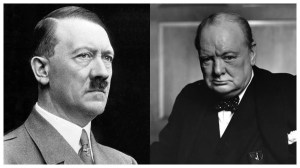
Winston Churchill – Hero AND Villain?

Pretend, for a moment, that you did not read the title to this article and picture for me two European leaders in the first half of the 20th century. One is bipolar, an alcoholic and rarely seen without a cigar in his mouth. The other, a tee-total, animal-loving vegetarian who remained abstinent for most of his life. One is the Prime Minister of the United Kingdom (twice) and one is the Chancellor of Germany.

Hailed as the saviour of the world in some desperate British people’s eyes, British school children are taught to love and adore Churchill in the way we would Charles Darwin or Margot Robbie. Maybe not the latter .

We are taught that it was Churchill’s stern resistance, his refusal to bow to Hitler’s demands, that won World War 2 for the Allies and secured the defeat of fascism in Germany. Whilst some aspects are true, most are not. Churchill himself once famously, as an addage to the famous quotation ‘history is written by the winners’, commented that ‘history will be kind to me, for I intend to write it’. That he did and that it is.

If we want to go into details of battleplans during World War 2 it is important to remember the idea which many historians share that ‘the UK gave us time, the USA gave money and the Soviets gave their lives’. This is true.

People think the war was won because of Churchill? Hitler’s decision to invade Russia forced him to move most of his forces East and ended the Blitz which had brought London to its knees. Hitler’s poor planning saved us there.

Then we get onto my real point. The Bengal Famine of 1943. Don’t worry, I know you haven’t heard of it, because it makes Britain, Churchill and both their legacies look bad. Why would it be taught in school?

Bengal (now Bangladesh) was part of the British Indian Empire. Despite millions of Indians volunteering to fight in Europe and Japan to support the Empire, who had been oppressing them for years, Churchill decided that blockades, sanctions and restrictions in that region had to be upheld. To support the war effort. Churchill’s detractors point to his well-documented bigotry, articulated often with shocking callousness and contempt. “I hate Indians,” he once trumpeted. “They are a beastly people with a beastly religion.” Cheers for that Winston.

It is estimated that of the 60 million Bengalis, 2-3 million died of starvation because of this decision.

Want more? He referred to Palestinians as “barbaric hordes who ate little but camel dung.” When quashing insurgents in Sudan in the earlier days of his imperial career, Churchill boasted of killing three “savages.” Contemplating restive populations in northwest Asia, he infamously lamented the “squeamishness” of his colleagues, who were not in “favor of using poisoned gas against uncivilized tribes.” Read that again. Then once more. I’ll stop now but it goes on.

This may sound like an angry rant against Churchill but it’s not. The man displayed great courage and leadership at a time when Britain needed it most. But he is not the hero we have been taught throughout our lives. He was not the Second Coming. In a recent poll he was ranked as the Greatest Briton of all time. Not Darwin? Not Shakespeare? Newton, Lennon, Hawking? None of them ever sanctioned genocide or expressed views which are inexplicable.

Famed for his quick wit, he once entered into an argument with Lady Astor. Lady Astor, infuriated, snapped and commented “Well Winston, if I was your wife I would poison your tea.” To which he replied, “and if I was your husband I would drink it.” A war veteran, a well-versed politician, an excellent public speaker and a Nobel Prize winner for Literature. No one denies the gifts God gave Churchill and it would be difficult to suggest he did not utilise these gifts. But the white-washing of his history is terrifying.

It was in the darkest of times that we needed a man like Churchill. A man of principle and conviction. A complicated man and, if we’re honest, were his incredibly offensive comments so much different from what other politicians at the time were spouting? There is no doubt, however, that in modern times a politician who switched from the Conservatives, to the Liberals, then back to the Conservatives whilst having a drinking problem and advocating policies that many who class as “insane” could ever become PM – twice.

Hero or Villian? Perspective or fact?

Remember Dominic Cummings? Neither.

Dominic Mckenzie Cummings, Chief Adviser to Boris Johnson and arguably one of the most hated men in Britain, for those of you who may have justifiably forgotten. They say ‘ignorance is bliss’ and having no knowledge of this guy must be heavenly.

At the beginning of this once in a lifetime crisis Dominic Cummings was the epitome of the Tory party – one rule for them and one rule for us. It will be rare that I will be quoting Peaky Blinders on this blog, but I can’t help remembering Oswald Moseley’s quote, “two men like us for whom forbidding is forbidden”. Moseley, an equally reprehensible character and leader of the British fascist movement in the 1920s and 1930s, would be proud if he could see the way Boris Johnson and Cummings have dodged what would be career-ending for any Labour politician.

For those who don’t know, a bit of background on Cummings. The ‘man’ was special adviser to Michael Gove *sigh* for 7 years, including his time as Secretary for Education where he, for some reason, got rid of AS-Levels and turned GCSE grades into numbers. (I don’t know why, I’ll work it out one day.)

He then left Gove. “Hooray!” you may be thinking. ‘Ding dong the Witch is Dead’ might even be slipped on and you could be forgiven. But no. Instead the timing was actually perfect for Cummings as he immediately took up the position of Director of ‘Vote Leave’ between 2015-2016. *Bigger sigh*.

After his 2016 Brexit victory there came a blissful silence from this ‘man’. Then some people elected Boris so that Brexit thing could happen. Boris created a new position, ‘Chief Adviser to the Prime Minister’, just so he accommodate his Cummings into one of the most senior roles in government, without being elected of course. Just a side-note for those of you who think I am being harsh on Cummings – Sajid Javid, THE CHANCELLOR OF THE UK, resigned after he refused Cumming’s demands that he dismiss one of his Chief Advisers. The Chancellor of the UK, effectively the third most powerful man in Cabinet, was forced to resign because Cummings said so. Cummings has never been elected by anyone; at least Javid has. Make no mistake about who’s in charge – and it certainly isn’t that blonde James Corden look-a-like.

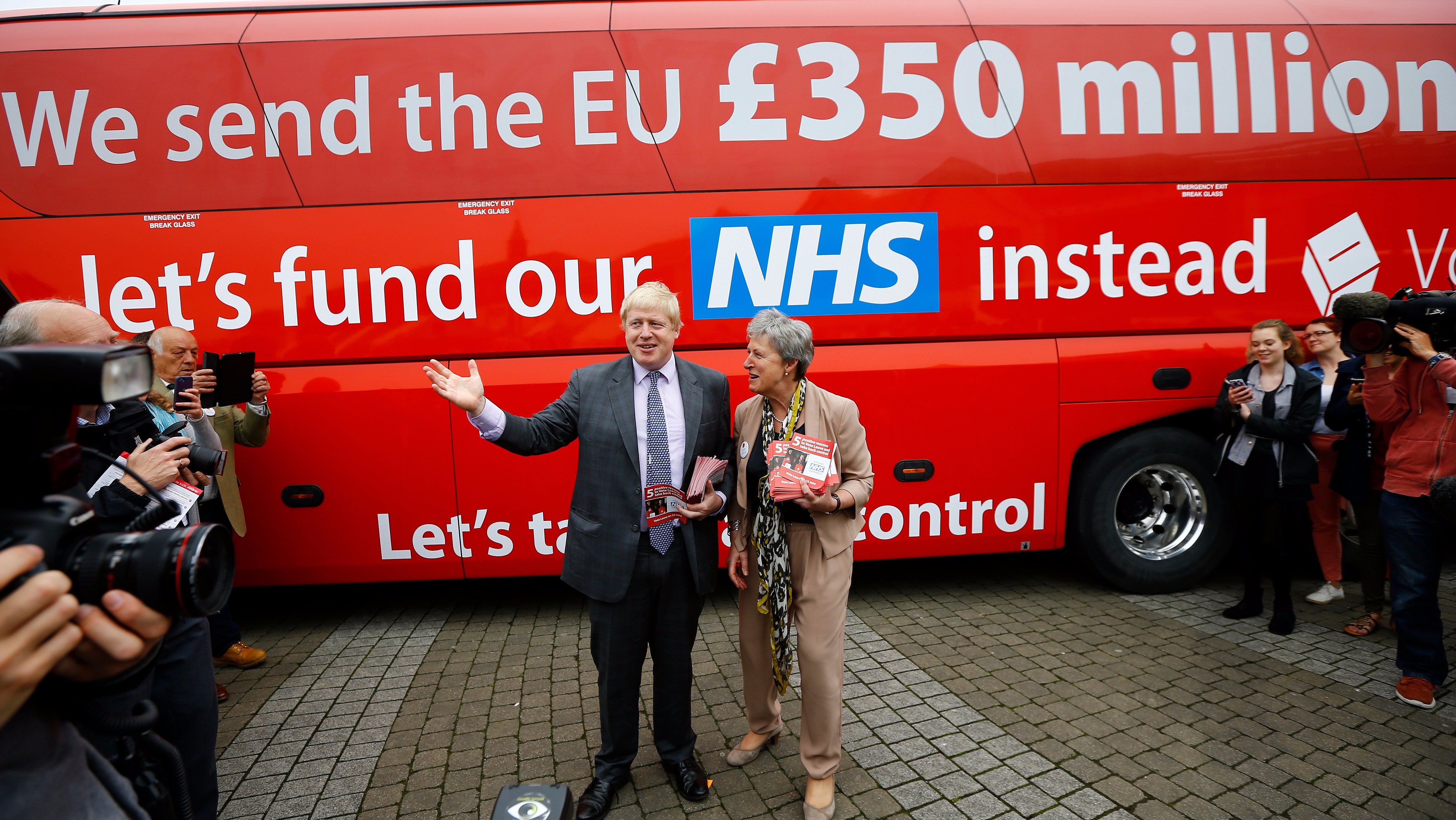
UK does get back some of £350m it sends to EU, Boris Johnson ...

Remember that famous slogan “£350 million pounds a week could be spent on the NHS” – you’ll never guess who worked that out. *I need to breathe in now

Cummings list of lies are absolutely incredible – in ANY other job he would be fired and probably face criminal proceedings. A quick reminder of just a few of his lies. Four days after the Prime Minister announced everyone “must stay at home” Mr Cummings was seen leaving his house because his wife believed their four year old to be very ill. He left, then returned to Downing Street 4 hours later. Despite the advice the clear advice that anyone who had symptoms or had come into contact with someone who may have COVID should remain at home for 14 days.

Cummings then drove to Durham because he feared that he and his wife would become seriously ill and need childcare. You may, at this point, have a touch of sympathy for the man. After all, the guidelines were vague when children were involved. ‘Essential travel’ was not fully explained.

Couldn’t he have found childcare closer to him? A friend, family member, care-worker? 240 miles is a long way to go for childcare isn’t it? He also drove to and back from a Hospital because there were ‘no taxis’, despite the advice at that time being – “people with symptoms that may be caused by coronavirus and who do not require hospital treatment are told they “must remain at home until they are well”. I could go on about his various lies since this incident but I’m sure you’re sick to death of reading them. But there are two really interesting aspects to this Cummings case which should be addressed.

The first was the journalism. Journalists these days have almost become identical to politicians: sensationalist, looking for click-bait, questionable sources and bare-faced lies (see Johnny Depp vs The Sun). But the journalism in this case was worthy of Woodward and Bernstein. Release one bit of information about seeing Cummings driving around – let Tory leaders panic, find an excuse, get it out there. Then just as they think they’re safe, add the ‘blog’ incident and the ‘long drive’ incident and watch the Tories scramble for someone to blame. Survival of the fittest has always been their way.

Gollum 2.0

Gollum 2.0

Even more saddening than that is this. The guidelines and advice given at the beginning was most likely checked and double-checked by Cummings before Boris was allowed to announce it. He knew the rules. He knew what Boris was going to say. And he knew the loopholes to stop him being properly charged. That is corruption. He was also aware of the millions of people, you and I included most likely, who weren’t allowed to visit loved ones because we believed their advice. Hindsight is wonderful – but why did we do that? Why did we trust men like Johnson and Cummings? Some say the public reaction was harsh and an overreaction – these people are wrong. It cannot be one rule for them, one rule for us.

It is currently estimated that up to 6.5million jobs could be lost by the end of this lock-down – but I doubt Cummings is too worried.

The Troubled Journey of HS2

Now admit it. You may not like me, my writing style, or agree with my political viewpoints. But that’s a bloody good article headline.

High-Speed 2 (HS2), the ambitious railway project intended to revolutionize the UK’s transport system. It has failed. It is a failure (I can relate). But it’s still being built? Miles upon miles of clean countryside is being torn up for …

Well that’s the question. Firstly, let’s focus on the North. Having attended Leeds University for 4 years I saw the station being fully renovated (not that I got to enjoy the final product). Only for the residents of Leeds to be told that HS2 will not be going to Leeds. What a waste of money – you must be thinking. That’s not the start or the end of it.

One of the primary criticisms leveled against HS2 is its staggering cost. From its inception, the project has been dogged by financial concerns, with estimates skyrocketing over time. The initial projected cost of HS2 was approximately £55 billion. Imagine what the government could do with that money. My last article referenced the tragedy of Grenfell. I’m sure some of that money could go to the victims, their families or could be put towards better building regulation and improved infrastructure. But this is a Tory project, let’s not forget, so who cares about them? (I have no political bias. I write what I think.)

But even if you were stunned by the inital approximate cost (which you should be!) subsequent revisions have seen the budget balloon to an estimated £100 billion and beyond. One hundred. Billion. Pounds. Imagine you were on, what I consider to be a good salary, of £45,000 a year. If you get that straight into your bank account (by the way you don’t because a lot of that is going towards this monstrosity). Guess how many years you would have to work to earn that much.

22,222 years.

But it’s not just the economics of it all. After 13 years of the same government we know that economics is not the Tory Party’s strong point … if it ever was. What about the environment?

Now, let’s be clear. When it comes to climate change I am deep-rooted in my beliefs that we are past the tipping point. On a podcast, an Environmental Scientict said that there’s no point in your recycling bin, or you cycling to work. His comparison was a house (the earth) is on fire and we have just turned on the kitchen tap to try and fix it. A brilliant analogy, I believe, but just because governments’ are slowly turning that tap on (good luck with your “Net 0 by 2030!” – or was it 2050?)

I thought Climate Change was just scientific fact by now. Like Evolution. To say “I don’t believe in Climate Change” is synanymous with saying “I don’t believe the Earth is round”. Well done ‘Einstein’. We’ve moved beyond hyptheses and it is no longer a case of belief. It’s a case of when. But now that I’m down with my little rant about Climate Change and the impact HS2 has had on the environment. Let’s move to its’ many other failures.

So we have – no travel to key areas. Unbelievable costs. And the environmental impact.

What about the delays and mismangement? The project was originally scheduled for completion by 2026, but its timeline has faced repeated setbacks. One major factor contributing to these delays is changes in leadership. In case you’ve been locked in a dark room for the last 3 years we have had 3 different Prime Ministers. One of them, Liz Truss, being the shortest-serving Prime Minister in history (excluding those who died in the post). This demonstrates a clear lack of clear accountability. They can blame it on the previous, who can blame it on the previous … who can blame it on global economic forces. “Blame everyone except for the idiot 3ft from the mirror” should be their new moto.

While the vision behind HS2 aimed to enhance the UK’s transport infrastructure, the project has been plagued by a multitude of problems, ultimately leading to its failure to live up to expectations. Exorbitant costs, environmental concerns, delays, regional imbalances, and changing travel behaviors have all contributed to the skepticism surrounding HS2.

And yet … they still pump money into this joke.

They MUST Be Joking by Now?

It was announced a few weeks ago that Matt Hancock would be joining “I’m a Celebrity, get me Out of Here!”, whilst still trying to remain as an MP. I was not even shocked when I read the headline. In fact, I almost laughed. Almost.

After all of this mess, Matt Hancock now thinks its appropriate to stay in his position and go out and get his five seconds of fame on a reality TV show. Hancock, the clue’s in the name by the way, is famous in the Tory party for … um … well he was caught on CCTV groping that woman. But as an MP? Hancock served as Secretary of State for Health and Social Care, a fantastic job he did too! As we are now genuinely facing a nurse-strike over Christmas due to his failure after failure.

hancock

Speaking of this man’s failures, it’s also funny to mention that he actually stood in the 2019 Conservative Party leadership election but withdrew shortly after the first ballot. The man is so self-confident he genuinely believed that he could be Prime Minister! Whilst that does not sound that hilarious after we have suffered through Boris, then Liz Truss and now Rishi (an article on his bullying saga will soon come), it was ridiculous at the time. He quickly withdrew as he saw the tides turning and potentially realised that he is actually incompetent after all. In the end, he began endorsing Boris Johnson, which allowed him to retain in his Cabinet in July 2019. Hancock served as Health Secretary during the COVID-19 pandemic and played a prominent role in the government’s response.

That’s right, Hancock played a key role in the government’s response to COVID. The “eat-out to help-out scheme”, the millions spent on failed tracking apps, the failure to supply proper protection when needed. This man is beyond a joke. He is just a walking failure.

But his arrogance knows no bounds, it would seem. Failure after failure after failure. And then it was announced that he would be going on a reality TV show. I have never watched this show, but I plan to this year simply because I want to see this shambles of a man fail again – except this time when he fails the entire country will not collapse. I hope.

But the audacity of an MP to think it’s appropriate and respectful to his constituents to go on a TV show whilst still “representing their best interests” is an absolute joke. The Tory party, in all fairness to them, were quick to remove the whip from him. This means that in the next election, if he hasn’t had the good grace and decency to step down before then, he will have to stand as an independent.

His excuse for joining the show? He wants people “to see the real me”. We’ve seen enough of the real you Matt, whether it was your public failures in office or your disgusting private life. We’ve seen enough and we’ve had enough.

If this isn’t some sort of joke and he intends to stay in Westminster – then the title of the show is quite apt in my opinion. Get him out of there.

Prime Minister. After Prime Minister. After Prime Minister. Would you take the job?

Wow. It has been a long time since I last posted an article. I’d like to say that I haven’t written on this blog for a long time as my last article came just after the news that the Queen had passed away and I wanted to show respect. But to be honest, politics has been moving so fast around me that I have barely been able to keep up.

So let me just start again by paying my respects to the greatest monarch in British history – certainly a debateable comment but that’s what this blog is supposed to be all about. Isn’t it?

And a brief note to follow on from that, before we get on to what I will now term the “Wild Westminster” (not great, I know, but Wild West … anyone?), is that we have all been given an extra bank holiday for King Charles’ coronation. Literally everyone I’ve spoken to about this is so happy to get an extra bank holiday, who wouldn’t be, but no one has mentioned anything about King Charles at all. Personally, I hope he acts like his mother and stays out of political situations. But I’m not holding my breath. But in my previous article I said that the monarchy died with the Queen and whilst it has not actually “died”, we are not French after all where a good revolution is always on the cards, but I sense that a lot of people simply to do not care about the monarchy or their business anymore.

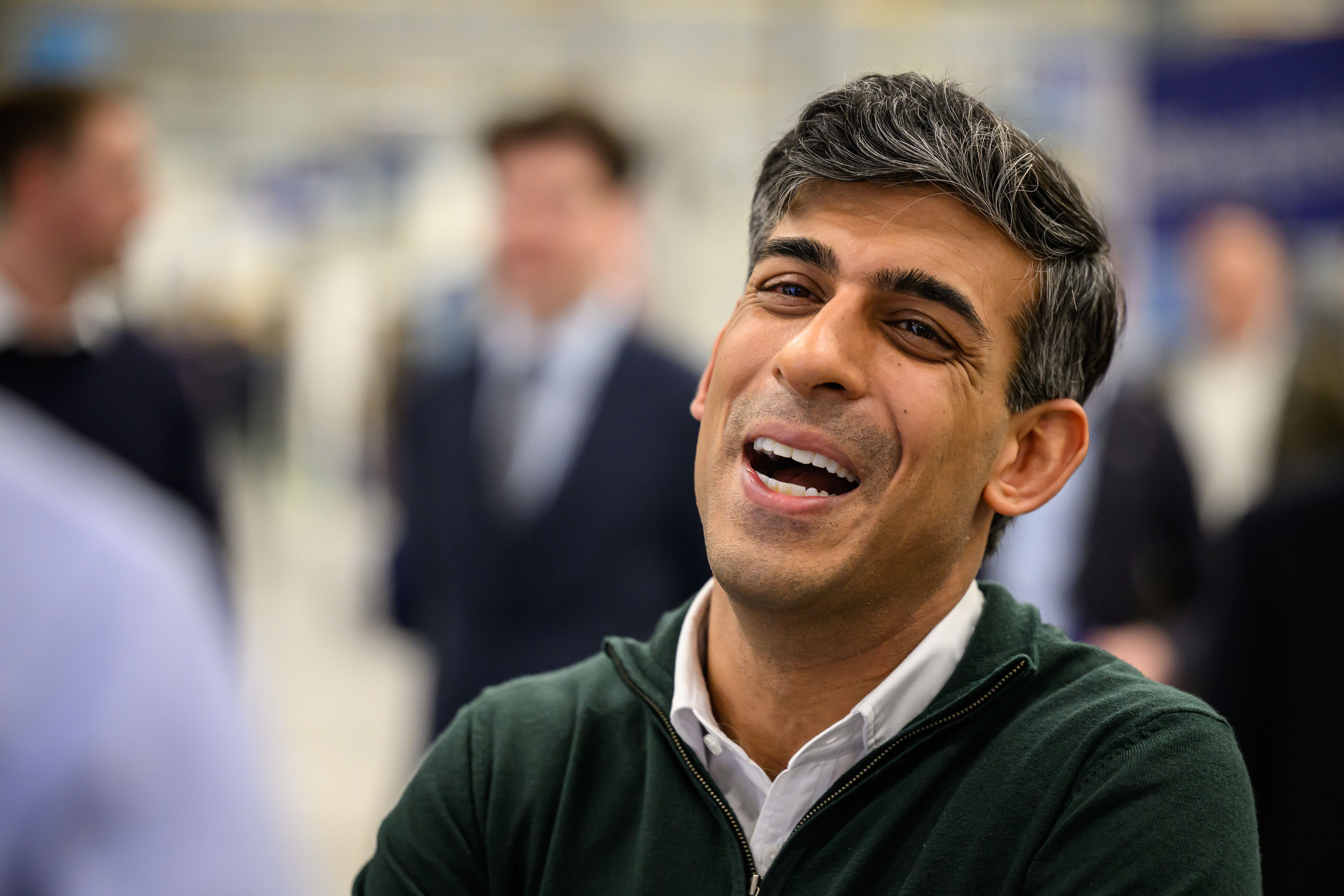
sunak

Anyway, onto the madness of the Wild Wild Westminster. My last article, to the day was when Liz Truss was still Prime Minister. As mentioned before on this blog, I knew she would be incompetent, but even I could not predict a failing on this level. Yes, the lettuce thing was very funny. Yes, she was the shortest serving Prime Minister in British history. But seriously, the only reason she won was because the Tory membership felt that Rishi stabbed Boris in the back. That’s it. They did not consider her complete lack of political knowledge, economics, or common sense.

Instantly, with the release of her mini budget on the 23rd of September, there was a public outcry and complete confusion within Westminster. What was going on? The budget was nothing short of a calamity. Throughout the debates the main issue, on my mind and the mind of many I suppose was the economy and cost of living crisis which we are all now facing. Whilst I am no fan of Rishi Sunak, during these debates he showed that he, at the very least, had the political and economic nous which Liz Truss was clearly lacking. When repeatedly asked whether she would cut public spending or raise taxes, she “umm’d” and “arrr’d” about it, refusing to give a straightforward answer.

Following this she then decided to boldly claim that she would do neither. Continuing with high public spending whilst aiming to reduce taxation. Now, you do not have to be a genius, or even clever, to know that public spending comes from taxation. If you want high public spending, you need high taxation. If you want low taxation, then you must cut public spending. It is as simple as that. But Liz Truss still could not grasp this very basic principle. Shocking.

But alas, she did not “stab King Boris” in the back. Therefore, the Tory members proudly elected her in and what happened? The pound collapsed. It didn’t dip, it didn’t drop slightly. It collapsed. Her mini-budget was just a sign of pure ignorance on the part of Truss and her best-mate (not anymore, I imagine) Kwasi Kwarteng. As she suddenly noticed what an absolute disaster this was, she, like many other Tory leaders before her, instantly sacked a close friend and colleague and tried to place the blame on him. Yes, it was his fault and they are both clueless as each other. But I suppose there is no loyalty amongst thieves.

Her decision to then bring Jeremy Hunt into the fold was also a calamitous choice as he began to tear apart this shambles of a budget. An awful choice by Liz Truss, is that three in a row now (?), but even this served to undermine her position further.

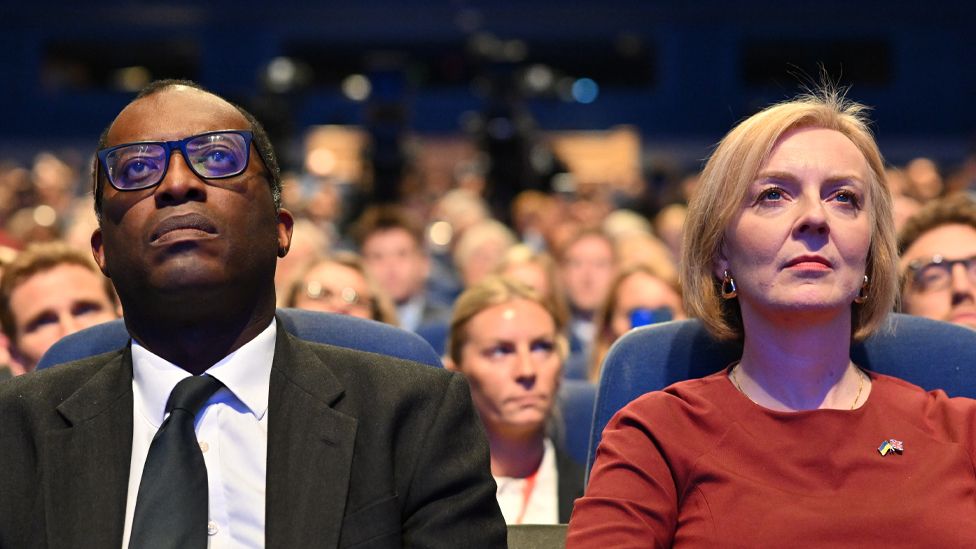
I told Liz Truss she was going too fast, says Kwasi Kwarteng - BBC News

It was on the 6th of September that Liz Truss took over from Boris. She lasted 44 days. Obviously, following that Rishi Sunak became the first Prime Minister of Indian descent. To be honest, it is actually amazing to consider that we now have an Indian Prime Minister if one were to look back on the treatment of India by the British empire. But that’s another article for another time.

So that’s not 3 Prime Minister’s in as many months. And what I find personally annoying is that there is absolutely no shame amongst these ministers. The Conservative Party has been in power for 12 years now. 12 years, with a strong majority is enough time to do a lot of good for the country and if you read my article on Tony Blair, you will understand what can be achieved in this time. But instead, we now face a housing crisis, ANOTHER criminal Prime Minister, a cost-of-living crisis, and the Bank of England has now recently announced that Britain is officially in a recession and has predicted that it will be the longest in British history. Many of you may remember the aftermath of the 2008/2009 financial crisis caused by the housing market in the United States. This is not only a continuation of that but could well end up being even more damaging.

Boris, then Liz Truss and now Rishi Sunak. Dear God. And with Rishi now facing allegations of bullying within the workplace relating to Gavin Williamson’s text messages to Penny Mordaunt (article soon to follow) he is under intense pressure as well. He claims he did not know about the texts, but there’s something about these Tory Prime Minister’s that makes me think they are lying. They are always lying. They have always lied. And whilst, perhaps, he did not know the exact details of the texts, although I find that hard to believe, he was made aware that this man was a bully and not suitable for a Ministerial position.

Now we have Tory MPs, unsure of what to do or how to tie a pair of shoelaces, claiming that “this is in the past” and that it was a “one-off” incident. The text messages lasted for two days and used vulgar, disgusting language and threats. I am no fan of Penny Mordaunt, don’t mistake me, but bullying in the workplace is just unacceptable. This was unacceptable. The Tory party is unacceptable.

Prime Minister after Prime Minister after Prime Minister. And now it turns out that Boris did have the backing of 102 Tory MPs to allow him to stand for the leadership again. Just let that sink in. After all that Boris has put the country through, all of the scandals, crises, and utter shambles. And the Tory MPs still want him back. I sometimes feel like I’m the only person in the world who sees this as an utter disaster. What are they thinking?

What good can come from re-electing Boris. But as I mentioned in article a long time ago. Boris is not done with politics. He hasn’t sailed off into the sunset. However, that brings me back to the title of this article (sorry that I have been going round the houses but it has been a long time since I posted and I needed to vent. There will be additional, shorter, and more readable articles to follow, I promise). Why would anyone take the job?

At work we were asking each other if we would take the job, a few people said yes but with ridiculous ideas. I would personally take the job just so I could dissolve Parliament and call a re-election. Nevertheless, Boris is no fool. He plays the fool. He had enough votes to stand for the leadership again. And I believe that before the next General Election he will still be about, like a foul stench. But why would he take the job? He “delivered” on Brexit and left whilst still enormously popular with the Tory membership. Why would he want to lead the Party into the next election where surely, they must lose?

He’s too smart to take the job. Much like Trump, with the blonde floppy hair, the ignorance, arrogance, and self-entitlement, he also cannot stand to lose. If he were to take the leadership position, I honestly do believe that the Tory party would do reasonably well in the next election. But that’s not to say they would win. And Boris is not concerned with how the Tory party look, he’s not concerned about the cost-of-living crisis, the war in Ukraine, Brexit, or you. Boris is concerned about Boris. And his legacy. Nothing more.

There is a saying in British politics that the Labour Party don’t win elections, the Tory Party lose them. Think back to Thatcher and John Major. Together they were in power for 18 years and in that time, they had, arguably, created more division and economic crises than we are faced with even now. And they lost to Tony Blair in 1997. I believe they will lose to Starmer in the next election. But read that again. I am not saying that Starmer will “win it for Labour” – I just believe the Tories will lose. What a sorry state of affairs.

Boris Johnson, much like his chum David Cameron who called for the disastrous Brexit referendum and then immediately cut and run, is not interested in the country’s well-being. They are both only concerned about themselves. Liz Truss then taking over and destroying the pound, her own career and launching us further into a deep recession. She did not care about the well-being of the country or the poor. She just wanted to be Prime Minister. And now Rishi Sunak, a Prime Minister who is certainly competent when it comes to political knowledge. But there is only so much he can do. He is despised by a large portion of the Tory membership because he betrayed Boris. He is despised by most of the country for the current financial situation we are stuck with. He is despised by Boris.

Why do these people want the Prime Minister job? It’s a lose-lose situation, surely. How arrogant and un-self-aware do you have to be to want to take on this position? Well, we’re finding out.

No doubt by the time I post this article there will be more news about another Prime Minister but for now, I just cannot believe what is happening to British politics.

It is shocking.

The Queen, Sir David Attenborough and Liz Truss

It was just this morning that I woke to the terrifying news that the Queen is “under medical observation” at her home in Balmoral. She is 96, to be fair, but she has also remained one of the main pillars of British democracy (ironically, as she is technically a monarch). Time to panic.

It has been reported that Prince Charles and the rest of the Royal Family are by her side. Prince William is also travelling up. As is Prince Andrew, although I am not sure whether that’s to see her sick mother or attend a 13 year olds’ party. Who knows with that freak?

What a lot of people do not know is that Queen Elizabeth II was never actually supposed to be Queen. One of the best monarchs the Queen has ever had happened by chance. In fact, if you want a quick history lesson in a paragraph here it comes:

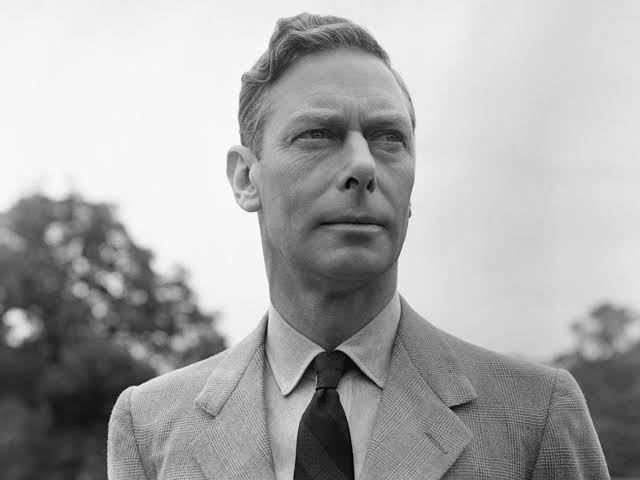
Queen Elizabeth II’s father, King George VI was never even supposed to be King! If anyone has watched “The King’s Speech” (and I thoroughly recommend that you do) we learn that King George VI had to overcome a stammer during his reign between 1938 and 1947. Do those dates sound familiar? World War 2 started in 1939 and ended in 1945 and King George VI was not only thrown into this position, but also had to overcome a stammer to maintain Britain’s morale. That’s a leader. And his daughter has also been a leader.

King George VI was the great-grandson of Queen Victoria. However, he also had an elder brother named Edward VIII. He was King from January 1936 before abdicating the same year. A short, terrible reign in which he wanted to sign a deal with Hitler and saw some benefits of fascism …

However, there soon came a constitutional crisis when he proposed to Wallis Simpson (an American socialite). Although there was nothing technically wrong with this, context is everything. Simpson was already divorced, going through a second divorce and was NOT British. Prime Ministers, the dominions and even members of the Royal family denounced the idea of a King marrying someone with two living ex-husbands. What if she switched her mind again and started spying for them?

Moreover, at the time Edward was the “Head of the Church of England” which did not approve of re-marriage after divorce, What a lot of people do not actually know about Edward VIII and Simpson is that she tried to run away several times, before he abdicated as she did not love him and thought that his royal duties were more important. But she failed and Edward abdicated after 326 days – making him the shortest reigning monach in Britain’s history. All for a woman who didn’t like him.

After this, he and his wife toured Nazi Germany, meeting with numerous members of Nazi high-command. In World War 2 he was stationed in France, but it was revealed and obvious that he was a Nazi-sympathiser and was appointed Governor of the Bahamas – best way to get someone out of the way.

So King George VI became king, when it was not his duty, and Queen Elizabeth II followed. This year we celebrated her Jubilee – 70 years as Queen – the things she’s seen and the way she has carried herself across the globe is nothing short of admirable.

Elizabeth is the longest-lived and longest-reigning British monarch, the oldest and longest-serving incumbent head of state, and the second-longest reigning sovereign monarch in world history.

I could list all the things that the Queen has been through. But if you read the above paragraph and think about all those records. If you then also consider the major events which have occurred over the last 70 years. People will haev different views on what her greatest achievments have been during her life.

But, for me, as a politics graduate; what I respect most about the Queen is that she has constistently remained politically neutral. She does not comment on policies, politicians or the economy. Because that is not her place. Because apparently we live in a functioning “democracy”.

This blog post, coming after the Tory Members elected Liz Truss as “leader”. There’s a saying – it doesn’t rain, it pours. An apt quotation given the current weather in Britain.

But we now face a cost-of-living crisis, homelessness on a scale never before seen, a completely incompetent Prime Minister. Add on to that the fact that Britain is becoming more and more isolated due to strained relations with the USA and the EU – this will be something for Liz Truss to fix (a blog post I will post later) and she will fail.

david

Another hero we cannot afford to lose is Sir David Attenbrough. If we couple these political and constitutional disasters with the on-going climate crisis. One third of Pakistan is under-water. Britain is facing bizzare weather. Africa is facing a massive drought. Australia is experiencing unprecedented weather patterns. Remember that thing … um … “climate change” (formerly “Global Warming” but now “Global Weirding”) that we have been warned about for the last 20 years.

Evidence was there – but we could not see the actual outcome. For decades scientists warned us that when these weather patterns beging to appear – it is too late. With big companies continually spouting that they are aiming for “Net Zero by 2030”. So that means another 8 years of this level of pollution. And after that, it’s not as if the Amazon will suddenly grow back, the sea levels will decrease and the air quality will become healthy again.

The Queen. Sir David Attentborough – when they go I fear for politics, Britain and the planet.

Broken Boris, Broken Brexit, Broken Britain

Oh how it was only a month ago that people seemed to be celebrating the end of the Boris Johnson’s era, as he announced his “intention” to resign. As an article I wrote exactly a month ago outlined, this was never an official resignation. Nor was it a signal that Boris wanted to leave politics.

The man needs to be in the limelight, he needs to be seen, he needs to be adored. And thanks to a never-ending stream of media and millions upon millions of Boris fans, he will get to choose his moment to leave. And this is not it.

I am no fan of Tony Blair, but many will remember in his final PMQs speech in 2007 he displayed a level of grace and diplomacy that Britain had been lacking since he launched his illegal invasion of Iraq in 2003. However, leaving that to one side, Blair’s final words during Prime Minister’s Questions to Parliament were moving, profound and entirely suitable for someone leaving such an important role in for such a long time. He said at last, and with almost a tear in his eye, “To all my colleagues from all of the different political parties. Some may belittle politics but we know, who are engaged in it, it is where people stand tall. And although I know it has its many harsh contentions – it is still the arena that sets the heart beating a little faster. And if it is on occassion the place of low skullduggery, it is more often the place for the pursuit of noble causes. And I wish everyone, friend or foe, well. And that is that. The end.” Met with a standing ovation from both sides of the House.

For all his mismanagement, his lies, his enemies, he still left the highest office in the country with dignity and respect. By this point, his party had begun to hate him, those around him had begun to conspire and eventhough he held a strong majority – he knew that his time was up. And so he resigned. This is not to say Blair held the office with any special dignity or treated it any better than those who had preceded him; in fact, he probably disrepected the role of Prime Minister and the Houses of Parliament more than any other leader in history. Except one.

Boris has nothing but contempt for the British people. He has no respect for the role of Prime Minister.  Attending those weird Downing Street parties (really, who wants to party with those over-grown prefects. I bet Jacob-Rees Mogg really knows his way around a 7 minute anechdote about paint drying). As wild and fun as I am sure these parties were, they were still illegal.

A further quick list – the Rwandan deportations, a vote of no confidence, two massive by-election losses, soaring inflation, a hike in interest rates, a hike in national insurance, mounting strikes from TFL which will soon spread to other working sectors (just believe me, it will), a cost of living crisis, a widening gap between the rich and the poor which is almost comparable to Dickenensian times, as one commentator posted. And Boris’ final words?

“Hasta la vista, baby.”

Are you joking? Your final words in Parliament are a quote from the Terminator? After all the mess, lies and fear you’ve created, those are your final words? Without a second of remorse or even an attempt to regain some form of bipartisanship … is it because you knew they wouldn’t be your last words in Parliament?

Directly translated “hasta la vista” does technically mean goodbye, but is usually said with a note of “see you later” or “I’ll see you again”. But I don’t think we should get bogged down in the direct nuances of what Boris said; half the time I don’t think he even knows what he’s saying so let’s put that to one side. There’s a possibility that studying his final speech may become like studying Shakespeare at school, endlessly analysing The Bard’s use of the word “red” until you drove yourself mad. By the way, Shakespeare described blood as “red” in Macbeth because blood is bloody red! But I digress.

A better way to judge Boris’ plans, and most people’s to be fair, is to look at the surrounding context, look at their past actions and then apply that to potential future contexts you can see coming. Let’s apply this.

Firstly, the context surrounding Boris’ “resignation”. It is essential that we understand that Boris has not resigned. He is still our Prime Minister; but as I said in a previous article, he is not an idiot. He plays the idiot.”All the world’s a stage, and all the men and women merely players” as Shakespeare once famously wrote. (If only my English teachers could see me quoting the playwright now! Not that I’m still holding that grudge.)

To be quite honest, I don’t think Britain has really experienced a politician like Boris Johnson before. A man who not only knows when to seize an opportunity and run with it, as he did with Brexit as everyone around him was calling him mad. He saw the opportunity as a win-win. And it was.

But more importantly than seizing opportunities as they immediately arise, Boris also knows when to step back into the shadows if necessary and let others take control. After the Brexit vote, surely a Brexit-supporting politician should have immediately stood. Whilst Boris was essentially “stabbed in the back” by Michael Gove at this point, he did not cry or kick up a fuss – allowing the media to do this for him. But rather than this being an honourable act of stepping aside to let the better man stand (if you think Michael Gove is a better person than you just give up, genuinely just give up).

He did not even complain when Theresa May won the election, by the slimmest of margins, despite the fact that she was a Remainer. This was because Boris knows how to play the game. It was obvious, or seemingly so, that whoever took over as Prime Minister after David Cameron would face an incredible challenge over seeing Brexit through. And while all the Tory MPs rushed to get their names on the ballot, Boris potentially knew that his time would come later.

BROKEN BORIS

Obviously, with the benefit of hindsight, Boris’ plans did work out. Theresa May did make a mess of things, she did nearly bring the Tory party down and it was only due to the divided nature of the Labour party, coupled with the in-fighting over Jeremy Corbyn, that the Tories managed to stay in power.

Boris did then see an opportunity to strike, as the Labour party was unimaginably weak at this point. He led the bid and was successful – as a lot of people forget how immensely popular he is amongst the Tory membership. And, whilst the Tory members may share 3 brain cells between them, their voting powers are very strong when deciding who the next leader of the party will be.

Context. So whist everyone is clamouring to find out who the next Tory leader will be. *Sigh*. Will it be the well-informed, tax dodging criminal? Well … apparently he “stabbed Boris in the back”, according to many Tory party members, because he refused to work for a criminal…

But guess what? There’s no honour amongst thieves. Learn it the hard way. Or the next Prime Minister could be Liz Truss, who is possibly the most incompetent politician I have ever seen.  I am being entirely objective when I say Liz Truss is not fit to be the Prime Minister. That is not sexist. I feel the same way about Rishi Sunak too, as he is a criminal, but at least he is knowledgeable about the current situation of the country. But anyway, who knows who will win. The Tory members will let us know the bad news soon enough.

Rather more interesting than who will win out of those two losers. They are doomed to be one-term PMs as there is no way they can continue to lead the country without massively raising taxes, tackling the Unions and solving the housing crisis – a competent PM could not acheive this. Either one of these overgrown children could not and will not be able to do it, even if they had the best ministers around them and not a who’s-who of political ineptitude.

But who comes after that? If we assume that Labour will continue with its in-fighting and Starmer as their leader then I think it’s safe to assume they do not pose a threat to the Tories’ massive majority.

Increasingly, there have been demands within the Tory party for Boris to return. There are even reports that the PM has discussed and even broadly outlined a plan for his return. Indeed, a leaked report from one of his close aides suggests that Boris has gone so far as to say that he wants to be back as Prime Minister within a year. It really is incredible and, unfortunately, I cannot tell whether this manouvre is too far or whether he’s just a step ahead of every political commentator there is, as he has been throughout his career.

I’d imagine the former. Boris has been in politics long enough. As the famous Bible saying goes, “You either die a hero, or live long enough to see yourself become the villain”. Or maybe that’s Batman. Nevertheless, even as I write this there is a slight worry that Boris may be toying with us, yet again. His claims of returning to government, the fact that he hasn’t disappeared to become some millionaire adviser like Blair, Cameron, Clegg all have done is interesting to say the least. He has the option to ride off into the sunset with millions of pounds to sit with – but he isn’t. Why? Don’t tell me it’s out of some patriotic duty he must feel. Give it a rest.

But with over 8,000 Conservative Party Members signing a petition calling for Boris to be put back on the ballot paper, people should be concerned. Boris’ tenure has led to a failed Brexit, with strains on relations with Europe, the USA and the rest of the world as Britain seeks to isolate itself further. Added to that, the lies, the crimes, the wasted money on COVID schemes. Even as I research this article I come across new information that Norway could cut power to Britain, compounding the effect of the predictions that the UK’s energy prices are expected to jump by 70% in October.

Boris’ tenure has been marred by such headlines. And whilst the next PM will definitely be either Rishi Sunak or Liz Truss, don’t expect either to be around for long. In fact, don’t expect much from either of them – the situation will get worse before it gets better.

But “Hasta la vista baby” ??? All we can do is hope we never see you again Boris. Hope beyond hope.

Rats Leaving the Sinking Ship (But that “Ship” is the British Government!)

Why are we celebrating? Well, because last night Rishi Sunak (the Govermment’s Chancellor of the Exchequer) and Sajid Javid (Health Secretary), amongst others, handed in their official resignations as members of the cabinet. I suppose we all knew this would come at some point – it had too.

Here’s a quick list of the Ministers (different to being in the cabinet) who have also resigned:

  • Will Quince, Education Minister
  • Alex Chalk, Solicitor General
  • Robin Walker, Education Minister
  • John Glen, Treasury Minister
  • Victoria Atkins, Justice Minister
  • Jo Churchill, Environment Minister
  • Stuart Andrew, Housing Minister

But what is more interesting is the specific cabinet ministers who have resigned. And I expect more to come.

After 2 years of Covid lockdowns, restriction, changing financial policies and record-breaking cases of deaths we now have no Chancellor of the Exchequer or Health Secretary. Yes, Nadhim Zahawi will become the new Chancellor; there are even rumours that he was threatening to also resign if he was not given the Chancellor role.

It’s not what you know, it’s who you know. 

Steve Barclay will become the new Health Secretary. I hear you ask “who”? Good question. Well, after being elected he previously served as “Secretary of State for Exiting the European Union” from 2018 to 2020 and that went um … well. Essentially, they’re seat fillers, looking to get ahead and siding with the PM to make it seem as if Boris was prepared for this.

And to be fair, throughout his career Boris has always been a step ahead of the game. He plays the buffoon, the “loveable” (I use that word because I have heard others refer to him in such a manner) clown. But let’s not forget he was a very talented journalist. He then moved into politics at the exact right time, defeating Ken Livingstone in 2008. Ken Livingston was actually the first Mayor of London, elected in 2000, and was responsible for winning the UK’s bid for the 2012 Olympics. As well as implementing ride-and-go bikes for people to get around the city easier. They’re now called “Boris Bikes”.

During the Brexit referendum Boris chose the side of “leave” which I think shocked many because, if he were to tell the truth (highly unlikely in any circumstance), he would probably admit that he is not a Brexiteer. But he saw that through, eventually winning. Then, he allowed Theresa May to immediately take over and take the brunt of the Brexit anger. It was only after this had, to some extent, settled down that Boris saw his opportunity to reach the position of Prime Minister, something which he told his dad he was going to be when he was 9 years old.

It’s not what you know, it’s who you know.

So, as the cost-of-living crisis increases, COVID cases continue to rise and the UK is stuck with an unbelievable amount of debt, matched only by record levels of inflation and a recession which technically hasn’t begun yet if you follow the strict definition of what a “recession” is. But everyone knows it’s coming and they’re batting down the hatches.

Rishi probably had his resignation letter prepared as soon as the tax-dodging, non-domicile news about his wife was leaked. You cannot be Chancellor and a tax dodger. Although, there used to be a time when we would not have a convicted criminal as a Prime Minister and yet here, we are.

And I agree, I think it is no coincidence that these two Ministers in particular resigned. Because what can they do? Apart from leave it to the next guy to sort. Remember David Cameron after the Brexit Referendum? Cut. And. Run.

But what’s more pertinent, relevant, and perhaps scary in my eyes is that we are celebrating the collapse of our own government. This is madness, surely. Yes, they should all resign. But these are ministers and MPs who have backed Boris Johnson all the way; they were all biding their time and I feel like the Pincher scandal was the opportunity that they all seized. The Pincher scandal is disgusting. The man is disgusting. But the Tory Cabinet is disgusting too. Whilst you were in lockdown, doing those annoying Zoom quizzes with family you hadn’t seen in years, they were partying and lying and laughing at you. And me. Us.

But the celebrations that Boris may finally disappear need to be quick and then we need to focus back on politics. Our cabinet is resigning. Our PM is a liar, cheat, narcissist, and a criminal. I recently wrote an article on how Democracy is failing. Our government is failing. Whatever happens in the USA tends to happen in Britain 5/10 years later (if not sooner). Democracy is failing in this country. We can see it crumbling in front of us!

So, these celebrations must be quick, but then we must act to preserve the nature of democracy in this country. We cannot have a cabinet filled with criminals. We cannot have a Prime Minister who invites Sue Gray (the investigator of the “party-gate” claims) to his office to tell her not to produce the report. Then say she was never invited. Then suddenly remember she was. A liar through and through.

But much like how Boris has seen and picked his moments throughout his career – Starmer and Labour or The Liberal Democrats must see this as their chance to hammer the final nail in the coffin. They cannot be weak. They must strike at PMQs, they have to be on the streets. Now is not the time to watch the world burn, as Labour seem to have been doing over the last few years. The time is now for Starmer to prove his worth and prove that he is a better politician, leader, and human being than Boris.

For the sake of the country. Don’t screw this up.

Democracy Has Failed – What’s Next?

Many people on this planet believe that democracy is some sort of God-given right which we should all be incredibly greatful for, if we live in a supposedly democratic country, and something which we should aim to push onto other countries so that they can develop “properly”.

A bit of history. The Greeks were originally the first to come up with forms of government and eventually settled on four main forms: democracy, monarchy, oligarchy and tyranny. Even with these forms you had overlap. For example, the Kings of Sparta were “kept in check” by ‘ephors’ who themselves were elected in an oligarchical fashion. Corinth and Stymphalos also had similar groups of “elders”, making it difficult to establish whether these areas fell under the umbrella or monarchies or oligarchies. The Greeks, however, experimented much beyond these four main pillars of governance.

Athens was perhaps the closest to what we would consider modern democracy. Pericles, in 431 BCE, commented that “Athen’s constitution is called a democracy because it respects the interests not of the minority but if the whole people … everyone is equal before the law.” Is that the democracy we have today? Are the interests of everyone in society considered? If there is proof that a “democratic” Prime Minister broke the law three times, but was only charged once, is that everyone being treated equally before the law? How democratic are your democracies, really?

Even if one were to consider Athenian democracy as almost idealistic, it must also be remembered that it was their democratic “bad decision” which led to the death sentence of Socrates in 399 BCE. Democracy is not always right. The argument that Hitler was democratically elected is a boring one, but certainly relevant in this context. Just because everyone has a say, this doesn’t mean they’re right. As Super Hans once realised, “people like Coldplay and voted for the Nazis, you can’t trust people!” So wise.

Eventually, monarchies fell as the majority of people became agnostic/atheist and began to resent being ruled by a family who had a “god-given” right. If you don’t believe in God then where does that right come from? This was at least part of the reason, they also failed to produce results and in almost all circumstances the Royal Families themselves ended up living their own lives to excess in an almost tyrannical manner. As the excess grew, so did the anger amongst many starving populations, eventually leading to revolution in many of these countries as a desperate act of revenge. Does this excess, combined with the extreme poverty we face, remind you of any country in particular?

We’d expect monarchies to have fallen everywhere. But, as I write we are celebrating our own monarch Queen Elizabeth II. To be honest, I have very mixed opinions of the Royal Family. On the one hand, it produces criminal freaks like Prince Andrew. They’re also exclusive to the point of abuse and absolute intolerance. However, I have nothing but respect and admiration for the Queen.  The lady is 96 years old, an incredible feat in itself, but has always remained politically neutral as well as mindful of the world around herself. Whilst Prime Ministers or leaders have come, made a mess and run, the Queen has always remained as the ultimate figurehead not only for Britain but also for the Commonwealth. What will come after her reign? Who can say? But I certainly won’t be on the street celebrating “King Charles” and I don’t think many people will.

Nevertheless, whilst Britain has certainly benefitted from having one of the most stable and respected monarchs in the world at the helm for the last 75 years this is undoubtedly the exception which proves the rule. In the majority of cases, if monarchies are able to survive instances such as the French Revolution or the American War of Independence, one just needs to look at the monarchies in the Middle East to see how easy it is for monarchies can become evil machines.

Oligarchies (a system in which a ruler or group of rulers is chosen by a specific group) were also an extremely popular form of government which existed for a long time. The Greeks actually essentially decided that intellectual oligarchies which meant that intelligence allowed people to rise to the top of society. However, this system also failed as it is inherently corrupt. The “group” who decide on the leader, is it a religious oligarchy, an intellectual oligarchy or a monetary oligarchy (as we see in Russia, where someone can take power and money and then use this money to pressure people into keeping them in power.)

Tyrannical reign essentially sums up the above situations. Tyranny specifically refers to someone who has gained power illegally and refuses to give it up. Think Caesar. This would obviously be unacceptable in modern society – although China? Putin? It’s not unheard of.

Another solution for governance, which seems to have taken a hold within the human consciousness, was democracy, which comes in two forms. The first is “direct” (think of the Brexit referendum) where you are voting on a simple question and there is a “yes” or “no” answer. One vote and majority rules. Obviously, as society grew and the population grew people began to use “representative” democracy which is what we see in all modern democracies. This is a system whereby we elect officials, MPs in Britain, to make decisions on my behalf. That’s gone well ..

So the first three lead to some sort of tyranny, evil and supression. They lead to a good life for those in power and extreme desperation for the rest. How is that differing from the results of our representative democracy, which we cling on to so greatly?

Bullingdon Boys – Oligarchy or Democracy?

We have a cabinet full of criminals. We have a Prime Minister who is actually a criminal but refuses to leave, that sounds like Tyranny to me. We’ve had a succession of Oxbridge, Etonian, Bullingdon Club Prime Ministers. That sounds like an oligarchical system to me? And monarchy? Well, we do have a Queen … but I’m sure Boris would take that job if he could.

Please don’t misunderstand me – democracy is one of the best things that humanity has ever created. The fact that I am even allowed to write on this blog; the fact I was able to protest against tyrants like Putin without fear of reprisal from police; the freedom which comes with democracy should not be underestimated. However, freedom and deomcracy are not tied. They are not intrinsically linked. You can have freedom without democracy. You can have democracies where no one is free.

But far too often we think it’s a “right” and it’s going to solve all our problems. It is a human concept, which has created a system which has led to Donald becoming President of the USA and Boris becoming Prime Minister. In my mind, that is a failure. We could suggest that this is because of the rapid, unexpected and exponential growth of technology which democratic states were simply not prepared for. It could also be argued that the failure of democracy essentially can be blamed on human nature, as fundamental human greed will always directly or indirectly lead to unfair political and economic systems. Perhaps there is no “right” way to govern society …

But I believe it can be fixed. A total overhaul may be needed, but it should happen before working-class people are pushed too far and democracy is left in the past like other failures such as communism. The fact that people are so quick to dismiss the other forms of government before taking a good look at the products of our democratic systems is irritating; the success or failure of a political system must be determined by what it produces. Monarchies, for example, led to groups living in excess at the expense of 99% of the rest of the population. What is democracy producing?

As Winston Churchill once famously commented, “Democracy is the worst form of government – except for all the others that have been tried.”

Is it time to try, at least, thinking of something new?

Brexit – You Broke It, You Bought It

I’m not sure if many people remember where/when they were when the Brexit result was announced. I remember exactly. It was the day after we got our exam results and we decided to go out. One of my friends, who shall remain nameless, overdid it and I was forced to look after him for the night. I woke up bright and breezy and went into my friend’s living room.

I switched on the TV and saw those two famous numbers that would dominate British political discourse for the next five years of my life. 52% to 48%. (Why oh why could they not have put a 5% minimum limit on it, why?) I imagine it’s because, much like me, most people never ever expected Britain to leave the EU. I went into my friend’s room and in his sick-covered shirt he sat bolt upright, ran down the stairs and started watching the news – nearly wept. Boris’ blatant lies, Michael Gove’s muddled statements, the chilling racist undercurrent which cut through the entire campaign. The expectation that all your problems were caused by the EU and its institutions is shocking.

Tories must admit the lies of Brexit to save the economy – and themselves - New Statesman

Essentially, as I said it would, the vote would come down to a simple question about whether people were happy with their current situation/lives or whether they were not. It is clear from that outcome that most were not. But this was after six years of Conservative rule. So is the austerity you face, the rise in foodbanks, the tripling of our national debt, joblessness, homelessness etc. Is that more down to a harsh government? Or an international unified body which has no ability to dictate a sovereign states’ laws. Obviously, the latter …?

I won’t go through a list of the lies they told you. You’ve heard them all and if you had any political nous, common sense, or a brain cell you would instantly see them for what they were, complete rubbish? I’m not a fan of James O’Brien, he does a daily talk show for LBC, but he has been consistently arguing against Brexit since the vote and has received a ridiculous amount of online hatred for it. I don’t agree with everything he says and do find him to be a bit patronising to people who may not be as educated as he is. But if you get a chance, you should definitely give him a listen.

In one portion of his show, my personal favourite, he gets a lot of angry Brexit supporters to ring in and simply say why we’ll be better off outside the EU. He asks them to specifically name one law, as I have done to my Brexit-voting kin, that they did not like obeying while in the EU. One man jokingly answered, “straight bananas” to about 10 seconds of stunned silence. Another woman seriously replied, “blue passports”, utterly seriously, and when asked whether this would improve poverty, housing, suicide rates, a crumbling NHS, people who rely on the freedom of movement – she immediately hung up.

My biggest argument for the EU had nothing to do with freedom of movement or the economy. In fact, there are certain aspects of the European Union, particularly the Commission, which I find wholly undemocratic and fundamentally disagree with. However, the creation of the European Union (technically starting as the European Economic Community ironically without Britain) has led to 65 years of peace between European nations.

This is the longest period of peace in the region in over 2,000 years. 65 years out of 2000.

It’s because it came down to immigration. Which is fine and I honestly don’t understand the problem. Being concerned about immigration affecting your livelihood etc can be a genuine problem and people admitting that can be a real step forward because then a genuine discussion can be had on the pros and cons of immigration. The problem arises when someone says they did vote on the basis of immigration and immediately get called a racist, shutting down the argument and making the debate even more controversial.

A lot of Brexit voters said there would be no delay in organising a deal because the EU needs us as much as we need them. When will this Dunkirk/Blitz spirit end? We are not the country that once controlled 3/4 of the globe. We are a country run by an unelected blonde fool who is being run by an even bigger unelected blonde fool. European countries look upon us a joke. Believe it.

Charles Kennedy – Integrity Personified

Charles Kennedy is probably not a man many of you have heard of but in these times of fake news, constant lies, politicians being spawns of Satan he was a saint.

A Member of Parliament between 1983-2015 and leader of the Liberal Democrats between 1999-2006; Kennedy led the charge in 2002 against the illegal invasion of Iraq. For this invasion, he rightly claimed, there was no evidence, no support, and no justification. Whilst Tories and Labour MPs alike voted for this war Kennedy stood alone. Leading the Liberal Democrats as the real opposition party.

A man of principle and integrity. If you’re able to cast your mind back to the Lib Dem – Tory Coalition Kennedy stood alone in begging Nick Clegg, who clearly wanted to cling to some kind of power, to not enter into an alliance with a party with such different views.

Not only a man of principles. He was a winner. His anti-war stance took the Liberal Democrats from near destruction, to gaining 62 seats in the 2001 General Election. This was the most the Liberal party had gained since 1923. Let that sink in for a second. Now, thanks largely to the coalition he rallied against and Clegg’s unpopularity, the Liberal Democrats have 11 seats.

This is not a direct tribute to Charles Kennedy – the man had a lot of problems with alcohol which are well-documented and can be read on another website if you so choose. It’s a tribute to a time when politicians had beliefs, stuck to them, and debated them in a fair way. Now? Well, now we have yelling, fighting, jeering, fake news and we have Boris. Charles Kennedy was not interested in any of those things. He led peaceful marches, argued excellently in Parliament, and encouraged a great deal of support.

His death in 2015, at the terribly young age of 55, was a reflection of his health issues. He had also just seen his party reduced to just 3 seats, as he himself lost his own seat for the first time in more than 3 decades. This must have been devastating.

During these ridiculous times it can be comforting to remember that not ALL MPs are evil. Not all of them are greedy, self-serving narcissists and not all of them lie constantly.

… But most are.

Winston Churchill – Hero AND Villain?

Pretend, for a moment, that you did not read the title to this article and picture for me two European leaders in the first half of the 20th century. One is bipolar, an alcoholic and rarely seen without a cigar in his mouth. The other, a tee-total, animal-loving vegetarian who remained abstinent for most of his life. One is the Prime Minister of the United Kingdom (twice) and one is the Chancellor of Germany.

Hailed as the saviour of the world in some desperate British people’s eyes, British school children are taught to love and adore Churchill in the way we would Charles Darwin or Margot Robbie. Maybe not the latter .

We are taught that it was Churchill’s stern resistance, his refusal to bow to Hitler’s demands, that won World War 2 for the Allies and secured the defeat of fascism in Germany. Whilst some aspects are true, most are not. Churchill himself once famously, as an addage to the famous quotation ‘history is written by the winners’, commented that ‘history will be kind to me, for I intend to write it’. That he did and that it is.

If we want to go into details of battleplans during World War 2 it is important to remember the idea which many historians share that ‘the UK gave us time, the USA gave money and the Soviets gave their lives’. This is true.

People think the war was won because of Churchill? Hitler’s decision to invade Russia forced him to move most of his forces East and ended the Blitz which had brought London to its knees. Hitler’s poor planning saved us there.

Then we get onto my real point. The Bengal Famine of 1943. Don’t worry, I know you haven’t heard of it, because it makes Britain, Churchill and both their legacies look bad. Why would it be taught in school?

Bengal (now Bangladesh) was part of the British Indian Empire. Despite millions of Indians volunteering to fight in Europe and Japan to support the Empire, who had been oppressing them for years, Churchill decided that blockades, sanctions and restrictions in that region had to be upheld. To support the war effort. Churchill’s detractors point to his well-documented bigotry, articulated often with shocking callousness and contempt. “I hate Indians,” he once trumpeted. “They are a beastly people with a beastly religion.” Cheers for that Winston.

It is estimated that of the 60 million Bengalis, 2-3 million died of starvation because of this decision.

Want more? He referred to Palestinians as “barbaric hordes who ate little but camel dung.” When quashing insurgents in Sudan in the earlier days of his imperial career, Churchill boasted of killing three “savages.” Contemplating restive populations in northwest Asia, he infamously lamented the “squeamishness” of his colleagues, who were not in “favor of using poisoned gas against uncivilized tribes.” Read that again. Then once more. I’ll stop now but it goes on.

This may sound like an angry rant against Churchill but it’s not. The man displayed great courage and leadership at a time when Britain needed it most. But he is not the hero we have been taught throughout our lives. He was not the Second Coming. In a recent poll he was ranked as the Greatest Briton of all time. Not Darwin? Not Shakespeare? Newton, Lennon, Hawking? None of them ever sanctioned genocide or expressed views which are inexplicable.

Famed for his quick wit, he once entered into an argument with Lady Astor. Lady Astor, infuriated, snapped and commented “Well Winston, if I was your wife I would poison your tea.” To which he replied, “and if I was your husband I would drink it.” A war veteran, a well-versed politician, an excellent public speaker and a Nobel Prize winner for Literature. No one denies the gifts God gave Churchill and it would be difficult to suggest he did not utilise these gifts. But the white-washing of his history is terrifying.

It was in the darkest of times that we needed a man like Churchill. A man of principle and conviction. A complicated man and, if we’re honest, were his incredibly offensive comments so much different from what other politicians at the time were spouting? There is no doubt, however, that in modern times a politician who switched from the Conservatives, to the Liberals, then back to the Conservatives whilst having a drinking problem and advocating policies that many who class as “insane” could ever become PM – twice.

Hero or Villian? Perspective or fact?

Johnny Depp vs. The S*n

Who still reads The S*n? Who still works for The S*n? Why? Journalistic principles, investigative work, or so you can add click-bait to my Facebook page?

Everyone I know, everyone I’ve met and anyone I respect knows The S*n is the worst newspaper in Britain. I have never read it once, I am ashamed to admit.  In fact, I can’t recall a time when I’ve ever seen anyone read it. Yet it remains a jewel in Rupert Murdoch’s journalistic crown as the third most-read newspaper in the country.

Hillsborough victim dies 32 years after UK stadium disaster | AP News

The paper that dismissed Liverpool fans as ‘drunken hooligans’ and blamed them directly for the Hillsborough disaster, whilst simultaneously protecting corrupt police officers and politicians. That’s the paper you really want to be seen reading? I suspect it is largely read in private, out of shame.

The new problem The S*n now faces is the claims about domestic abuse from Amber Heard and Johnny Depp. The saga began because The S*n’s Executive Editor, Dan Wooton, referred to Depp as a ‘wife-beater’ in 2018 and claimed there was ‘overwhelming evidence’ that he had been attacking his then-wife Amber Heard. It goes without saying that there was no evidence. Normally, that wouldn’t be a problem for The S*n. They throw mud, it sticks, do they have to prove anything? No. Johnny Depp’s career is ruined and they can move on to the next target.

It was actually J.K Rowling’s decision to cast Johnny Depp in her new ‘Fantastic Beasts’ that re-ignited The S*n’s irrational hatred of Johnny Depp. How dare Rowling cast an incredibly successful actor in a lead role? They’d accused him without any evidence, this was over.

But Johnny Depp had recordings, terrible recordings of Heard punching him in the face, slicing his hand with a bottle of vodka and (sorry for this) defecating in his bed. Their relationship doesn’t interest me at all, I’m sure there were problems on both sides. What’s more important than Depp vs Heard, to me, is Depp vs The S*n.

In America libel laws are the exact opposite to those in the UK. In the USA if a newspaper wants to print an article it needs to have actual verifiable proof, which could hold up in court, before they can print a ‘revealing’ or ‘investigative’ article. This is what makes it so hard for American newspapers to take down Trump or any other senior politician, because the pressure is on them to find the evidence.

Rather bizarrely, in the UK libel laws require the accuser to provide proof of their innocence. In this instance, Depp has to prove that he was not a ‘wife-beater’, rather than The S*n being forced to reveal their evidence (of which there is probably little more than hearsay). This is why victory in libel cases in the UK is so low – because so much effort, evidence and money has to be funnelled into a court case that you will probably lose anyway.

Innocent until proven guilty? Unfortunately, not for Johnny Depp.

The BLM Movement – It Comes and It Goes (but nothing changes)

The death of George Floyd on the 20th May 2020 was obviously a tragic event, epitomising the inherent racism which exists in both America and in Britain. The outcry was massive. Despite a global pandemic, people marched and protested and signed petitions and changed the way they viewed their past behaviour. It was beautiful and horrifying at the same time. And in my naivety I thought it would last more than about two weeks.

But the knee protest, popularised by San Francisco 49ers quarterback Colin Kaepernick in 2016, is not the end nor the beginning of my problem with the way people have responded to the BLM protests.

People rushed onto Instagram to quickly tell their like-minded followers not to be racist, a good thing obviously, although something I suspect was more a demonstration of how ‘woke’ they were, rather than an attempt to actually educate anyone. They posted ‘how you may be being racist without knowing’, they posted ‘research racism’s history’ and they posted ’10 ways YOU can combat racism’. They were all very interesting articles, but they were things we knew? Surely they were things you know? You know racism instantly – I have always said you can tell if someone’s genuinely racist within 20 seconds of meeting them. You know who the racists are and so do I.

Racists out there need to be treated in a similar way to the way we reacted to this pandemic. A slow start (150 years) but soon they must simply be isolated. You should stay away from them, you should wear a virtual mask and not talk to them. It may be a step too far to wash your hands after meeting one but if you have to that’s fair. Forget trying to ‘educate’ racists in 2020, they don’t want to learn. They should just be rejected, ignored, possibly even feared. Follow these rules and watch as they just disappear – not unlike COVID-19.

And that brings me to the question what happened to the BLM protest? Everyone posted their picture of the infamous Edward Colston statue being replaced by a sculpture of Black Lives Matter protester Jen Reid. Then what? Silence. No more posts on how not to be racist? No more lessons? Racism must be over then?

Then people argue, ‘well, one statue may not sound like a lot but its a start!’. Again, I don’t think so. In 1833 Britain introduced the ‘Slavery Abolition Act’, which abolished slavery in most British colonies, freeing more than 800,000 enslaved Africans in the Caribbean and South Africa as well as a small number in Canada. That could be classed as a ‘start’ of the fight against racism. A full 3 decades later, in 1865, Abraham Lincoln managed to emancipate American slaves and have them classed as humans instead of ‘property’, as they had previously been titled in the Southern states. That could’ve been a starting point.

When Rosa Parks refused to give up her seat to a white man on December 1st 1955, that should be considered a starting point. In the 1960s, a century after slavery had ended but the United States of America denied basic civil rights to African Americans, during the Civil Rights Movement. That could have been the ‘start’. In 1963 when Martin Luther King Jr gave his famous ‘I have a dream’ speech, that could have been a ‘start’. Two years later, when Martin Luther King Jr. led three peaceful protest marches in 1965 along the 54-mile highway from Selma, Alabama, to the state capital of Montgomery; on the way encountering dogs, bomb threats, death threats and riot police. That could have been a ‘start’.

When, in a similar but arguably even more brutal manner, unarmed Rodney King was beaten mercilessly on camera by four police officers who “could’ve struck him with batons between fifty-three and fifty-six times.” That could’ve been a ‘start’. But that was in 1991.

It’s 2020 and ‘starting points’ simply are not good enough. They haven’t been for a long time.