To what extent was the Zionist movement successful in achieving its objectives in 1948?

**For those of you who do not know. I did a Master’s Degree in ‘International History and Politics’ at The University of Leeds and graduated in 2020. I got a Distinction. I was good. **

I haven’t posted on this blog in over a year (a surprise to myself)! I remember stopping because ChatGPT started to become regularly used and people were suspecting that I was using it to write my articles. I never have for my blog posts; I’ve never seen the point and I’ve never even thought ChatGPT is even that good. It is NOT AI. It is, what I like to call, ‘advanced Googling’.

But with the genocide currently going on in Gaza, conducted by Israel (let’s just call it what it is), I remembered this morning that I actually did a very long module on ‘The Israel-Palestine Conflict’ and completed it in 2019. This essay got 81/100 – so it’s bloody good. Of course, I was writing it 6 years ago so my views where tempered quite a lot compared to how they are now. But I thought I would share this, just as a brief history lesson of such a messy conflict.

I have a lot I could write here about Netanyahu being one of the worst dictators of the modern age. I could write about how Israel’s nuclear regime is suspect, with not even top cabinet members having knowledge of how many nukes they possess.

I just want to quickly recount Mehdi Hasan’s (a genius) debate with Danny Ayalon (former Israeli Cabinet Minister), in which Ayalon himself says that he has no idea how many nukes Israel has. Hasan points out the hypocrisy of this by stating: “Imagine if an Iranian Ambassador came onto this show and I asked how many nukes they had and he just shrugged and said, ‘I dunno’, would you not be outraged? Can you not see the blatant hypocrisy?”

Ayalon admits yes! Hassan then beautifully reminds Ayalon that Iran, and its’ surrounding Arab nations had subscribed to UN Resolution 487. Ayalon insists there is no such resolution concerning Israel’s nuclear capabilities; to which Hassan responds, quoting the resolution, stating that “This board furthermore notes that Israel has not adhered to the Treaty on the Non-Proliferation of Nuclear Weapons. Making the area deeply concerned about the danger to international peace and security created by the premeditated Israeli air attack on Iraqi nuclear installations on 7 June 1981.”

I do not ignore the events of October 7th, horrific and monstrous as they were, but I ask – what about the events on October the 6th? What about the events on October the 8th, or 9th … or 10th? Or YESTERDAY? The essay beneath is an extremely tempered version of my views now, not only because the situation was vastly different 6 years ago, but also because (and I won’t lie about this) I wanted to secure a good grade in this module.

But for those of you who do not want to read the entire essay, here’s a summary: No, the Zionist movement WAS NOT WHOLLY successful in achieving its objectives in 1948. Zionists wanted to escape Europe and find a peaceful homeland. They wanted to escape the horrors placed upon Jewish people by the Holocaust and the Soviet Union.

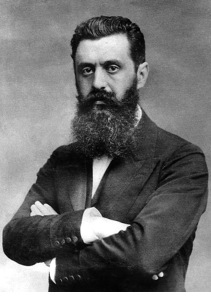
Leaders of the Zionist movement even considered Argentina as a ‘homeland’ to be safe, they just wanted a recognised state that was AWAY from Europe! If leading Zionist thinkers, such as Theodore Herzl, could see what Israel is conducting today they would be appalled, ashamed and embarrassed by the horrific scenes they had created. There is a difference between being anti-Israel and antisemitic. Israel is a rogue, fascist, murdering state. Jewish people are Jewish people, from different places all over the world, most of whom, to their credit, have renounced the actions of Israel.

And that is why I have finally decided to post this essay, as I am reminded of Martin Niemöller’s brilliant poem (rather ironically, written by an initial supporter of Hitler, until he began to see how the Nazis were treating minorities withing Germany): “First they came for…”:

First they came for the Communists
And I did not speak out
Because I was not a Communist
Then they came for the Socialists
And I did not speak out
Because I was not a Socialist
Then they came for the Trade Unionists
And I did not speak out
Because I was not a Trade Unionist
Then they came for the Jews
And I did not speak out
Because I was not a Jew
Then they came for ME
And there was no one left
To speak out for me
.

And SO … (FINALLY) … MY ESSAY FROM 2019:

Candidate Name: Nesaar Uppal  
Candidate Number: ############
Module Name: The Israel-Palestine Conflict
Module Code: PIED5501M

The early modern roots of the Zionist movement emerged from the persistent persecution of Jewish people across Europe for hundreds of years (Halperin, 2015). This persecution caused Jewish people to be spread all across Europe and the Middle East in diaspora.[1] Seeing this persecution, diaspora and finding a religious right to create a Jewish homeland many believed that people of the Jewish faith deserved their own land and their own government (Herzl, 1895; Weizmann, 2005). Theodore Herzl, one of the first Zionist thinkers and perhaps the most influential, planned to create a homeland for Jews to escape persecution in Europe. The creation of an internationally recognised Jewish homeland was indeed the main aim of the Zionist movement, with Eichler (2016) noting that ‘the official goal of the Zionist movement … a Jewish national home to be secured by international law.’ However, a number of other Zionist objectives emerged causing divisions within the Zionist movement about which aims to pursue first. Along with creating a Jewish homeland and ending diaspora, Herzl genuinely wanted to also bring economic prosperity to the region, with better infrastructure and more finance Herzl hoped that Jewish immigration would ‘help them (Arabs) raise their own economic standard’ (Weinstock, 2011, p.50).

Herzl’s desire for a mass migration of Jews to the Middle East to end diaspora, referred to as Aliyah, took place in waves, with the first being between 1881 and 1903 (Greilsammer, 2011). However, as the third and fourth Aliyah’s took place in the 1920s and 1930s more and more communist Jews from Eastern Europe brought their communist ideas to the Jewish homeland, hoping to create a communist state (Greilsammer, 2011). After the devastating persecution which occurred during the Second World War the immigration of Jews to Palestine increased massively; Weinstock (1973, p.55) commented that ‘fascism in Europe gave considerable impulse … at the end of the Second World War the 583,000 Jews represented 1/3 of the Palestine population.’ This continued immigration, purchasing of Arab land and refusal to allow Arabs to work on Jewish-owned land led to increased tensions.[2] These tensions came to a helm in 1947 and 1948. In 1947 the United Nations issued resolution 181 which called for a partition plan of Palestine, effectively granting a Jewish homeland in the region and greatly angering the Arab League (Greilsammer, 2011, p.44). Following this, in 1948 a coalition of Arab forces invaded Israel in 1948, the day after the Israeli leader David Ben-Gurion declared independence for Israel. During the following ten months of fighting the Arab coalition eventually lost and was forced to retreat, with Israel taking control of the whole of Palestine and a large section of Transjordan, 60% more land than what they had been guaranteed by the UN (Rogan, 2008, pp.102-103).

In a number of ways, it could be contended that the Zionist movement was very successful in achieving its objectives in 1948. It became an internationally recognised sovereign state which was indeed the key aim of Zionism; it was also able to provide a safe homeland for persecuted Jews and whilst diaspora was never fully achieved and later referred to as ‘idealistic’ it still provided refugee for hundreds of thousands of Jews. However, in a number of other ways it failed in achieving its original objectives. Herzl envisaged a model society based on equality with Arabs, as Karsh (2006, p.470) demonstrates that ‘the archives show that rather than seek the expulsion of the Palestinian Arabs, the Zionist leaders believed that there was sufficient room in Palestine for both peoples to live side by side in peace and equality.’ This failure to assimilate with Palestinian Arabs was further compounded by Jewish settler’s hoarding land and wealth from Arabs, creating a Jewish elite and not an equal society. There are a number of reasons for the success of the Zionist movement in 1948. Support from the West, particularly the USA and the UN, was vital in securing their independence. Moreover, Britain’s withdrawal from the region and their simultaneous problems with India and Pakistan gaining independence meant that support for the Arab cause dwindled after the Second World War. Furthermore, Israel’s superior financial situation, technology and international support meant they were able to win the 1948 war and secure a sovereign state for themselves.

The primary Zionist objective was to create an internationally-recognised national home for Jewish people; Weinstock (1973, p.51) notes that when Herzl ‘convened the first Zionist Congress at Basle in 1897’ he described the Zionist aim ‘as being the establishment for Jewish people of a home in Palestine secured by public law.’ Certainly, this was achieved first with the UN resolution 181 in 1947 which guaranteed a partition plan but was then further emphasised by David Ben-Gurion’s declaration of independence in May 1948. Moreover, Zionists also wanted to see ‘the revival of the Hebrew language and culture’ and saw this ‘as one of the essential elements of a new society’ (Greilsammer, 2011, p.43). Indeed, there can be little debate about the success of Zionism with regards to this particular aspect of their objectives. Conforti (2011, p.572-573) reaffirms this success by analysing the UN’s actions after the British withdrawal from the region, concluding that ‘from the legal point of view, the resolution of November 1947 that decided the division of Palestine in a Jewish and an Arab state was the international community’s (UN and USA) endorsement of the creation of Israel’. However, the creation of a Jewish national home was not supposed to come at the expense of the Palestinian population. Numerous times, Herzl and other key Zionist leaders expressed their desire to share the land with Arab Palestinians. After analysing Herzl’s works, Karsh (2006, p.471) concludes that ‘there was no trace of such a belief (that Arabs should be expelled to allow Jews to enter Palestine) in either Herzl’s famous political treatise The Jewish State (1896) or his 1902 Zionist novel Altneuland (Old-New Land).’ Numerous political leaders shared this idea of peaceful co-habitation with the Arab population. Indeed, as early as 1934, ‘Jabotinsky’s Revisionist Party prepared a draft constitution for Jewish Palestine, which put the Arab minority on an equal footing with its Jewish counterpart ‘throughout all sectors of the country’s public life’ (Karsh, 2006, p.473). Thus, the apparent success in 1948 of creating an internationally recognised Jewish state is undoubtedly tainted by the fact that this came at the expense of a lot of Jewish and Arab lives and created a high level of animosity between the Jewish population in Israel and the surrounding Arab nations. The creation of the state was, as Greilsammer (1973, p.50) ‘on some levels, an incredible success’.

The success of the Zionists in creating a nation-state was due to a number of contributing factors and fortunate circumstances, including Western support, British withdrawal and Arab divisions. Eichler is perhaps the historian who places the most emphasis on Western aid benefitting Zionism, asking ‘how could we even think of the Zionist movement succeeding without support from Western colonial powers?’ (Eichler, 2016, p.8). After the end of the Second World War the British Empire was in full retreat and the British government could not afford to sustain its influence across the globe, it had also become heavily indebted to the USA who were very anti-imperialist. These factors forced Britain to retreat further from the Balfour Declaration in 1917 and the Middle East in general. Moreover, Conforti (2011, p.570-571) astutely comments that ‘it (Israel) emerged at the same time as independent India and Pakistan, a time when the British Empire was crumbling, and the Zionist movement was able to take advantage of British weakness.’ Zionist leaders, sensing this withdrawal, used an ‘armed insurrection’ to ‘force the British to turn over the Palestine file to the UN’ (Eichler, 2016, p.8).  Also, the Zionists were able to achieve their objective of creating and securing a Jewish homeland because of divisions within the Arab League.[3] These divisions were exploited by the Israeli armed forces. Indeed, Rai (2014, p.2) notes that Zionists were successful in 1948 because ‘the Arab governments all pursued their own objectives, with King Abdullah of Transjordan willing to accept a Jewish state in return for territorial gains.’ These divisions were further compounded by the fact that the newly formed Israel was more unified, better equipped and more financially able to sustain a war (Weinstock, 1973) Indeed, Weinstock (1973, p.58) estimates that, in the 1940s, ‘the Arab industrial sector amounted at most to 10% of the global Palestinian industrial produce’ and that ‘in 1942 … Arab industry in Palestine consisted of 1,558 establishments engaging 8,804 persons.’ Weinstock (1973, p.58) therefore concludes that the Zionists were able to create and protect their sovereign state because they were ‘possessing technological and financial advantages.’ Thus, the Zionist movement was successful in achieving its main objective of an internationally recognised Jewish homeland, to some extent. This new state did not allow Arabs and Jews to peacefully co-exist, as Herzl had originally intended, because of the nature in which Israel declared its own independence and sided with Western powers, who many Arabs saw as the enemy (Rai, 2014). Nevertheless, the creation of a safe Jewish homeland just three years after the Holocaust in Europe was an enormous success. The movement was also so successful in achieving this particular objective because of the extremely poor and divided Arab opposition and a large amount of political and economic support from the West.

Another objective of the Zionist movement, an extension of the creation of an internationally recognised home, was to re-define the stereotypical Jewish man and create a model socialist society based on democracy, law and equality. It could be said that in 1947 and 1948 Israel failed to achieve this objective. As Greilsammer (2011, p.41) repeatedly states, a secondary key objective for Zionists was ‘to form a new Jewish man, strong, healthy and free, both typical and universal, to be an example for other nations.’ Indeed, Lustick (1980, pp.131-132) accurately notes that ‘most Zionist founders dreamt of a modern, pluralist, secular, democratic state’ before concluding that they failed in this objective and, in 1948, ‘Instead of creating a new Jew and a state built on mutual tolerance and respect for the Other, Israel fixed certain behaviours and perpetuated divisions.’ Thus, Israel did not represent the model society that many Zionists had dreamt of prior to Israel’s independence in 1948. Indeed, some historians consider the desire to create a model state with model citizens as admirable, but a complete failure in the case of Israel. Because the Zionist movement had elected Palestine as a place to establish their homeland, the economic realities of the region became clear quickly. David Ben-Gurion was unable to improve the economy as quickly as had been expected and ‘general austerity was the rule’ with ‘the power of the Labour Party becoming overwhelming and Ben-Gurion’s autocracy was insufferable for many’ (Davidson, 2002, p.24). In fact, Greilsammer (2011, p.50) is especially critical of the failure of the Zionist movement to create a fair and modern state, commenting that ‘the gap between the ideal of the founders of Zionism and reality is even more striking as we consider the theme of ‘conquest of labor’ … and the desire to build a society where there would be no exploitation.’ The initial Zionist leaders expressed their desire to allow Arabs to continue living with the same rights that they had. It could even be claimed that Gurion was an idealist in the 1930s, as he claimed that this new Jewish state would have ‘one law for all residents, just rule, love of one’s neighbour, true equality. The Jewish state will be a role model to the world in its treatment of minorities and members of other nations. Law and justice will prevail in our state’ (Karsh, 2006, p.481).

However, the Zionist movement failed in this objective to create peace and harmony between Arabs who had lived in the region for generations and the newly created Jewish homeland. Herzl himself ‘did not envision the Jewish-Arab conflict’ (Eichler, 2016, p.6). Instead of the envisaged peaceful transition into a Jewish majority in Palestine, the 1948 war forced Israel to take a hard-line against any potential Arab enemies. This led to the creation of 700,000 Palestinian refugees. This brutal expulsion was not a reflection of the ‘future Jewish national home as an ideal society’ (Eichler, 2016, p.6). Whilst it is true that Israel remains a full democracy which is supposed to appeal to both Arabs and Jews, for example by having rules such as ‘in every Cabinet where the Prime Minister is a Jew, the vice-premiership shall be offered to an Arab and vice versa’ (Karsh, 2006, p.472). Glass (2001) comments that ‘Herzl did conceive of a diverse society’ and that ‘the Israeli political system in place over this time is a far cry from Herzl’s own vision.’ Thus, it is apparent that a key objective of the Zionist movement was to create a model society with model citizens that was fair and reflected the best practices of Western democracies. However, in 1948 its treatment of the Palestinian Arab population, combined with economic and social realities of governing such a new and impoverished state meant that Zionists ultimately failed to create a tolerant society and instead built a right-wing anti-Arab state; as Weinstock (1973, p. 43) concludes, ‘it is doubtful whether the founders of the Zionist movement would have relished this prospect.’

A third essential objective of the Zionist movement was to fully achieve an end to diaspora and group together all the persecuted Jews from across the globe in one nation to guarantee their safety. This was a goal right from the beginning as Jewish persecution was the essential reasoning for the necessity of a singular Jewish homeland in the first place. Indeed, Greilsammer (2011, p.41) states that ‘the first goal of this ideology was to end the Jewish Diaspora … and to bring them to Israel.’ Indeed, with regards to this particular goal the Zionist movement was extremely successful. The expansion of the Jewish community in Palestine was massive in the early 20th century, as the ‘Jewish population rose from 24,000 in 1882 to 175,000 in 1931’ (Weinstock, 1973, p. 55). These Aliyah’s involved the emigration of Jews from all over the world, including Jews ‘from communist countries after de-Stalinization; Jews from Egypt; Jews from post-Soviet countries, and Ethiopian Jews’ (Greilsammer, 2011, p.45). This growth in population continued and was accelerated by the Second World War so that, by 1948, the Jewish population was close to 500,000. This was a massive increase in population but did not reflect the initial Zionist ideal of all Jews living in one state.

Indeed, it would be impossible for every single person of the Jewish faith to relocate to Israel; some have found accepting new homes in Britain or the USA whilst some others fear for their own safety if they were to move to the Middle East. Indeed, as Neff (1995, p.6) highlights, ‘some Jewish communities, such as the one in Alegria, are not moving to Israel, but to other countries.’ After the mass migrations which took place prior to 1948 the Zionist leadership began to accept that ‘the likelihood of mass migration again is extremely low’ (Greilsammer, 2011, p.46). Indeed, Ben-Gurion himself privately stated that ‘the idea of the Zionist ‘triumph’, a definitive end to the Diaspora, is not believable anymore’ (Jensehaugen, 2012, p.289). Moreover, Eichler (2016, p.6) notes that ‘Herzl accepted that ending diaspora was unlikely’ but he still aimed to gather a majority of Jews in one state so that ‘Jews who were left in the diaspora would be respected because now the Jews would be a normal people with a normal political homeland.’

Thus, it could be deemed that this objective was successful because the Zionist movement adapted their definition to fit reality; they became aware that not every Jew in the world would want to live in that particular part of the world (Jensehaugen, 2012). However, the leadership still accepted the importance and necessity to encourage Jewish migration, which was effective prior to 1948, so that the Jewish identity and pride could be re-established (Klocke, 2014). The Zionist movement was able to achieve this particular objective with relative ease due to the fact that Jews across Europe had been persecuted terribly for hundreds of years (Morris, 2009, pp. 82-87). This was exposed with events such as the Dreyfus Affair in France, or the Holocaust in Germany or the Pogroms in Eastern Europe (Zollman, 2002). It was not hard for Zionists to convince persecuted Jews to unite together under one sovereign state because that is what a lot of them wished for anyway because of their poor treatment in Europe (Jensehaugen, 2012). Nevertheless, Weinstock (1973, p.53) does raise the important point that ‘it is thought that the wave of socialist Zionists (from Eastern Europe) was the main cause of hostility with the Arab population.’ The hostility towards these migrants came from Zionists as well as Arabs and ‘Russian Jews were considered by a number of Zionists and members of the Yishuv to constitute a major factor in arousing the hostility of the Palestinian Arabs’ (Weinstock, 1973, p.53). Thus, whilst the Zionist movement may have been as successful as possible in reducing Jewish diaspora around the globe, this may have made it a lot more difficult for Arabs to tolerate them and therefore reduced the success of some of the other Zionist goals.

In conclusion, it is difficult to assess the success of the Zionist movement in 1948 because it was ‘continually evolving and adapting during the first half of the 20th century’ (Conforti, 2011, p.570). Undeniably, the creation of a sovereign state in 1948 and a Jewish home which could unite any persecuted Jewish people from around the world was a huge success. Furthermore, the establishment of a democratic system and one of the finest legal systems in the world is no small achievement in such a short space of time, considering that mass Jewish migration into the region only really began in 1905 with the Second Aliyah (Morris, 2009, pp.142-144). However, the first Zionist leaders, such as Herzl or Weizmann, wanted to create a model society with model citizens and, perhaps most importantly, felt that their presence in the region would be ‘beneficial’ (Weinstock, 1973, p.49). The Zionist movement, for the most part, genuinely believed that there would be enough space in Palestine for new Jewish immigrants and existing Arab citizens (Herzl, 1895). After the 1948 war, however, these objectives completely failed. Hostilities between the Arab countries and Israel was extremely high, 700,000 Palestinian Arab refugees were displaced, and Israel became a right-wing autocratic state for a number of years in an attempt to boost its own economy (Margolick, 2008). However, as outlined by Herzl (1895) the main aims of the Zionist movement should always remain the creation of a Jewish homeland, the end of diaspora and the revival of Hebrew and Jewish culture. These key aims were achieved, to some extent, by the end of 1948.

Any successes that the Zionist movement enjoyed were down to a number of contributing factors. Most important of which was the support from the West (Rogan, 2008). Perhaps borne out of guilt from the atrocities of the Holocaust, or perhaps because the USA saw limitless benefits of having an allied democracy in the region, the West was very eager to support the Zionist movement (Rogan, 2008, pp.23-26). Britain’s withdrawal from the region and the takeover of the Palestine situation by the UN definitely benefitted the Zionist cause as it created the partition plan in 1947 and paved the way for a declaration of Israel’s independence in 1948 (Glass, 2001). Moreover, the disunity between the surrounding Arab states and ‘their lack of wealth and infrastructure also made Zionist’s objectives easier to achieve’, as they could buy land cheaply and during the 1948 war they were able to beat a coalition of forces simply due to their better resources and their ability to divide the Arab states (Karsh, 2006, p.479). Thus, the Zionist movement was successful in achieving their main aims in 1948 of ending diaspora and creating a sovereign Jewish state, but this success came at a price and that was the type of state they wanted to build. Israel in 1948 did not reflect the thinking of original Zionists who wanted Arabs and Jews to live side-by-side and wanted to build a model society (Rai, 2014). A more nuanced conclusion would suggest that the Zionist movement was very successful in achieving its objectives in 1948, but this success caused problems later on with surrounding Arab states which has largely tainted the view political historians have on Zionism and its success.

Any successes that the Zionist movement enjoyed were down to a number of contributing factors. Most important of which was the support from the West (Rogan, 2008). Perhaps borne out of guilt from the atrocities of the Holocaust, or perhaps because the USA saw limitless benefits of having an allied democracy in the region, the West was very eager to support the Zionist movement (Rogan, 2008, pp.23-26). Britain’s withdrawal from the region and the takeover of the Palestine situation by the UN definitely benefitted the Zionist cause as it created the partition plan in 1947 and paved the way for a declaration of Israel’s independence in 1948 (Glass, 2001). Moreover, the disunity between the surrounding Arab states and ‘their lack of wealth and infrastructure also made Zionist’s objectives easier to achieve’, as they could buy land cheaply and during the 1948 war they were able to beat a coalition of forces simply due to their better resources and their ability to divide the Arab states (Karsh, 2006, p.479). Thus, the Zionist movement was successful in achieving their main aims in 1948 of ending diaspora and creating a sovereign Jewish state, but this success came at a price and that was the type of state they wanted to build. Israel in 1948 did not reflect the thinking of original Zionists who wanted Arabs and Jews to live side-by-side and wanted to build a model society (Rai, 2014). A more nuanced conclusion would suggest that the Zionist movement was very successful in achieving its objectives in 1948, but this success caused problems later on with surrounding Arab states which has largely tainted the view political historians have on Zionism and its success.

Word Count: 3,557

Bibliography:

Conforti, Y. 2011. Between Ethnic and Civic: The Realistic Utopia of Zionism. Israel Affairs. 17(4), pp.563-582.

Davidson, L. 2002. Zionism in the US 1917-1948: Zionism and the betrayal of American Democratic Principles. Journal of Palestine Studies. 1(3), p.21-35.

Eichler, W. 2016. Theodor Herzl and the Trajectory of Zionism. [Online]. [Date Accessed 1 May 2020]. Available from: https://www.opendemocracy.net/en/north-africa-west-asia/theodor-herzl-and-trajectory-of-zionism/

Glass, C. 2001. The Mandate Years Colonialism and the Creation of Israel. [Online]. [Date Accessed 27 April 2020]. Available from: https://www.theguardian.com/books/2001/may/31/londonreviewofbooks

Greilsammer, I. 2011. Zionism Between Ideal and Reality. Cairn Info. 47(3), pp.41-51.

Halperin, L. 2015. Origins and Evolution of Zionism. Foreign Policy Research Institute. pp.1-10.

Herzl, T. 1895. The State of the Jews. England: Tredition Classics.

Jensehaugen, J. 2012. Securing the State: From Zionist Ideology to Israeli Statehood. Diplomacy & Statecraft. 23(2), pp.280-303.

Karsh, E. 2006. Resurrecting the Myth: Benny Morris, the Zionist Movement, and the ‘Transfer’ Idea. Israel Affairs. 11(3), pp.469-490.

Klocke, Z. 2014. An Investigation into Zionism’s Inner Leadership. [Online]. [Date Accessed 24 April 2020]. Available from: https://pdxscholar.library.pdx.edu/cgi/viewcontent.cgi?article=1047&context=younghistorians

Lustick, I. 1980. Zionism and the State of Israel: Regime Objectives and the Arab Minority in the First Years of Statehood. 16(1), pp.127-16.

Margolick, D. 2008. Endless War. [Online]. [Date Accessed: 23 April 2020] Available from: https://www.nytimes.com/2008/05/04/books/review/Margolick-t.html

Morris, B. 2009. 1948: A History of the First Arab-Israeli War. Yale: Yale University Press.

Neff, D. 1995. The Palestinians and Zionism: 1897-1948. Middle East Policy Council. 4(1), pp.1-10.

Rai, S. 2014. What Were the Causes and Consequences of the 1948 Arab-Israeli War? University of Leicester. 12(2), pp.1-3.

Rogan, E. 2008. The War for Palestine: Rewriting the History of 1948. England: Cambridge University Press.

Weizmann, C. 2005. The Letters and Papers of Chaim Weizmann (Series A: Letters): United Nations; Weizmann First President of Israel; The Prisoner of Rehovot. England: Transaction Publishers.

Weinstock, N. 1973. The Impact of Zionist Colonisation on Palestinian Arab Society Before 1948. Journal of Palestine Studies. 2(2), pp.49-63.

Zollman, J. 2002. The Dreyfus Affair. [Online]. [Date Accessed: 12 April 2020]. Available from: https://www.myjewishlearning.com/article/the-dreyfus-affair/


[1] ‘Diaspora’ is a term which refers to a scattered population that live beyond the borders of what they would consider their homeland. In this essay the term refers to Jewish people being spread beyond the borders of modern-day Israel.

[2] Early Zionists did not want Arabs working on their land because they thought this was too much like imperialism, but in actual fact it just served to create a Jewish elite with a great deal of wealth.

[3] Refers to the coalition of Arab forces which invaded Israel in 1948, included Saudi Arabia, Yemen and Egypt.

Iran’s Attacks on Israel, Nuclear Ambitions, and the Crisis in Gaza and Palestine

In the ever-volatile landscape of the Middle East, recent escalations between Iran and Israel have once again ignited international concern and prompted debates over appropriate responses and global allegiances. Central to this discourse are the historical contexts, nuclear ambitions, and the ongoing crisis in Gaza and Palestine, adding layers of complexity to an already intricate geopolitical puzzle.

Iran’s relationship with Israel has long been marked by tension and hostility, rooted in ideological differences, historical grievances, and regional power struggles. Iran’s support for militant groups like Hamas and Hezbollah, coupled with its anti-Israel rhetoric and calls for the destruction of the Jewish state, have fueled animosity and sporadic bouts of violence.

Meanwhile, Israel, wary of Iran’s nuclear ambitions and hostile proxies, has adopted a policy of strategic ambiguity regarding its own nuclear capabilities. While neither confirming nor denying the possession of nuclear weapons, Israel maintains a formidable military deterrent, underscoring its commitment to ensuring its security and survival in a volatile neighborhood.

The specter of nuclear proliferation further complicates the dynamics between Iran and Israel. Iran’s pursuit of nuclear technology, ostensibly for peaceful purposes but met with suspicion by the international community, has raised alarms in Israel and beyond. Fears of a nuclear-armed Iran, coupled with inflammatory rhetoric from Iranian leaders, have heightened tensions and fueled speculation about preemptive strikes and military interventions.

Conversely, Israel’s alleged nuclear arsenal, though officially undeclared, adds a layer of deterrence and uncertainty to the equation. The mere possibility of a nuclear response from Israel in the event of a significant threat has tempered aggression from adversaries and shaped strategic calculations across the region.

Amidst these geopolitical tensions, the crisis in Gaza and Palestine serves as a poignant reminder of the human cost of conflict and the urgent need for a peaceful resolution. Decades of occupation, displacement, and violence have left the Palestinian territories in a state of perpetual turmoil, with Gaza bearing the brunt of the humanitarian crisis.

The recent escalation in violence, triggered by clashes in East Jerusalem and the forced eviction of Palestinian families from their homes, has reignited simmering tensions and sparked waves of protests and retaliatory attacks. The indiscriminate rocket fire from Gaza into Israeli territory and the subsequent airstrikes by the Israeli military have resulted in civilian casualties on both sides, exacerbating the suffering of innocent civilians caught in the crossfire.

In the face of Iran’s attacks on Israel and the crisis in Gaza and Palestine, the dilemma of retaliation looms large, with implications that extend far beyond the immediate conflict zone. While Israel has the right to defend itself against aggression and protect its citizens, the prospect of escalation and unintended consequences cannot be ignored. A tit-for-tat cycle of violence risks spiraling out of control, exacerbating instability and endangering innocent lives on all sides.

Moreover, the international community faces a delicate balancing act, torn between competing interests, alliances, and moral imperatives. While some nations may rally behind Israel, citing shared values and security concerns, others may urge restraint and advocate for diplomatic solutions to avoid further bloodshed and regional destabilization.

Amidst the complexities and competing narratives, the imperative for peace and stability remains paramount. Rather than succumbing to the allure of military brinkmanship or the temptation of retaliatory strikes, all parties must prioritize dialogue, de-escalation, and diplomacy. The specter of nuclear annihilation looms large, serving as a stark reminder of the catastrophic consequences of miscalculation and unchecked aggression.

In conclusion, the tensions between Iran and Israel, exacerbated by historical animosities, nuclear ambitions, and the crisis in Gaza and Palestine, pose a formidable challenge to global peace and security. As the world watches with bated breath, the imperative for restraint, dialogue, and negotiated settlements has never been more urgent. Only through concerted efforts to bridge divides, build trust, and uphold the principles of international law can lasting peace be achieved in the Middle East and beyond.

The Capitol Insurrection – The Dangerous Start

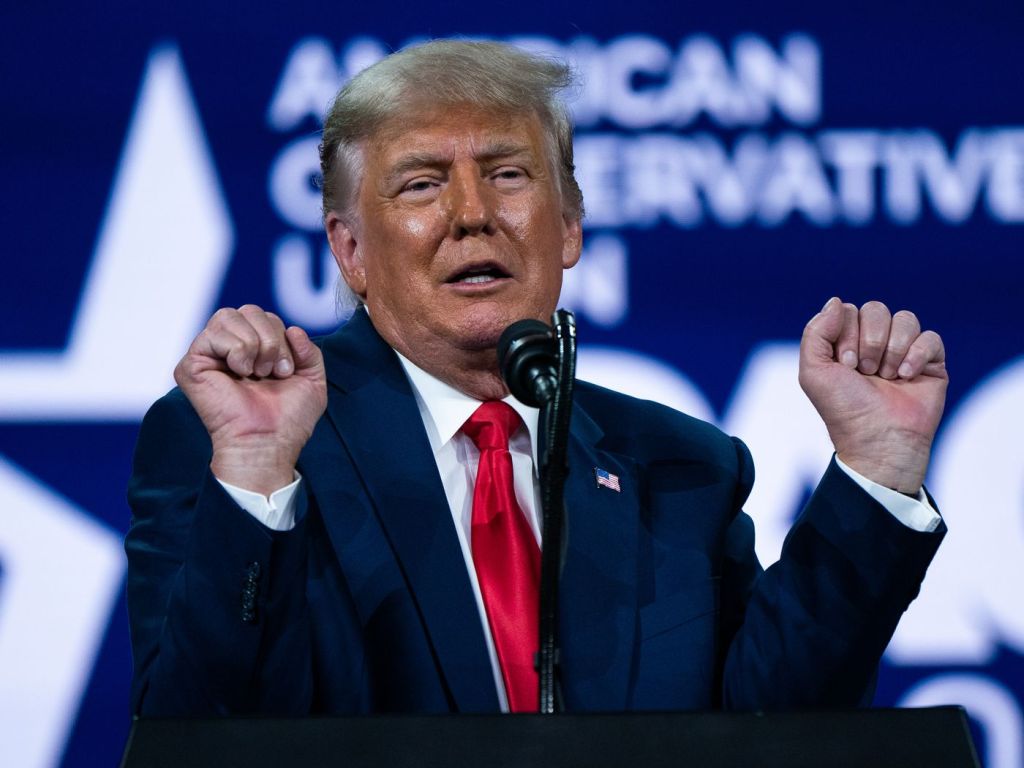
To be honest, I can’t remember the overall stance of this blog on Donald Trump. I think the man is a master media-manipulator, uncompromising (for good and bad) and that he is at least six foot tall. I also happen to think he is the most dangerous President since Nixon, Andrew Johnson (both of whom, coincidentally, were similarly impeached but the Senate refused to remove them from office – Nixon resigning the day before and Johnson surviving by just one vote.)

I oft avoid the news, because whenever I open the BBC News App I see three items: COVID-19, Climate Change, Trump. I don’t feel particularly positive about any of those to be honest. It’s almost as if 2021 is a continuation of 2020 and the change of one day makes no difference. But something slipped through my ignorance gap – which has included deleting Facebook and Twitter.

It was the storming of the Capitol building. It was outrageous when my parents told me about it. I thought they must be confusing the Capitol building with another famous building in Washington. I was wrong. I visited the Capitol on a school trip to Washington, even standing in front of it you get a sense of its importance – both symbolic and real. It has been the scene of so many important laws, wars, conflicts, political leaders and it was just stormed by a bunch of gun-toting red-necks.

A lot of people instantly jumped on the argument that if these protestors had been Black or a member of a minority community there would be far more than four dead. Indeed, if the BLM movement had ever reached that far (before being constantly beaten, harassed and arreseted) far more violence would have ensued. I can assure you. I have done a few pieces on the BLM movement and their treatment by the police, despite their anti-violent protests, is absolutely stunning when compared to how these white armed citizens were able to storm the United States legislature building. It’s shocking. But not surprising and the only common denominator is the pigment colour of their skin.

But we all know that. We all know that the establishment cannot attack it’s supporters, no matter how many or how mad they may be. What, for me, is more scary is the fact that this was even possible. For those people who have followed Trump’s politics this was entirely predictable if he lost the election. He built his campaign around mocking war veterans, disabled reporters and getting into Twitter arguments with basically anyone famous. He may not have specifically said violent things (although this is entirely possible) … but this was always building. I’ll admit even I didn’t predict to this unprecedented extent. But still.

The problem, however, in this case is not about race it is about constitutional authority. Read on, it’ll get more less boring after those two words, promise. After the 1860 election in the USA Abraham Lincoln, then a famous anti-Slavery candidate and the first Republican President (how the Republicans and Democrats switched their rhetoric and policies over time and how Lincoln, the greatest US President was the first Republican President, has led to the last Republican President, Donald Trump, will be tackled another time).

A lot of people like to focus the American Civil War on slavery. The Southern states needed it, the Northern states did not. However, much like the arms race prior to World War 1, slavery was just powder keg. The spark, in the First World War was when Gavrilo Princip incidentally ran into and assassinated Archduke Franz Ferdinand, sparking a long list of alliances and sparking a World War. On November 19, 1863, President Abraham Lincoln famously gave his Gettysburg Address, after the Battle of Gettysburg, in it, he famously stated:

“Now we are engaged in a great civil war, testing whether that nation or any nation so conceived and so dedicated, can long endure. We are met on a great battle-field of that war … that we here highly resolve that these dead shall not have died in vain—that this nation, under God, shall have a new birth of freedom—and that government of the people, by the people, for the people, shall not perish from the earth.” Abraham Lincoln 1863

Because that’s the truth of the American Civil War. Slavery was always a key issue. But the bigger issue was the constitutional democracy and whether that would maintain and endure. When Lincoln was elected the Southern states decided that they did not like this election outcome and seceded – forming the Confederacy and their own state. That was what the war was fought about. Because democracy cannot function if the losing side is not willing to concede defeat. It is a never-ending cycle. What if the newly formed Confederacy don’t like the next President they elect? Will part of that group secede? What about that group? And so on. The American Civil War was fought to maintain a respectable, fairly new, type of democracy where you accept loss with good grace because there is a mutual understanding that both parties want what’s best for the country.

What happened in the Capitol was not only shocking but showed similarities to a country so deeply divided that violence was the only recourse. Some political commentators have suggested that this is all a build up for his 2024 campaign. Personally, I find this highly unlikely for several reasons.

A) Will he live that long?

B) These people are literally rebels. They must be prosecuted and held to account.

C) How does he plan to survive the impending charges of rape, indecent assault, fraud, money laundering, tax evasion, perjury?

D) I like to think that Americans are smart enough to realise they made a grave error and I trust them not to repeat it.

Fool me once …

Labour Supporters – Why Are You So Scared of Winning?

March 18th 2024 / Leave Feedback / nezuppal

When Tony Blair was first elected in a landslide victory in May 1997 it was heralded as a new socialist era for the country. Rather than being the heavily left-wing leader that many Labour leaders had previously clung to (Kinnock comes to mind immediately, a specialist in failure) Blair was far more centrist. Initially Blair was a God-like figure, the first Labour Prime Minister in just under two decades who could bring about much needed change to the Tory policies that had ripped holes in the North and destroyed the economy (see Tony Blair article for his list of accomplishments whilst in government).

But slowly, core supporters turned against Blair, even before the Iraq catastrophe. They realised he was not as left-wing as they had hoped. He was far more centrist, willing to compromise and often referred to as a ‘Red Tory’.

What these supporters fail to understand is that Labour is not a protest party. It is not a single-issue party. It is not UKIP. It is not the Green Party. It is not even the Liberal Democrats. It is the opposition party – their duty is to hold the government to account, challenge their decisions, represent their constituents, and pass laws benefiting people that voted for them.

Cast your mind back to Jeremy Corbyn. The most left-wing leader the Labour party has had in decades thanks to the support of Momentum. Every PM Questions he was shouted at, he asked pointless questions and, if we are completely honest, he achieved very little.

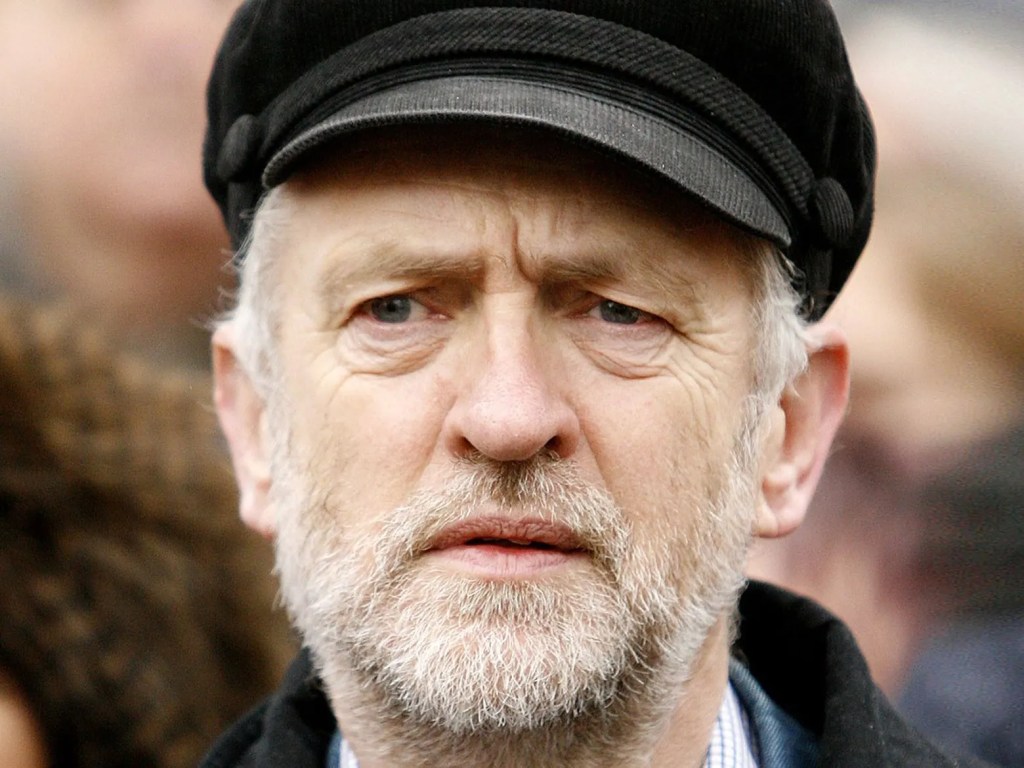
Kick Jeremy Corbyn out for good to stifle Tory attacks, allies urge Keir  Starmer | News | The Times

Did he support Brexit? Not really sure. Did he like the EU? Not really sure. He even faced a second leadership contest (which he somehow won) because it soon became aware to anyone with a political compass that this was not the man who could get Labour back into power.

The final straw, for me and perhaps many others who had previously supported them, came in the 2017 general election. Labour increased its share of the vote to 40%, with Labour’s 9.6% vote swing being its largest since the 1945 general election. Under Corbyn, Labour achieved a net gain of 30 seats and a hung parliament. This was celebrated by Corbyn and Momentum as a huge victory and a sign of a better future. But the party remained in Opposition. They were in Opposition … yet again. That is not a victory. Use your swing statistics, blame the media, do whatever you like. Corbyn lost and would never win.

An analogy? Champions League Final – AFC Wimbledon (Tories) are 5-0 ahead at half time. Liverpool (that’s how good Corbyn fans think he was) get a huge swing to make it 5-3. A good step forward. But it’s a loss. And, for me at least, the analogy of Wimbledon still beating Liverpool is especially apt when one considers the Prime Minister at the time – Theresa May. Remember how unbelievably unpopular she was? Her weird dancing, the confusion over Brexit … I could go on. Obviously this has been overshadowed by Boris’ tomfoolery. But does anyone really believe that a competent leader would have lost to Theresa May in 2017?

So what did Blair understand that Brown, Miliband and Corbyn miss? Well, I must admit that Blair did destroy the reputation of the Labour Party with the Iraq invasion in 2003, but this cannot be the whole explanation?

In fact, the reality is much simpler. Blair understood politics. There is a basic rule in politics if you want to get elected. Appeal to the ‘undecided voters’. Yes, keep your core base on-side, but gain the respect and votes of people who either would not normally vote for your Party or vote at all. Corbyn appealed to a number of young voters who don’t understand that you can only make change when you’re in power. Opposition has its limits.

That’s why Murdoch, The Sun, the media, pretty much every member of the establishment hates Keir Starmer. Because he could win. They compare him to Labour in a negative way because they fear the change he could bring if he won and made positive changes. He will win the next election; he will bring about change. But we’ll have to wait 5 years for that. Starmer isn’t a ‘Red Tory’. He’s a political winner. He understands what it will take to defeat this government. His performances at Prime Minister Questions are exceptional as a former lawyer it almost appears as if he were cross-examining Boris as if he were a criminal (technically that’s not libel because I did not directly call Boris a criminal). But the way Boris squirms, dodges and loses reveals Boris for the criminal he is. (That is potentially libel, but it’s only libel if it isn’t true remember).

If you are a member of the Labour Party you should be throwing all your support behind Starmer – he is your only chance of getting into power again. And liberals who see him as a ‘Second Blair’ would do well to remember that they haven’t won an election since Blair. Stick to your principles and achieve no change, compromise, and get into power where you can make real change. It’s as simple as that you are patronising Corbyn supporters.

Starmer is a strong leader and has potential, but Labour right now need someone with a killer instinct for politics. Someone who would hammer Boris Johnson on the cost-of-living crisis every week during Prime Minister’s Questions. Starmer does not do this. Whether people want to admit it or not, Blair would have.

In the words of the great Jeff Daniels: “If liberals are so goddamn right why do they lose so goddamn always?”

House Stalemate – Disaster after Disaster!

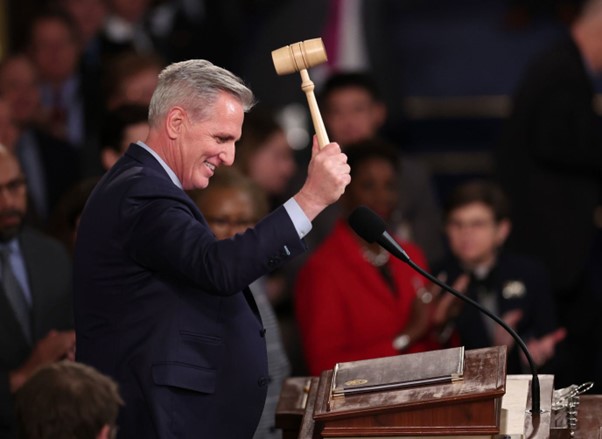
Kevin McCarthy is now, finally, the elected Speaker of the House of Representatives. Most observers would assume that the delay in his election was due to the Democrats, as McCarthy is a famously staunch Republican. They would be wrong.

It was actually a stalemate due to the Republicans halting his election as 20 Republican House members refused to vote for him. Republicans won the Chamber in the midterm elections, but Kevin McCarthy, who has served as the party’s House minority leader for four years, had 20 Republicans standing between him and the gavel – and they would not budge.

Matt Gaetz, one of those so-called “Never Kevins”, described Mr McCarthy as a “desperate guy” and said his request was simple: “For him to drop out of the race.” That’s right, in case you thought you had mis-read that or believed you had gone insane. A Republican party member did not want McCarthy to become Speaker of the House of Representatives.

And this stalemate continued for day after day after day.

Whilst this halt in democracy may seem one that is commonplace in American politics these days. This is not the case. For days, there was no speaker of the House of Representatives. What a disaster!

Finally, the stalemate has ended after an agonising wait and lots of negotiations. The Republicans are elated, the US house was filled with roars of “USA, USA,”. Are we at a football game? Or one of the Houses of the most powerful countries in the world. “USA, USA” – as if this wasn’t days of embarrassment. Kevin McCarthy is the new House speaker who has survived brutal brawls for power.

Yes, McCarthy now holds the famous gavel. But everyone knows how weak his position is. Republicans, Democrats, the Chinese Government, Putin, Britain, the EU. They all know and see what a joke this man is. How can he recover? He can’t. Resign. This has been one of the greatest farces in American Politics in over a century. And yes I am including the election of George Bush and yes I haven’t forgotten the election of Donald. This has been disastrous.

hammer

It took 15 rounds of voting and the last race to go this long was the 1859 contest. Those were the turbulent years before the infamous American Civil War. (I have previously written several articles about how the USA is inches away from another Civil War – are you starting to see it now?)

In the present day, the wrangling has left the Grand Old Party battered & the nation bruised. The unprecedented chaos in the four days of House voting brought the world’s oldest democracy to a grinding halt. It also gives a glimpse of the tumultuous times ahead.

The Republicans control the house, but most of McCarthy’s opposition is from his own party. That’s right, to anyone reading who likes the Republican party, this mess was not caused by the Democrats. You can try blaming them and I’m sure they will. But this was caused by 20 REPUBLICAN rebels.

They are ultra-conservative, hard-right lawmakers who boast themselves to be members of the House Freedom Caucus. About 30 Republican lawmakers of the caucus, are determined to drag the party further to the right, thereby deepening the chasm.

But for the man who is seizing the gavel and is second in line to the US presidency, the role could turn into a nightmare. And most of the heartburn is going to come from his own rank & file because the caucus strongly rejects his leadership.

Speaking to Wion, Jon-Christopher Bua, US political analyst & White House commentator says,”McCarthy has got a title but no power. He has succumbed to the very extreme right-wing who despise him. So, we are left with an unmanageable house.”

Esssentially, Bua is saying that McCarthy now has the title of Speaker but no real power. He is under the thumb of the hard right-wing of his own party. His own party is splitting. His own party hate him. And rightly so.

In the end, the 57-year-old Californian emerges as a weakened speaker, one with less authority on paper than those before him. Speaking to Wion, Stephen Golub, author and political analyst said, “The drama reflects that Kevin McCarthy is going to be one of the most, if not the weakest speakers in the US history because his margin is so small, that he had to sell his soul to the very far-right Republicans.”

This is dangerous. With the current global issues the USA faces in China, and Russia, this demonstrates the weakness within American Democracy. American democracy is a joke and this does nothing but exemplify this. This has been a farce. This has been a disaster. Whilst it has, thankfully, and finally, come to an end. It just the beginning of McCarthy’s problems.

McCarthy has shrugged off suggestions that the deal could weaken his power. But he was profuse in thanking one man, Donald Trump, who was sitting miles away from the scene of chaos but still managed to pull the strings. With his party having the majority, it should have been a low-hanging fruit. But his pleas for backing McCarthy seemingly fell on deaf ears. Trump’s hold is seemingly shrinking & his hopes of a re-run for the top job once again in 2024 look in complete disarray.

What will McCarthy do now? He will do as he is told. Unlike Speakers’ before him who have yielded this great power for good or evil (depending on your own personal political beliefs) – they have at least been able to conduct policies with the support of their own parties. McCarthy can’t do this. He’s a joke in the House and he is a joke across the world.

In the words of the greatest President of the United States:

“Elections belong to the people. It’s their decision. If they decide to turn their back on the fire and burn their behinds, then they will just have to sit on their blisters,” said Abraham Lincoln, 16th President of the United States.

Raab Bullying – This IS Getting Boring Now

What a tagline for an article! I can already imagine the number of people jumping to read this article. But to be perfectly honest, this will be the last post on “current affairs”. I have tried to keep up with current affairs, periodically, but I just cannot find the time any more. Each week, day, hour there is more terrifying news about this government’s shambolic affairs and I cannot keep up. If you can, or want to, I suggest you pick up the Daily Mail like everyone else seems to be doing and imagine that you are an “informed” member of society.

But, unlike the mainstream media, I write for myself. I have said it a few times but the mainstream media is not a charity, it is a business run by businessmen such as Rupert Murdoch and their sole purpose is to steer the political agenda in alignment with their own self-interest. If you don’t like the news, stop watching it. If you don’t like a newspaper, stop buying it.

It’s comparable with the new, never-ending Marvel films. I often hear a lot of friends and colleagues complain that Marvel will not stop making new films and that they are ruining their own legacy. But why would they stop making movies? People keep watching them and, rather more importantly, the money keeps rolling in. It is not in their interest to stop making movies. They will only stop when the cost-benefit analysis shows them that making more and more of these rubbish films will be a waste of their money. So, stop watching them. They will go away if you stop watching them.

And whilst this is true of the mainstream media, this is not true of current affairs. You CAN stop reading The Daily Mail or The Guardian and still be informed … this blog, for example. But alas, my digression has ceased. The main point of that rant was that things do not change in current affairs.

The “new” “news” you are reading today, is the same as yesterday and was the same as last year and the same as the decade preceding that. Dominic Raab is a bully. Not too long ago I wrote a piece on the reprehensible Gavin Williamson, the sad little bully who was finally forced to hand in his resignation. Where is he now? Honestly, who cares.

But, in the same article, I noted that even with an in-depth enquiry into Gavin’s behaviour, the systemic bullying within Westminster change. I was right, of course, but I didn’t think I would be proved so right so quickly.

It genuinely feels like Groundhog Day. Repeating the same events over and over, whilst the media will have you being angry at Qatar, or angry at the Chinese government, or disappointed with the US electoral system. Yes, you should be angry about all those things. Yes, they are despicable. But I’m failing to see where the massive amounts of coverage on the Iranian revolution is. This revolution, which I will cover soon, is a momentous event and is massively important. It was highlighted in England’s first World Cup game against Iran, where the team refused to sing their own national anthem. It was a huge moment of protest and, whilst England were too afraid of wearing an armband and getting a yellow card, these men and women openly embarrassed and ignored their own political system.

And good for them. England’s stance was embarrassing. More to follow.

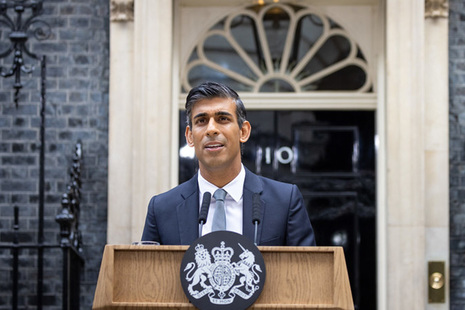
But, as big as this event is, people have been steered away from Raab’s bullying saga. On Monday, the UK Prime Minister Rishi Sunak came out in defence of Dominic Raab, after the deputy prime minister was accused of rude and demeaning behaviour towards civil servants. The PM said he did not “recognise that characterisation” of his deputy and denied knowing about any formal complaints against him.

Sunak is facing further questions over his judgment as allegations of bullying emerged from Raab’s previous stint as justice secretary – with staff reportedly offered a “route out” of his department when he was reinstated in October.

But Rishi, my dear, isn’t that the exact same line you gave about Gavin Williamson? “I didn’t know”. “That doesn’t sound right”. “No one told me”. It’s your job to know. It’s your job to protect and help people and you have failed twice already. It is an absolute joke and represents the very worst of this Tory government.

Whilst this article has been a boring ramble about the mainstream media, I refuse to write any further on the sagas of this ridiculous government. If, for some reason, you still decide to vote for Rishi at the next election I don’t even want to try and understand your justifications. I don’t want to hear from people who have, time and again, defended bullies, liars, criminals, and cheats. It. Is. Boring.

raab

A picture of evil incompetence. 

Raab, much like Williamson before him, is a bully. People don’t just make bullying claims at work. It takes immense bravery to put your entire career on the line over such incidents and the fact that they are not even taken seriously is utterly shattering. Rishi didn’t know? Fine. He doesn’t really seem to know anything about anything anymore. If something good happens, it was down to him. And when countless bad things happen, he’s ignorant or he blames someone else. But after 12-14 years he has no one else to blame? Just call an election Rishi, please, and then I may write about you again. But for now, these stories are repetitive, depressing, and tiresome.

Current affairs are only “current” in the UK because there are new names. But, until there is a new government, or some genuine internal change, it is not worth my time (or yours I suspect) to continue on reading and trying to understand this government.

They are beyond my comprehension. They are beyond yours.

They MUST Be Joking by Now?

It was announced a few weeks ago that Matt Hancock would be joining “I’m a Celebrity, get me Out of Here!”, whilst still trying to remain as an MP. I was not even shocked when I read the headline. In fact, I almost laughed. Almost.

After all of this mess, Matt Hancock now thinks its appropriate to stay in his position and go out and get his five seconds of fame on a reality TV show. Hancock, the clue’s in the name by the way, is famous in the Tory party for … um … well he was caught on CCTV groping that woman. But as an MP? Hancock served as Secretary of State for Health and Social Care, a fantastic job he did too! As we are now genuinely facing a nurse-strike over Christmas due to his failure after failure.

hancock

Speaking of this man’s failures, it’s also funny to mention that he actually stood in the 2019 Conservative Party leadership election but withdrew shortly after the first ballot. The man is so self-confident he genuinely believed that he could be Prime Minister! Whilst that does not sound that hilarious after we have suffered through Boris, then Liz Truss and now Rishi (an article on his bullying saga will soon come), it was ridiculous at the time. He quickly withdrew as he saw the tides turning and potentially realised that he is actually incompetent after all. In the end, he began endorsing Boris Johnson, which allowed him to retain in his Cabinet in July 2019. Hancock served as Health Secretary during the COVID-19 pandemic and played a prominent role in the government’s response.

That’s right, Hancock played a key role in the government’s response to COVID. The “eat-out to help-out scheme”, the millions spent on failed tracking apps, the failure to supply proper protection when needed. This man is beyond a joke. He is just a walking failure.

But his arrogance knows no bounds, it would seem. Failure after failure after failure. And then it was announced that he would be going on a reality TV show. I have never watched this show, but I plan to this year simply because I want to see this shambles of a man fail again – except this time when he fails the entire country will not collapse. I hope.

But the audacity of an MP to think it’s appropriate and respectful to his constituents to go on a TV show whilst still “representing their best interests” is an absolute joke. The Tory party, in all fairness to them, were quick to remove the whip from him. This means that in the next election, if he hasn’t had the good grace and decency to step down before then, he will have to stand as an independent.

His excuse for joining the show? He wants people “to see the real me”. We’ve seen enough of the real you Matt, whether it was your public failures in office or your disgusting private life. We’ve seen enough and we’ve had enough.

If this isn’t some sort of joke and he intends to stay in Westminster – then the title of the show is quite apt in my opinion. Get him out of there.

Bullying In The Workplace

 November 11th, 2022 / Leave Feedback / nezuppal

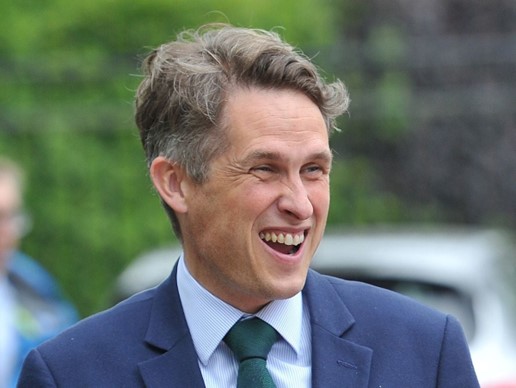
It seems nowadays that politicians can’t last longer than ten minutes in serious cabinet positions before a scandal breaks about them, or they fail, or they try to go on a Celebrity TV show. This time it was Gavin Williamson, a truly reprehensible and disgusting man.

The Rt Hon Rishi Sunak MP - GOV.UK

Having faced claims of bullying before this was Gav’s third attempt to be a decent human being and a member of the Cabinet. It lasted 72 hours. It was only two weeks ago that he was appointed as Cabinet Office Minister by Rishi Sunak. The only explanation I can possibly think of for appointing such an evil man to the role is desperation; the Tories are running very low on credible ministers. So, they are now resorting to appointing bullies to keep their party in check. What a disgrace.

Bullying in the workplace is common. People don’t like to admit, people don’t like to talk about it and people are often told to “shut up” and “move on”. I have experienced bullying in the workplace, though not to this extent, and it is truly demoralising and shatters ones’ confidence.

One allegations of abusive text messages sent to Wendy Morton emerged it was clear that this man was not only unfit for cabinet, but he was also unfit for any public role and I can only say that I hope to never hear his name again. Whilst I am no fan of Wendy Morton, the Chief Whip of the House of Commons, the bullying against her was unacceptable. It is as simple as that.

The sheer arrogance of the man. Whilst the entire country was in shock and mourning the death of The Queen, this narcissist was waiting for an invite to the funeral. That was his main concern. There are a few issues with this. Firstly, there are only a certain number of MPs who could attend. At the end of the day, a lot of MPs did not get an invitation. A lot of cabinet members did not attend. But they understood that there is a limit on the number of people who were allowed to attend.

But this was simply not good enough for “Sir” (imagine) Gavin Williamson. As soon as he found out about the death of The Queen, he immediately texted Morton and asked why he was not able to attend. It was explained, several times, why he could not attend. But he continued to harass, swear and bully Wendy Morton. In one of the exchanges, he said “Well, let’s see how many more times you f*** us all over. There is a price for everything!” Is that a threat? If this was in a movie, and sometimes I feel like British politics has turned into some sort of sick horror film, then I would say it was.

The party chairman, Sir Jake Berry, informed Rishi Sunak the day before he entered 10 Downing Street that Ms Morton had launched an official complaint against Gavin. Both Sir Jake Berry and Ms Morton lost their jobs in the cabinet re-shuffle, instigated by Sunak, whilst Gavin was allowed to return to government.

Sir Jake told the paper that he was informed by the Conservative Party chief executive on October 24 that a complaint had been made against Sir Gavin regarding allegations of “bullying and intimidation of parliamentary colleagues”. Rishi Sunak may not have known about the exact details of the text messages, but he was certainly aware of this man’s historic record of bullying colleagues into submission. An abusive man, he has a despicable record. Even when compared to other members of the Tory party.

He was first sacked by Theresa May, when he was serving as defence secretary, for leaking details of a national security meeting. He was then later sacked by Boris Johnson, when he was serving as Education Secretary, for the A-levels disaster. Is this man evil or incompetent? The Tory party can usually tolerate one, but not both.

As the scandal began to break, a simultaneous historic research report into Westminster bullying concluded that bullying was something commonplace within cabinet and within the entire civil service. The report especially highlighted bullying against women. If this were a man bullying another man, would it have received the same attention? I cannot say for certain, but in my mind that is missing the point.

After his initial appointment, despite the fact Rishi new he was a bully, he was still defended by the Prime Minister. And, rather obviously, other cabinet officials followed suit. They said that Gavin acted “in the heat of the moment” and that it was a “one off”, something which they should all put behind them. But they weren’t the ones that were bullied? And how does that make any sense at all? These text messages, which got slowly more aggressive, took place over the course of two days. It wasn’t “in the heat of the moment”, not that is any defence at all in my opinion. A despicable man with a despicable record sending despicable texts to a colleague. A one off? Come off it.

twat

Workplace bullying is systemic and it comes from the top down. If leaders don’t set an example and take a hard-line, anti-bullying stance they are rubbish leaders. It is as simple as that. Whether you are the manager of a small start-up company or, and I can’t believe I’m even writing this, the Prime Minister the example you set is followed by those who follow you.

Apparently, Sir Gavin told The Sunday Times: “I of course regret getting frustrated about the way colleagues and I felt we were being treated. I am happy to speak with Wendy and I hope to work positively with her in the future as I have in the past.” He doesn’t regret get frustrated. He regrets getting caught. And he wasn’t even getting frustrated, he was intimidating and bullying a colleague. He’s happy to speak with Ms Morton? This story broke a while ago and, at the time of writing, he has still refused to apologise to Ms Morton for his disgusting behaviour.

He now faces a direct inquiry into his behaviour, both in the past and in this particular circumstance. But the inquiry will not produce anything that we don’t already know. And it will not change the way “men” like this behave.

It was only on the 8th of November, the time at which I am writing this article, that he has finally resigned. He claims that that he did not want his concerning behaviour to become a “distraction.” To be honest, Rishi Sunak probably welcomed the distraction, but his reaction to it has not only been thoroughly disappointing but demonstrates to me an inexplicable level of weakness. A man who claims that politics should be all about integrity and respect does not instantly suspend or fire this abusive bully, but rather he sits and waits. He makes claims that he knew of no such “texts”. But again, this is missing the point. The texts were just the lightning rod; highlighting the bullying which goes on in Parliament, not just within the Tory party I might add.

I never expected much from Rishi Sunak as Prime Minister. When he was first chosen as Chancellor, I think there was a lot of hope and expectation as he seemed like a genuinely nice person. We all drank the cool aid, let’s be honest. But like many leaders before him, and probably many to follow, he quickly showed his true colours by refusing to shut this down immediately. It was only after the scandal broke, the public outrage and the demands from within his own party to take action that he finally urged Gavin to resign. He didn’t even sack him. He hasn’t come out and said how unacceptable his behaviour was. He has been weak.

As for Gavin Williamson. I don’t think we’ll be hearing from him again soon. I hope. Although with the pace at which politics is moving in the UK, I imagine he may well be Prime Minister by the time I post this article.

There hasn’t been an apology. Only distractions with the COP-27 and with Ukraine taking the headlines. Cost-of-living crises and massive inflation have also re-taken the headlines. The bullying saga has nearly been forgotten by everyone. It lasted two weeks and will obviously be repeated. Though “men” like Gavin will just be more careful next time.

Rishi has come out and said now that he “regrets” his “mistake”. The mistake was electing this shambles of a government. The regrets are ours.

In the words of the great, irreplaceable Denzel Washington: “This was an abusive man, so not a real man at all.”

NEVER Have I been So Happy to Be So Wrong

A few days ago, I wrote about, what was then, the upcoming mid-term elections. I suspected that the Republicans would run away with victories in the House and in the Senate. I imagined complete control of both houses for them and Biden becoming a lame-duck President with little power, just two years into his first (and likely) only term.

How wrong I was.

How happy you should be.

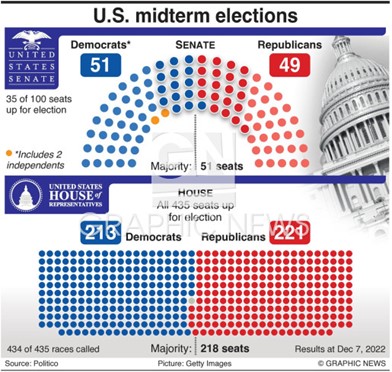
The results. In the House, the Democrats lost 9 seats. A minimal amount and fairly insignificant. The Republicans, meanwhile, gained 7 seats. An embarrassing amount to be honest as 218 seats are needed for a majority in the House and they now have only 218. Key battlefield states did not deliver fully for the Republicans in this election and that is fantastic news.

In the Senate, more surprisingly in my eyes, the Democrats actually managed to gain a seat. Whilst the Republicans lost one! This means that neither party has a majority in either the House or the Senate. With the final results of this election revealing that the Democrats had a total of 46 Senators, compared with the Republican’s 48. To get a majority one party needs more than 51 seats. The Republicans failed to secure even a small majority in either House. Party hats on!

midterm

In key battlegrounds, such as the 1st and 4th district of Nevada, were what I feared would lead to a direct and strong majority for the Republicans. But it has not turned out this way and the Republican voters did not show up as strongly as their leaders had hoped. In my eyes, this election was a failure for the Republicans and, perhaps, a demonstration of the end of the Trump era?

Is the left waking up? Well, it may be too soon to say that. But perhaps there is light at the end of this tunnel of madness. Trump brought anger and disruption to an already angry and disrupted political system. Whilst we are all quick, in Britain at least, to quickly claim that Biden is not doing enough or is making fiscally irresponsible policies. What we can at least say is that he has brought statesmanship back to the Presidency.

He may seem a bit old, with videos emerging of him being unable to finish speeches or being helped down flights of stairs, he is a respected man and he has earnt that respect. He does not shout, whine or cry – as Trump does – he focuses on the job at hand. At it has almost, rather sadly, come to the point where this is all we need from a President at the moment. We don’t need a great President like FDR to revolutionise the country. We don’t need powerful, loud leaders like the JFK or Robert Kennedy. Even if we did need Presidents like these. Where are they? What America and the rest of the world needs and has right now is a President who will not stoke more division and insight more hatred, just to gain a mass of support.

Biden has also gained more respect from myself and political commentators for coming out and praising one Republican governor who lost a crucial seat and accepted the result with good grace. Many of his supporters were spouting the same nonsense. Saying that the election was rigged or that there should be a re-count. But this politician was having none of it and Biden was quick to praise this. A small act, but an important one. As I have previously written, we cannot begin questioning the results of every single election result. It’s a slippery slope and one which does not end well.

By nipping this in the bud early, Biden has gained the headlines as political commentators begin to suggest that his brand of politics is changing the way the Republicans are seen, not just in America but across the world.

Since Trump, the Republicans have sought to hold on to their right-wing support base as it had previously brought them the Presidency and allowed them to gain power. The issue with appealing to this marginalised group of people, however, is that it tends to alienate the middle-ground “undecided” voters. Whilst it is true that the number of “undecided” voters is disappearing, with the country becoming more toxic and more divided than ever. It is no longer a case of deciding whether you like a certain President’s policies more than the other, or a Senators’, it is now just about which party they “represent”. You ARE a Republican. Or you ARE a Democrat. That is becoming how people define their political views in America and it is a great shame.

Nevertheless, we should still celebrate me being wrong about the mid-term disaster. These mid-terms were not a disaster, nor were they a triumph. Instead, we should view them with hope and sign of a better future for the USA.

I thoroughly hope that Biden has the good sense and grace to step aside in the next Presidential election. It is too far off to know whether he will or not, with politics changing so fast. But that fact that he is meeting with the Chinese Premier this week and establishing international relations suggests to me that they are on a path to a more united front.

And that’s exactly what the UK and USA need right now, to be united and to face global threats of Putin, Climate Change and China together.

I do not think this marks the end of right-wing fanaticism in America. Nevertheless, this election perhaps demonstrated to the world that, in the words of Churchill, “this is not the end. This is not even the beginning of the end. But it is, perhaps, the end of the beginning.” I truly hope this is the end of the beginning for a new, more unified United States.

Or maybe I’m dreaming.

Mid-Term Distaster

With the America’s mid-term elections fast approaching, which will decide the fate of the Senate, I thought now would be an appropriate time to give my own, unique, and flavoursome take on what is going to be an interesting time to in global politics to say the least.

Let’s begin with the current situation. We have Joe Biden (79 years old), who has served 8 years as vice-President and is currently in the middle of his first term as president. The House of Representatives, currently in it’s 117th session since 2021 is led by the Democrats. Within the House there are 435 voting members and the Democrats only hold an 8-seat majority. Slim margins to say the least. So, as things stand the Democrats are, at the time of writing, in a relatively comfortable position.

Nevertheless, the United States Senate, which is arguably more prestigious as it deals with more extensive powers, financial policies and each state has two senators, regardless of their population. Senators serve a 6-year term, longer than The President, so this election is going to be an extremely important one.

Let’s just start by saying that the Republicans are currently favourite to win in the Senate. Whilst it remains close, it is historically accurate to say that, generally speaking, when one party has control of the Presidency and one of the Houses, the other House swings the other way. And that’s what I believe will happen.

I truly believe that the fate of Joe Biden’s legacy, his agenda, and the way direction in which he is taking the country is under serious threat. Whilst Donald Trump is all smiles and waves, with his signature clenched fist raised in the air, Biden looks worried. And he should be. And so should you.

cropped-images.jpg

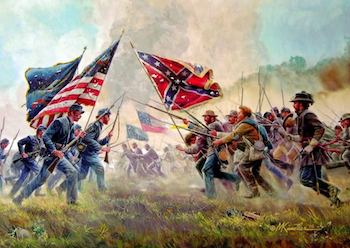
I have previously written articles about how democracy is failing and I do believe there will be a civil war in the United States within the next 40 years, if not sooner. A lot of people look at me with complete bewilderment when I suggest this to them. But history does not lie. Prior to the American Civil War, just before the election of Abraham Lincoln, there was a lot of division within the country, primarily concerning slavery and the fact that Lincoln had just won the 1860 Presidential election and was a well-known abolitionist. However, despite these massive divisions which we can now look back on and reflect, a famous Senator who actually was the first to secede from the Union infamously claimed that “not a single drop of American blood will be spilt – brother will not fight brother”. How wrong he was. How hypocritical he was.

And that is the main issue with democracy at the moment and with the divisions we can see right now. Senators and politicians are able to make claims like these, but not follow through with them. In the end, the American Civil War became less about slavery and was ultimately about protecting democracy and the Union of the United States of America.

The American Civil War, a Summary - African American Registry

It is a very simple principle and a fundamental one for any functioning democracy to work. Majority rules. And the minority has to accept that outcome, even if they don’t like it. The issue with the first American Civil War was that the Southern states did not like the outcome of the 1860 election and decided that they would form the Confederacy as new and entirely different country. This cannot be allowed to happen in any democracy because where does it end? In the Confederacy, what if they then elected a President which a few states did not like. Would those states secede into The Confederacy 2.0? What if within that Confederacy 2.0 another President was elected whom they did not like? Another, even smaller country needs to be created. And so on. The entire point of democracy is that, whilst not everyone will agree on every issue, the majority of people decide.

As Lincoln famously said in his Gettysburg address, in my opinion the best political speech of all time, he outlined why they were fighting this battle:

“Four score and seven years ago our fathers brought forth on this continent, a new nation, conceived in Liberty, and dedicated to the proposition that all men are created equal.

Now we are engaged in a great civil war, testing whether that nation, or any nation so conceived and so dedicated, can long endure.

The world will little note, nor long remember what we say here, but it can never forget what they did here. It is for us the living, rather, to be dedicated here to the unfinished work which they who fought here have thus far so nobly advanced.

That we here highly resolve that these dead shall not have died in vain—that this nation, under God, shall have a new birth of freedom—and that government of the people, by the people, for the people, shall not perish from the earth.”

A beautiful speech which essentially sums up the entire American Civil War and what these young men were fighting for. America was a young country and it was being tested on its principles of equality and fairness. Whilst he was wrong when he states that the world would not remember what was said there, he was correct that no one has forgotten what those brave men did at Gettysburg.

They were engaged in a war that was dedicated to the fundamental principles of democracy. And to protect democracy they needed the best President in United States’ history, they needed determination and they needed “brother to fight brother”.

Whilst that was nearly 150 years ago, the same issues exist today. Not just inherent racism, division, and anger. But danger. Recently, as you may well know, Nancy Pelosi’s house was broken into. Pelosi, the Speaker of the House since 2019 and a Democrat was safe. But the self-proclaimed right-wing terrorist entered Pelosi’s house screaming “where is Nancy?” before brandishing a hammer and leaving Pelosi’s husband with a fractured skull. Worried yet?

This type of aggression and intolerance of fair and free elections is almost a modern-day re-enactment of the issues faced in 1860. People not being able to accept the outcome of democratic elections. A lot of people seem to have forgotten that it was just two years ago that right-wing Donald supporters stormed the Capitol after Biden was elected. This was insurrection. Four people died. This was a small mutiny and, in my eyes, a sign of things to come.

But history is repeating itself and people are burying their heads in the sand. The elections are taking place as I write this article. I’m predicting a Republican win, as are most political commentators, but what comes next?

Well … I’ve said what I think will come next. And it is a dystopian nightmare.

MY Queen

It was only a few hours ago that I wrote an article about what the state of Britain would be if the worst were to happen. If the Queen passed there would be a constitutional crisis (especially with BoJ waiting in the wings) and if Sir David Attenborough passed then a lot of climate research would die.

However, just moments after I published my initial article that I learned the Queen had actually passed. At 96, she lived a full and healthy life and I think there are few would say that she did a poor job as Britain’s’ Monarch. In fact, if anyone differs with that opinion, please message me and I will explain why you are wrong.

What comes next? That’s the question. Prince Charles has already assumed the throne. However, what I dislike about Prince Charles, in comparison to Queen Elizabeth II, is that Charles feels it’s his place to comment on politics. It is not. Stay out of it, as your mother did.

In my previous post I skipped over the Queen’s achievements, thinking I would have time to write about them later. If there’s one thing, I’ve learnt from this and from Her Majesty it is to “do it now” – don’t wait for the right time or circumstances. Get up of your arse and do it, as Elizabeth II continued to do into her 90s.

Alas, we only now have memories and grief. Britain, having left the EU and with strained relations to the USA, could not have lost their monarch at a worst time. But, as previously mentioned, Elizabeth II never got involved in politics – for good or bad.

No comment on Brexit, no comment on the blonde floppy-haired idiot, no comment on economic policy. And that’s how we, in the political sphere, appreciated it. I could list hundreds of the Queen’s expeditions – and how they improved Britain’s global standing. But I will mention but a few.

queen

The Queen rose to power at my age (or close to) and was suddenly in charge of the colonies and the Commonwealth countries. Moreover, Elizabeth reigned as a constitutional monarch through major political changes such as the Troubles in Northern Ireland, devolution in the United Kingdom, the decolonisation of Africa, and the United Kingdom’s accession to the European Communities and withdrawal from the European Union. The number of her realms varied over time as territories have gained independence and some realms have become republics. Her many historic visits and meetings include state visits to China in 1986, Russia in 1994, the Republic of Ireland in 2011, and visits with five Popes.

Significant events include Elizabeth’s coronation in 1953 and the celebrations of her Silver, Golden, Diamond, and Platinum Jubilees in 1977, 2002, 2012, and 2022, respectively. Elizabeth was the longest-lived and longest-reigning British monarch, and the second-longest verifiable reigning sovereign monarch in world history, only behind Louis XIV of France. An unbelievable achievement.

Although I am no fan of monarchies, especially now, I held a special respect for Queen Elizabeth II as she was forced into the role (outlined in a previous post) and still conducted it better than anyone before her or after.

Her eldest son, Charles III, has now succeeded her as the monarch. But who cares? The man has been waiting to be King since he was 3 years old! Just pass it on to Prince William – because, in all honesty, Britain’s Monarchy has ended today. On the 9th of September 2022.

The Queen, Sir David Attenborough and Liz Truss

It was just this morning that I woke to the terrifying news that the Queen is “under medical observation” at her home in Balmoral. She is 96, to be fair, but she has also remained one of the main pillars of British democracy (ironically, as she is technically a monarch). Time to panic.

It has been reported that Prince Charles and the rest of the Royal Family are by her side. Prince William is also travelling up. As is Prince Andrew, although I am not sure whether that’s to see her sick mother or attend a 13 year olds’ party. Who knows with that freak?

What a lot of people do not know is that Queen Elizabeth II was never actually supposed to be Queen. One of the best monarchs the Queen has ever had happened by chance. In fact, if you want a quick history lesson in a paragraph here it comes:

Queen Elizabeth II’s father, King George VI was never even supposed to be King! If anyone has watched “The King’s Speech” (and I thoroughly recommend that you do) we learn that King George VI had to overcome a stammer during his reign between 1938 and 1947. Do those dates sound familiar? World War 2 started in 1939 and ended in 1945 and King George VI was not only thrown into this position, but also had to overcome a stammer to maintain Britain’s morale. That’s a leader. And his daughter has also been a leader.

King George VI was the great-grandson of Queen Victoria. However, he also had an elder brother named Edward VIII. He was King from January 1936 before abdicating the same year. A short, terrible reign in which he wanted to sign a deal with Hitler and saw some benefits of fascism …

However, there soon came a constitutional crisis when he proposed to Wallis Simpson (an American socialite). Although there was nothing technically wrong with this, context is everything. Simpson was already divorced, going through a second divorce and was NOT British. Prime Ministers, the dominions and even members of the Royal family denounced the idea of a King marrying someone with two living ex-husbands. What if she switched her mind again and started spying for them?

Moreover, at the time Edward was the “Head of the Church of England” which did not approve of re-marriage after divorce, What a lot of people do not actually know about Edward VIII and Simpson is that she tried to run away several times, before he abdicated as she did not love him and thought that his royal duties were more important. But she failed and Edward abdicated after 326 days – making him the shortest reigning monach in Britain’s history. All for a woman who didn’t like him.

After this, he and his wife toured Nazi Germany, meeting with numerous members of Nazi high-command. In World War 2 he was stationed in France, but it was revealed and obvious that he was a Nazi-sympathiser and was appointed Governor of the Bahamas – best way to get someone out of the way.

So King George VI became king, when it was not his duty, and Queen Elizabeth II followed. This year we celebrated her Jubilee – 70 years as Queen – the things she’s seen and the way she has carried herself across the globe is nothing short of admirable.

Elizabeth is the longest-lived and longest-reigning British monarch, the oldest and longest-serving incumbent head of state, and the second-longest reigning sovereign monarch in world history.

I could list all the things that the Queen has been through. But if you read the above paragraph and think about all those records. If you then also consider the major events which have occurred over the last 70 years. People will haev different views on what her greatest achievments have been during her life.

But, for me, as a politics graduate; what I respect most about the Queen is that she has constistently remained politically neutral. She does not comment on policies, politicians or the economy. Because that is not her place. Because apparently we live in a functioning “democracy”.

This blog post, coming after the Tory Members elected Liz Truss as “leader”. There’s a saying – it doesn’t rain, it pours. An apt quotation given the current weather in Britain.

But we now face a cost-of-living crisis, homelessness on a scale never before seen, a completely incompetent Prime Minister. Add on to that the fact that Britain is becoming more and more isolated due to strained relations with the USA and the EU – this will be something for Liz Truss to fix (a blog post I will post later) and she will fail.

david

Another hero we cannot afford to lose is Sir David Attenbrough. If we couple these political and constitutional disasters with the on-going climate crisis. One third of Pakistan is under-water. Britain is facing bizzare weather. Africa is facing a massive drought. Australia is experiencing unprecedented weather patterns. Remember that thing … um … “climate change” (formerly “Global Warming” but now “Global Weirding”) that we have been warned about for the last 20 years.

Evidence was there – but we could not see the actual outcome. For decades scientists warned us that when these weather patterns beging to appear – it is too late. With big companies continually spouting that they are aiming for “Net Zero by 2030”. So that means another 8 years of this level of pollution. And after that, it’s not as if the Amazon will suddenly grow back, the sea levels will decrease and the air quality will become healthy again.

The Queen. Sir David Attentborough – when they go I fear for politics, Britain and the planet.

How Do You Keep Up???

I must firstly make an apology. For my lack of posting, I know that many of you rely on this as your main source of entertainment/information and for that I am sincerely sorry.  But genuinely, even if I was posting every single day on this blog, as was my initial plan, I still wouldn’t be able to keep up with the rate at which the world is changing. Are we being exposed to more news? Or is their genuinely worse things happening in the world?

This post comes the day after Liz Truss has been elected by the Tory membership as the new leader of the Conservative Party, beating Rishi Sunak. It was pretty obvious that she would win, as the Party’s membership is still incredibly loyal to Boris (remember him? He’ll be back, baby!) and saw Sunak as a traitor to the party.

Liz Truss lettuce joke explained: How a humble salad staple outlasted the  UK's shortest-serving Prime Minister

Forget that Truss is incompetent, forget that she has no relevant experience, forget that she has performed woefully in every live debate they’ve had. The Tory membership still love their BoJo so much that they wouldn’t elect Rishi Sunak. I am no fan of Rishi Sunak – but at least he (kind of) knew what he was talking about! That’s how the Tory Membership and Tory voters think.

And it’s for this exact reason that I have no confidence that:

  1. Boris will not make a grand return
  2. Labour will not win the next election

Both, at the moment, seem almost impossible. Comparable to Trump being elected President of the United States, or Britain voting to leave the EU? But that’s how divided mainstream politics has become in both the USA and Britain – that parties will elect a completely incompetent leader just so they can remain in power. Britain must be careful not to stray down the same path as the USA with regards to political divides – The Economist is now predicting absolute insanity (as I did a year ago) and a potential civil war. This is something Britain can’t afford and can’t get involved in.

If you want to know more about the Truss/Sunak/Boris saga you should head straight for one of those mainstream newspapers – you’ll get your hit of dopamine there and I can’t keep up with this insanity! As someone once told me, however, is that “the media is not a charity.” And whilst shrieking “FAKE NEWS” is not exactly what I mean by this – one should be careful when reading constantly negative news.

Focus on something else – as I now will.

Broken Boris, Broken Brexit, Broken Britain

Oh how it was only a month ago that people seemed to be celebrating the end of the Boris Johnson’s era, as he announced his “intention” to resign. As an article I wrote exactly a month ago outlined, this was never an official resignation. Nor was it a signal that Boris wanted to leave politics.

The man needs to be in the limelight, he needs to be seen, he needs to be adored. And thanks to a never-ending stream of media and millions upon millions of Boris fans, he will get to choose his moment to leave. And this is not it.

I am no fan of Tony Blair, but many will remember in his final PMQs speech in 2007 he displayed a level of grace and diplomacy that Britain had been lacking since he launched his illegal invasion of Iraq in 2003. However, leaving that to one side, Blair’s final words during Prime Minister’s Questions to Parliament were moving, profound and entirely suitable for someone leaving such an important role in for such a long time. He said at last, and with almost a tear in his eye, “To all my colleagues from all of the different political parties. Some may belittle politics but we know, who are engaged in it, it is where people stand tall. And although I know it has its many harsh contentions – it is still the arena that sets the heart beating a little faster. And if it is on occassion the place of low skullduggery, it is more often the place for the pursuit of noble causes. And I wish everyone, friend or foe, well. And that is that. The end.” Met with a standing ovation from both sides of the House.

For all his mismanagement, his lies, his enemies, he still left the highest office in the country with dignity and respect. By this point, his party had begun to hate him, those around him had begun to conspire and eventhough he held a strong majority – he knew that his time was up. And so he resigned. This is not to say Blair held the office with any special dignity or treated it any better than those who had preceded him; in fact, he probably disrepected the role of Prime Minister and the Houses of Parliament more than any other leader in history. Except one.

Boris has nothing but contempt for the British people. He has no respect for the role of Prime Minister.  Attending those weird Downing Street parties (really, who wants to party with those over-grown prefects. I bet Jacob-Rees Mogg really knows his way around a 7 minute anechdote about paint drying). As wild and fun as I am sure these parties were, they were still illegal.

A further quick list – the Rwandan deportations, a vote of no confidence, two massive by-election losses, soaring inflation, a hike in interest rates, a hike in national insurance, mounting strikes from TFL which will soon spread to other working sectors (just believe me, it will), a cost of living crisis, a widening gap between the rich and the poor which is almost comparable to Dickenensian times, as one commentator posted. And Boris’ final words?

“Hasta la vista, baby.”

Are you joking? Your final words in Parliament are a quote from the Terminator? After all the mess, lies and fear you’ve created, those are your final words? Without a second of remorse or even an attempt to regain some form of bipartisanship … is it because you knew they wouldn’t be your last words in Parliament?

Directly translated “hasta la vista” does technically mean goodbye, but is usually said with a note of “see you later” or “I’ll see you again”. But I don’t think we should get bogged down in the direct nuances of what Boris said; half the time I don’t think he even knows what he’s saying so let’s put that to one side. There’s a possibility that studying his final speech may become like studying Shakespeare at school, endlessly analysing The Bard’s use of the word “red” until you drove yourself mad. By the way, Shakespeare described blood as “red” in Macbeth because blood is bloody red! But I digress.

A better way to judge Boris’ plans, and most people’s to be fair, is to look at the surrounding context, look at their past actions and then apply that to potential future contexts you can see coming. Let’s apply this.

Firstly, the context surrounding Boris’ “resignation”. It is essential that we understand that Boris has not resigned. He is still our Prime Minister; but as I said in a previous article, he is not an idiot. He plays the idiot.”All the world’s a stage, and all the men and women merely players” as Shakespeare once famously wrote. (If only my English teachers could see me quoting the playwright now! Not that I’m still holding that grudge.)

To be quite honest, I don’t think Britain has really experienced a politician like Boris Johnson before. A man who not only knows when to seize an opportunity and run with it, as he did with Brexit as everyone around him was calling him mad. He saw the opportunity as a win-win. And it was.

But more importantly than seizing opportunities as they immediately arise, Boris also knows when to step back into the shadows if necessary and let others take control. After the Brexit vote, surely a Brexit-supporting politician should have immediately stood. Whilst Boris was essentially “stabbed in the back” by Michael Gove at this point, he did not cry or kick up a fuss – allowing the media to do this for him. But rather than this being an honourable act of stepping aside to let the better man stand (if you think Michael Gove is a better person than you just give up, genuinely just give up).

He did not even complain when Theresa May won the election, by the slimmest of margins, despite the fact that she was a Remainer. This was because Boris knows how to play the game. It was obvious, or seemingly so, that whoever took over as Prime Minister after David Cameron would face an incredible challenge over seeing Brexit through. And while all the Tory MPs rushed to get their names on the ballot, Boris potentially knew that his time would come later.

BROKEN BORIS

Obviously, with the benefit of hindsight, Boris’ plans did work out. Theresa May did make a mess of things, she did nearly bring the Tory party down and it was only due to the divided nature of the Labour party, coupled with the in-fighting over Jeremy Corbyn, that the Tories managed to stay in power.

Boris did then see an opportunity to strike, as the Labour party was unimaginably weak at this point. He led the bid and was successful – as a lot of people forget how immensely popular he is amongst the Tory membership. And, whilst the Tory members may share 3 brain cells between them, their voting powers are very strong when deciding who the next leader of the party will be.

Context. So whist everyone is clamouring to find out who the next Tory leader will be. *Sigh*. Will it be the well-informed, tax dodging criminal? Well … apparently he “stabbed Boris in the back”, according to many Tory party members, because he refused to work for a criminal…

But guess what? There’s no honour amongst thieves. Learn it the hard way. Or the next Prime Minister could be Liz Truss, who is possibly the most incompetent politician I have ever seen.  I am being entirely objective when I say Liz Truss is not fit to be the Prime Minister. That is not sexist. I feel the same way about Rishi Sunak too, as he is a criminal, but at least he is knowledgeable about the current situation of the country. But anyway, who knows who will win. The Tory members will let us know the bad news soon enough.

Rather more interesting than who will win out of those two losers. They are doomed to be one-term PMs as there is no way they can continue to lead the country without massively raising taxes, tackling the Unions and solving the housing crisis – a competent PM could not acheive this. Either one of these overgrown children could not and will not be able to do it, even if they had the best ministers around them and not a who’s-who of political ineptitude.

But who comes after that? If we assume that Labour will continue with its in-fighting and Starmer as their leader then I think it’s safe to assume they do not pose a threat to the Tories’ massive majority.

Increasingly, there have been demands within the Tory party for Boris to return. There are even reports that the PM has discussed and even broadly outlined a plan for his return. Indeed, a leaked report from one of his close aides suggests that Boris has gone so far as to say that he wants to be back as Prime Minister within a year. It really is incredible and, unfortunately, I cannot tell whether this manouvre is too far or whether he’s just a step ahead of every political commentator there is, as he has been throughout his career.

I’d imagine the former. Boris has been in politics long enough. As the famous Bible saying goes, “You either die a hero, or live long enough to see yourself become the villain”. Or maybe that’s Batman. Nevertheless, even as I write this there is a slight worry that Boris may be toying with us, yet again. His claims of returning to government, the fact that he hasn’t disappeared to become some millionaire adviser like Blair, Cameron, Clegg all have done is interesting to say the least. He has the option to ride off into the sunset with millions of pounds to sit with – but he isn’t. Why? Don’t tell me it’s out of some patriotic duty he must feel. Give it a rest.

But with over 8,000 Conservative Party Members signing a petition calling for Boris to be put back on the ballot paper, people should be concerned. Boris’ tenure has led to a failed Brexit, with strains on relations with Europe, the USA and the rest of the world as Britain seeks to isolate itself further. Added to that, the lies, the crimes, the wasted money on COVID schemes. Even as I research this article I come across new information that Norway could cut power to Britain, compounding the effect of the predictions that the UK’s energy prices are expected to jump by 70% in October.

Boris’ tenure has been marred by such headlines. And whilst the next PM will definitely be either Rishi Sunak or Liz Truss, don’t expect either to be around for long. In fact, don’t expect much from either of them – the situation will get worse before it gets better.

But “Hasta la vista baby” ??? All we can do is hope we never see you again Boris. Hope beyond hope.

OHHH Boris – Playing Games Again. It’s A Fake Resignation.

“Pincher by name, pincher by nature”. He knew. Illegal parties at Downing Street. He knew. Wasting hundreds of millions on his friends COVID projects. He knew. And then he lied to parliament about it. All of it. Lying to Parliament used to be a crime; if you were caught lying to Parliament you would be asked to instantly resign as an investigation is conducted. We are now way beyond those days of honour and respect for both houses. Those days are a mere spec of dust in the distance.

I don’t want to write too much about Boris because it will get tiresome and I suspect over the next few days/weeks it will be all that is reported. Let’s just quickly start with a basic fact – Boris Johnson has not resigned. As I mentioned in a previous article, written only a few days ago, Boris has been one step ahead his entire career. And what worries me, is that he’s playing his old tricks again.

Let’s be clear, Boris Johnson is not an idiot. There are many terms you could use to describe him, but he is not an idiot. Politically, I would consider him one of the most savvy British politicians we’ve had in a long time. Many could replace “savvy” with “evil” or “self-serving” and they would not be wrong. Nevertheless, after the initial resignations of his own Chancellor and Health Minister, hoping that this would be the worst of it, he cowered for 36 hours in Downing Steet. But then the floodgates opened. By the time he announced his intention to resign, 57 ministers had already ‘found their morals’ and had handed in their resignations. The number continues to increase. As he exited Downing Street (NOT for the last time) he stood on those famous steps and, throughout his speech, you could hear the echoing boos from the crowds at the gates to Downing Street.

Boris studied PPE at Oxford and whilst he may portray himself as a bumbling moron, he is not. He knows how to play the game, which is how he’s reached where he is and lasted so long.

However, I have always said that Tories only care about winning and low taxes. The last two by-elections, in Wakefield and Tiverton and Honiton were taken from the Tories by Labour and The Liberal Democrats respectively. The Tories lost. Boris cost them two seats. It is no coincidence that these resignations are coming in now. None of these Ministers cared about the parties, drugs, alcohol, lying to Parliament – but if you can’t keep them in power and lower their taxes, they will “find their morals”, they will “stab you in tha back” and they will eat you alive.

Add to this the massive rises in inflation and taxation (a situation which they normally blame on the Labour Party, but how can you blame a party that hasn’t been in power for 12 years?) and one can start to understand how much trouble Boris is in. No Chancellor.

The papers reported on him resigning. He hasn’t resigned. He says he intends to. But as he does this, he is filling up his cabinet with a who’s-who of idiots, incompetents and morons. Even Nadhim Zahawi, who was appointed Chancellor just a few days ago, has resigned already. No doubt this is most likely because of the shady-ness surrounding his appointment. Along with the fact that being Chancellor of this country, as we dive head first into a recession, is possibly the least desirable post for any Tory politician right now.

He has not resigned and has stated many times that he does not want to be a one-term Prime Minister; sadly, for him he will be remembered as the one-term, 1-star Prime Minister. The sacking of Michael Gove was the final nail in their bizarre saga, as Gove is now homeless and could have perhaps been one of the few people Boris could have kept during this crisis to blame later. What is he thinking?

Boris has filled all these positions, whilst sacking Michael Gove for what seem to be almost entirely personal reasons, so that he can quickly call a General Election. The Tories would likely lose a general election and then he could walk off into the sunset, which he will, saying that it was not him – it was the Party. Even in his resignation speech he managed to blame everyone but himself. During Prime Ministers’ Questions, Starmer absolutely hammered home every point he needed to. To which, Boris would reply “vaccines” or something – not a great argument when you’ve just had your Health Secretary resign Boris.

As Boris has, somehow, survived a vote of no confidence and another one cannot be called for at least a year his enemies are scrambling to find someway of getting him out immediately. He refuses to do so and likely plans to call another election.

However, he seems to have forgotten several things. Firstly, calling a snap election would mean dissolving Parliament. This would involve repealing the Fixed-Term Parliaments Act of 2011 (Cameron and The Conservatives policy). But, rather more importantly, the Prime Minister always has to request the Queen’s permission to dissolve Parliament and allow for a new election. I have written about the alternative forms of governance which have been tried in the past.

The Queen has always said “yes”, as she does an amazing job of remaining politically neutral. But with this much anger in the country, so many resignations, there is a possibility (however slim it may be) that she could ask Boris to resign rather than accept his request to dissolve Parliament. Unlikely, I know, but we are in unprecedented times. However, this comes with it’s own risks. Yes, it may be perfectly acceptable in these circumstances; but we soon enter a system whereby the Monarch can call/refuse elections … is that a democracy/monarchy hybrid. Or just a monarchy?

On a slightly different note, yesterday Rafael Nadal withdrew from the Wimbledon Semi-Finals because he felt that he was not prepared enough to win two more matches. As a huge fan of tennis this was a great disappointment to me. But what was interesting was that he resigned because he felt that “he was not fit for the role and did not want to make a mockery of Wimbledon” – if he cannot perform to his best then he will not play. This was from a tennis player talking about a Tennis match. And yet he seemed to have more integrity, empathy and respect for this country than our Prime Minister.

To summarise, Boris Johnson has not resigned. He intends to resign. The Queen could prevent this by preventing him from calling another election. So as, over the past few months, we have smirked at the USA and Russia for their terrible leadership and their failed democratic systems. Well, now we have a criminal Prime Minister who is refusing to leave his post and we are not relying on the Queen, or members of his own Party, to get rid of him.

And NOWWWW – I have updated this post because things appear to be moving at the speed of light! We have Rishi Sunak placing a bid for Prime Minister, with the UK’s fiscal policy advisor backing him to win. For me, this would be a disaster. Rishi is a criminal, as much as Boris. Rishi is a liar, as much as Boris. Rishi is a tax-dodger, as much as Boris. Yes, having a British Prime Minister of Indian-descent would be extraordinary. But not him. Not Priti Patel. Not him.

Other runners include Penny Morduant, Trade Minister, who has been quoted as saying that, “politics needs to be more about the ship, less about the leader” hardly the inspiring words enshrined in Churchill’s “We shall fight them on the beaches” but okay.

Liz Truss is also another possibility, she seems to have been waiting in the wings silently and this could certainly be her opportunity. However, she was integral to Boris’ Party, supporting him throughout. She has done the usual Tory trend of promising lower taxes and to reform government spending. (Read above, all Tories care about is lower taxes).

Sajid Javid also has placed his bid, promising to make further reforms to tax by cutting National Insurance and Corporation Tax. Same old. Same old. Grant Shapps also promised to focus on the cost-of-living crisis, something I suspect he’s seen Labour address and the Tories ignore, and said he would like to cut personal taxes for the “most vulnerable”. Your party raised them! Taxes, taxes, taxes.

Suella Braverman is perhaps the most interesting for me. She was the first to throw her hat into the ring upon Boris’ “Resignation”. You would expect this kind of condfidence to be accompanied with a plan. However, her application was met with laughter as, when quested by the Shadow Attorney General Emily Thornberry, on how she plans to cut the record-breaking backlogs in the CPS. Her response was to cut taxes and see through Brexit. Taxes.

Tom Tugendhat, never heard the name? Neither. He seems like a potential outside candidate who is not covered in Boris’ sleaze. But he voted against Brexit. That will work strongly against him. Jeremy Hunt, my god, yes the man is still going. Having served, and left, as Health Secretary and as chair of the Health and Social Care Act. His latest blunder was to run against Mr Johnson in 2019 when he lost, receiving just 1/3 of the vote.

Nadhim Zahawi, Vaccines Secretary who was in charge of seeing the roll-out of the COVID vaccine in 2021 has also thrown his hat into the ring. Having previously served as Education Minister, before being promoted to Chancellor and then quickly resigning to announce his intention to stand for the Premiership. The least trustworthy of the least trustworthy.

On a rather interesting and obvious side-note the Durham Police, who were looking into Kier Starmer over breaking the rules have found that there was “no case to answer.” In a Press Conference he stated, “It shouldn’t be controversial to say that those who make the law cannot break the law.” That’s the state we are in now. The Daily Mail, however, reports that “Gloating” Kier Starmer demands another election as the Labour leader taunts “Bring it on”. Not sure who reads The Daily Mail. But guess what? We all want another election to get this corrupt, sleazy, evil, incompetent government to disappear. We are begging, not taunting. We are stating facts, not gloating.

These are your candidates so far, I’m sure there are more to come. I don’t know from where. If we begin relying on the Queen to prevent tyrants like Boris staying in power – are we living in a democracy? Really?

This is a Prime Minister who was elected in a free and fair general election. If you don’t think this is a sign that democracy has failed – then you are wrong.

America IS Breaking

At the beginning of June, following the worst elementary mass shooting since Sandy Hook, I wrote an article entitled “America’s Gun Culture Will Not End”. I was right, of course, but even I could not have predicted what would come next.

On Thursday 23rd June the Supreme Court, almost unbelievably, declared for the first time in the United State’s history that “the US Constitution protected an individual’s rights to carry a handgun in public for self-defence.” The decision was unbelievable and inexplicable. An analogy would be when the idea of arming teachers was floated in the USA – how ridiculous was that? In fairness, there are slightly stricter controls on background checks, but I don’t think anyone could have predicted an expansion in gun rights just weeks after children were murdered in school by a terrorist who had legally bought a gun.

Nevertheless, it has fundamentally changed gun laws in America. It is now no longer up to each state to decide their own gun laws – a policy which did not work anyway. Now gun laws are up to the Federal Government, a government which has chosen to expand gun rights just weeks after the worst mass shooting in decades.

What are you doing America?

More worryingly, however, are the three separate branches of government and how they will inter-link in the future. (I have an article on Roe vs. Wade coming up – prepare yourselves for that one). The Supreme Court’s decision was wrong; yes, it does include some minor extra background checks. But fundamentally it was the wrong decision.

But there are three separate branches of government. The President, Congress and The Supreme Court. And each holds checks and balances against one another to prevent one becoming too powerful. For example, if a President tried to stand for more than two terms The Supreme Court would deme this unconstitutional as it has been amended to follow George Washington’s precedent of only serving a maximum of eight years. (An interesting side note, this was always an unwritten convention until FDR managed to win four elections, before dying in office, upon which the Constitution was finally updated.)

What is more concerning about the change in gun laws, because America is never realistically going to sort out its gun laws, although I did not expect an expansion in gun rights. You have the NRA to thank for that. The major issue is that the branches of government no longer remain independent of one another – and this is the tipping point.

As mentioned above, each branch has checks and balances over the other branches. One key power the President possesses is his ability to appoint people to the Supreme Court. This must be approved by a Senate committee and Congress. However, when there is no bi-partisanship and one-party controls everything then it is easy to flood the Supreme Court – as is the case now. There are currently 6 Republican-appointed judges and 3 Democratic-appointed judges.

“Aren’t the judges supposed to be impartial and uphold the rule of law?”, I hear you wonder. Yes. Yes, they are. But they do not. If you were to look at the voting record of Clarence Thomas, the worst judge in my opinion who has previously been accused by attorney Anita Hill of sexual harassment, and compare it to that of Stephen Breyer it should be pretty obvious which party appointed which judge.

Whilst I, and indeed many Americans, disagree with these changes the gravest error, in my opinion, was Biden getting involved. On Saturday Biden signed a bi-partisan gun safety bill into law, it was the first major gun reform in three decades. He claimed that “God willing, it’s going to save a lot of lives.” He also commented after the Supreme Court’s decision on abortion laws, saying “”Is the Supreme Court broken? The Supreme Court has made some terrible decisions.”

Even the NYC Mayor, Eric Adams, has said that he will allow businesses to continue to restrict guns as he does not want New York to turn into the “Wild Wild West”. The fact that even a Mayor has come out publicly to denounce the Supreme Court’s decision and openly encourage citizens to ignore – and by association the rule of law – is shocking in itself!

Perhaps it has, but the President is literally pitting his branch of government against the Supreme Court. The Supreme Court was designed to be impartial, above reproach and to uphold the American Constitution. Currently it is failing to do so, with worsening laws on abortion and gun laws. But for the President to comment on their decisions clearly demonstrates their lack of impartiality and perhaps is even a sign of how broken the American system is.

“Democracy has failed” or has America?

Democracy Has Failed – What’s Next?

Many people on this planet believe that democracy is some sort of God-given right which we should all be incredibly greatful for, if we live in a supposedly democratic country, and something which we should aim to push onto other countries so that they can develop “properly”.

A bit of history. The Greeks were originally the first to come up with forms of government and eventually settled on four main forms: democracy, monarchy, oligarchy and tyranny. Even with these forms you had overlap. For example, the Kings of Sparta were “kept in check” by ‘ephors’ who themselves were elected in an oligarchical fashion. Corinth and Stymphalos also had similar groups of “elders”, making it difficult to establish whether these areas fell under the umbrella or monarchies or oligarchies. The Greeks, however, experimented much beyond these four main pillars of governance.

Athens was perhaps the closest to what we would consider modern democracy. Pericles, in 431 BCE, commented that “Athen’s constitution is called a democracy because it respects the interests not of the minority but if the whole people … everyone is equal before the law.” Is that the democracy we have today? Are the interests of everyone in society considered? If there is proof that a “democratic” Prime Minister broke the law three times, but was only charged once, is that everyone being treated equally before the law? How democratic are your democracies, really?

Even if one were to consider Athenian democracy as almost idealistic, it must also be remembered that it was their democratic “bad decision” which led to the death sentence of Socrates in 399 BCE. Democracy is not always right. The argument that Hitler was democratically elected is a boring one, but certainly relevant in this context. Just because everyone has a say, this doesn’t mean they’re right. As Super Hans once realised, “people like Coldplay and voted for the Nazis, you can’t trust people!” So wise.

Eventually, monarchies fell as the majority of people became agnostic/atheist and began to resent being ruled by a family who had a “god-given” right. If you don’t believe in God then where does that right come from? This was at least part of the reason, they also failed to produce results and in almost all circumstances the Royal Families themselves ended up living their own lives to excess in an almost tyrannical manner. As the excess grew, so did the anger amongst many starving populations, eventually leading to revolution in many of these countries as a desperate act of revenge. Does this excess, combined with the extreme poverty we face, remind you of any country in particular?

We’d expect monarchies to have fallen everywhere. But, as I write we are celebrating our own monarch Queen Elizabeth II. To be honest, I have very mixed opinions of the Royal Family. On the one hand, it produces criminal freaks like Prince Andrew. They’re also exclusive to the point of abuse and absolute intolerance. However, I have nothing but respect and admiration for the Queen.  The lady is 96 years old, an incredible feat in itself, but has always remained politically neutral as well as mindful of the world around herself. Whilst Prime Ministers or leaders have come, made a mess and run, the Queen has always remained as the ultimate figurehead not only for Britain but also for the Commonwealth. What will come after her reign? Who can say? But I certainly won’t be on the street celebrating “King Charles” and I don’t think many people will.

Nevertheless, whilst Britain has certainly benefitted from having one of the most stable and respected monarchs in the world at the helm for the last 75 years this is undoubtedly the exception which proves the rule. In the majority of cases, if monarchies are able to survive instances such as the French Revolution or the American War of Independence, one just needs to look at the monarchies in the Middle East to see how easy it is for monarchies can become evil machines.

Oligarchies (a system in which a ruler or group of rulers is chosen by a specific group) were also an extremely popular form of government which existed for a long time. The Greeks actually essentially decided that intellectual oligarchies which meant that intelligence allowed people to rise to the top of society. However, this system also failed as it is inherently corrupt. The “group” who decide on the leader, is it a religious oligarchy, an intellectual oligarchy or a monetary oligarchy (as we see in Russia, where someone can take power and money and then use this money to pressure people into keeping them in power.)

Tyrannical reign essentially sums up the above situations. Tyranny specifically refers to someone who has gained power illegally and refuses to give it up. Think Caesar. This would obviously be unacceptable in modern society – although China? Putin? It’s not unheard of.

Another solution for governance, which seems to have taken a hold within the human consciousness, was democracy, which comes in two forms. The first is “direct” (think of the Brexit referendum) where you are voting on a simple question and there is a “yes” or “no” answer. One vote and majority rules. Obviously, as society grew and the population grew people began to use “representative” democracy which is what we see in all modern democracies. This is a system whereby we elect officials, MPs in Britain, to make decisions on my behalf. That’s gone well ..

So the first three lead to some sort of tyranny, evil and supression. They lead to a good life for those in power and extreme desperation for the rest. How is that differing from the results of our representative democracy, which we cling on to so greatly?

Bullingdon Boys – Oligarchy or Democracy?

We have a cabinet full of criminals. We have a Prime Minister who is actually a criminal but refuses to leave, that sounds like Tyranny to me. We’ve had a succession of Oxbridge, Etonian, Bullingdon Club Prime Ministers. That sounds like an oligarchical system to me? And monarchy? Well, we do have a Queen … but I’m sure Boris would take that job if he could.

Please don’t misunderstand me – democracy is one of the best things that humanity has ever created. The fact that I am even allowed to write on this blog; the fact I was able to protest against tyrants like Putin without fear of reprisal from police; the freedom which comes with democracy should not be underestimated. However, freedom and deomcracy are not tied. They are not intrinsically linked. You can have freedom without democracy. You can have democracies where no one is free.

But far too often we think it’s a “right” and it’s going to solve all our problems. It is a human concept, which has created a system which has led to Donald becoming President of the USA and Boris becoming Prime Minister. In my mind, that is a failure. We could suggest that this is because of the rapid, unexpected and exponential growth of technology which democratic states were simply not prepared for. It could also be argued that the failure of democracy essentially can be blamed on human nature, as fundamental human greed will always directly or indirectly lead to unfair political and economic systems. Perhaps there is no “right” way to govern society …

But I believe it can be fixed. A total overhaul may be needed, but it should happen before working-class people are pushed too far and democracy is left in the past like other failures such as communism. The fact that people are so quick to dismiss the other forms of government before taking a good look at the products of our democratic systems is irritating; the success or failure of a political system must be determined by what it produces. Monarchies, for example, led to groups living in excess at the expense of 99% of the rest of the population. What is democracy producing?

As Winston Churchill once famously commented, “Democracy is the worst form of government – except for all the others that have been tried.”

Is it time to try, at least, thinking of something new?

America’s Gun Culture Will Not End

**I took a break from this blog as I have been focusing on other projects. I was hoping to design this website and publish this article on the 1 year anniversary of my last post. (Not a deadline I managed to acheive, but I got there in the end!) I’m very open to suggestions and will try to post a lot more regularly from now on! Anyway, let’s get to it. And the subject I’ve chosen to begin with is no laughing matter.**

I oft find myself trying to work out how American’s think. Injustice in America is sort of accepted as par for the course. Wiping out entire tribes, generations and families of Native Americans – who cares? Slavery (need I say more) – who cares? African-Americans make up 12% of the American population, but 33% of the prison population – but they still do not care.

So, if we move beyond the “how” American’s think, let’s get into a bit of legal stuff. America has a “codified” constitution – it is a written down document. It was drafted by a group of genuises, particularly James Maddison and Thomas Jefferson. The quality of this document is the fact that it has managed to survive since its’ creation in 1787; it survived a civil war, two world wars, countless more wars and invasions from the USA (Korea, Vietnam, Iraq, Afghanistan).

It’s easy to amend the constitution – or at least it used to be. For ANY part of the constitution to be changed, Congress must propose the amendment and it must be approved by 2/3rds vote in both houses. This was designed to avoid any partisanship (it has not worked). If this is all successful then the amendments must be passed by 2/3 of the legislatures each state – i.e. 34 out of 50 states. I suppose in the current political situation, with such a lack of bi-partisanship, amending the constitution seems almost impossible. The last time it was properly amended was in 1992, exactly 30  years ago, and the two parties have grown further apart.

Now, partisanship reigns King in America, not George. One just needs to look at Roe vs. Wade (an article which will be coming soon) to fully understand how desperate America is.

You get your gun-touting mid-West American who a lot of people in Britain envisage, with their machine guns and turrets and tanks. But a lot of Americans actually would rather prefer to carry a handheld gun, because if the police have guns, if gangs have guns how do you defend yourself?

These Americans with their assault rifles claim that it is their god-given (and by that I mean their Constitutional right) to have as many guns as they like. And the more powerful the better! What they forget is that their right to carry a gun is an Amendment to the initial American Constitution …

The Bill of Rights refers to the first 10 Amendments which were passed soon after the full US Constitution was created. The Bill of Rights is where we can find the famous (or infamous) 2nd Amendment, also known as “the right to bear arms”. I do sometimes wonder what if they had just elaborated and said, perhaps, “the right to bear arms in order to form a professional militia to prevent tyranny”. That’s what the amendment means, but the beauty and brilliance of the US constitution is that it is specific enough to create different branches of government, whilst remaining fairly vague which has allowed for its evolution and continuation.

“You can’t amend the Constitution!!” they cry. Yes, you can.

IF YOU COULDN’T AMEND THE CONSTITUTION WE’D STILL HAVE SLAVERY IN THE USA YOU MORONS.

Yes you can. The 18th Amendment prohibited the sale and purchase of alcohol, which directly led to the growth of the Mafia and illegal bootleggers. So this Amendment was then completely reversed in 1933 by the 21st Amendment. It can be done. It has been done.

In the UK after the tragedy of the Dunblane Massacre, where sixteen students were murdered by another terrorist with a gun. This was in 1996 and by 1997 John Major and Tony Blair had established two new Firearms Acts as well as creating a “buy-back scheme” for people who owned guns, but never used them and would now face a criminal record if they were found with them.

This rapid action was incredible. It has not eradicated violence in the UK, as many Americans like to remind us, and there is certainly a knife problem, particularly in London. But against the context of 21 young children being murdered for no reason, our violence issues pale into comparison.

Why am I writing about this? Because at 11.32am on Tuesday 31st May a terrorist (no, he isn’t Muslim or Asian, but I refuse to name him or refer to him as anything other than that – because that’s what he is.) took an AR-15-style Semi-Automatic Rifle into a fourth grade class and left 21 dead. The children were 9 and 10 years old.

But rather than leaving me sad, it makes me confused. These killings are not new to the USA. Of course, the age and innocence of these victims makes this particular shooting all the more heart-breaking. But literally the day before, US memorial Day weekend was marked by several mass shootings which left nine people dead and more than 60 injured.

In 2020, for the first time in the country’s history, ‘firearm-related deaths’ have becine the leading cause for childhood and teenage deaths. Re-read that and just think. In the USA, if you are a child or teenager you’ll most likely killed by a gun – because the top 1% of the top 1% can’t be bothered to sacrifice their bonuses to save childrens’ lives. They know exactly what the problem is, the world knows what the problem is, the President of the USA even knows what the problem is. But their hands are tied.

When Bill Clinton was President he managed to pass the “Assault-Weapons Ban 1994” which specifically included banning the sales of AR rifles. However, this ban only lasted 10 years and by 2004 they were once again being mass produced. Look at the size of those weapons. Why would they ever possibly, ever, in any situation, no matter the context, be needed anywhere other than the battlefield. An elementary school is not a battlefield.

What angers me even more and should terrify every parent in America was that this terrorist legally purchased two of these huge assault rifle on his 18th birthday. No checks, no questions just two massive rifles and 21 potentially brilliant lives taken away. And this is not uncommon in America. Yes, some states have much stricter regulation than others and the carrying of firearms across state borders is illegal. But this doesn’t mean it doesn’t happen? These weapons are far too easy to sell and transport but more importantly, in some states they are just too easy to purchase from your local store!

He bought these weapons completely legally.

You’d think Sandy Hook would have woken America up to its problems. But the NRA and other lobbyist obviously get in the way. Nothing about the reaction of the USA surprised me, because I know change is next to impossible. But when the leading cause of deaths is completely preventable, it does lead you to question whether America is beyond hope (another article I am working on, following the Capitol’s insurrection in 2021).

Change is possible, but incredibly unlikely. Realistically, you will never see an American bring a knife to a gun fight.

To what extent and why was the Zionist movement successful in achieving its objectives in 1948?

The early modern roots of the Zionist movement emerged from the persistent persecution of Jewish people across Europe since the Middle Ages, and across the globe long before that (Halperin, 2015). This persecution caused Jewish people to flee and disperse all across Europe and the Middle East in diaspora. Seeing this persecution and diaspora, many believed that people of the Jewish faith deserved their own land and their own government (Herzl, 1895; Weizmann, 2005). Theodore Herzl, one of the first Zionist thinkers towards the end of the 19th century and perhaps the most influential, planned to create a homeland for Jews to escape persecution in Europe. Since Herzl (1895) the creation of an Jewish homeland was indeed the main aim for every Zionist, with Eichler (2016) noting that ‘the official goal of the Zionist movement … a Jewish national home to be secured by international law.’

The Jewish State, Theodor Herzl | CIE

Another key aim of the Zionist movement was the ending of diaspora. The treatment of Jews during the 20th century was terrible and Herzl’s desire for a mass migration of Jews to the Middle East to end diaspora, referred to as Aliyah, took place in waves, with the first being between 1881 and 1903 (Greilsammer, 2011). After the devastating persecution during the Second World War the migration of Jews to Palestine increased massively; Weinstock (1973, p.55) commented that ‘fascism in Europe gave considerable impulse … at the end of the Second World War the 583,000 Jews represented 1/3 of the Palestine population.’ This continued immigration, purchasing of Arab land and refusal to allow Arabs to work on Jewish-owned land led to increased tensions between Jews and the surrounding Arab states.2 Heightening this rivalry, the day after the Israeli leader David Ben-Gurion declared independence for Israel a coalition of Arab forces invaded Israel. During the following ten months of fighting the Arab coalition eventually lost and was forced to retreat, with Israel taking control of the whole of Palestine and a large section of Transjordan, 60% more land than what they had been guaranteed by the United Nation’s (UN) partition plan. (Rogan, 2008, pp.102-103).

The Zionist movement was certainly successful in creating a Jewish homeland, which became an internationally recognised sovereign state. However, the Zionist movement undeniably failed in achieving some of its original objectives. Herzl envisaged a ‘model’ society based on equality between Jews and Palestinian Arabs, as Karsh (2006, p.470) notes that ‘the archives show that rather than seek the expulsion of the Palestinian Arabs, the Zionist leaders believed that there was sufficient room in Palestine for both peoples to live side by side in peace and equality.’ After the 1948 war hundreds of thousands of Palestinian refugees were scattered across the Middle East and many were not allowed to remain in Israel (Eichler, 2016). This poor treatment and eradication of the local population was certainly not what Herzl and Weizmann had envisaged and did not reflect the desired ‘model’ citizen or society (Halperin, 2015). Herzl had repeatedly stated that ‘Arabs and Jewish immigrants could live and work together in harmony’ and that there would be no need for Arab expulsion (Karsh, 2006, pp.468-469).

Nevertheless, no one can deny that Zionist movement did achieve a few key objectives and there are a number of reasons for these successes in 1948. Support from the West, particularly the USA and the UN, was vital in securing their independence. Moreover, Britain’s withdrawal from the region and their simultaneous problems with India and Pakistan gaining independence meant that support for the Arab cause dwindled after the Second World War. Furthermore, Israel’s superior financial situation, technology and international support meant they were able to win the 1948 war and secure a sovereign state for themselves.

The primary Zionist objective was to create an internationally-recognised national home for Jewish people; Weinstock (1973, p.51) notes that when Herzl ‘convened the first Zionist Congress at Basle in 1897’ he described the Zionist aim ‘as being the establishment for Jewish people of a home in Palestine secured by public law.’ Certainly, this was achieved first with the UN Resolution 181 in 1947 which guaranteed a partition plan but was then further emphasised by David Ben-Gurion’s declaration of independence in May 1948. Moreover, Zionists also wanted to see ‘the revival of the Hebrew language and culture’ and saw this ‘as one of the essential elements of a new society’ (Greilsammer, 2011, p.43).

Indeed, there can be little debate about the success of Zionism with regards to this particular aspect of their objectives. Conforti (2011, p.572-573) reaffirms this success by analysing the UN’s actions after the British withdrawal from the region, concluding that ‘from the legal point of view, the resolution of November 1947 that decided the division of Palestine in a Jewish and an Arab state was the international community’s (UN and USA) endorsement of the creation of Israel’. However, the creation of a Jewish national home was not supposed to come at the expense of the Palestinian population. Numerous times, Herzl and other key Zionist leaders expressed their desire to share the land with Arab Palestinians. After analysing Herzl’s works, Karsh (2006, p.471) concludes that ‘there was no trace of such a belief (that Arabs should be expelled to allow Jews to enter Palestine) in either Herzl’s famous political treatise The Jewish State (1896) or his 1902 Zionist novel Altneuland (Old-New Land).’

Several political leaders shared this idea of peaceful co-habitation with the Arab population. Indeed, as early as 1934, ‘Jabotinsky’s Revisionist Party prepared a draft constitution for Jewish Palestine, which put the Arab minority on an equal footing with its Jewish counterpart ‘throughout all sectors of the country’s public life’ (Karsh, 2006, p.473). Thus, the apparent success in 1948 of creating an internationally recognised Jewish state is undoubtedly tainted by the fact that this came at the expense of thousands Jewish and Arab lives and created a high level of animosity between the Jewish population in Israel and the surrounding Arab nations. The creation of the state was, as Greilsammer (1973, p.50) puts it ‘on some levels, an incredible success’.

Ze'ev Jabotinsky - Wikipedia

The success of the Zionists in creating a nation-state was due to a number of contributing factors and fortunate circumstances, including Western support, British withdrawal and Arab divisions. Eichler is perhaps the historian who places the most emphasis on Western aid benefitting Zionism, asking ‘how could we even think of the Zionist movement succeeding without support from Western colonial powers?’ (Eichler, 2016, p.8). After the end of the Second World War the British Empire was in full retreat and the British government could not afford to sustain its influence across the globe. This forced Britain to retreat further from the Balfour Declaration in 1917 and the Middle East in general. Moreover, Conforti (2011, p.570-571) astutely comments that ‘it (Israel) emerged at the same time as independent India and Pakistan, a time when the British Empire was crumbling, and the Zionist movement was able to take advantage of British weakness.’ Zionist leaders, sensing this withdrawal, used an ‘armed insurrection’ to ‘force the British to turn over the Palestine file to the UN’ (Eichler, 2016, p.8).

Also, the Zionists were able to achieve their objective of creating and securing a Jewish homeland because of divisions within the Arab League.3 Indeed, Rai (2014, p.2) notes that Zionists were successful in 1948 because ‘the Arab governments all pursued their own objectives, with King Abdullah of Transjordan willing to accept a Jewish state in return for territorial gains.’ These divisions were further compounded by the fact that the newly formed Israel was more unified, better equipped and more financially able to sustain a war (Weinstock, 1973) Indeed, Weinstock (1973, p.58) estimates that, in the 1940s, ‘the Arab industrial sector amounted at most to 10% of the global Palestinian industrial produce’ and that ‘in 1942 … Arab industry in Palestine consisted of 1,558 establishments engaging 8,804 persons.’ Weinstock (1973, p.58) therefore concludes that the Zionists were able to create and protect their sovereign state because they were ‘possessing technological and financial advantages.’ Thus, the Zionist movement was successful in achieving its main objective of an internationally-recognised Jewish homeland, just three years after the horrors of the Holocaust. However, this new state was not what a lot of original Zionists had envisioned. It did not allow Arabs and Jews to peacefully co-exist, as Herzl had originally intended (Rai, 2014).

Another objective of the Zionist movement, an extension of the creation of an internationally-recognised home, was to re-define the stereotypical Jewish man and create a model socialist society based on democracy, law and equality. It could be said that in 1947 and 1948 Israel failed to achieve this objective. As Greilsammer (2011, p.41) repeatedly states, a secondary key objective for Zionists was ‘to form a new Jewish man, strong, healthy and free, both typical and universal, to be an example for other nations.’ Indeed, Lustick (1980, pp.131-132) accurately notes that ‘most Zionist founders dreamt of a modern, pluralist, secular, democratic state’ before concluding that they failed in this objective and, in 1948, ‘Instead of creating a new Jew and a state built on mutual tolerance and respect for the Other, Israel fixed certain behaviours and perpetuated divisions.’ Thus, Israel did not represent the model society that many Zionists had dreamt of prior to Israel’s independence in 1948. Indeed, some historians consider the desire to create a model state with model citizens as admirable, but a complete failure in the case of Israel. Because the Zionist movement had elected Palestine as a place to establish their homeland, the economic realities of the region became clear quickly. David Ben-Gurion was unable to improve the economy as quickly as had been expected and ‘general austerity was the rule’ with ‘the power of the Labour Party becoming overwhelming and Ben-Gurion’s autocracy was insufferable for many’ (Davidson, 2002, p.24).

In fact, Greilsammer (2011, p.50) is especially critical of the failure of the Zionist movement to create a fair and modern state, commenting that ‘the gap between the ideal of the founders of Zionism and reality is even more striking as we consider the theme of ‘conquest of labor’ … and the desire to build a society where there would be no exploitation.’ The initial Zionist leaders expressed their desire to allow Arabs to continue living with the same rights that they had. It could even be claimed that Gurion was an idealist in the 1930s, as he claimed that this new Jewish state would have ‘one law for all residents, just rule, love of one’s neighbour, true equality. The Jewish state will be a role model to the world in its treatment of minorities and members of other nations. Law and justice will prevail in our state’ (Karsh, 2006, p.481).

However, the Zionist movement failed in this objective to create peace and harmony between Arabs who had lived in the region for generations and the newly created Jewish homeland. Herzl himself ‘did not envision the Jewish-Arab conflict’ (Eichler, 2016, p.6). Instead of the envisaged peaceful transition into a Jewish majority in Palestine, the 1948 war forced Israel to take a hard-line against any potential Arab enemies. This led to the creation of 700,000 Palestinian refugees. This brutal expulsion was not a reflection of the ‘future Jewish national home as an ideal society’ (Eichler, 2016, p.6). Whilst it is true that Israel remains a full democracy which respects both Palestinian Arabs and Jews, for example by having rules such as ‘in every Cabinet where the Prime Minister is a Jew, the vice-premiership shall be offered to an Arab and vice versa’ (Karsh, 2006, p.472), the political system has numerous inherent flaws. Glass (2001) comments that ‘Herzl did conceive of a diverse society’ and that ‘the Israeli political system in place over this time is a far cry from Herzl’s own vision.’ Thus, it is apparent that a key objective of the Zionist movement was to create a model society with model citizens that was fair and reflected the best practices of Western democracies. However, in 1948 its treatment of the Palestinian Arab population, combined with economic and social realities of governing such a new and impoverished state meant that Zionists ultimately failed to create a tolerant society and instead built a right-wing anti-Arab state; as Weinstock (1973, p. 43) concludes, ‘it is doubtful whether the founders of the Zionist movement would have relished this prospect.’

A third essential objective of the Zionist movement was to fully achieve an end to diaspora and group together all the persecuted Jews from across the globe in one nation to guarantee their safety. This was a goal right from the beginning as Jewish persecution was the essential reasoning for the necessity of a singular Jewish homeland in the first place. Indeed, Greilsammer (2011, p.41) states that ‘the first goal of this ideology was to end the Jewish Diaspora … and to bring them to Israel.’ Indeed, with regards to this particular goal the Zionist movement was extremely successful. The expansion of the Jewish community in Palestine was massive in the early 20th century, as the ‘Jewish population rose from 24,000 in 1882 to 175,000 in 1931’ (Weinstock, 1973, p. 55). These Aliyahs involved the emigration of Jews from all over the world, including Jews ‘from communist countries after de-Stalinization; Jews from Egypt; Jews from post-Soviet countries, and Ethiopian Jews’ (Greilsammer, 2011, p.45). This growth in population continued and was accelerated by the Second World War so that, by 1948, the Jewish population was close to 500,000. This was a massive increase in population but did not reflect the initial Zionist ideal of all Jews living in one state.

Indeed, it would be impossible for every single person of the Jewish faith to relocate to Israel; some have found accepting new homes in Britain or the USA whilst some others fear for their own safety if they were to move to the Middle East. Indeed, as Neff (1995, p.6) highlights, ‘some Jewish communities, such as the one in Alegria, are not moving to Israel, but to other countries.’ After the mass migrations which took place prior to 1948 the Zionist leadership began to accept that ‘the likelihood of mass migration again is extremely low’ (Greilsammer, 2011, p.46). Indeed, Ben-Gurion himself privately stated that ‘the idea of the Zionist ‘triumph’, a definitive end to the Diaspora, is not believable anymore’ (Jensehaugen, 2012, p.289). Moreover, Eichler (2016, p.6) notes that ‘Herzl accepted that ending diaspora was unlikely’ but he still aimed to gather a majority of Jews in one state so that ‘Jews who were left in the diaspora would be respected because now the Jews would be a normal people with a normal political homeland.’

Thus, it could be deemed that this objective was successful because the Zionist movement adapted their definition to fit reality; they became aware that not every Jew in the world would want to live in that particular part of the world (Jensehaugen, 2012). However, the leadership still accepted the importance and necessity to encourage Jewish migration, which was effective prior to 1948, so that the Jewish identity and pride could be re-established (Klocke, 2014). The Zionist movement was able to achieve this particular objective with relative ease due to the fact that Jews across Europe had been persecuted terribly for hundreds of years (Morris, 2009, pp. 82-87). This was exposed with events such as the Dreyfus Affair in France, or the Holocaust in Germany or the Pogroms in Eastern Europe (Zollman, 2002). It was not hard for Zionists to convince persecuted Jews to unite together under one sovereign state because many European Jews had first-hand experience of the horrific treatment they experienced in Europe (Jensehaugen, 2012).

Nevertheless, Weinstock (1973, p.53) does raise the important point that ‘it is thought that the wave of socialist Zionists (from Eastern Europe) were the main cause of hostility with the Arab population.’ The hostility towards these migrants came from Zionists as well as Arabs and ‘Russian Jews were considered by a number of Zionists and members of the Yishuv to constitute a major factor in arousing the hostility of the Palestinian Arabs’ (Weinstock, 1973, p.53). Thus, whilst the Zionist movement may have been as successful as possible in reducing Jewish diaspora around the globe, this may have made it a lot more difficult for Arabs to tolerate them and therefore reduced the success of some of the other Zionist goals. Thus, analysing the success of certain Zionist aims is extremely complex as they often overlap and success in one policy area can directly lead to failures in other areas.

In conclusion, it is difficult to assess the success of the Zionist movement in 1948 because it was ‘continually evolving and adapting during the first half of the 20th century’ (Conforti, 2011, p.570). Undeniably, the creation of a sovereign state in 1948 and a Jewish home which could unite any persecuted Jewish people from around the world was a huge success. Furthermore, the establishment of a democratic system and one of the finest legal systems in the world is no small achievement in such a short space of time, considering that mass Jewish migration into the region only really began in 1905 with the Second Aliyah (Morris, 2009, pp.142-144). However, the first Zionist leaders, such as Herzl or Weizmann, wanted to create a society that people around the world could aspire to. Indeed, there was no animosity towards the Palestinian Arabs in the early years of Zionism as the leaders felt that their presence in the region would be ‘beneficial’ (Weinstock, 1973, p.49). The Zionist movement, for the most part, genuinely believed that there would be enough space in Palestine for new Jewish immigrants and existing Arab citizens (Herzl, 1895).

After the 1948 war, however, a lot of these objectives completely failed. Hostilities between the Arab countries and Israel was extremely high, 700,000 Palestinian Arab refugees were displaced, and Israel became a right-wing autocratic state for a number of years in an attempt to boost its own economy (Margolick, 2008). However, as outlined by Herzl (1895) the main aims of the Zionist movement should always remain the creation of a Jewish homeland, the end of diaspora and the revival of Hebrew and Jewish culture. These key aims were achieved, to some extent, by the end of 1948.

Any successes that the Zionist movement enjoyed were down to a number of contributing factors. Most important of which was the support from the West (Rogan, 2008). Perhaps borne out of guilt from the atrocities of the Holocaust, or perhaps because the USA saw limitless benefits of having an allied democracy in the region, the West was very eager to support the Zionist movement (Rogan, 2008, pp.23-26). Britain’s withdrawal from the region and the takeover of the Palestine situation by the UN definitely benefitted the Zionist cause as it created the partition plan in 1947 and paved the way for a declaration of Israel’s independence in 1948 (Glass, 2001).

Moreover, the disunity between the surrounding Arab states and ‘their lack of wealth and infrastructure also made Zionist’s objectives easier to achieve’ (Karsh, 2006, p.479). Thus, the Zionist movement was successful in achieving their main aims in 1948 of ending diaspora and creating a sovereign Jewish state, but this success came at a price and that was the type of state they wanted to build. Israel in 1948 did not reflect the thinking of original Zionists who wanted Arabs and Jews to live side-by-side and wanted to build a model society (Rai, 2014).

A more nuanced conclusion would suggest that the Zionist movement was fairly successful in achieving its objectives in 1948 but this success caused problems later on with surrounding Arab states which has largely tainted the view political historians have on Zionism and its success.

The Capitol Insurrection – The Dangerous Start

To be honest, I can’t remember the overall stance of this blog on Donald Trump. I think the man is a master media-manipulator, uncompromising (for good and bad) and that he is at least six foot tall. I also happen to think he is the most dangerous President since Nixon, Andrew Johnson (both of whom, coincidentally, were similarly impeached but the Senate refused to remove them from office – Nixon resigning the day before and Johnson surviving by just one vote.)

I oft avoid the news, because whenever I open the BBC News App I see three items: COVID-19, Climate Change, Trump. I don’t feel particularly positive about any of those to be honest. It’s almost as if 2021 is a continuation of 2020 and the change of one day makes no difference. But something slipped through my ignorance gap – which has included deleting Facebook and Twitter.

It was the storming of the Capitol building. It was outrageous when my parents told me about it. I thought they must be confusing the Capitol building with another famous building in Washington. I was wrong. I visited the Capitol on a school trip to Washington, even standing in front of it you get a sense of its importance – both symbolic and real. It has been the scene of so many important laws, wars, conflicts, political leaders and it was just stormed by a bunch of gun-toting red-necks.

A lot of people instantly jumped on the argument that if these protestors had been Black or a member of a minority community there would be far more than four dead. Indeed, if the BLM movement had ever reached that far (before being constantly beaten, harassed and arreseted) far more violence would have ensued. I can assure you. I have done a few pieces on the BLM movement and their treatment by the police, despite their anti-violent protests, is absolutely stunning when compared to how these white armed citizens were able to storm the United States legislature building. It’s shocking. But not surprising and the only common denominator is the pigment colour of their skin.

But we all know that. We all know that the establishment cannot attack it’s supporters, no matter how many or how mad they may be. What, for me, is more scary is the fact that this was even possible. For those people who have followed Trump’s politics this was entirely predictable if he lost the election. He built his campaign around mocking war veterans, disabled reporters and getting into Twitter arguments with basically anyone famous. He may not have specifically said violent things (although this is entirely possible) … but this was always building. I’ll admit even I didn’t predict to this unprecedented extent. But still.

The problem, however, in this case is not about race it is about constitutional authority. Read on, it’ll get more less boring after those two words, promise. After the 1860 election in the USA Abraham Lincoln, then a famous anti-Slavery candidate and the first Republican President (how the Republicans and Democrats switched their rhetoric and policies over time and how Lincoln, the greatest US President was the first Republican President, has led to the last Republican President, Donald Trump, will be tackled another time).

A lot of people like to focus the American Civil War on slavery. The Southern states needed it, the Northern states did not. However, much like the arms race prior to World War 1, slavery was just powder keg. The spark, in the First World War was when Gavrilo Princip incidentally ran into and assassinated Archduke Franz Ferdinand, sparking a long list of alliances and sparking a World War. On November 19, 1863, President Abraham Lincoln famously gave his Gettysburg Address, after the Battle of Gettysburg, in it, he famously stated:

“Now we are engaged in a great civil war, testing whether that nation or any nation so conceived and so dedicated, can long endure. We are met on a great battle-field of that war … that we here highly resolve that these dead shall not have died in vain—that this nation, under God, shall have a new birth of freedom—and that government of the people, by the people, for the people, shall not perish from the earth.” Abraham Lincoln 1863

Because that’s the truth of the American Civil War. Slavery was always a key issue. But the bigger issue was the constitutional democracy and whether that would maintain and endure. When Lincoln was elected the Southern states decided that they did not like this election outcome and seceded – forming the Confederacy and their own state. That was what the war was fought about. Because democracy cannot function if the losing side is not willing to concede defeat. It is a never-ending cycle. What if the newly formed Confederacy don’t like the next President they elect? Will part of that group secede? What about that group? And so on. The American Civil War was fought to maintain a respectable, fairly new, type of democracy where you accept loss with good grace because there is a mutual understanding that both parties want what’s best for the country.

What happened in the Capitol was not only shocking but showed similarities to a country so deeply divided that violence was the only recourse. Some political commentators have suggested that this is all a build up for his 2024 campaign. Personally, I find this highly unlikely for several reasons.

A) Will he live that long?

B) These people are literally rebels. They must be prosecuted and held to account.

C) How does he plan to survive the impending charges of rape, indecent assault, fraud, money laundering, tax evasion, perjury?

D) I like to think that Americans are smart enough to realise they made a grave error and I trust them not to repeat it.

Fool me once …

Corbyn’s Libel Case – This Blog Suddenly Becomes Relevant

As if there is some higher power or something, today the hashtag #istandwithcorbyn emerged. Having previously done articles about libel laws and Corbyn’s time as leader of the Labour party it seems as if the God is reading my blog and giving me things to write about. Or it’s a coincidence.

I would advise you to read my Johnny Depp vs. The Sun article to get a summary of libel laws. Then my article on Labour’s fear of winning – in which I did express dissatisfaction for Corbyn’s style of leadership, prior to reading this. I have never denied he is a man of integrity. In the face of constant attacks, misinformation and downright lies Corbyn managed not to go completely insane. I do not deny the man’s heart and his political convictions. What I was questioning in my article was his leadership style and, more importantly, the fact that he was and is a genuinely caring human would mean that Labour would never get into power. Name me a high-ranking politician who is a genuinely good, caring person. Go on.

The saying goes, “nice guys finish last.” And that was my point on Corbyn in my previous article.

So what’s the story? Well, a Panorama presenter called John Ware is suing Jeremy Corbyn for libel. When Jeremy Corbyn was leader of the Labour party one of his many headaches was the media. This was back when Jeremy Corbyn had near-full support within the Labour party. The Party supported their leader, as they should, and accused John Ware’s investigation into antisemitism within the Labour Party as a “deliberate and malicious misrepresentations designed to mislead the public”.

This is where it gets slightly confusing. Seven former employees from Labour’s governance and legal unit, who contributed to the programme, had sued the party after it issued a press release describing them as having “personal and political axes to grind”.

So what do we have? An investigative journalist doing his job within the Labour Party. Then we have whistle-blowers within the Labour Party who testify to antisemitism not being tackled appropriately internally. The Labour Party says this is nothing more than a personal attack on Corbyn to try to undermine his credibility – a possibility but we won’t find out for many months.

Now, if you had read my previous article on libel laws in the UK you will remember that they are virtually impossible to win without clear evidence, strong backing and – most importantly – a load of money. And so that is why Carole Morgan has created a ‘gofundme’ type page to raise a target of £20,000 to help Corbyn fight his legal battle. See, unlike Boris Johnson, David Cameron or George Osborne, Corbyn is not part of the Eton-Oxford-PPE elite. He is a humble, not particularly wealthy, politician who has come under attack.

You may be thinking at this point – why does Corbyn need more money. He is still part of the Labour Party, the party which originally defended Corbyn against these claims.

But in the late hours of yesterday the Labour Party issued a statement saying: It would pay “substantial damages” and accepted press statements made against them last year were “defamatory and false”.

The party also apologised and agreed to pay damages to John Ware – the journalist who presented the Panorama investigation – after falsely accusing him of “deliberate and malicious misrepresentations designed to mislead the public”.

This is almost unprecedented. The Labour Party just lay down. It is virtually impossible to win a libel case but the Labour Party surrendered before the fight had even begun!

After leaving the High Court yesterday Corbyn issued a statement which, whilst I suspect is most likely true, did absolutely nothing to help his personal image and case. He said, “The party’s decision to apologise today and make substantial payments to former staff who sued the party in relation to last year’s Panorama programme is a political decision, not a legal one.” And I think I agree.

Corbyn has always been a thorn in Labour’s side. When he was a backbencher he voted most consistently against Blair’s proposals because he did not feel they were left-wing enough. Prior to the 2003 invasion of Iraq Corbyn directly asked Tony Blair, “why are we doing this?” To which Tony Blair ignored him and carried on down the corridor.

The Party’s decision to abandon Corbyn, one of their longest-serving MPs, demonstrates the ruthlessness within the party that we only really see in the Conservative Party. But Corbyn has already lost this case because the Labour Party have abandoned him. The fundraiser may help – but Corbyn can’t escape this and the lack of loyalty from the Labour leadership was almost certainly the final nail in the coffin.

Len McCluskey, general secretary of Unite and Labour’s biggest donor, also lashed out at the action from the Labour Party. He said: “Today’s settlement is a misuse of Labour Party funds to settle a case it was advised we would win in court,” he said. And he’s absolutely right; with the support of the Labour Party Corbyn could have won. He could have won something!!

The Labour Party want to move on from Corbyn’s brief legacy. Starmer has already committed himself to removing any sort of anti-semitism in the Party, obviously a great commitment but one which I think he will find hard to acheive.

The abandonment of Corbyn in such a cold-manner is certainly more worthy of the Conservative Party than any previous Labour Party.

Trump’s Situation – It’s Actually a Win-Win for Him

One of the most bizarre and corrupt aspects of the US political system is often ignored or forgotten – and that is the Presidential Pardon. A Presidential Pardon allows the President of the United States to completely exonerate ANY USA citizen without any excuse or explanation.

The authority to take such action is granted to the president by Article II, Section 2, Clause 1 of the U.S. Constitution. The president’s pardon power is technically limited to federal offenses because the Constitution only grants the President the power to pardon offenses against the United States.

But a lot of confusion surrounds the Presidential Pardon. Can they pardon themselves? Can they use it to halt or alter impeachment proceedings? It really is up to the decision of the President at the time. It is used regularly – after Nixon was impeached and nearly convicted (resigning the day before the judgement – classy move) Ford used the Presidential Pardon to exonerate Nixon of any of his past crimes. His justification? The country had to move on. But it is more likely that this was a political decision to avoid added damage to the Republican Party.

The Presidential Pardon is most commonly used on a President’s last day in office. It’s their last chance to use the power and they won’t have to face a backlash because the people they exonerated will be free and the President does not have to answer for it.

On Bill Clinton’s last day as President, he used his power under the U.S. Constitution to grant pardons and clemency to 456 people, thus commuting the sentences of those already convicted of a crime and obviating a trial for those not yet convicted. On January 20, 2001, he pardoned 140 people in the final hours of his presidency. Why? We will never know the full answer. But most of the people Clinton pardoned in the last few days were tax dodgers, frauds, people involved in conspiracies to defraud the government and making false statements to Federal Agents. And people wonder why Trump was able to beat Hilary Clinton. The Clinton’s are synonymous with corruption and I would never trust either of them – political robots.

But this brings me on to Trump’s situation. He’s already escaped being convicted after being impeached so he does not need to worry about himself – unless new evidence comes to light which is certainly a possibility. But either way you look at Trump’s current situation it is a win-win for him.

I don’t really believe he ever wanted to be President. What started out as a publicity stunt soon became a vision of a political outsider which soon took control of the Republican Party and went on to become President. Does he want another four years as President? Who can say?

But this is where he emerges as the winner, an example of how unfair life is. He will win. Because if he loses this election he will be able to pardon anyone connected to his crimes, which we all know he has committed. Epstein, Prince Andrew, Ghislaine Maxwell … the list goes on. He could completely pardon them on his last day in office. Leaving himself to live the rest of his life knowing that he and his evil gang would be free forever. He’d remain the first person to become President of the USA without ever holding any sort of political office before. That’s a win.

If he gets re-elected (and if you’re smart you would not rule this out as a possibility) then he gets to stay in power as the most powerful man in the world. A man who assaults women, says prisoners of war are really to blame for their own capture, advised people to drink bleach to fight Coronavirus and struggles to count backwards from 100. He’d then be able to claim that he served as President for as long as he could and he would still retain the power to pardon any of his chums whenever he wishes. That’s definitely a win.

People seem to think that if he loses the November election it’ll be a huge victory for the common man. Do you think Donald Trump cares? When people on the internet make memes about his hair or orange tan, do you think he cares? Do you think he even notices? He’s spent his entire life as a millionaire. He has proved that he can do what he wants, say what he wants, spend time with whoever he wants and still rise to the highest office in the world.

If all that isn’t winning at life then I’m not sure what is.

The BLM Movement – It Comes and It Goes (but nothing changes)

The death of George Floyd on the 20th May 2020 was obviously a tragic event, epitomising the inherent racism which exists in both America and in Britain. The outcry was massive. Despite a global pandemic, people marched and protested and signed petitions and changed the way they viewed their past behaviour. It was beautiful and horrifying at the same time. And in my naivety I thought it would last more than about two weeks.

But the knee protest, popularised by San Francisco 49ers quarterback Colin Kaepernick in 2016, is not the end nor the beginning of my problem with the way people have responded to the BLM protests.

People rushed onto Instagram to quickly tell their like-minded followers not to be racist, a good thing obviously, although something I suspect was more a demonstration of how ‘woke’ they were, rather than an attempt to actually educate anyone. They posted ‘how you may be being racist without knowing’, they posted ‘research racism’s history’ and they posted ’10 ways YOU can combat racism’. They were all very interesting articles, but they were things we knew? Surely they were things you know? You know racism instantly – I have always said you can tell if someone’s genuinely racist within 20 seconds of meeting them. You know who the racists are and so do I.

Racists out there need to be treated in a similar way to the way we reacted to this pandemic. A slow start (150 years) but soon they must simply be isolated. You should stay away from them, you should wear a virtual mask and not talk to them. It may be a step too far to wash your hands after meeting one but if you have to that’s fair. Forget trying to ‘educate’ racists in 2020, they don’t want to learn. They should just be rejected, ignored, possibly even feared. Follow these rules and watch as they just disappear – not unlike COVID-19.

And that brings me to the question what happened to the BLM protest? Everyone posted their picture of the infamous Edward Colston statue being replaced by a sculpture of Black Lives Matter protester Jen Reid. Then what? Silence. No more posts on how not to be racist? No more lessons? Racism must be over then?

Then people argue, ‘well, one statue may not sound like a lot but its a start!’. Again, I don’t think so. In 1833 Britain introduced the ‘Slavery Abolition Act’, which abolished slavery in most British colonies, freeing more than 800,000 enslaved Africans in the Caribbean and South Africa as well as a small number in Canada. That could be classed as a ‘start’ of the fight against racism. A full 3 decades later, in 1865, Abraham Lincoln managed to emancipate American slaves and have them classed as humans instead of ‘property’, as they had previously been titled in the Southern states. That could’ve been a starting point.

When Rosa Parks refused to give up her seat to a white man on December 1st 1955, that should be considered a starting point. In the 1960s, a century after slavery had ended but the United States of America denied basic civil rights to African Americans, during the Civil Rights Movement. That could have been the ‘start’. In 1963 when Martin Luther King Jr gave his famous ‘I have a dream’ speech, that could have been a ‘start’. Two years later, when Martin Luther King Jr. led three peaceful protest marches in 1965 along the 54-mile highway from Selma, Alabama, to the state capital of Montgomery; on the way encountering dogs, bomb threats, death threats and riot police. That could have been a ‘start’.

When, in a similar but arguably even more brutal manner, unarmed Rodney King was beaten mercilessly on camera by four police officers who “could’ve struck him with batons between fifty-three and fifty-six times.” That could’ve been a ‘start’. But that was in 1991.

It’s 2020 and ‘starting points’ simply are not good enough. They haven’t been for a long time.