To what extent was the Zionist movement successful in achieving its objectives in 1948?

**For those of you who do not know. I did a Master’s Degree in ‘International History and Politics’ at The University of Leeds and graduated in 2020. I got a Distinction. I was good. **

I haven’t posted on this blog in over a year (a surprise to myself)! I remember stopping because ChatGPT started to become regularly used and people were suspecting that I was using it to write my articles. I never have for my blog posts; I’ve never seen the point and I’ve never even thought ChatGPT is even that good. It is NOT AI. It is, what I like to call, ‘advanced Googling’.

But with the genocide currently going on in Gaza, conducted by Israel (let’s just call it what it is), I remembered this morning that I actually did a very long module on ‘The Israel-Palestine Conflict’ and completed it in 2019. This essay got 81/100 – so it’s bloody good. Of course, I was writing it 6 years ago so my views where tempered quite a lot compared to how they are now. But I thought I would share this, just as a brief history lesson of such a messy conflict.

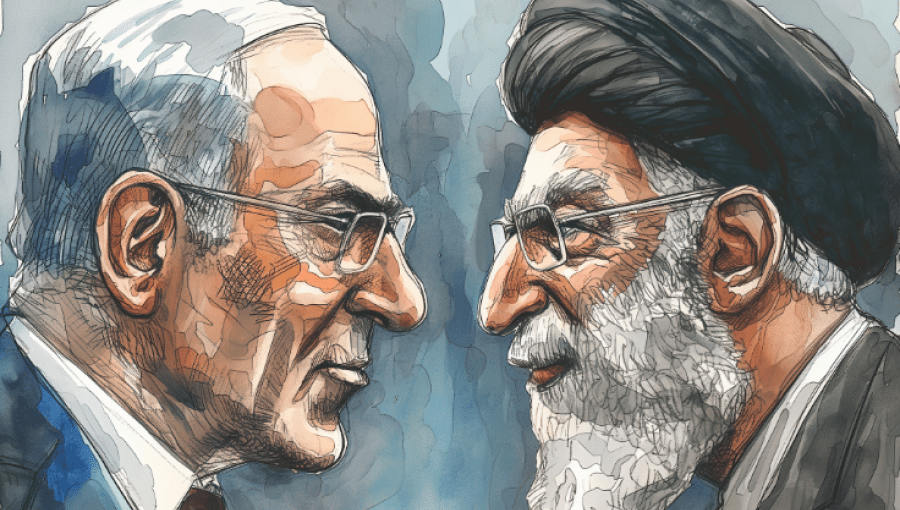
I have a lot I could write here about Netanyahu being one of the worst dictators of the modern age. I could write about how Israel’s nuclear regime is suspect, with not even top cabinet members having knowledge of how many nukes they possess.

I just want to quickly recount Mehdi Hasan’s (a genius) debate with Danny Ayalon (former Israeli Cabinet Minister), in which Ayalon himself says that he has no idea how many nukes Israel has. Hasan points out the hypocrisy of this by stating: “Imagine if an Iranian Ambassador came onto this show and I asked how many nukes they had and he just shrugged and said, ‘I dunno’, would you not be outraged? Can you not see the blatant hypocrisy?”

Ayalon admits yes! Hassan then beautifully reminds Ayalon that Iran, and its’ surrounding Arab nations had subscribed to UN Resolution 487. Ayalon insists there is no such resolution concerning Israel’s nuclear capabilities; to which Hassan responds, quoting the resolution, stating that “This board furthermore notes that Israel has not adhered to the Treaty on the Non-Proliferation of Nuclear Weapons. Making the area deeply concerned about the danger to international peace and security created by the premeditated Israeli air attack on Iraqi nuclear installations on 7 June 1981.”

I do not ignore the events of October 7th, horrific and monstrous as they were, but I ask – what about the events on October the 6th? What about the events on October the 8th, or 9th … or 10th? Or YESTERDAY? The essay beneath is an extremely tempered version of my views now, not only because the situation was vastly different 6 years ago, but also because (and I won’t lie about this) I wanted to secure a good grade in this module.

But for those of you who do not want to read the entire essay, here’s a summary: No, the Zionist movement WAS NOT WHOLLY successful in achieving its objectives in 1948. Zionists wanted to escape Europe and find a peaceful homeland. They wanted to escape the horrors placed upon Jewish people by the Holocaust and the Soviet Union.

Leaders of the Zionist movement even considered Argentina as a ‘homeland’ to be safe, they just wanted a recognised state that was AWAY from Europe! If leading Zionist thinkers, such as Theodore Herzl, could see what Israel is conducting today they would be appalled, ashamed and embarrassed by the horrific scenes they had created. There is a difference between being anti-Israel and antisemitic. Israel is a rogue, fascist, murdering state. Jewish people are Jewish people, from different places all over the world, most of whom, to their credit, have renounced the actions of Israel.

And that is why I have finally decided to post this essay, as I am reminded of Martin Niemöller’s brilliant poem (rather ironically, written by an initial supporter of Hitler, until he began to see how the Nazis were treating minorities withing Germany): “First they came for…”:

First they came for the Communists
And I did not speak out
Because I was not a Communist
Then they came for the Socialists
And I did not speak out
Because I was not a Socialist
Then they came for the Trade Unionists
And I did not speak out
Because I was not a Trade Unionist
Then they came for the Jews
And I did not speak out
Because I was not a Jew
Then they came for ME
And there was no one left
To speak out for me
.

And SO … (FINALLY) … MY ESSAY FROM 2019:

Candidate Name: Nesaar Uppal  
Candidate Number: ############
Module Name: The Israel-Palestine Conflict
Module Code: PIED5501M

The early modern roots of the Zionist movement emerged from the persistent persecution of Jewish people across Europe for hundreds of years (Halperin, 2015). This persecution caused Jewish people to be spread all across Europe and the Middle East in diaspora.[1] Seeing this persecution, diaspora and finding a religious right to create a Jewish homeland many believed that people of the Jewish faith deserved their own land and their own government (Herzl, 1895; Weizmann, 2005). Theodore Herzl, one of the first Zionist thinkers and perhaps the most influential, planned to create a homeland for Jews to escape persecution in Europe. The creation of an internationally recognised Jewish homeland was indeed the main aim of the Zionist movement, with Eichler (2016) noting that ‘the official goal of the Zionist movement … a Jewish national home to be secured by international law.’ However, a number of other Zionist objectives emerged causing divisions within the Zionist movement about which aims to pursue first. Along with creating a Jewish homeland and ending diaspora, Herzl genuinely wanted to also bring economic prosperity to the region, with better infrastructure and more finance Herzl hoped that Jewish immigration would ‘help them (Arabs) raise their own economic standard’ (Weinstock, 2011, p.50).

Herzl’s desire for a mass migration of Jews to the Middle East to end diaspora, referred to as Aliyah, took place in waves, with the first being between 1881 and 1903 (Greilsammer, 2011). However, as the third and fourth Aliyah’s took place in the 1920s and 1930s more and more communist Jews from Eastern Europe brought their communist ideas to the Jewish homeland, hoping to create a communist state (Greilsammer, 2011). After the devastating persecution which occurred during the Second World War the immigration of Jews to Palestine increased massively; Weinstock (1973, p.55) commented that ‘fascism in Europe gave considerable impulse … at the end of the Second World War the 583,000 Jews represented 1/3 of the Palestine population.’ This continued immigration, purchasing of Arab land and refusal to allow Arabs to work on Jewish-owned land led to increased tensions.[2] These tensions came to a helm in 1947 and 1948. In 1947 the United Nations issued resolution 181 which called for a partition plan of Palestine, effectively granting a Jewish homeland in the region and greatly angering the Arab League (Greilsammer, 2011, p.44). Following this, in 1948 a coalition of Arab forces invaded Israel in 1948, the day after the Israeli leader David Ben-Gurion declared independence for Israel. During the following ten months of fighting the Arab coalition eventually lost and was forced to retreat, with Israel taking control of the whole of Palestine and a large section of Transjordan, 60% more land than what they had been guaranteed by the UN (Rogan, 2008, pp.102-103).

In a number of ways, it could be contended that the Zionist movement was very successful in achieving its objectives in 1948. It became an internationally recognised sovereign state which was indeed the key aim of Zionism; it was also able to provide a safe homeland for persecuted Jews and whilst diaspora was never fully achieved and later referred to as ‘idealistic’ it still provided refugee for hundreds of thousands of Jews. However, in a number of other ways it failed in achieving its original objectives. Herzl envisaged a model society based on equality with Arabs, as Karsh (2006, p.470) demonstrates that ‘the archives show that rather than seek the expulsion of the Palestinian Arabs, the Zionist leaders believed that there was sufficient room in Palestine for both peoples to live side by side in peace and equality.’ This failure to assimilate with Palestinian Arabs was further compounded by Jewish settler’s hoarding land and wealth from Arabs, creating a Jewish elite and not an equal society. There are a number of reasons for the success of the Zionist movement in 1948. Support from the West, particularly the USA and the UN, was vital in securing their independence. Moreover, Britain’s withdrawal from the region and their simultaneous problems with India and Pakistan gaining independence meant that support for the Arab cause dwindled after the Second World War. Furthermore, Israel’s superior financial situation, technology and international support meant they were able to win the 1948 war and secure a sovereign state for themselves.

The primary Zionist objective was to create an internationally-recognised national home for Jewish people; Weinstock (1973, p.51) notes that when Herzl ‘convened the first Zionist Congress at Basle in 1897’ he described the Zionist aim ‘as being the establishment for Jewish people of a home in Palestine secured by public law.’ Certainly, this was achieved first with the UN resolution 181 in 1947 which guaranteed a partition plan but was then further emphasised by David Ben-Gurion’s declaration of independence in May 1948. Moreover, Zionists also wanted to see ‘the revival of the Hebrew language and culture’ and saw this ‘as one of the essential elements of a new society’ (Greilsammer, 2011, p.43). Indeed, there can be little debate about the success of Zionism with regards to this particular aspect of their objectives. Conforti (2011, p.572-573) reaffirms this success by analysing the UN’s actions after the British withdrawal from the region, concluding that ‘from the legal point of view, the resolution of November 1947 that decided the division of Palestine in a Jewish and an Arab state was the international community’s (UN and USA) endorsement of the creation of Israel’. However, the creation of a Jewish national home was not supposed to come at the expense of the Palestinian population. Numerous times, Herzl and other key Zionist leaders expressed their desire to share the land with Arab Palestinians. After analysing Herzl’s works, Karsh (2006, p.471) concludes that ‘there was no trace of such a belief (that Arabs should be expelled to allow Jews to enter Palestine) in either Herzl’s famous political treatise The Jewish State (1896) or his 1902 Zionist novel Altneuland (Old-New Land).’ Numerous political leaders shared this idea of peaceful co-habitation with the Arab population. Indeed, as early as 1934, ‘Jabotinsky’s Revisionist Party prepared a draft constitution for Jewish Palestine, which put the Arab minority on an equal footing with its Jewish counterpart ‘throughout all sectors of the country’s public life’ (Karsh, 2006, p.473). Thus, the apparent success in 1948 of creating an internationally recognised Jewish state is undoubtedly tainted by the fact that this came at the expense of a lot of Jewish and Arab lives and created a high level of animosity between the Jewish population in Israel and the surrounding Arab nations. The creation of the state was, as Greilsammer (1973, p.50) ‘on some levels, an incredible success’.

The success of the Zionists in creating a nation-state was due to a number of contributing factors and fortunate circumstances, including Western support, British withdrawal and Arab divisions. Eichler is perhaps the historian who places the most emphasis on Western aid benefitting Zionism, asking ‘how could we even think of the Zionist movement succeeding without support from Western colonial powers?’ (Eichler, 2016, p.8). After the end of the Second World War the British Empire was in full retreat and the British government could not afford to sustain its influence across the globe, it had also become heavily indebted to the USA who were very anti-imperialist. These factors forced Britain to retreat further from the Balfour Declaration in 1917 and the Middle East in general. Moreover, Conforti (2011, p.570-571) astutely comments that ‘it (Israel) emerged at the same time as independent India and Pakistan, a time when the British Empire was crumbling, and the Zionist movement was able to take advantage of British weakness.’ Zionist leaders, sensing this withdrawal, used an ‘armed insurrection’ to ‘force the British to turn over the Palestine file to the UN’ (Eichler, 2016, p.8).  Also, the Zionists were able to achieve their objective of creating and securing a Jewish homeland because of divisions within the Arab League.[3] These divisions were exploited by the Israeli armed forces. Indeed, Rai (2014, p.2) notes that Zionists were successful in 1948 because ‘the Arab governments all pursued their own objectives, with King Abdullah of Transjordan willing to accept a Jewish state in return for territorial gains.’ These divisions were further compounded by the fact that the newly formed Israel was more unified, better equipped and more financially able to sustain a war (Weinstock, 1973) Indeed, Weinstock (1973, p.58) estimates that, in the 1940s, ‘the Arab industrial sector amounted at most to 10% of the global Palestinian industrial produce’ and that ‘in 1942 … Arab industry in Palestine consisted of 1,558 establishments engaging 8,804 persons.’ Weinstock (1973, p.58) therefore concludes that the Zionists were able to create and protect their sovereign state because they were ‘possessing technological and financial advantages.’ Thus, the Zionist movement was successful in achieving its main objective of an internationally recognised Jewish homeland, to some extent. This new state did not allow Arabs and Jews to peacefully co-exist, as Herzl had originally intended, because of the nature in which Israel declared its own independence and sided with Western powers, who many Arabs saw as the enemy (Rai, 2014). Nevertheless, the creation of a safe Jewish homeland just three years after the Holocaust in Europe was an enormous success. The movement was also so successful in achieving this particular objective because of the extremely poor and divided Arab opposition and a large amount of political and economic support from the West.

Another objective of the Zionist movement, an extension of the creation of an internationally recognised home, was to re-define the stereotypical Jewish man and create a model socialist society based on democracy, law and equality. It could be said that in 1947 and 1948 Israel failed to achieve this objective. As Greilsammer (2011, p.41) repeatedly states, a secondary key objective for Zionists was ‘to form a new Jewish man, strong, healthy and free, both typical and universal, to be an example for other nations.’ Indeed, Lustick (1980, pp.131-132) accurately notes that ‘most Zionist founders dreamt of a modern, pluralist, secular, democratic state’ before concluding that they failed in this objective and, in 1948, ‘Instead of creating a new Jew and a state built on mutual tolerance and respect for the Other, Israel fixed certain behaviours and perpetuated divisions.’ Thus, Israel did not represent the model society that many Zionists had dreamt of prior to Israel’s independence in 1948. Indeed, some historians consider the desire to create a model state with model citizens as admirable, but a complete failure in the case of Israel. Because the Zionist movement had elected Palestine as a place to establish their homeland, the economic realities of the region became clear quickly. David Ben-Gurion was unable to improve the economy as quickly as had been expected and ‘general austerity was the rule’ with ‘the power of the Labour Party becoming overwhelming and Ben-Gurion’s autocracy was insufferable for many’ (Davidson, 2002, p.24). In fact, Greilsammer (2011, p.50) is especially critical of the failure of the Zionist movement to create a fair and modern state, commenting that ‘the gap between the ideal of the founders of Zionism and reality is even more striking as we consider the theme of ‘conquest of labor’ … and the desire to build a society where there would be no exploitation.’ The initial Zionist leaders expressed their desire to allow Arabs to continue living with the same rights that they had. It could even be claimed that Gurion was an idealist in the 1930s, as he claimed that this new Jewish state would have ‘one law for all residents, just rule, love of one’s neighbour, true equality. The Jewish state will be a role model to the world in its treatment of minorities and members of other nations. Law and justice will prevail in our state’ (Karsh, 2006, p.481).

However, the Zionist movement failed in this objective to create peace and harmony between Arabs who had lived in the region for generations and the newly created Jewish homeland. Herzl himself ‘did not envision the Jewish-Arab conflict’ (Eichler, 2016, p.6). Instead of the envisaged peaceful transition into a Jewish majority in Palestine, the 1948 war forced Israel to take a hard-line against any potential Arab enemies. This led to the creation of 700,000 Palestinian refugees. This brutal expulsion was not a reflection of the ‘future Jewish national home as an ideal society’ (Eichler, 2016, p.6). Whilst it is true that Israel remains a full democracy which is supposed to appeal to both Arabs and Jews, for example by having rules such as ‘in every Cabinet where the Prime Minister is a Jew, the vice-premiership shall be offered to an Arab and vice versa’ (Karsh, 2006, p.472). Glass (2001) comments that ‘Herzl did conceive of a diverse society’ and that ‘the Israeli political system in place over this time is a far cry from Herzl’s own vision.’ Thus, it is apparent that a key objective of the Zionist movement was to create a model society with model citizens that was fair and reflected the best practices of Western democracies. However, in 1948 its treatment of the Palestinian Arab population, combined with economic and social realities of governing such a new and impoverished state meant that Zionists ultimately failed to create a tolerant society and instead built a right-wing anti-Arab state; as Weinstock (1973, p. 43) concludes, ‘it is doubtful whether the founders of the Zionist movement would have relished this prospect.’

A third essential objective of the Zionist movement was to fully achieve an end to diaspora and group together all the persecuted Jews from across the globe in one nation to guarantee their safety. This was a goal right from the beginning as Jewish persecution was the essential reasoning for the necessity of a singular Jewish homeland in the first place. Indeed, Greilsammer (2011, p.41) states that ‘the first goal of this ideology was to end the Jewish Diaspora … and to bring them to Israel.’ Indeed, with regards to this particular goal the Zionist movement was extremely successful. The expansion of the Jewish community in Palestine was massive in the early 20th century, as the ‘Jewish population rose from 24,000 in 1882 to 175,000 in 1931’ (Weinstock, 1973, p. 55). These Aliyah’s involved the emigration of Jews from all over the world, including Jews ‘from communist countries after de-Stalinization; Jews from Egypt; Jews from post-Soviet countries, and Ethiopian Jews’ (Greilsammer, 2011, p.45). This growth in population continued and was accelerated by the Second World War so that, by 1948, the Jewish population was close to 500,000. This was a massive increase in population but did not reflect the initial Zionist ideal of all Jews living in one state.

Indeed, it would be impossible for every single person of the Jewish faith to relocate to Israel; some have found accepting new homes in Britain or the USA whilst some others fear for their own safety if they were to move to the Middle East. Indeed, as Neff (1995, p.6) highlights, ‘some Jewish communities, such as the one in Alegria, are not moving to Israel, but to other countries.’ After the mass migrations which took place prior to 1948 the Zionist leadership began to accept that ‘the likelihood of mass migration again is extremely low’ (Greilsammer, 2011, p.46). Indeed, Ben-Gurion himself privately stated that ‘the idea of the Zionist ‘triumph’, a definitive end to the Diaspora, is not believable anymore’ (Jensehaugen, 2012, p.289). Moreover, Eichler (2016, p.6) notes that ‘Herzl accepted that ending diaspora was unlikely’ but he still aimed to gather a majority of Jews in one state so that ‘Jews who were left in the diaspora would be respected because now the Jews would be a normal people with a normal political homeland.’

Thus, it could be deemed that this objective was successful because the Zionist movement adapted their definition to fit reality; they became aware that not every Jew in the world would want to live in that particular part of the world (Jensehaugen, 2012). However, the leadership still accepted the importance and necessity to encourage Jewish migration, which was effective prior to 1948, so that the Jewish identity and pride could be re-established (Klocke, 2014). The Zionist movement was able to achieve this particular objective with relative ease due to the fact that Jews across Europe had been persecuted terribly for hundreds of years (Morris, 2009, pp. 82-87). This was exposed with events such as the Dreyfus Affair in France, or the Holocaust in Germany or the Pogroms in Eastern Europe (Zollman, 2002). It was not hard for Zionists to convince persecuted Jews to unite together under one sovereign state because that is what a lot of them wished for anyway because of their poor treatment in Europe (Jensehaugen, 2012). Nevertheless, Weinstock (1973, p.53) does raise the important point that ‘it is thought that the wave of socialist Zionists (from Eastern Europe) was the main cause of hostility with the Arab population.’ The hostility towards these migrants came from Zionists as well as Arabs and ‘Russian Jews were considered by a number of Zionists and members of the Yishuv to constitute a major factor in arousing the hostility of the Palestinian Arabs’ (Weinstock, 1973, p.53). Thus, whilst the Zionist movement may have been as successful as possible in reducing Jewish diaspora around the globe, this may have made it a lot more difficult for Arabs to tolerate them and therefore reduced the success of some of the other Zionist goals.

In conclusion, it is difficult to assess the success of the Zionist movement in 1948 because it was ‘continually evolving and adapting during the first half of the 20th century’ (Conforti, 2011, p.570). Undeniably, the creation of a sovereign state in 1948 and a Jewish home which could unite any persecuted Jewish people from around the world was a huge success. Furthermore, the establishment of a democratic system and one of the finest legal systems in the world is no small achievement in such a short space of time, considering that mass Jewish migration into the region only really began in 1905 with the Second Aliyah (Morris, 2009, pp.142-144). However, the first Zionist leaders, such as Herzl or Weizmann, wanted to create a model society with model citizens and, perhaps most importantly, felt that their presence in the region would be ‘beneficial’ (Weinstock, 1973, p.49). The Zionist movement, for the most part, genuinely believed that there would be enough space in Palestine for new Jewish immigrants and existing Arab citizens (Herzl, 1895). After the 1948 war, however, these objectives completely failed. Hostilities between the Arab countries and Israel was extremely high, 700,000 Palestinian Arab refugees were displaced, and Israel became a right-wing autocratic state for a number of years in an attempt to boost its own economy (Margolick, 2008). However, as outlined by Herzl (1895) the main aims of the Zionist movement should always remain the creation of a Jewish homeland, the end of diaspora and the revival of Hebrew and Jewish culture. These key aims were achieved, to some extent, by the end of 1948.

Any successes that the Zionist movement enjoyed were down to a number of contributing factors. Most important of which was the support from the West (Rogan, 2008). Perhaps borne out of guilt from the atrocities of the Holocaust, or perhaps because the USA saw limitless benefits of having an allied democracy in the region, the West was very eager to support the Zionist movement (Rogan, 2008, pp.23-26). Britain’s withdrawal from the region and the takeover of the Palestine situation by the UN definitely benefitted the Zionist cause as it created the partition plan in 1947 and paved the way for a declaration of Israel’s independence in 1948 (Glass, 2001). Moreover, the disunity between the surrounding Arab states and ‘their lack of wealth and infrastructure also made Zionist’s objectives easier to achieve’, as they could buy land cheaply and during the 1948 war they were able to beat a coalition of forces simply due to their better resources and their ability to divide the Arab states (Karsh, 2006, p.479). Thus, the Zionist movement was successful in achieving their main aims in 1948 of ending diaspora and creating a sovereign Jewish state, but this success came at a price and that was the type of state they wanted to build. Israel in 1948 did not reflect the thinking of original Zionists who wanted Arabs and Jews to live side-by-side and wanted to build a model society (Rai, 2014). A more nuanced conclusion would suggest that the Zionist movement was very successful in achieving its objectives in 1948, but this success caused problems later on with surrounding Arab states which has largely tainted the view political historians have on Zionism and its success.

Any successes that the Zionist movement enjoyed were down to a number of contributing factors. Most important of which was the support from the West (Rogan, 2008). Perhaps borne out of guilt from the atrocities of the Holocaust, or perhaps because the USA saw limitless benefits of having an allied democracy in the region, the West was very eager to support the Zionist movement (Rogan, 2008, pp.23-26). Britain’s withdrawal from the region and the takeover of the Palestine situation by the UN definitely benefitted the Zionist cause as it created the partition plan in 1947 and paved the way for a declaration of Israel’s independence in 1948 (Glass, 2001). Moreover, the disunity between the surrounding Arab states and ‘their lack of wealth and infrastructure also made Zionist’s objectives easier to achieve’, as they could buy land cheaply and during the 1948 war they were able to beat a coalition of forces simply due to their better resources and their ability to divide the Arab states (Karsh, 2006, p.479). Thus, the Zionist movement was successful in achieving their main aims in 1948 of ending diaspora and creating a sovereign Jewish state, but this success came at a price and that was the type of state they wanted to build. Israel in 1948 did not reflect the thinking of original Zionists who wanted Arabs and Jews to live side-by-side and wanted to build a model society (Rai, 2014). A more nuanced conclusion would suggest that the Zionist movement was very successful in achieving its objectives in 1948, but this success caused problems later on with surrounding Arab states which has largely tainted the view political historians have on Zionism and its success.

Word Count: 3,557

Bibliography:

Conforti, Y. 2011. Between Ethnic and Civic: The Realistic Utopia of Zionism. Israel Affairs. 17(4), pp.563-582.

Davidson, L. 2002. Zionism in the US 1917-1948: Zionism and the betrayal of American Democratic Principles. Journal of Palestine Studies. 1(3), p.21-35.

Eichler, W. 2016. Theodor Herzl and the Trajectory of Zionism. [Online]. [Date Accessed 1 May 2020]. Available from: https://www.opendemocracy.net/en/north-africa-west-asia/theodor-herzl-and-trajectory-of-zionism/

Glass, C. 2001. The Mandate Years Colonialism and the Creation of Israel. [Online]. [Date Accessed 27 April 2020]. Available from: https://www.theguardian.com/books/2001/may/31/londonreviewofbooks

Greilsammer, I. 2011. Zionism Between Ideal and Reality. Cairn Info. 47(3), pp.41-51.

Halperin, L. 2015. Origins and Evolution of Zionism. Foreign Policy Research Institute. pp.1-10.

Herzl, T. 1895. The State of the Jews. England: Tredition Classics.

Jensehaugen, J. 2012. Securing the State: From Zionist Ideology to Israeli Statehood. Diplomacy & Statecraft. 23(2), pp.280-303.

Karsh, E. 2006. Resurrecting the Myth: Benny Morris, the Zionist Movement, and the ‘Transfer’ Idea. Israel Affairs. 11(3), pp.469-490.

Klocke, Z. 2014. An Investigation into Zionism’s Inner Leadership. [Online]. [Date Accessed 24 April 2020]. Available from: https://pdxscholar.library.pdx.edu/cgi/viewcontent.cgi?article=1047&context=younghistorians

Lustick, I. 1980. Zionism and the State of Israel: Regime Objectives and the Arab Minority in the First Years of Statehood. 16(1), pp.127-16.

Margolick, D. 2008. Endless War. [Online]. [Date Accessed: 23 April 2020] Available from: https://www.nytimes.com/2008/05/04/books/review/Margolick-t.html

Morris, B. 2009. 1948: A History of the First Arab-Israeli War. Yale: Yale University Press.

Neff, D. 1995. The Palestinians and Zionism: 1897-1948. Middle East Policy Council. 4(1), pp.1-10.

Rai, S. 2014. What Were the Causes and Consequences of the 1948 Arab-Israeli War? University of Leicester. 12(2), pp.1-3.

Rogan, E. 2008. The War for Palestine: Rewriting the History of 1948. England: Cambridge University Press.

Weizmann, C. 2005. The Letters and Papers of Chaim Weizmann (Series A: Letters): United Nations; Weizmann First President of Israel; The Prisoner of Rehovot. England: Transaction Publishers.

Weinstock, N. 1973. The Impact of Zionist Colonisation on Palestinian Arab Society Before 1948. Journal of Palestine Studies. 2(2), pp.49-63.

Zollman, J. 2002. The Dreyfus Affair. [Online]. [Date Accessed: 12 April 2020]. Available from: https://www.myjewishlearning.com/article/the-dreyfus-affair/


[1] ‘Diaspora’ is a term which refers to a scattered population that live beyond the borders of what they would consider their homeland. In this essay the term refers to Jewish people being spread beyond the borders of modern-day Israel.

[2] Early Zionists did not want Arabs working on their land because they thought this was too much like imperialism, but in actual fact it just served to create a Jewish elite with a great deal of wealth.

[3] Refers to the coalition of Arab forces which invaded Israel in 1948, included Saudi Arabia, Yemen and Egypt.

From Waistcoat to Winner: Southgate’s Redemption and England’s Revival

Let’s get one thing straight: Gareth Southgate is the best thing to happen to English football since Sir Alf Ramsay. Now, I know what you’re thinking—”Isn’t that the guy who missed the penalty in Euro ’96?” Yes, but let’s put that behind us. In fact, it’s precisely because of that miss that Southgate’s tale is one of the greatest redemption stories in football history.

While Ramsay’s 1966 World Cup win is etched in every English fan’s memory, it’s time to appreciate the modern-day knight of the Three Lions. Let’s dive into some hard-hitting facts and a few laughs along the way to show why Gareth Southgate is criminally underrated and arguably the best manager England has seen since the days of black and white television.

First, let’s rewind to Euro 1996. Picture it: Southgate steps up for the penalty, and… well, you know the rest. But fast forward 25 years, and there he is, not just stepping up, but guiding an entire team to their first major tournament final since 1966. A semi-final in the World Cup, followed by a final in the Euros, and reaching back-to-back finals (with the Nations League in between)—if that’s not redemption, what is?

Sir Alf Ramsay took England to World Cup glory in 1966, the first and only time the trophy has been in English hands. But let’s be honest, the world of football back then didn’t have the kind of competition it does today. Ramsay had to face teams like Portugal and West Germany, sure, but Southgate has had to navigate the minefields of social media criticism, VAR controversies, and a squad that dances more than it plays (looking at you, Jesse Lingard).

Southgate’s record speaks for itself: under his leadership, England reached the semi-finals of the 2018 World Cup, the final of Euro 2020, and another final in the 2022-23 Nations League. Ramsay’s team might have won the World Cup, but Southgate’s squad has given us consistent thrills and heart-stopping moments in an era where the pressure is off the charts.

Southgate’s greatest strength lies in his ability to foster unity and teamwork. His philosophy is built on support and understanding, knowing the pain of failure firsthand. Remember how he consoled Bukayo Saka after his penalty miss in the Euro 2020 final? That’s the kind of empathy and leadership that makes a difference.

It’s not just about tactics; it’s about building a team that fights for each other. Southgate has managed to cultivate a sense of camaraderie and belief, making players want to play for the badge and for each other. This isn’t just a team; it’s a family. And let’s face it, England hasn’t looked this united since the Spice Girls were topping the charts.

Critics might argue that England’s football under Southgate can be “boring,” but hey, boring football is grinding out the wins. And let’s talk about penalty shootouts—a decades-long bane for England. Not anymore. After beating Switzerland in a shootout, England seems to have found a newfound comfort with penalties. It’s a far cry from the historical nerves and mishaps, showing just how much the mental game has changed under Southgate’s leadership.

Of course, Southgate hasn’t been free from criticism. Playing Harry Kane and Phil Foden out of position has ruffled some feathers. But how do you sideline a captain who has done so much for England? People tend to forget that Kane scored a crucial penalty last night and has been a heroic leader. It’s a dilemma similar to what Ole Gunnar Solskjaer faced with Cristiano Ronaldo at Manchester United—you can’t live with him, you can’t play without him. Because he gets the goals.

When comparing Southgate to other managers who have tried and failed to lead England to glory, the differences are stark. Sven-Göran Eriksson brought us quarter-final exits and a love affair with David Beckham’s right foot. Fabio Capello brought discipline but forgot to pack his creativity. Roy Hodgson’s tactics were as thrilling as a cold cup of tea. Compared to these illustrious figures, Southgate is a breath of fresh air. He’s pragmatic yet inspiring, firm yet understanding. He’s like the Mary Poppins of football managers—practically perfect in every way, with a waistcoat instead of a carpetbag.

The mere fact that we are now disappointed with performances in the quarters and semis shows how far this team has come. England fans now have sincere expectations, not just hope. Yes, that heaps a lot more pressure and criticism on Southgate. But what we all feel now, a sense that something MIGHT happen on Sunday, is such a far cry from where we were just a decade ago with the “Golden Generation.”

Come Sunday, whether England wins or loses, Southgate’s legacy is already cemented. He’s brought hope, excitement, and a genuine sense of pride back to English football. He’s shown that with unity, empathy, and a good dose of tactical nous, you can compete with the best in the world.

In conclusion, Gareth Southgate is not just an underrated manager; he’s a national treasure. His journey from the agony of Euro ’96 to the euphoria of leading England to their first final in over half a century is a story of resilience and redemption. So, here’s to Gareth Southgate—the best manager England has had since Sir Alf Ramsay, and quite possibly, ever. Cheers, Gareth. You’ve done us proud.

2024: The Great Tory Trainwreck and Labour’s Lukewarm Landslide

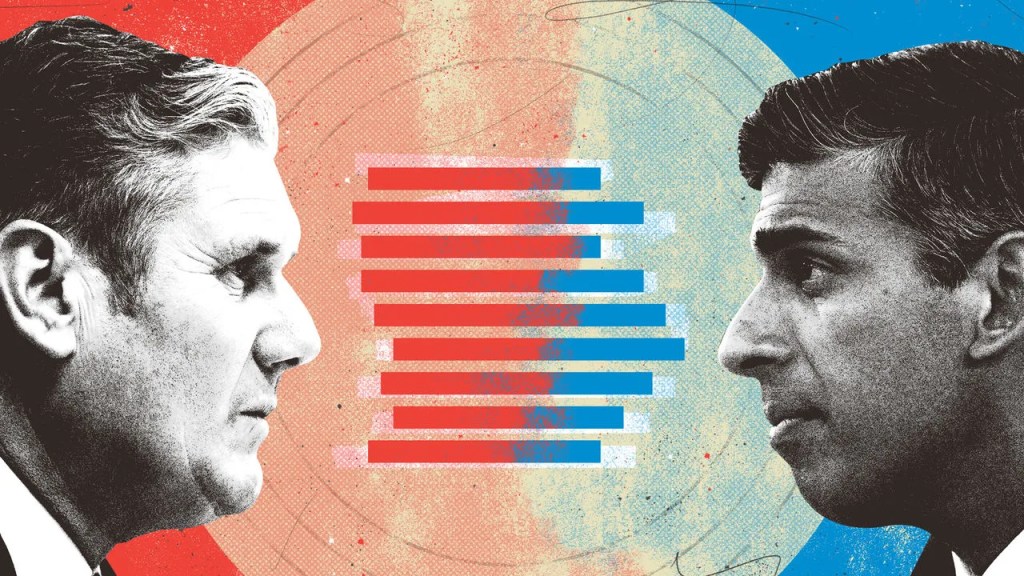
Welcome, dear readers, to the carnival of British politics! With the 2024 General Election just around the corner, our tea leaves have brewed up a stormy prediction. Grab your popcorn, because the once indomitable Tory Party is on track for a cataclysmic crash that will make the Titanic look like a leisurely swim. How bad? Think fewer than 100 seats, folks. Yes, you read that right — double digits! But don’t pop the champagne for Labour just yet. This isn’t quite the Tony Blair landslide of 1997. Instead, expect a motley coalition of smaller parties ready to seize the day.

It’s hard to pinpoint exactly when the Tories’ fortune started to nosedive, but here we are. Polling data from the latest YouGov surveys shows a number of deadly red flags. Recent numbers show the Conservatives at a bleak 22%, a stark fall from their glory days of 43.6% in 2019. Labour is soaring ahead at 37%, while the Liberal Democrats are cozying up with 15%, the Green Party is planting roots at 7%, the SNP is kilted up at 4%, and a ragtag group of “Others” — including Nigel Farage’s Reform UK — are pulling in a surprisingly robust 15%. It’s a bloodbath, with the Tories projected to scrape through with a pitiful 75 seats if these trends hold. Yes, you read it here first, I know they’ll be in double digits.

Traditional Tory voters, it seems, are caught in a political existential crisis. Voting Labour? That’s like a lifelong carnivore suddenly turning vegan — highly unlikely and emotionally traumatic. Almost unthinkable! Although possible that some may see the light. But where will the ones who would rather eat their own vomit than side with Starmer go? For those who like their politics with a dash of hardline rhetoric and a side of Brexit nostalgia, Nigel Farage’s Reform UK is the new sanctuary. A sizable chunk of ex-Tories seem ready to swap their blue rosettes for Farage’s brand of rebellious reform, with his party polling at around 8%. It’s clear that he’s becoming the pied piper for disillusioned Conservatives.

Then there are the Tories who, while horrified by Labour, aren’t quite ready to go full Farage. Enter the Liberal Democrats, with their polite centrism and promises of a “kinder, gentler” approach. They’re attracting Tories like a well-dressed pub on a Sunday afternoon, bringing them up to a respectable 15% in the polls. Meanwhile, the Greens are also gaining traction, riding the wave of climate consciousness. While they won’t be breaking into the double digits in terms of seats, their presence is growing, especially among younger voters who think recycling alone won’t save the planet (it won’t, but that’s for another day). And in Scotland, the SNP continues to scoop up seats like they’re collecting rare Pokémon cards. With Scottish Tories on the decline, the SNP could dominate north of the border, as they did before, further slicing into the Conservative pie.

So, with the Tories imploding like a poorly baked soufflé, Labour is set to not just win, but secure a massive majority. Picture the House of Commons as a sea of red, with Keir Starmer at the helm of a Labour government. But before we get carried away with visions of triumphant social reforms, let’s take a step back. The reality is that even with this monumental win, Labour’s path is strewn with the rubble of past mismanagement and current crises. They may not be as scandal-ridden as their predecessors, but being less corrupt is a pretty low bar to set. The new government will inherit an economy bruised by Brexit, strained by a pandemic, and burdened by a decade of austerity.

Despite their majority, Labour will be hamstrung by the monumental task of cleaning up the mess left by the Tories. For Starmer, the initial years in office will likely be dominated by crisis management rather than sweeping changes. Fixing what’s broken — from the NHS to the cost-of-living crisis — will take precedence over implementing the more ambitious elements of their manifesto. They’ll need to shore up their position and build enough momentum to survive a full five-year term. If they manage to stabilize the ship and earn the public’s trust, then maybe, just maybe, they can start rolling out some of their more progressive policies.

As the curtains rise on the 2024 election, the script promises a shakeup in British politics, but perhaps not the revolutionary overhaul some might expect. The Tories are bracing for an epic collapse, while Labour is preparing for a cautiously optimistic win. That’s the way it should be … neither party has been that impressive and, from asking a select few who I consider educated in the world of politics, the response I get in my questioning of which party they will vote for and why is inevitably … “well, they aren’t like the Tories”. Fair enough.

So, dear reader, keep your seatbelt fastened and your sense of humour intact. The prediction of this blog is a Tory meltdown, but that doesn’t necessarily mean a victory for the left! (Does Labour even represent the “Left” anymore or is it just “Not Tory”? Think on that …

The next few months are going to be a wild ride through the twists and turns of British democracy. And remember, in politics, as in life, it’s often the unexpected that steals the show. Stay tuned, stay sceptical, and always question the polls. They’re as reliable as the British weather forecast — often wrong, but always entertaining.

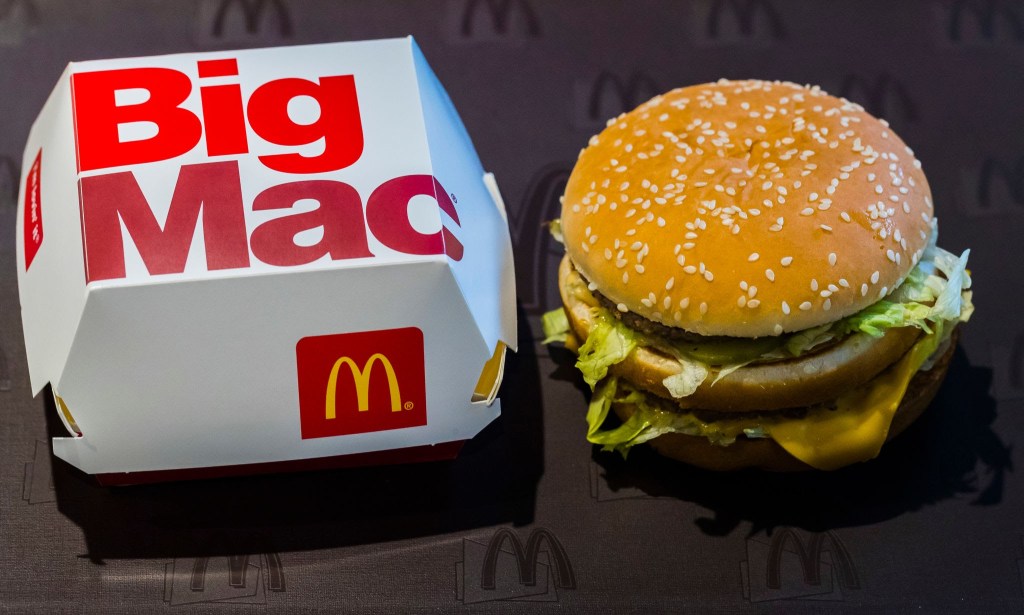
From Big Macs to Big Impact: The Supersized Legacy of Spurlock Morgan

Once upon a time, in the early 2000s, the world of fast food was rocked by a man with a mission and an iron stomach. Enter Spurlock Morgan, a documentary filmmaker with a flair for the dramatic and a stomach for… well, pretty much anything. His rise to fame began with a film that would forever change the way we think about the golden arches and their ubiquitous, calorie-laden offerings.

In 2004, Spurlock introduced us to “Supersize Me,” a documentary that chronicled his 30-day odyssey of eating nothing but McDonald’s. It was a month-long extravaganza of Big Macs, fries, and fizzy sodas, all supersized, of course. Spurlock’s idea was simple yet daring: eat McDonald’s three times a day and see what happens. Spoiler alert: it wasn’t pretty. His weight ballooned, his cholesterol skyrocketed, and his liver… well, let’s just say it probably started drafting a resignation letter.

The film’s impact was as outsized as his meals. “Supersize Me” didn’t just gross millions at the box office; it earned more than $20 million worldwide, catapulting Spurlock into the realm of high-earning non-fiction filmmakers. The documentary led to significant changes in the fast-food industry. McDonald’s, perhaps fearing a future where their mascot would be a cautionary tale rather than a clown, phased out their supersize option and started offering healthier alternatives. Salads, apple slices, and even milk were suddenly thrust into the spotlight, much to the chagrin of burger enthusiasts everywhere.

Buoyed by his newfound fame, Spurlock didn’t stop there. Over the next 13 years, he produced nearly 70 documentary films and TV series through his production company, Warrior Poets. True to form, Spurlock’s projects often delved into controversial and provocative topics, from exploring the world’s most dangerous places in “30 Days” to dissecting corporate America in “The Greatest Movie Ever Sold,” a film financed entirely by product placements. His knack for turning the mundane into the magnificent was unparalleled.

In a move that seemed equal parts genius and ironic, Spurlock eventually opened his own fast-food restaurant, Holy Chicken! It was a place where transparency was on the menu, quite literally. The restaurant boasted free-range chickens, locally sourced ingredients, and a commitment to honesty that was as refreshing as it was unexpected. Customers could enjoy their meals knowing exactly where their food came from, how it was prepared, and just how many calories they were consuming – a far cry from the mystery meat days of yore. “We are ultimately going to be the first honest fast food restaurant,” he told Today. “We are going to set the record straight.”

Spurlock’s final project was a sequel to his groundbreaking documentary. “Super Size Me 2: Holy Chicken!” examined how the fast food industry had rebranded itself as healthier in the years since the original film. The sequel wasn’t just a rehash of old material; it was a pointed critique of the ways in which fast-food chains used marketing and regulatory loopholes to present a facade of healthiness. In conjunction with the film’s release, Spurlock launched Holy Chicken!, positioning it as a more “humane” fast-food option. The menu was designed to highlight certain regulations he claimed fast-food chains sidestepped, making it a culinary manifesto against the industry’s smoke and mirrors.

However, Spurlock’s career wasn’t all laughter and happy meals. In 2017, he came forward with a confession that rocked his fan base and the industry. Spurlock admitted to past instances of sexual misconduct, detailing an incident from his college days and another involving a former employee. His candor was shocking and sobering, a far cry from the playful provocateur the public had come to know.

The fallout was immediate. Spurlock stepped down from Warrior Poets, and his projects were halted. It was a stark reminder that even those who challenge norms and fight for transparency are not immune to the consequences of their actions. His admission and the subsequent backlash were a testament to the growing accountability movement within the entertainment industry.

In the later years of his life, Spurlock faced another formidable adversary: cancer. He battled the disease with the same tenacity that had characterized his career, but this was one fight he couldn’t win. Spurlock passed away, leaving behind a legacy that was as complex as it was impactful.

Spurlock Morgan was a man of contradictions: a provocateur with a cause, a documentarian with a penchant for the absurd, and an entrepreneur who believed in transparency. His work with “Supersize Me” forced a billion-dollar industry to take a hard look at itself, while his later ventures continued to challenge the status quo.

Despite the controversies that marred his career, Spurlock’s contributions to both film and food are undeniable. He made us laugh, made us think, and maybe even made us a little bit healthier. In the end, Spurlock Morgan’s story is a reminder that even the most unlikely heroes can leave a lasting mark on the world.

And so, as we bid farewell to a man, whose crimes no one can defend, who once supersized himself for the sake of enlightenment. We can only hope that the positive aspects of his legacy live on, as we marvel at his questioning of the norm and the striving for betterment continues to inspire future generations – just with a little less sodium and a lot more heart.

Blunders, Bungles, and Ballots: A Hilarious History of Tory Turmoil

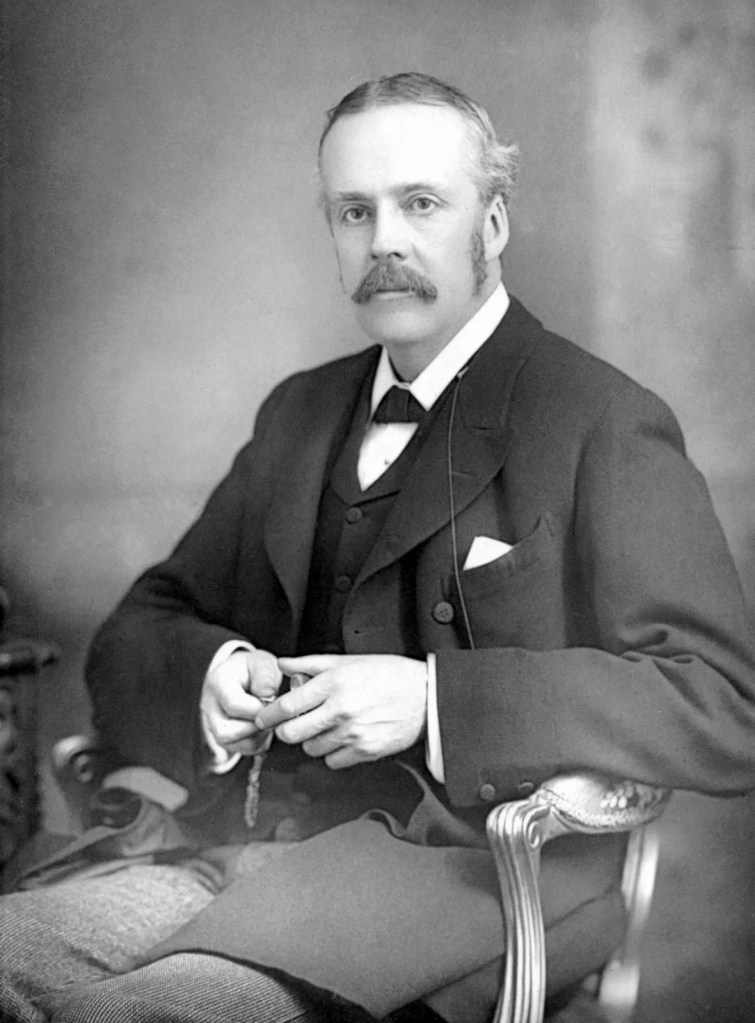
In the grand narrative of British political history, few periods evoke as much rueful amusement as the twin sagas of Tory tribulation in the 1906 and 1997 general elections. Picture, if you will, the pomp and circumstance of Arthur Balfour’s era, as he, with the confidence of a lion entering the colosseum, led his Conservative cohorts into the electoral arena of 1906.

And if the name “Balfour” sounds familiar to you – well done! Arthur Balfour famously issued the Balfour Declaration in 1917, announcing British support for a national home for the Jewish people in Palestine. As Foreign Secretary, he was just as useless as when he was Prime Minister during one of the Tories’ largest political losses in history. We must note, history remembers the winners … but it also remembers the inadequate losers too. Balfour. Remember the name.

Prior to the election, the resurgent Liberals, under the dynamic leadership of Henry Campbell-Bannerman, would prove to be a formidable opponent. As the dust settled, the Tories found themselves floundering in the wake of an electoral tsunami, losing a staggering 246 seats – an electoral catastrophe of unparalleled magnitude. The Liberals, buoyed by their triumph, seized control of the House of Commons with an impressive 399 seats, marking the dawn of a new political era.

Fast forward to the tumultuous terrain of 1997, where John Major’s Conservative Party found itself adrift in a sea of discontent and disillusionment. The once-mighty Tories, who had long held sway over British politics, now faced the unenviable task of defending their record against the rising tide of Tony Blair’s New Labour movement.

Major, with his trademark understated demeanour and steadfast determination, sought to rally the troops and steer the ship of state through the stormy waters of economic uncertainty and political upheaval. Alas, it was not to be. Blair’s New Labour juggernaut, with its slick campaign machinery and irresistible charisma, swept aside the Tories with ruthless efficiency. The result? A devastating defeat that saw the Conservatives haemorrhage 178 seats, leaving them with a mere 165 in the House of Commons. Meanwhile, New Labour, riding high on a wave of optimism and promise, secured a commanding majority of 179 seats, signalling the dawn of a new political era.

With a statesman-like leader, such as Major, the Tories still suffered a staggering loss of 178 seats – leaving them with just 165 seats and Blair with an unbelievable 418 seats. That was with a well-respected statesman at the helm. Since 2015 we have dealt with incompetency, corruption, inadequacy or just plain evil. You may know them as Theresa May, Boris Johnson, Liz Truss or Rishi Sunak. So what could happen in 2024?

To answer this, we need to know what precipitated these seismic shifts in the political landscape. Ah, the devil is in the details. In both instances, a union of factors conspired to spell doom for the Conservative Party.

Economic mismanagement, internal divisions, and a failure to resonate with the aspirations of the electorate all played their part in sealing the Tories’ fate. From Balfour’s struggles to address the pressing issues of unemployment and social reform to Major’s battles with economic instability and European integration, the Conservatives found themselves out of step with the prevailing mood of the nation. Moreover, their perceived detachment from the concerns of ordinary voters only served to exacerbate their woes, as they grappled with an increasingly restive electorate clamouring for change. Sound familiar?

Of course, no political debacle would be complete without a healthy dose of hubris, and the Tories certainly didn’t disappoint on that front. From Balfour’s overconfidence in the face of impending defeat to Major’s stubborn refusal to heed the warning signs of electoral annihilation, the Conservatives seemed destined to stumble headlong into the abyss of political oblivion. It was like watching a Greek tragedy unfold in real-time, with the protagonists blinded by their own arrogance and pride, unable to see the writing on the wall until it was too late.

So, what does the future hold for the Tories in 2024? Will they learn from the mistakes of their forebears, or are they doomed to repeat the sins of the past? Only time will tell. Could they end up with fewer than 100 seats? It’s not unimaginable! One can hope.

With Rishi Sunak at the helm and a litany of scandals and missteps to contend with, the Conservatives face an uphill battle to retain their grip on power. And if history is any guide, they may well find themselves once again cast adrift in the choppy seas of electoral defeat, as the electorate delivers its verdict with a resounding cry of “out with the old, in with the new!”

Sunak’s Soaked Snap Election: A Comedy of Errors in Shades of Blindness

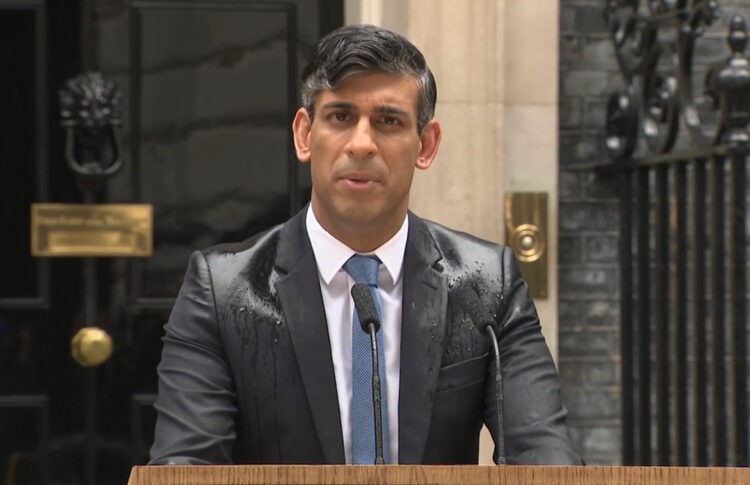
As the rain-soaked streets of Westminster witnessed Rishi Sunak’s decision to call a snap election, it was like watching a soggy soap opera unfold in real-time. The stage was set for a political drama of epic proportions, complete with plot twists and turns that would make even the most seasoned scriptwriter blush. But he did it! He called an election earlier than necessary! And clearly this was not staged or planned; just look at the weather … or his face.

This upcoming election marks the first real test of the electorate’s mood since 2019, a time when Boris Johnson’s buoyant charisma and unyielding Brexit fervor propelled the Tories to a resounding victory. But alas, it seems Sunak’s ego couldn’t resist the siren call of power, leading him to remove the one thing that made people vote Tory: Boris Johnson himself.

Since the last real, pre-COVID and fair election, in my opinion, was held in 2015 and resulted in a Tory majority. Since then, I would argue, we have had four of the most corrupt and despicable Prime Ministers in our history. David Cameron used to make you shudder? Perhaps you hold a deep hatred for Thatcherite politics. Well, to be fair, those leaders were successful in, at the very least, getting things done. Since 2015, we’ve had Theresa May, Boris Johnson, Liz Truss and Rishi Sunak. A whos-who of incompetence, evil and, in Liz Truss’ case a genuine ignorance about who that moron was or where she came from.

More importantly, however, only Boris Johnson was genuinely elected democratically in 2019. In 2015, David Cameron legitimately won a general election (with the promise of a Brexit vote – thanks Dave!), but soon jumped ship and left us with Theresa May. Then Boris won the election in 2019 before being somehow beaten by Liz Truss and Rishi Sunak. None of these people were elected by the people. Rishi Sunak was NOT an elected Prime Minister so don’t shed a tear if he fails to win his first actual general election as leader.

In her usual no-holds-barred style, Angela Rayner, the Deputy Leader of the Labour Party, described Sunak as a “pint-size wannabe loser,” a title that seemed to hit the mark with surprising accuracy. Sunak’s attempts to distance himself from Johnson left him resembling a damp squib rather than a political powerhouse.

Sunak’s journey from economic wunderkind to political pariah has been as chaotic as a hen party in a downpour. His ‘Eat Out to Help Out’ scheme, initially hailed as a stroke of genius, quickly devolved into a public health nightmare, akin to handing out umbrellas during a monsoon and expecting sunshine. It is now thought to have actually extended the length and dangers of COVID-lockdown.

Then came the ‘pingdemic,’ a debacle of epic proportions that saw Sunak caught in the crossfire of his own misguided policies. As the nation grappled with staff shortages and supply chain disruptions, Sunak found himself pinged by his own NHS Test and Trace app while extolling the virtues of returning to the office. It was a comedy of errors that would have been hilarious if it hadn’t been so detrimental.

But perhaps the pièce de résistance in Sunak’s political pantomime was his brazen betrayal of Boris Johnson. Like a snake shedding its skin, Sunak attempted to slither away from the Prime Minister, leaving a trail of WhatsApp messages and strategic leaks in his wake. Yet, for all his machinations, Sunak’s attempts to position himself as the Tories’ next top dog only served to highlight his own shortcomings as a leader.

As the rain continues to fall on Westminster, one can’t help but wonder if Sunak’s decision to call a snap election is one last throw of the dice, a desperate bid to catch the snoozing Labour and Lib Dems off guard. But let’s face it, trying to surprise your opponents when you represent the most corrupt government in UK history is like trying to sneak up on someone in a room full of flashing neon signs.

In the end, Rishi Sunak’s snap election may be nothing more than a futile attempt to outrun the storm clouds gathering overhead. But as the saying goes, you can’t outrun the rain forever, and sooner or later, Sunak will find himself soaked to the bone, facing the consequences of his actions. And if the electorate’s appetite for change is anything to go by, even the charisma-vacuum that is Keir Starmer might start looking like a breath of fresh air in comparison.

Here we go …

The Climate Change Chronicles: How Global Greed and Failed Agreements Left Us Adrift

In Britain we love to talk about the weather. Not only does it provide an easy source of small talk when interacting with Karen from across the road, but it’s also a fact that Britain has historically always enjoyed four very differing seasons. There were months where you could guarantee times of pure sunshine and pollen and, if you were to go far back enough, even months where you could guarantee snow!

I have a huge amount of respect for climate protestors and their leaders. But we must remember there is only so much Sir David Attenborough can do for us! The man’s old and we can happily watch his incredible shows going “Awwwww” or gasping at the marvels of nature – but soon it’ll all be gone. Sitting here in my boiling room, watching the rain fall down and remembering it being a boiling 26 degrees just a few days ago – I do start to wonder whether the weather will be such a hot topic in the future (jeeez count them puns)!

First, let’s get one thing straight: climate change is a natural cycle. Throughout Earth’s history, temperatures have yo-yoed more than a dieter in January. From the Ice Ages to the Medieval Warm Period, our planet has seen it all.

But ah, the climate conspiracists! These are the folks who believe that climate change is a hoax, a ruse cooked up by shadowy figures to…well, it’s not entirely clear what they think the endgame is. Some argue it’s about control, others say it’s a ploy to sell more electric cars.

Let’s take a look at some of their greatest hits:

  1. “Climate change is a hoax!” Yes, because melting ice caps and record-breaking temperatures are clearly figments of our collective imagination. Never mind the fact that 97% of climate scientists agree that human activities are driving unprecedented changes in the Earth’s climate. But hey, what do scientists know, right?
  2. “Volcanoes emit more CO2 than humans!” Nice try, but volcanic emissions pale in comparison to human activities. Humans pump out about 35 billion tons of CO2 annually, whereas all the volcanoes in the world combined emit roughly 200 million tons. That’s like comparing a firecracker to a nuclear explosion.
  3. “It’s all about the money!” Ah, yes. Because the real power brokers are clearly those climate scientists, raking in the big bucks from their well-funded research grants while fossil fuel executives struggle to make ends meet. Seriously, ExxonMobil’s annual revenue is around $178 billion. The entire global climate fund? A measly $10.3 billion.

Now, let’s talk about what we’ve done—or rather, failed to do. Remember the Paris Agreement? That grand accord where nearly every country on Earth pledged to keep global temperature rise well below 2 degrees Celsius above pre-industrial levels, ideally aiming for 1.5 degrees? Spoiler alert: we’re on track to blow past both targets. Current policies have us headed for a scorching 2.7 degrees Celsius increase by the end of the century.

Yet in 2022, China’s CO2 emissions hit a staggering 10 billion tons. The U.S. rejoined the Paris Agreement, aiming to halve emissions by 2030, but emissions rose by 6.2% in 2022. The EU wants to be carbon neutral by 2050, but emissions in 2022 were only 24% lower than in 1990. Progress, sure, but not nearly enough.

The root of these failures? Greed. Fossil fuel industries, with their deep pockets and influential lobbying, consistently hinder progress. In 2022, global fossil fuel subsidies amounted to a whopping $423 billion, effectively undermining climate efforts. Companies like ExxonMobil, Chevron, and Saudi Aramco continue to post record profits while the planet burns. Nations prioritize short-term economic gains over long-term sustainability, like Brazil’s Amazon deforestation for beef and soy exports.

And here’s the kicker: even if we magically stopped all emissions today, we’d still have to reverse the damage we’ve already done. According to the IPCC, the last time CO2 levels were this high was during the Pliocene Epoch, around 3 million years ago, when sea levels were 15-25 meters higher. The damage we’ve done is baked into the system.

CO2 stays in the atmosphere for centuries, meaning the effects of our past emissions will continue to unfold. The Greenland Ice Sheet is melting at an unprecedented rate, with Arctic ice-free summers possible by 2035. The oceans, which absorbed 90% of the excess heat, suffer from coral bleaching and ecosystem disruption. Reversing this damage isn’t just challenging; it’s virtually impossible within our lifetimes.

So, where does this leave us? We’ve missed the boat, and the climate ship has sailed. But while we may not reverse the damage, we can still mitigate its worst effects. We need a drastic overhaul of our energy systems, reduction in fossil fuel subsidies, and significant investment in renewables. We must build resilient infrastructure, develop sustainable agriculture, and protect vulnerable communities.

Believe it (or not) – Man Landed on the Moon.

In all of human history, few events have captivated the world’s imagination quite like the Apollo moon landings. Yet, despite overwhelming evidence to the contrary, conspiracy theories continue to persist, suggesting that the United States never actually set foot on the lunar surface (AND I BLOODY HATE IT!). But fear not, truth seekers, for I can, through a LOT of research, here to debunk every argument against the moon landings and prove once and for all that America did indeed achieve this monumental feat.

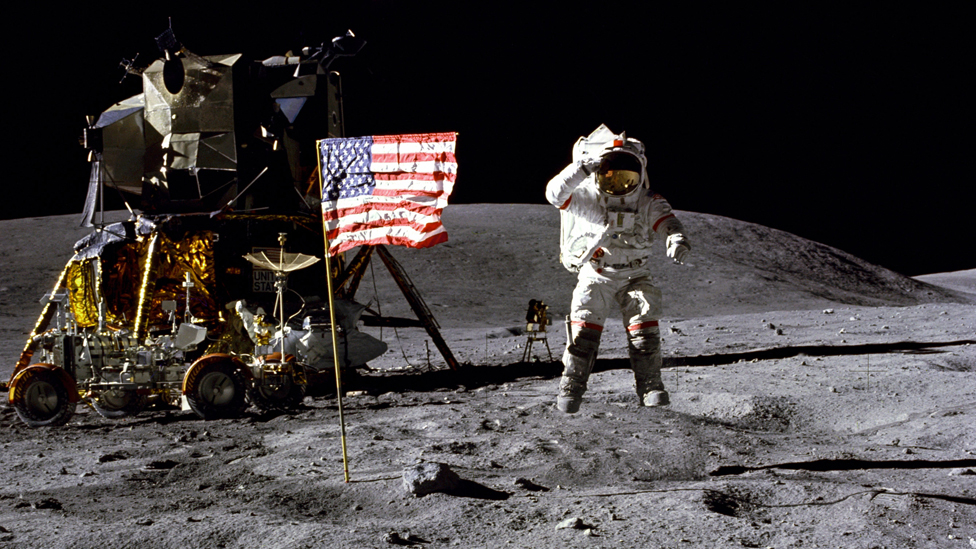
The first argument, and the one most of us are probably aware of is “The Flag Waving Debate Conspiracy”. Theorists often point to the American flag planted on the lunar surface, claiming that its movement suggests the presence of wind, which is impossible in the vacuum of space. However, they fail to acknowledge that the flag’s movement was caused by the astronauts twisting it to plant it securely in the lunar soil. It had a pole holding the flag up, like on Earth, but another pole along the top of the flag so that the flag would not just drop down! THINK! The flag had two poles in it, and with the absence of air resistance, the flag continued to move momentarily due to inertia, as seen infootage from subsequent missions. The motion was not caused by wind! It was caused by the second pole! If they hadn’t added that pole the flag would have simply dropped due to the lack of wind on the moon.

How would that have looked?

Then there is the so-called ‘Missing Stars Skeptics’ who argue that photographs taken on the lunar surface lack stars in the background, suggesting that they were staged in a studio with a black backdrop. However, astrophotography experts have explained that the cameras used on the moon were adjusted to capture the bright lunar landscape, making the faint stars invisible in the images. Additionally, the exposure settings necessary to capture the dim stars would have overexposed the bright lunar surface.

(A side note to this.) If you have the world’s smartest minds on the planet working on this mission do you not think that they would’ve added stars if that’s what you were supposed to see? The idea that they just, what, forgot to add stars to these “fake pictures” is good enough? If these genuises knew that they would see stars in their videos/pictures guess what – THEY WOULD HAVE ADDED STARS!

A lesser-known but important conspiracy is ‘The Van Allen Radiation Belt Conspiracy’ where theorists claim that the Van Allen radiation belts surrounding Earth would have been lethal to the Apollo astronauts, preventing them from reaching the moon. However, NASA scientists meticulously calculated the trajectory and timing of the Apollo missions to minimize the astronauts’ exposure to radiation. Furthermore, the spacecraft’s shielding provided sufficient protection against radiation during their brief passage through the Van Allen belts.

NASA, nor any of their scientists, denied the existence of this Belt, but they navigated their way around it. This “argument” (conspiracy) is actually perhaps one that annoys me the most. One can easily wave (pardon the pun) the flag issue or the camera footage; but this is actual science. The fact that NASA and the astronauts were willing to solve this problem and even then take the risk of moving into space makes their missions all the more incredible? Let’s not forget, the USSR was the first to enter orbit, the first to send a mammal into space and the first to send a man into space – if this Belt was so inpentrable and dangerous … how did they manage that? (THE FLAG HAS TWO POLES – JUST LOOK!)

Okay, fine, the shadows and lighting. This is one of the most common arguments against the moon landings is the purported inconsistency in shadows and lighting seen in photographs and videos. Critics claim that multiple light sources indicate artificial studio lighting. However, these anomalies can be easily explained by the uneven terrain of the lunar surface, which reflects sunlight at various angles, creating shadows that appear inconsistent to the untrained eye. Personally, I don’t understand this conspiracy or its merits – have you been on the surface of the moon? (NO). Do you fully understand the reflection of light from the Sun to the Moon as and when it occurs? (NO). And neither do I. This is not an argument.

Finally, my favourite – the Footprints and Rover Tracks Skeptics question the appearance of footprints and rover tracks in the lunar soil, suggesting that they should not remain preserved due to the lack of atmosphere and erosion mechanisms on the moon. Even as I write that sentence it makes no sense. The astronauts landed in their LEM and walked on the moon, later taking a rover machine to their and even playing golf. Not-so-recent satellites have shown ALL of these tracks and markers, suggesting someone (GOD KNOWS WHO) landed on the moon.

Conspiracy theoritst then argue why are those footprints/trackprints still there due to erosion and lack of atmosphere on the moon. If there’s a lack of atmosphere… they should remained untouched (as they are). This argument also contradicts the “Flag Conspiracy”! I think people are getting a bit confused here.

FACTS – lunar soil behaves differently from Earth soil, lacking moisture and microbial activity that would cause erosion. Additionally, the absence of wind and water on the moon allows footprints and rover tracks to remain intact for centuries, as evidenced by recent lunar missions. That’s why we CAN STILL see the footprints, rover tracks and even a golf tee!

In conclusion, the notion that the United States did not land on the moon is a myth perpetuated by conspiracy theorists who cherry-pick evidence and ignore scientific facts. In my opinion, these are people who do not believe that man landed on the moon because we aren’t doing it every day in the 21st century. Our failure in progress (after the 1970s) does not mean that there was no progress beforehand. Millions around the world watched the moon landings. Hundreds of thousands of people worked on the Apollo Missions. A few fortunate men were allowed to touch the moon.

And yet, not a single person has come forward about it all being a scam. We have whistleblowers right now coming out about the FED changing interest rates, but not one single person (in about 70 years) has come forward and said it was all a fraud .. explain.

The Apollo moon landings represent one of humanity’s greatest achievements, made possible by the dedication, ingenuity, and bravery of thousands of individuals involved in the space program. As we continue to explore the cosmos, let us celebrate the triumph of human exploration and leave the moon landing hoaxes where they belong—in the realm of science fiction.

Moon Bound: Why America Went Once and Never Returned

Ah, the Moon—Earth’s favorite neighbor, forever hanging in the sky like a celestial nightlight. But why, oh why, did the USA land there six times, only to ghost the lunar scene like a cosmic fling gone awry? Let’s dive into the interstellar soap opera that is America’s lunar escapades, complete with Cold War drama, budgetary bloopers, and a dash of Elon Musk Twitter madness.

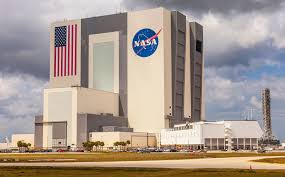
Picture it: the swinging ’60s, a time when bell-bottoms were in vogue and the space race was all the rage. Enter John F. Kennedy (side note – a man who was elected as President of the United States of America at the age of just 41 – imagine that power at 41!). The dashing president with a penchant for bold declarations. In a move that would make even the most seasoned reality TV star blush, Kennedy announced to the world, “We choose to go to the Moon!” And just like that, NASA’s Apollo program was born, with the Moon becoming the ultimate prize in humanity’s cosmic game of capture the flag. Kennedy Space Centre is still hailed as one of the ultimate sites for space exploration; despite the tragic fact that JFK was assasinated before he could ever see his dream realised.

Fast forward to July 20, 1969, when Neil Armstrong and Buzz Aldrin strutted their stuff on the lunar surface like a couple of interstellar rock stars. Meanwhile, Michael Collins (I know you’ve never heard of him, but it took three men to reach the moon – sadly only two could actually touch it’s surface) orbited above, presumably binge-watching space documentaries and contemplating the meaning of life. It was a moment of triumph, a cosmic mic drop heard ’round the world.

But as the ’70s dawned and disco fever swept the nation, America’s lunar ambitions began to wane. Blame it on budget cuts or a collective midlife crisis, but suddenly, the Moon just wasn’t as alluring as it once was. Sure, there were a few more Apollo missions, but they lacked the pizzazz of the initial lunar landing. It was as if America had achieved its lunar destiny and now sought new cosmic conquests, like sending cheese to Mars or starting a lunar colony of space-faring llamas.

And then there were the mishaps—oh, the mishaps! Apollo 13, the mission that went from bad to worse faster than you can say “Houston, we have a problem.” Ron Howard’s movie, starring Tom Hanks and Kevin Bacon, is perhaps one of the best movies of all time in my personal opion. All I can say is thank the lord my father made me watch it when I was young and taught me the basics of the Apollo missions. And that is no exaggeration, as my father was alive to watch such a crisis live. Sometimes I have bumpted into nerds, like myself, who believed that Apollo 13 never happened – or that the movie over-dramatised everything.

I don’t want this article to be specifically about Apollo 13, but rather the moon landings in general. So if you want to know more about Apollo 13 watch the movie, hit up Wikipedia … or just wish your dad was as smart as mine. Up to you. (SPOILER ALERT!!!!!! = But fear not, for the crew survived to tell the tale, proving once and for all that space travel is equal parts exhilarating and utterly bonkers).

Oh BUT STOP! The thrill of watching SpaceX nail yet another rocket landing—it’s like witnessing a cosmic ballet of engineering prowess and sheer audacity. My heart skipped a beat as the fourth rocket touched down with the finesse of a seasoned dancer. I, probably along with the rest of the world, knew that this was Musk’s last shot at getting funding from NASA and respect from the rest of the world. The “Nerd World” held its breath. Third time’s a charm? Well, for Musk it was the fourth (AND FINAL) time. But alas, the excitement has waned as SpaceX seems to have taken an extended intermission from its rocket landing spectaculars. Here’s hoping for an encore performance soon!

But wait, there’s more! Enter Elon Musk, the eccentric billionaire with a penchant for flamethrowers and Twitter rants. While his company ‘SpaceX’ aims for the stars, Musk seems more interested in stirring up controversy on social media than plotting the next cosmic conquest. It’s like watching a cosmic soap opera unfold in real-time, complete with rocket launches, love triangles, and the occasional meme-induced meltdown.

Furthermore, as we see the USA and Kennedy’s dream fall away – India and China’s space programs are skyrocketing, quite literally, with ambitious missions and rapid advancements. India’s ISRO has achieved milestones like the ‘Mars Orbiter Mission’ on a shoestring budget, while China’s CNSA boasts lunar landings and plans for a space station. Meanwhile, the USA, once the undisputed cosmic champion, finds itself playing catch-up in the interstellar Olympics. As the global space race heats up, America must innovate and collaborate to stay ahead in the celestial game.

With Putin flexing his space muscles and India’s space program gaining steam, the stage is set for a new space race of epic proportions. Perhaps Space Travel is not the immediate concern for the USA (let alone smaller countries) as we currently see ourselves in such economic and political turmoil. Nevertheless, the fact India and China are launching their own Space Programs (without even consulting the USA or Russia) would certainly point to the fact that there is a shift in the balance of power.

So why did the USA land on the Moon but never return? The answer, it seems, is a cosmic confluence of geopolitics, budget constraints, and the capricious whims of fate. But fear not, fellow space cadets, for the final frontier beckons, a tantalizing adventure waiting to unfold. After all, in the grand cosmic comedy of errors, anything is possible—even a lunar hoedown with Neil Armstrong leading the moonwalk.

Perhaps Kennedy and the Kennedy Space Centre must be consigned to a beautiful American History. That is, of course, unless Trump can Make America Great Again on Earth and on the Moon …

America’s Hidden Civil War: How Modern Political Divides Mirror the 1850s

It’s easy to think that a civil war, the kind with muskets and Gettysburg-type battlefields, is a relic of history. But if you look closely, you might notice that America’s internal civil war has already started. Don’t worry, it’s not the kind with bayonets and cannonballs. No, this one is much sneakier and mostly fought on Twitter and cable news.

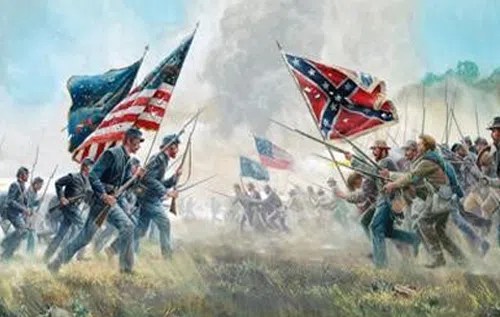
Back in the 1850s, America seemed like it was cruising. The economy was growing, railroads were being built, and people were heading West to chase gold and glory. The country was expanding, not just geographically but also culturally. There were abolitionists and pro-slavery folks, and they got into it from time to time. Sure, there were a few skirmishes in places like “Bleeding Kansas,” but who would’ve thought that would lead to a full-blown civil war? It’s like when you miss a step on the stairs, and before you know it, you’re tumbling all the way down. Except in this case, the tumble led to half a million people dead and a country in shambles.

Today, we’ve got our own set of issues. The economy is as shaky as a Jenga tower in an earthquake, and politics is more polarized than ever. It feels like you can’t have a Christmas dinner without someone bringing up a contentious topic. And let’s not even get started on social media, where the “unfriend” button is the modern equivalent of a duel. If Facebook existed in the 1850s, you could bet Lincoln would’ve blocked a whole bunch of people.

Our political climate has a lot in common with those pre-Civil War days. The country is split into red and blue, like someone tried to do a tie-dye job and got the colors wrong. Politicians are acting like it’s a reality TV show where drama is the main ingredient. Remember the Kansas-Nebraska Act? That was the reality TV of the 1850s. It was like, “Let’s let people vote on whether they want slavery or not. What could go wrong?” Spoiler alert: everything.

Meanwhile, the rest of the world isn’t exactly a paragon of stability. Global tensions are high, and it feels like everyone is playing a game of “Whack-a-Mole” with crises popping up all over. War in one country, coups in another, and the U.S. economy breaking like it’s been jinxed by a fortune cookie. It’s like the world is playing Jumanji, and no one can find the dice to roll their way out of the game.

The modern civil war isn’t fought with rifles and bayonets. It’s fought with memes, hashtags, and, occasionally, shouting matches on cable news. The battleground is the comment section, where everyone has an opinion, and no one has a filter. You can get into a heated argument over whether pineapple belongs on pizza (IT DOES NOT), let alone discuss politics or social issues.

But here’s the thing: even though it feels like everything’s falling apart, there’s hope. Sure, it’s not easy to find common ground when everyone’s busy shouting, but history has shown that the U.S. has a knack for coming back from the brink. After all, we’ve got some pretty good survival instincts—just look at the number of reality shows we can binge-watch without losing our minds.

Maybe the secret to avoiding a full-blown civil war is to remember that we’re all in this together. Instead of digging deeper trenches and building higher walls, we need to start talking to each other. Not just about the big stuff, like politics and the economy, but also about the little things, like how to fix a leaky faucet or whether it’s okay to eat cereal for dinner.

In the end, if we can find a way to laugh at ourselves and our differences, maybe we can keep the hidden civil war from becoming a full-blown reality. Because let’s be honest, nobody wants to fight a war that only ends up giving you carpal tunnel syndrome from all the online arguing.

As light-hearted as I wish this article could be, however, it is not. The war has started – but how it will unfold … who can tell?

From Putin’s Inner Circle to Chelsea’s Winner Circle: The Wild Ride of Roman Abramovich

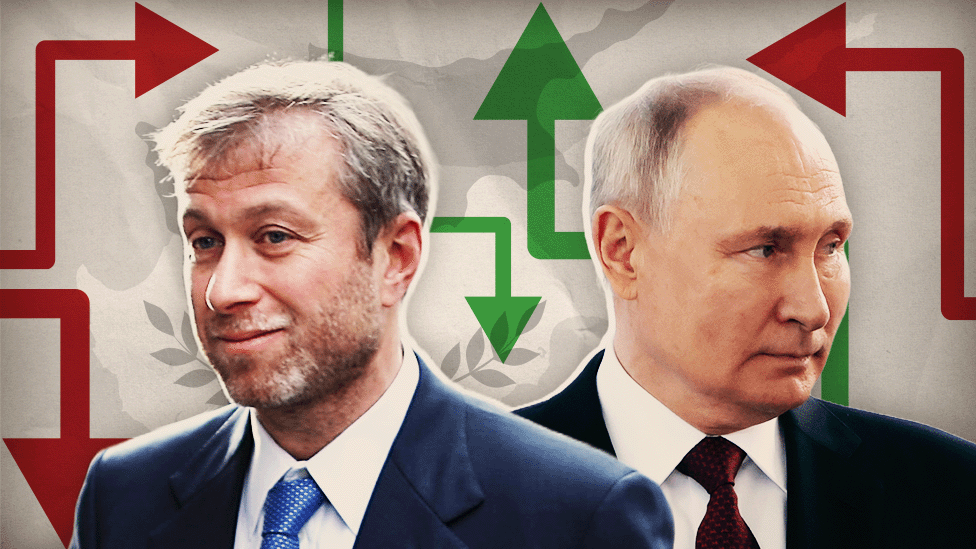
Roman Abramovich’s tenure at Chelsea Football Club is one of the most remarkable success stories in modern football. When he acquired the club in 2003, Abramovich brought a fresh perspective to the sport: a combination of business acumen and a willingness to spend what was necessary to win. This approach turned Chelsea into a powerhouse almost overnight.

Under Abramovich’s ownership, Chelsea transformed from a mid-table Premier League team into one of the most successful clubs in Europe. His financial investments in players and facilities were unparalleled. Chelsea’s trophy cabinet, previously gathering dust, suddenly overflowed with silverware. The club won five Premier League titles, five FA Cups, three League Cups, and two UEFA Champions League trophies during his reign. It’s no exaggeration to say that Abramovich’s influence on Chelsea was transformative, not just for the club but for English football as a whole.

Abramovich’s success with Chelsea didn’t just come from opening his wallet, although that certainly helped. He also displayed a knack for hiring the right managers and supporting them with the resources needed to succeed. His choices, like José Mourinho, Carlo Ancelotti, and Antonio Conte, became iconic in Chelsea’s history. He even made bold moves like sacking a successful manager to achieve greater success, a testament to his relentless pursuit of excellence.

However, Abramovich’s close relationship with Russian President Vladimir Putin has always been a topic of interest. As one of Russia’s most influential oligarchs, Abramovich maintained strong ties with the Kremlin. His position as Governor of Chukotka, a remote Russian region, illustrated his strategic connections to Putin’s inner circle. It wasn’t just about business; it was about being in a small and exclusive club where having friends in high places was crucial for survival.

Putin’s circle of trust is notoriously tight, with loyalty valued above all else. Abramovich, known for his discretion and support of the Kremlin’s policies, was among the privileged few. These relationships benefited his business interests, allowing him to navigate the complexities of Russian politics while expanding his wealth. It wasn’t just about staying in Putin’s good graces; it was about ensuring his position as an oligarch was secure.

When Russia invaded Ukraine in 2022, these connections to Putin became a significant liability for Abramovich. Western sanctions targeted Russian oligarchs, and Abramovich was among those affected. His assets were frozen, and he faced travel restrictions, leading to the sale of Chelsea Football Club. The sale marked the end of an era, and Abramovich’s pledge to donate the proceeds to aid Ukraine’s war victims was seen as an attempt to distance himself from the Kremlin.

Abramovich’s journey with Chelsea and his ties to Putin reflect the duality of his life. On one hand, he achieved tremendous success with Chelsea, turning the club into a football juggernaut. On the other hand, his connections to Putin’s small circle became a liability, impacting his freedom and business operations. It’s a complex story of ambition, loyalty, and the changing landscape of geopolitics. While Abramovich’s future remains uncertain, his impact on Chelsea and his connection to Russia’s inner circle will continue to be subjects of fascination.

Netanyahu’s Failure: Why Resignation Should Have Followed the October 7th Attacks

In the wake of the devastating October 7th attacks, which saw a surge of violence targeting Israelis and Jewish people, one question looms large: why has Prime Minister Benjamin Netanyahu not resigned? It’s a question that demands answers, as the failure of Israeli intelligence to prevent these attacks represents a profound dereliction of duty on the part of the country’s leadership.

Let’s be clear: the primary responsibility of any government is to ensure the safety and security of its citizens. In Israel, where the threat of violence is an ever-present reality, this responsibility takes on added significance. Yet, in the aftermath of the October 7th attacks, it’s evident that Netanyahu’s government failed to live up to this fundamental obligation.

The attacks themselves were a tragic reminder of the ongoing threats facing Israel and the Jewish community worldwide. From the brutal stabbing of innocent civilians to the desecration of synagogues, the perpetrators of these heinous acts sought to sow fear and division among Israelis and Jews everywhere. And while such acts of terror are sadly nothing new, what is particularly galling is the apparent failure of Israeli intelligence to anticipate and prevent them.

As Prime Minister, Netanyahu bears ultimate responsibility for the failures of his government, including those of the intelligence agencies tasked with safeguarding the nation. The fact that these attacks were able to occur on his watch, despite warnings and intelligence indicating a heightened threat level, speaks to a systemic breakdown in Israel’s security apparatus.

Moreover, Netanyahu’s response to the attacks has been woefully inadequate. Rather than taking responsibility and acknowledging the failures of his government, he has instead sought to deflect blame and exploit the tragedy for political gain. This cynical approach not only does a disservice to the victims of the attacks but also undermines public trust in the government’s ability to keep Israelis safe.

In any other democracy, such a failure of leadership would be met with swift and decisive consequences. Yet, inexplicably, Netanyahu remains in power, seemingly impervious to calls for accountability. This is not leadership; it’s a betrayal of the trust placed in him by the Israeli people.

Resignation is the only appropriate course of action for Netanyahu in the aftermath of the October 7th attacks. By stepping down, he would not only acknowledge the gravity of the failures that occurred under his watch but also pave the way for new leadership capable of restoring public confidence in Israel’s security apparatus.

Furthermore, Netanyahu’s resignation would send a powerful message to the perpetrators of terror that Israel will not tolerate attacks on its citizens and will hold those responsible for security failures to account. It would also demonstrate to the international community that Israel takes its commitment to protecting its people seriously and will not allow political considerations to override the imperative of ensuring their safety.

In the end, Netanyahu’s continued tenure as Prime Minister in the wake of the October 7th attacks is not only untenable but morally indefensible. It’s time for him to do the right thing, put the interests of the Israeli people first, and resign. Anything less would be a betrayal of the trust placed in him and a disservice to the victims of the attacks and their families.

Facing Reality: Iran’s Wake-Up Call and the Cost of Western Indecision

It’s remarkable what can finally grab the attention of those in power. In this case, it’s not the heartfelt protests, the sage advice from experts, or the diplomatic maneuvers that are causing a stir. No, it’s a threat from Iran that’s finally making Western leaders sit up and take notice. It’s almost as if they needed a bit of a nudge from an unexpected source to start seeing the bigger picture.

Let’s rewind the tape a bit and take a stroll through history. Picture the 20th century, a time of global power plays and more than a few colossal blunders. Iran, once known as Persia, found itself right in the middle of the action. Take, for example, the 1953 debacle when Mossadegh decided to nationalize the oil industry. Enter the CIA, swooping in like a plot twist from a spy novel to shake things up. It’s a tale of intrigue and deception that would make James Bond raise an eyebrow.

Then there’s the Iran-Iraq War of the ’80s, a brutal conflict that claimed countless lives. It’s the classic tale of two adversaries locked in a deadly embrace while the rest of the world looked on, too timid to intervene. Spoiler alert: it didn’t end well for anyone involved.

Fast forward to the 21st century, where Iran’s nuclear ambitions took center stage. Negotiations, sanctions, and more negotiations followed, all while Israel kept a wary eye on the proceedings. It’s like a high-stakes game of poker, with the fate of the region hanging in the balance.

And let’s not forget Iran’s ongoing feud with Israel, a bitter rivalry that’s claimed its fair share of casualties. It’s the kind of animosity that puts your average sports rivalry to shame. Think Yankees vs. Red Sox, but with nuclear warheads instead of baseball bats. Yeah, it’s serious stuff.So here we are, with Iran throwing threats around like confetti and the West scrambling to catch up. It’s a sobering reminder of just how high the stakes are in the Middle East.

But here’s the thing: it didn’t have to be this way. If Western leaders had shown even a shred of courage or morality decades ago, countless lives could have been spared. Instead, they chose the path of least resistance, turning a blind eye to injustice and suffering in the name of political expediency.

So while it’s heartening to see some belated recognition of the situation, let’s not forget the cost of this collective failure of leadership. It’s a bitter pill to swallow, but perhaps it will serve as a wake-up call for those who have the power to make a difference. After all, if we don’t learn from history, we’re doomed to repeat it. And in the case of the Middle East, that’s a price we simply can’t afford to pay.

As tensions simmer and threats are exchanged, it’s natural to wonder: what if things escalate further? In a hypothetical scenario where Iran follows through on its ultimatum and launches an attack on Israel, the potential consequences could be catastrophic. With both countries possessing formidable military capabilities, the prospect of open conflict is a sobering one.

Let’s break it down. On one side, you have Iran, a nation with a sizable military force and a strategic advantage due to its geographical proximity to Israel. Iran boasts an array of conventional weaponry, including tanks, artillery, and a large standing army. But perhaps most concerning is its ballistic missile arsenal, which poses a significant threat to Israeli population centers and military installations alike. Add to that Iran’s network of proxy forces, such as Hezbollah in Lebanon, and you have a potent mix of conventional and asymmetric capabilities at Tehran’s disposal.

On the other side, you have Israel, a small but technologically advanced nation with a military that punches well above its weight. Israel’s air force is its most potent asset, equipped with state-of-the-art fighter jets like the F-15 and F-16, as well as advanced missile defense systems such as the Iron Dome. Israel also possesses a formidable array of ground forces, including highly trained infantry and elite special operations units.

In a conventional military confrontation, Israel would likely have the upper hand. Its superior air power and technological edge would allow it to strike Iranian targets with precision while minimizing its own casualties. Israel’s Iron Dome system would provide an additional layer of defense against incoming missiles, further tilting the odds in its favor.

However, the situation becomes far more complex when you factor in Iran’s unconventional capabilities, such as its ballistic missiles and proxy forces. A sustained conflict could see Iran raining missiles down on Israeli cities, causing widespread destruction and loss of life. Additionally, Iran’s proxies, particularly Hezbollah in Lebanon, could launch cross-border attacks, further complicating Israel’s strategic calculus.

But perhaps the most significant factor to consider is the international response. While Israel has traditionally enjoyed strong support from its allies, including the United States, there’s no guarantee that such support would materialize in the event of another conflict with Iran. With the Middle East already a powder keg of regional rivalries and geopolitical tensions, the prospect of a broader conflagration looms large.

In the end, the true winners of such a conflict would be few and far between. The human cost would be staggering, with innocent civilians on both sides bearing the brunt of the violence. Moreover, the destabilizing effects of a major conflict in the region would reverberate far beyond the borders of Iran and Israel, potentially triggering a wider regional crisis with global ramifications.

As we contemplate the potential consequences of further escalation, it’s clear that the path to peace in the Middle East is fraught with peril. Diplomacy, dialogue, and a commitment to finding common ground must prevail if we are to avoid the catastrophic consequences of another senseless war. The stakes could not be higher, and the time for action is now.

MPs to Vote on ‘Smoking Ban’ – for those born after 2009

Up in Smoke: The Great UK Smoking Ban Saga

In the hazy realm of public health policies, the United Kingdom has often been hailed as a pioneer, wielding its legislative wand to cast away the clouds of tobacco smoke from public spaces. But now, a new proposal has emerged from the mist: a smoking ban targeted at those born after 2009. As with any good saga, this proposal comes with its fair share of drama, skepticism, and potential plot twists.

Across the pond in New Zealand, a similar ban was attempted, but the results were about as clear as a foggy London morning. While the intentions were noble—creating a smoke-free generation—the reality was a bit murkier. Despite efforts to snuff out smoking among the younglings, enforcing the ban proved to be as challenging as herding cats at a catnip convention. It seems that where there’s a puff, there’s a way, and teenagers are nothing if not resourceful when it comes to getting their hands on forbidden treats.

But let’s not forget the cautionary tales of history, whispered to us from the smoke-filled speakeasies of the Prohibition era. When America decided to ban the sale of alcohol, it unwittingly birthed the roaring twenties, complete with jazz, flappers, and a thriving black market run by the likes of Al Capone. Could a similar fate await the UK if it decides to take the draconian route with tobacco? Picture it: cigarette smugglers lurking in the shadows, puffing away on contraband cigars while exchanging secret handshakes.

And then there’s the elephant—or rather, the cloud— in the room: vaping. What started as a promising alternative to smoking has turned into a full-blown trend among the youth, complete with its own set of controversies. With flavors ranging from cotton candy to unicorn tears (yes, really), vaping has become the rebellious cousin of smoking, lurking in the school bathrooms and Instagram feeds of teenagers everywhere.

So, what’s the solution to this smoky conundrum? Instead of reaching for the ban hammer, perhaps it’s time to get creative. Education campaigns could be jazzed up with catchy jingles and flashy dance numbers, turning anti-smoking messages into the next TikTok sensation. Access to smoking cessation programs could be paired with incentives like free pizza or concert tickets, because let’s face it, who can say no to free pizza?

But let’s not forget the power of community. By addressing the root causes of smoking initiation—like peer pressure and socioeconomic factors—we can create a support system as sturdy as Big Ben. Together, we can snuff out smoking one puff at a time, creating a future where the only clouds in the sky are the ones we dreamily gaze at while sipping our morning tea.

So, dear reader, as we navigate the twists and turns of the Great UK Smoking Ban Saga, let us remember that the path to a smoke-free future may be winding, but with a dash of humor and a pinch of creativity, we can clear the air and breathe easy once more.

Maybe China Will Save Us All ..? Don’t Count on it.

While China’s strides in solar power are indeed remarkable, the context of its broader economic landscape is crucial. The housing market downturn in China poses a significant challenge, potentially impacting the country’s economic stability and governmental control. Evidence suggests that amid such economic uncertainties, initiatives like bolstering renewable energy could serve multiple purposes for the Chinese government.

Firstly, investing heavily in solar power allows China to assert its technological prowess and economic resilience on the global stage. By dominating the solar industry, China not only secures a strategic position in the renewable energy market but also boosts its international reputation as a leader in innovation and sustainability. This narrative can help counterbalance negative perceptions arising from economic instability, thus reinforcing the government’s authority and legitimacy.

Secondly, focusing on renewable energy aligns with China’s long-term strategic goals of reducing dependence on imported fossil fuels. Amid fluctuations in global energy markets, ensuring energy security becomes paramount for maintaining political stability and economic growth. By ramping up solar capacity, China reduces vulnerability to external energy shocks, thereby strengthening its autonomy and control over domestic affairs.

Moreover, the emphasis on renewable energy dovetails with broader narratives of ecological conservation and environmental stewardship promoted by the Chinese government. Presenting itself as a champion of green initiatives not only resonates with domestic audiences concerned about pollution and climate change but also enhances China’s soft power internationally. This narrative reinforces the government’s legitimacy by positioning it as a responsible global actor committed to addressing pressing environmental challenges.

However, it’s essential to acknowledge that China’s motives aren’t solely altruistic. The government’s prioritization of solar power also serves its self-interest in consolidating power and control. By spearheading ambitious renewable energy projects, the Chinese Communist Party (CCP) can demonstrate its ability to tackle critical issues effectively, thereby strengthening its grip on power and public perception.

Furthermore, the economic benefits derived from the solar industry, such as job creation and infrastructure development, can help mitigate the social unrest that often accompanies economic downturns. By investing in sectors like renewable energy, the government can redirect attention from economic grievances towards narratives of progress and modernization, thereby maintaining social stability and quelling dissent.

In essence, while China’s push for solar dominance aligns with its renewable energy and environmental objectives, it also serves as a strategic tool for bolstering governmental control and solidifying power in times of economic uncertainty. By leveraging the narrative of technological advancement and sustainability, the Chinese government navigates complex economic and political challenges while reinforcing its authority both domestically and internationally.

Iran’s Attacks on Israel, Nuclear Ambitions, and the Crisis in Gaza and Palestine

In the ever-volatile landscape of the Middle East, recent escalations between Iran and Israel have once again ignited international concern and prompted debates over appropriate responses and global allegiances. Central to this discourse are the historical contexts, nuclear ambitions, and the ongoing crisis in Gaza and Palestine, adding layers of complexity to an already intricate geopolitical puzzle.

Iran’s relationship with Israel has long been marked by tension and hostility, rooted in ideological differences, historical grievances, and regional power struggles. Iran’s support for militant groups like Hamas and Hezbollah, coupled with its anti-Israel rhetoric and calls for the destruction of the Jewish state, have fueled animosity and sporadic bouts of violence.

Meanwhile, Israel, wary of Iran’s nuclear ambitions and hostile proxies, has adopted a policy of strategic ambiguity regarding its own nuclear capabilities. While neither confirming nor denying the possession of nuclear weapons, Israel maintains a formidable military deterrent, underscoring its commitment to ensuring its security and survival in a volatile neighborhood.

The specter of nuclear proliferation further complicates the dynamics between Iran and Israel. Iran’s pursuit of nuclear technology, ostensibly for peaceful purposes but met with suspicion by the international community, has raised alarms in Israel and beyond. Fears of a nuclear-armed Iran, coupled with inflammatory rhetoric from Iranian leaders, have heightened tensions and fueled speculation about preemptive strikes and military interventions.

Conversely, Israel’s alleged nuclear arsenal, though officially undeclared, adds a layer of deterrence and uncertainty to the equation. The mere possibility of a nuclear response from Israel in the event of a significant threat has tempered aggression from adversaries and shaped strategic calculations across the region.

Amidst these geopolitical tensions, the crisis in Gaza and Palestine serves as a poignant reminder of the human cost of conflict and the urgent need for a peaceful resolution. Decades of occupation, displacement, and violence have left the Palestinian territories in a state of perpetual turmoil, with Gaza bearing the brunt of the humanitarian crisis.

The recent escalation in violence, triggered by clashes in East Jerusalem and the forced eviction of Palestinian families from their homes, has reignited simmering tensions and sparked waves of protests and retaliatory attacks. The indiscriminate rocket fire from Gaza into Israeli territory and the subsequent airstrikes by the Israeli military have resulted in civilian casualties on both sides, exacerbating the suffering of innocent civilians caught in the crossfire.

In the face of Iran’s attacks on Israel and the crisis in Gaza and Palestine, the dilemma of retaliation looms large, with implications that extend far beyond the immediate conflict zone. While Israel has the right to defend itself against aggression and protect its citizens, the prospect of escalation and unintended consequences cannot be ignored. A tit-for-tat cycle of violence risks spiraling out of control, exacerbating instability and endangering innocent lives on all sides.

Moreover, the international community faces a delicate balancing act, torn between competing interests, alliances, and moral imperatives. While some nations may rally behind Israel, citing shared values and security concerns, others may urge restraint and advocate for diplomatic solutions to avoid further bloodshed and regional destabilization.

Amidst the complexities and competing narratives, the imperative for peace and stability remains paramount. Rather than succumbing to the allure of military brinkmanship or the temptation of retaliatory strikes, all parties must prioritize dialogue, de-escalation, and diplomacy. The specter of nuclear annihilation looms large, serving as a stark reminder of the catastrophic consequences of miscalculation and unchecked aggression.

In conclusion, the tensions between Iran and Israel, exacerbated by historical animosities, nuclear ambitions, and the crisis in Gaza and Palestine, pose a formidable challenge to global peace and security. As the world watches with bated breath, the imperative for restraint, dialogue, and negotiated settlements has never been more urgent. Only through concerted efforts to bridge divides, build trust, and uphold the principles of international law can lasting peace be achieved in the Middle East and beyond.

Unmasking the Economic Bull Market: Bursting the Bubble

In recent years, the financial markets have been on a relentless upward trajectory, buoyed by a surge in investor confidence and optimism. While this prolonged period of growth may seem like a boon for investors, beneath the surface lurks the looming specter of a massive bubble waiting to burst. By examining various indicators and historical patterns, it becomes increasingly evident that the current bull market may be more fragile than it appears.

Valuation metrics serve as a barometer of the market’s rationality, indicating whether asset prices are justified by underlying fundamentals. One of the most widely used metrics is the price-to-earnings (P/E) ratio, which compares a stock’s price to its earnings per share. When P/E ratios soar to levels significantly above historical averages, it suggests that investors are willing to pay a premium for future earnings, often exceeding realistic expectations. Currently, many stocks are trading at P/E ratios reminiscent of the dot-com bubble era, indicating a disconnect between price and fundamental value.

Investor sentiment plays a pivotal role in driving market movements, and extremes in sentiment can signal the formation of a bubble. The prevailing sentiment in the current market is one of unwavering optimism and exuberance, with investors exhibiting a “fear of missing out” (FOMO) mentality. Surveys of investor sentiment consistently reveal excessively bullish attitudes, with retail investors flooding into the market in pursuit of quick gains. However, history has shown that such euphoria is often a precursor to market downturns, as irrational exuberance gives way to sobering reality.

A hallmark of any bubble is the proliferation of speculative activity and irrational exuberance. In the current market, we see a surge in speculative assets such as meme stocks and cryptocurrencies, driven by a frenzy of retail investor interest. These assets often exhibit wild price swings and lack underlying fundamentals, making them particularly susceptible to sharp corrections. Moreover, the unprecedented levels of margin debt – money borrowed to invest in securities – indicate that investors are increasingly leveraging themselves to amplify returns, further inflating the bubble and heightening the risk of a market crash.

History provides valuable lessons about the dangers of unchecked optimism and speculative excess. The dot-com bubble of the late 1990s and the housing bubble of the mid-2000s serve as stark reminders of the perils of irrational exuberance. In both cases, investors were lured by the promise of outsized returns, driving asset prices to unsustainable levels before reality came crashing down. The parallels between past bubbles and the current market dynamics are hard to ignore, raising concerns about a potential reckoning.

The broader economic backdrop adds another layer of uncertainty to the current market environment. Rising inflationary pressures, looming interest rate hikes, geopolitical tensions, and lingering effects of the COVID-19 pandemic all pose significant risks to economic stability and investor confidence. Any unexpected shocks or disruptions could trigger a sudden reversal in sentiment and catalyze a market downturn.

In conclusion, while the current bull market may seem invincible, a closer examination of various indicators and historical patterns reveals glaring vulnerabilities. Excessive valuation, irrational exuberance, speculative fervor, historical parallels, and macro-economic uncertainties all point to a market on shaky ground. Investors would be wise to exercise caution and prudence, lest they fall victim to the euphoria of the moment and suffer the consequences of a burst bubble. As the saying goes, “the higher they climb, the harder they fall.”

Analyzing the Odds: Trump’s Electoral Prospects in 2024

As the political carousel spins once more towards the possibility of a Trump comeback, I, for one, find myself reaching for the popcorn and wondering, “Could it really happen again?” Yes, folks, you heard it from me, the self-proclaimed Trump critic. So, let’s embark on a journey into the land of political satire, where statistics mingle with humor, and where even the most ardent anti-Trumpers may find a chuckle or two.

In the aftermath of President Biden’s tenure, marked by more twists and turns than a soap opera, some of us skeptics are left scratching our heads and pondering: Could a return to Trumpian antics, at the sprightly age of 78, actually offer a silver lining?

Imagine a world where diplomacy is conducted via Twitter, where snarky tweets and meme-worthy handshakes replace traditional negotiations. It’s an unconventional approach, to say the least, but who am I to deny the entertainment value of international politics on social media?

Now, let’s talk about NATO – the beloved alliance that brings together nations like a dysfunctional family at Christmas dinner. Remember those summits that felt more like awkward reunions than strategic meetings? Under Trump’s leadership, they were less about alliances and more about awkward encounters and passive-aggressive handshakes. While unconventional, perhaps this unorthodox approach could shake up the status quo in ways we never anticipated. After all, what better way to gauge international relations than through late-night comedians’ material?

And speaking of NATO, did you know that each member country contributes a certain percentage of its GDP to the alliance? It’s like a family potluck, but instead of bringing a dish, you bring a chunk of your national budget. Some countries, like the United States, contribute a hefty portion, while others, well, let’s just say they bring a side salad when everyone else brought a roast turkey. But hey, at least it gives us something to bicker about during those awkward family gatherings – I mean, NATO summits.

Now, before you start hurling tomatoes at your screen, let me make one thing clear: I’m not hopping aboard the Trump Train anytime soon. If you need proof of how much I dislike him, just read any article about him on this blog! But even the staunchest critics can’t deny the sheer spectacle of American politics.

As we navigate the choppy waters of uncertainty, let’s remember to keep our sense of humour intact. After all, in the wild world of American politics, anything is possible. So, whether you’re a die-hard supporter or a fervent skeptic like me, buckle up and brace yourselves for the next chapter in the saga. It’s sure to be a wild ride!

Putin’s “Election Victory”: A Global Comedy of Errors as West Clutches Pearls, China and India Applaud

In the recent culmination of political theatrics in Russia, where the notion of a fair and democratic election seems as mythical as a unicorn, Vladimir Putin once again emerged triumphant, extending his reign over the Russian political landscape. However, what followed was not merely a display of political power but rather a spectacle of international relations, replete with ironic endorsements, diplomatic nuances, and the subtle dance of geopolitics.

As ballots were cast and counted across Russia, the global community watched with a mixture of skepticism and resignation. Western leaders, quick to pounce on any perceived breach of democratic norms, were predictably swift in their condemnation of the electoral process. “The Russian people deserve better,” they intoned solemnly, as if they were the guardians of democratic virtue in a world beset by autocratic tendencies.

In a statement reminiscent of a political slapstick routine, Chinese Premier Xi Jinping offered his congratulations to Putin on his “resounding victory,” praising the stability and continuity that his leadership brings to Russia. The irony of China, a nation notorious for its authoritarian grip on power, endorsing the electoral process of another autocratic regime, was not lost on observers. However, geopolitics, like comedy, often thrives on irony.

India, under the leadership of Prime Minister Narendra Modi, struck a more cautious note, stopping short of outright endorsement but refraining from any criticism of the electoral process. With India’s own complex relationship with democracy and authoritarianism, Modi’s silence spoke volumes, signaling a pragmatic acceptance of the status quo rather than a principled stand against electoral malpractice.

Meanwhile, the turnout for the election, touted by Russian authorities as a testament to the legitimacy of the process, raised eyebrows among international observers. With reports of voter coercion, manipulation, and irregularities circulating widely, the credibility of the turnout figures remains questionable at best. Yet, in the grand theater of geopolitics, perception often trumps reality, and the narrative of a united Russian electorate rallying behind Putin’s leadership persists, albeit with a healthy dose of skepticism from the global community.

In the corridors of power, where pragmatism reigns supreme, the reactions to Putin’s “victory” underscore the complex interplay of interests and alliances that shape the geopolitical landscape. While the West expresses concern over the erosion of democratic norms, China and India weigh their strategic calculations, mindful of the delicate balance between stability, sovereignty, and self-interest.

However, beyond the immediate diplomatic ramifications, Putin’s continued grip on power fuels speculations about Russia’s regional ambitions, particularly concerning smaller neighboring countries such as Ukraine and Taiwan. With Putin’s government demonstrating a brazen disregard for international norms and sovereignty, there are concerns that Russia may embolden similar authoritarian impulses in other nations, thereby destabilizing the global order.

For China, Putin’s strongman tactics may serve as a model for asserting dominance over regions like Hong Kong and Taiwan, where Beijing’s authority is contested. By cozying up to Russia, China sends a clear message to the world: autocracy is not only acceptable but also effective in achieving geopolitical goals, even at the expense of democratic principles and human rights.

Similarly, India, with its own territorial disputes with neighboring countries like Pakistan and China, may view Putin’s consolidation of power as a blueprint for strengthening its own grip on contested regions. Modi’s government, known for its muscular approach to foreign policy, may find inspiration in Putin’s playbook, using authoritarian tactics to assert dominance in regions where India’s influence is challenged.

As the curtain falls on yet another chapter in Putin’s political saga, one thing remains abundantly clear: the world of geopolitics is a stage, and its actors, whether applauding or aghast, are bound by the rules of the game. Whether Putin’s victory is celebrated or condemned, the show must go on, with each twist and turn in the plot serving as a reminder of the enduring absurdity of international relations in the 21st century.

The Capitol Insurrection – The Dangerous Start

To be honest, I can’t remember the overall stance of this blog on Donald Trump. I think the man is a master media-manipulator, uncompromising (for good and bad) and that he is at least six foot tall. I also happen to think he is the most dangerous President since Nixon, Andrew Johnson (both of whom, coincidentally, were similarly impeached but the Senate refused to remove them from office – Nixon resigning the day before and Johnson surviving by just one vote.)

I oft avoid the news, because whenever I open the BBC News App I see three items: COVID-19, Climate Change, Trump. I don’t feel particularly positive about any of those to be honest. It’s almost as if 2021 is a continuation of 2020 and the change of one day makes no difference. But something slipped through my ignorance gap – which has included deleting Facebook and Twitter.

It was the storming of the Capitol building. It was outrageous when my parents told me about it. I thought they must be confusing the Capitol building with another famous building in Washington. I was wrong. I visited the Capitol on a school trip to Washington, even standing in front of it you get a sense of its importance – both symbolic and real. It has been the scene of so many important laws, wars, conflicts, political leaders and it was just stormed by a bunch of gun-toting red-necks.

A lot of people instantly jumped on the argument that if these protestors had been Black or a member of a minority community there would be far more than four dead. Indeed, if the BLM movement had ever reached that far (before being constantly beaten, harassed and arreseted) far more violence would have ensued. I can assure you. I have done a few pieces on the BLM movement and their treatment by the police, despite their anti-violent protests, is absolutely stunning when compared to how these white armed citizens were able to storm the United States legislature building. It’s shocking. But not surprising and the only common denominator is the pigment colour of their skin.

But we all know that. We all know that the establishment cannot attack it’s supporters, no matter how many or how mad they may be. What, for me, is more scary is the fact that this was even possible. For those people who have followed Trump’s politics this was entirely predictable if he lost the election. He built his campaign around mocking war veterans, disabled reporters and getting into Twitter arguments with basically anyone famous. He may not have specifically said violent things (although this is entirely possible) … but this was always building. I’ll admit even I didn’t predict to this unprecedented extent. But still.

The problem, however, in this case is not about race it is about constitutional authority. Read on, it’ll get more less boring after those two words, promise. After the 1860 election in the USA Abraham Lincoln, then a famous anti-Slavery candidate and the first Republican President (how the Republicans and Democrats switched their rhetoric and policies over time and how Lincoln, the greatest US President was the first Republican President, has led to the last Republican President, Donald Trump, will be tackled another time).

A lot of people like to focus the American Civil War on slavery. The Southern states needed it, the Northern states did not. However, much like the arms race prior to World War 1, slavery was just powder keg. The spark, in the First World War was when Gavrilo Princip incidentally ran into and assassinated Archduke Franz Ferdinand, sparking a long list of alliances and sparking a World War. On November 19, 1863, President Abraham Lincoln famously gave his Gettysburg Address, after the Battle of Gettysburg, in it, he famously stated:

“Now we are engaged in a great civil war, testing whether that nation or any nation so conceived and so dedicated, can long endure. We are met on a great battle-field of that war … that we here highly resolve that these dead shall not have died in vain—that this nation, under God, shall have a new birth of freedom—and that government of the people, by the people, for the people, shall not perish from the earth.” Abraham Lincoln 1863

Because that’s the truth of the American Civil War. Slavery was always a key issue. But the bigger issue was the constitutional democracy and whether that would maintain and endure. When Lincoln was elected the Southern states decided that they did not like this election outcome and seceded – forming the Confederacy and their own state. That was what the war was fought about. Because democracy cannot function if the losing side is not willing to concede defeat. It is a never-ending cycle. What if the newly formed Confederacy don’t like the next President they elect? Will part of that group secede? What about that group? And so on. The American Civil War was fought to maintain a respectable, fairly new, type of democracy where you accept loss with good grace because there is a mutual understanding that both parties want what’s best for the country.

What happened in the Capitol was not only shocking but showed similarities to a country so deeply divided that violence was the only recourse. Some political commentators have suggested that this is all a build up for his 2024 campaign. Personally, I find this highly unlikely for several reasons.

A) Will he live that long?

B) These people are literally rebels. They must be prosecuted and held to account.

C) How does he plan to survive the impending charges of rape, indecent assault, fraud, money laundering, tax evasion, perjury?

D) I like to think that Americans are smart enough to realise they made a grave error and I trust them not to repeat it.

Fool me once …

Elon Musk Sues OpenAI: Demands More AI Secrets and Space Oddities

In a legal odyssey that seems more scripted for the big screen than the courtroom, Elon Musk has recently launched a lawsuit against OpenAI and its co-founders, claiming a breach of contract. The visionary entrepreneur, known for his ambitious pursuits with Tesla, SpaceX, and a litany of other groundbreaking ventures, now finds himself at the center of a legal whirlwind. As Musk steps into the courtroom, it raises questions not only about the future of AI but also about the potential impact on his other ventures.

The crux of Musk’s legal argument revolves around a perceived breach of contract, despite the absence of a written agreement. Legal experts are quick to point out the uphill battle that awaits Musk in the absence of a formalized understanding between the parties involved. However, Musk’s unorthodox move might have strategic implications beyond the courtroom, serving as a platform for him to share his version of events and, perhaps more importantly, forcing OpenAI to disclose additional information about their AGI developments.

Yet, as the legal saga unfolds, investors are eyeing another celestial body—Tesla stock. In recent days, the electric carmaker’s stock has experienced a dip, leaving market analysts and shareholders speculating on the reasons behind the downturn. Some argue that Musk’s legal entanglement with OpenAI might be diverting his focus from the helm of Tesla, a company facing critical junctures in its own trajectory.

Tesla, under Musk’s leadership, has been at the forefront of revolutionizing the automotive industry with electric vehicles and renewable energy solutions. With ambitious plans for the Cybertruck, the development of the Gigafactories, and advancements in autonomous driving technology, Tesla is at a pivotal moment. Investors are expressing concerns that the legal distraction could impact the timely execution of these projects.

Meanwhile, SpaceX, Musk’s space exploration company, is gearing up for ambitious missions, including plans to send humans to Mars. As the world eagerly anticipates the first operational flights of the Starship rocket, questions arise about whether Musk’s legal battle with OpenAI might divert attention from the demanding tasks ahead. SpaceX, with its ambitious goals and tight timelines, requires undivided attention to ensure successful missions and maintain its pioneering position in space exploration.

In the midst of these unfolding dramas, there is a growing chorus among investors and industry analysts urging Musk to refocus his energies on the flagship companies that have defined his legacy. The simultaneous challenges facing Tesla and SpaceX demand a steady hand at the helm, and many argue that now, more than ever, Musk needs to prioritize these ventures to ensure their continued success.

As the legal proceedings continue to unfold, investors, space enthusiasts, and tech aficionados alike will be watching closely. The intersection of Musk’s legal battles, Tesla’s stock fluctuations, and the trajectory of SpaceX promises a captivating narrative—one where the balance between stars and stocks is delicately held in the hands of an entrepreneur with a penchant for pushing the boundaries of both the legal and technological realms.

NEVER Have I been So Happy to Be So Wrong

A few days ago, I wrote about, what was then, the upcoming mid-term elections. I suspected that the Republicans would run away with victories in the House and in the Senate. I imagined complete control of both houses for them and Biden becoming a lame-duck President with little power, just two years into his first (and likely) only term.

How wrong I was.

How happy you should be.

The results. In the House, the Democrats lost 9 seats. A minimal amount and fairly insignificant. The Republicans, meanwhile, gained 7 seats. An embarrassing amount to be honest as 218 seats are needed for a majority in the House and they now have only 218. Key battlefield states did not deliver fully for the Republicans in this election and that is fantastic news.

In the Senate, more surprisingly in my eyes, the Democrats actually managed to gain a seat. Whilst the Republicans lost one! This means that neither party has a majority in either the House or the Senate. With the final results of this election revealing that the Democrats had a total of 46 Senators, compared with the Republican’s 48. To get a majority one party needs more than 51 seats. The Republicans failed to secure even a small majority in either House. Party hats on!

midterm

In key battlegrounds, such as the 1st and 4th district of Nevada, were what I feared would lead to a direct and strong majority for the Republicans. But it has not turned out this way and the Republican voters did not show up as strongly as their leaders had hoped. In my eyes, this election was a failure for the Republicans and, perhaps, a demonstration of the end of the Trump era?

Is the left waking up? Well, it may be too soon to say that. But perhaps there is light at the end of this tunnel of madness. Trump brought anger and disruption to an already angry and disrupted political system. Whilst we are all quick, in Britain at least, to quickly claim that Biden is not doing enough or is making fiscally irresponsible policies. What we can at least say is that he has brought statesmanship back to the Presidency.

He may seem a bit old, with videos emerging of him being unable to finish speeches or being helped down flights of stairs, he is a respected man and he has earnt that respect. He does not shout, whine or cry – as Trump does – he focuses on the job at hand. At it has almost, rather sadly, come to the point where this is all we need from a President at the moment. We don’t need a great President like FDR to revolutionise the country. We don’t need powerful, loud leaders like the JFK or Robert Kennedy. Even if we did need Presidents like these. Where are they? What America and the rest of the world needs and has right now is a President who will not stoke more division and insight more hatred, just to gain a mass of support.

Biden has also gained more respect from myself and political commentators for coming out and praising one Republican governor who lost a crucial seat and accepted the result with good grace. Many of his supporters were spouting the same nonsense. Saying that the election was rigged or that there should be a re-count. But this politician was having none of it and Biden was quick to praise this. A small act, but an important one. As I have previously written, we cannot begin questioning the results of every single election result. It’s a slippery slope and one which does not end well.

By nipping this in the bud early, Biden has gained the headlines as political commentators begin to suggest that his brand of politics is changing the way the Republicans are seen, not just in America but across the world.

Since Trump, the Republicans have sought to hold on to their right-wing support base as it had previously brought them the Presidency and allowed them to gain power. The issue with appealing to this marginalised group of people, however, is that it tends to alienate the middle-ground “undecided” voters. Whilst it is true that the number of “undecided” voters is disappearing, with the country becoming more toxic and more divided than ever. It is no longer a case of deciding whether you like a certain President’s policies more than the other, or a Senators’, it is now just about which party they “represent”. You ARE a Republican. Or you ARE a Democrat. That is becoming how people define their political views in America and it is a great shame.

Nevertheless, we should still celebrate me being wrong about the mid-term disaster. These mid-terms were not a disaster, nor were they a triumph. Instead, we should view them with hope and sign of a better future for the USA.

I thoroughly hope that Biden has the good sense and grace to step aside in the next Presidential election. It is too far off to know whether he will or not, with politics changing so fast. But that fact that he is meeting with the Chinese Premier this week and establishing international relations suggests to me that they are on a path to a more united front.

And that’s exactly what the UK and USA need right now, to be united and to face global threats of Putin, Climate Change and China together.

I do not think this marks the end of right-wing fanaticism in America. Nevertheless, this election perhaps demonstrated to the world that, in the words of Churchill, “this is not the end. This is not even the beginning of the end. But it is, perhaps, the end of the beginning.” I truly hope this is the end of the beginning for a new, more unified United States.

Or maybe I’m dreaming.

The Queen, Sir David Attenborough and Liz Truss

It was just this morning that I woke to the terrifying news that the Queen is “under medical observation” at her home in Balmoral. She is 96, to be fair, but she has also remained one of the main pillars of British democracy (ironically, as she is technically a monarch). Time to panic.

It has been reported that Prince Charles and the rest of the Royal Family are by her side. Prince William is also travelling up. As is Prince Andrew, although I am not sure whether that’s to see her sick mother or attend a 13 year olds’ party. Who knows with that freak?

What a lot of people do not know is that Queen Elizabeth II was never actually supposed to be Queen. One of the best monarchs the Queen has ever had happened by chance. In fact, if you want a quick history lesson in a paragraph here it comes:

Queen Elizabeth II’s father, King George VI was never even supposed to be King! If anyone has watched “The King’s Speech” (and I thoroughly recommend that you do) we learn that King George VI had to overcome a stammer during his reign between 1938 and 1947. Do those dates sound familiar? World War 2 started in 1939 and ended in 1945 and King George VI was not only thrown into this position, but also had to overcome a stammer to maintain Britain’s morale. That’s a leader. And his daughter has also been a leader.

King George VI was the great-grandson of Queen Victoria. However, he also had an elder brother named Edward VIII. He was King from January 1936 before abdicating the same year. A short, terrible reign in which he wanted to sign a deal with Hitler and saw some benefits of fascism …

However, there soon came a constitutional crisis when he proposed to Wallis Simpson (an American socialite). Although there was nothing technically wrong with this, context is everything. Simpson was already divorced, going through a second divorce and was NOT British. Prime Ministers, the dominions and even members of the Royal family denounced the idea of a King marrying someone with two living ex-husbands. What if she switched her mind again and started spying for them?

Moreover, at the time Edward was the “Head of the Church of England” which did not approve of re-marriage after divorce, What a lot of people do not actually know about Edward VIII and Simpson is that she tried to run away several times, before he abdicated as she did not love him and thought that his royal duties were more important. But she failed and Edward abdicated after 326 days – making him the shortest reigning monach in Britain’s history. All for a woman who didn’t like him.

After this, he and his wife toured Nazi Germany, meeting with numerous members of Nazi high-command. In World War 2 he was stationed in France, but it was revealed and obvious that he was a Nazi-sympathiser and was appointed Governor of the Bahamas – best way to get someone out of the way.

So King George VI became king, when it was not his duty, and Queen Elizabeth II followed. This year we celebrated her Jubilee – 70 years as Queen – the things she’s seen and the way she has carried herself across the globe is nothing short of admirable.

Elizabeth is the longest-lived and longest-reigning British monarch, the oldest and longest-serving incumbent head of state, and the second-longest reigning sovereign monarch in world history.

I could list all the things that the Queen has been through. But if you read the above paragraph and think about all those records. If you then also consider the major events which have occurred over the last 70 years. People will haev different views on what her greatest achievments have been during her life.

But, for me, as a politics graduate; what I respect most about the Queen is that she has constistently remained politically neutral. She does not comment on policies, politicians or the economy. Because that is not her place. Because apparently we live in a functioning “democracy”.

This blog post, coming after the Tory Members elected Liz Truss as “leader”. There’s a saying – it doesn’t rain, it pours. An apt quotation given the current weather in Britain.

But we now face a cost-of-living crisis, homelessness on a scale never before seen, a completely incompetent Prime Minister. Add on to that the fact that Britain is becoming more and more isolated due to strained relations with the USA and the EU – this will be something for Liz Truss to fix (a blog post I will post later) and she will fail.

david

Another hero we cannot afford to lose is Sir David Attenbrough. If we couple these political and constitutional disasters with the on-going climate crisis. One third of Pakistan is under-water. Britain is facing bizzare weather. Africa is facing a massive drought. Australia is experiencing unprecedented weather patterns. Remember that thing … um … “climate change” (formerly “Global Warming” but now “Global Weirding”) that we have been warned about for the last 20 years.

Evidence was there – but we could not see the actual outcome. For decades scientists warned us that when these weather patterns beging to appear – it is too late. With big companies continually spouting that they are aiming for “Net Zero by 2030”. So that means another 8 years of this level of pollution. And after that, it’s not as if the Amazon will suddenly grow back, the sea levels will decrease and the air quality will become healthy again.

The Queen. Sir David Attentborough – when they go I fear for politics, Britain and the planet.

America IS Breaking

At the beginning of June, following the worst elementary mass shooting since Sandy Hook, I wrote an article entitled “America’s Gun Culture Will Not End”. I was right, of course, but even I could not have predicted what would come next.

On Thursday 23rd June the Supreme Court, almost unbelievably, declared for the first time in the United State’s history that “the US Constitution protected an individual’s rights to carry a handgun in public for self-defence.” The decision was unbelievable and inexplicable. An analogy would be when the idea of arming teachers was floated in the USA – how ridiculous was that? In fairness, there are slightly stricter controls on background checks, but I don’t think anyone could have predicted an expansion in gun rights just weeks after children were murdered in school by a terrorist who had legally bought a gun.

Nevertheless, it has fundamentally changed gun laws in America. It is now no longer up to each state to decide their own gun laws – a policy which did not work anyway. Now gun laws are up to the Federal Government, a government which has chosen to expand gun rights just weeks after the worst mass shooting in decades.

What are you doing America?

More worryingly, however, are the three separate branches of government and how they will inter-link in the future. (I have an article on Roe vs. Wade coming up – prepare yourselves for that one). The Supreme Court’s decision was wrong; yes, it does include some minor extra background checks. But fundamentally it was the wrong decision.

But there are three separate branches of government. The President, Congress and The Supreme Court. And each holds checks and balances against one another to prevent one becoming too powerful. For example, if a President tried to stand for more than two terms The Supreme Court would deme this unconstitutional as it has been amended to follow George Washington’s precedent of only serving a maximum of eight years. (An interesting side note, this was always an unwritten convention until FDR managed to win four elections, before dying in office, upon which the Constitution was finally updated.)

What is more concerning about the change in gun laws, because America is never realistically going to sort out its gun laws, although I did not expect an expansion in gun rights. You have the NRA to thank for that. The major issue is that the branches of government no longer remain independent of one another – and this is the tipping point.

As mentioned above, each branch has checks and balances over the other branches. One key power the President possesses is his ability to appoint people to the Supreme Court. This must be approved by a Senate committee and Congress. However, when there is no bi-partisanship and one-party controls everything then it is easy to flood the Supreme Court – as is the case now. There are currently 6 Republican-appointed judges and 3 Democratic-appointed judges.

“Aren’t the judges supposed to be impartial and uphold the rule of law?”, I hear you wonder. Yes. Yes, they are. But they do not. If you were to look at the voting record of Clarence Thomas, the worst judge in my opinion who has previously been accused by attorney Anita Hill of sexual harassment, and compare it to that of Stephen Breyer it should be pretty obvious which party appointed which judge.

Whilst I, and indeed many Americans, disagree with these changes the gravest error, in my opinion, was Biden getting involved. On Saturday Biden signed a bi-partisan gun safety bill into law, it was the first major gun reform in three decades. He claimed that “God willing, it’s going to save a lot of lives.” He also commented after the Supreme Court’s decision on abortion laws, saying “”Is the Supreme Court broken? The Supreme Court has made some terrible decisions.”

Even the NYC Mayor, Eric Adams, has said that he will allow businesses to continue to restrict guns as he does not want New York to turn into the “Wild Wild West”. The fact that even a Mayor has come out publicly to denounce the Supreme Court’s decision and openly encourage citizens to ignore – and by association the rule of law – is shocking in itself!

Perhaps it has, but the President is literally pitting his branch of government against the Supreme Court. The Supreme Court was designed to be impartial, above reproach and to uphold the American Constitution. Currently it is failing to do so, with worsening laws on abortion and gun laws. But for the President to comment on their decisions clearly demonstrates their lack of impartiality and perhaps is even a sign of how broken the American system is.

“Democracy has failed” or has America?

The Capitol Insurrection – The Dangerous Start

To be honest, I can’t remember the overall stance of this blog on Donald Trump. I think the man is a master media-manipulator, uncompromising (for good and bad) and that he is at least six foot tall. I also happen to think he is the most dangerous President since Nixon, Andrew Johnson (both of whom, coincidentally, were similarly impeached but the Senate refused to remove them from office – Nixon resigning the day before and Johnson surviving by just one vote.)

I oft avoid the news, because whenever I open the BBC News App I see three items: COVID-19, Climate Change, Trump. I don’t feel particularly positive about any of those to be honest. It’s almost as if 2021 is a continuation of 2020 and the change of one day makes no difference. But something slipped through my ignorance gap – which has included deleting Facebook and Twitter.

It was the storming of the Capitol building. It was outrageous when my parents told me about it. I thought they must be confusing the Capitol building with another famous building in Washington. I was wrong. I visited the Capitol on a school trip to Washington, even standing in front of it you get a sense of its importance – both symbolic and real. It has been the scene of so many important laws, wars, conflicts, political leaders and it was just stormed by a bunch of gun-toting red-necks.

A lot of people instantly jumped on the argument that if these protestors had been Black or a member of a minority community there would be far more than four dead. Indeed, if the BLM movement had ever reached that far (before being constantly beaten, harassed and arreseted) far more violence would have ensued. I can assure you. I have done a few pieces on the BLM movement and their treatment by the police, despite their anti-violent protests, is absolutely stunning when compared to how these white armed citizens were able to storm the United States legislature building. It’s shocking. But not surprising and the only common denominator is the pigment colour of their skin.

But we all know that. We all know that the establishment cannot attack it’s supporters, no matter how many or how mad they may be. What, for me, is more scary is the fact that this was even possible. For those people who have followed Trump’s politics this was entirely predictable if he lost the election. He built his campaign around mocking war veterans, disabled reporters and getting into Twitter arguments with basically anyone famous. He may not have specifically said violent things (although this is entirely possible) … but this was always building. I’ll admit even I didn’t predict to this unprecedented extent. But still.

The problem, however, in this case is not about race it is about constitutional authority. Read on, it’ll get more less boring after those two words, promise. After the 1860 election in the USA Abraham Lincoln, then a famous anti-Slavery candidate and the first Republican President (how the Republicans and Democrats switched their rhetoric and policies over time and how Lincoln, the greatest US President was the first Republican President, has led to the last Republican President, Donald Trump, will be tackled another time).

A lot of people like to focus the American Civil War on slavery. The Southern states needed it, the Northern states did not. However, much like the arms race prior to World War 1, slavery was just powder keg. The spark, in the First World War was when Gavrilo Princip incidentally ran into and assassinated Archduke Franz Ferdinand, sparking a long list of alliances and sparking a World War. On November 19, 1863, President Abraham Lincoln famously gave his Gettysburg Address, after the Battle of Gettysburg, in it, he famously stated:

“Now we are engaged in a great civil war, testing whether that nation or any nation so conceived and so dedicated, can long endure. We are met on a great battle-field of that war … that we here highly resolve that these dead shall not have died in vain—that this nation, under God, shall have a new birth of freedom—and that government of the people, by the people, for the people, shall not perish from the earth.” Abraham Lincoln 1863

Because that’s the truth of the American Civil War. Slavery was always a key issue. But the bigger issue was the constitutional democracy and whether that would maintain and endure. When Lincoln was elected the Southern states decided that they did not like this election outcome and seceded – forming the Confederacy and their own state. That was what the war was fought about. Because democracy cannot function if the losing side is not willing to concede defeat. It is a never-ending cycle. What if the newly formed Confederacy don’t like the next President they elect? Will part of that group secede? What about that group? And so on. The American Civil War was fought to maintain a respectable, fairly new, type of democracy where you accept loss with good grace because there is a mutual understanding that both parties want what’s best for the country.

What happened in the Capitol was not only shocking but showed similarities to a country so deeply divided that violence was the only recourse. Some political commentators have suggested that this is all a build up for his 2024 campaign. Personally, I find this highly unlikely for several reasons.

A) Will he live that long?

B) These people are literally rebels. They must be prosecuted and held to account.

C) How does he plan to survive the impending charges of rape, indecent assault, fraud, money laundering, tax evasion, perjury?

D) I like to think that Americans are smart enough to realise they made a grave error and I trust them not to repeat it.

Fool me once …

Farmers’ March from Punjab to Delhi – Why, what?

A lot of people may not be too familiar with the Punjab region of India. A relatively small region in the North of India and Pakistan it has always had ill-defined borders and been a hot spot for violence. The two main religious populations of the region are Sikhs (famously violent when provoked) and Hindus who massively outnumber the Sikhs who comprise just 1.7% of the Indian population.

With the entirety of my father’s side of the family originating from Punjab I must admit that I am slightly embarrassed that I did not see this mad sequence of events coming; my ignorance about my own heritage, also, does embarrass me.

So, what is happening in India?

Kes-Shreyans-Bhansali

Right now, as you’re reading this, millions of Indian farmers are marching from Punjab to Delhi to protest 3 new Indian farming laws that would effectively starve these farmers to death. Delhi is a fairly northern capital city, but the march is still at least 357km – to give some perspective if I were to march to Leeds it would 65 hours and would still be 50km fewer than the Punjabi protestors.

Someone (apologies but I cannot remember who) gave a great analogy of the situation in India currently. Imagine people in Newcastle start protesting and marching because new laws have been introduced by this government. These laws will damage local farmers and only help large corporations. They have very little food – that’s how desperate they are. Unable to reach a resolution with Parliament imagine the government then deployed riot police and paramilitary officers with assault weapons to try and halt the march. In India this is exactly what happened. The Modi government has already used tear gas and water cannons. (It goes without saying that women and children were there too).

One positive from this march is that the Indian community, as they so often do, have actually banded together with the protestors. Citizens are supporting farmers with food and shelter and water and that is definitely a silver lining. For these Punjabi farmers this really is a case of life or death – the support of local citizens could make all the difference.

Why are they even protesting? The Indian government, under Modi, fairly recently updated three of their farmer-related laws. Most importantly, he eliminated the Minimum Support Price for grain, making it a lot easier for large corporations to exploit farmers. Essentially the farmers want to keep their MSP and basically want better representation and support from the government.

With everyone looking at COVID-19, the vaccine and Christmas it can be easy to forget that a pandemic is global and whilst we may all be struggling – it’s all relative.