June 3rd, 2022 / Leave Feedback / nezuppal
Many people on this planet believe that democracy is some sort of God-given right which we should all be incredibly greatful for, if we live in a supposedly democratic country, and something which we should aim to push onto other countries so that they can develop “properly”.
A bit of history. The Greeks were originally the first to come up with forms of government and eventually settled on four main forms: democracy, monarchy, oligarchy and tyranny. Even with these forms you had overlap. For example, the Kings of Sparta were “kept in check” by ‘ephors’ who themselves were elected in an oligarchical fashion. Corinth and Stymphalos also had similar groups of “elders”, making it difficult to establish whether these areas fell under the umbrella or monarchies or oligarchies. The Greeks, however, experimented much beyond these four main pillars of governance.
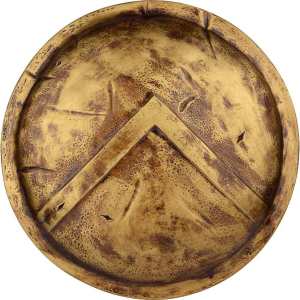
Athens was perhaps the closest to what we would consider modern democracy. Pericles, in 431 BCE, commented that “Athen’s constitution is called a democracy because it respects the interests not of the minority but if the whole people … everyone is equal before the law.” Is that the democracy we have today? Are the interests of everyone in society considered? If there is proof that a “democratic” Prime Minister broke the law three times, but was only charged once, is that everyone being treated equally before the law? How democratic are your democracies, really?
Even if one were to consider Athenian democracy as almost idealistic, it must also be remembered that it was their democratic “bad decision” which led to the death sentence of Socrates in 399 BCE. Democracy is not always right. The argument that Hitler was democratically elected is a boring one, but certainly relevant in this context. Just because everyone has a say, this doesn’t mean they’re right. As Super Hans once realised, “people like Coldplay and voted for the Nazis, you can’t trust people!” So wise.
Eventually, monarchies fell as the majority of people became agnostic/atheist and began to resent being ruled by a family who had a “god-given” right. If you don’t believe in God then where does that right come from? This was at least part of the reason, they also failed to produce results and in almost all circumstances the Royal Families themselves ended up living their own lives to excess in an almost tyrannical manner. As the excess grew, so did the anger amongst many starving populations, eventually leading to revolution in many of these countries as a desperate act of revenge. Does this excess, combined with the extreme poverty we face, remind you of any country in particular?
We’d expect monarchies to have fallen everywhere. But, as I write we are celebrating our own monarch Queen Elizabeth II. To be honest, I have very mixed opinions of the Royal Family. On the one hand, it produces criminal freaks like Prince Andrew. They’re also exclusive to the point of abuse and absolute intolerance. However, I have nothing but respect and admiration for the Queen. The lady is 96 years old, an incredible feat in itself, but has always remained politically neutral as well as mindful of the world around herself. Whilst Prime Ministers or leaders have come, made a mess and run, the Queen has always remained as the ultimate figurehead not only for Britain but also for the Commonwealth. What will come after her reign? Who can say? But I certainly won’t be on the street celebrating “King Charles” and I don’t think many people will.
Nevertheless, whilst Britain has certainly benefitted from having one of the most stable and respected monarchs in the world at the helm for the last 75 years this is undoubtedly the exception which proves the rule. In the majority of cases, if monarchies are able to survive instances such as the French Revolution or the American War of Independence, one just needs to look at the monarchies in the Middle East to see how easy it is for monarchies can become evil machines.
Oligarchies (a system in which a ruler or group of rulers is chosen by a specific group) were also an extremely popular form of government which existed for a long time. The Greeks actually essentially decided that intellectual oligarchies which meant that intelligence allowed people to rise to the top of society. However, this system also failed as it is inherently corrupt. The “group” who decide on the leader, is it a religious oligarchy, an intellectual oligarchy or a monetary oligarchy (as we see in Russia, where someone can take power and money and then use this money to pressure people into keeping them in power.)
Tyrannical reign essentially sums up the above situations. Tyranny specifically refers to someone who has gained power illegally and refuses to give it up. Think Caesar. This would obviously be unacceptable in modern society – although China? Putin? It’s not unheard of.
Another solution for governance, which seems to have taken a hold within the human consciousness, was democracy, which comes in two forms. The first is “direct” (think of the Brexit referendum) where you are voting on a simple question and there is a “yes” or “no” answer. One vote and majority rules. Obviously, as society grew and the population grew people began to use “representative” democracy which is what we see in all modern democracies. This is a system whereby we elect officials, MPs in Britain, to make decisions on my behalf. That’s gone well ..
So the first three lead to some sort of tyranny, evil and supression. They lead to a good life for those in power and extreme desperation for the rest. How is that differing from the results of our representative democracy, which we cling on to so greatly?

Bullingdon Boys – Oligarchy or Democracy?
We have a cabinet full of criminals. We have a Prime Minister who is actually a criminal but refuses to leave, that sounds like Tyranny to me. We’ve had a succession of Oxbridge, Etonian, Bullingdon Club Prime Ministers. That sounds like an oligarchical system to me? And monarchy? Well, we do have a Queen … but I’m sure Boris would take that job if he could.
Please don’t misunderstand me – democracy is one of the best things that humanity has ever created. The fact that I am even allowed to write on this blog; the fact I was able to protest against tyrants like Putin without fear of reprisal from police; the freedom which comes with democracy should not be underestimated. However, freedom and deomcracy are not tied. They are not intrinsically linked. You can have freedom without democracy. You can have democracies where no one is free.
But far too often we think it’s a “right” and it’s going to solve all our problems. It is a human concept, which has created a system which has led to Donald becoming President of the USA and Boris becoming Prime Minister. In my mind, that is a failure. We could suggest that this is because of the rapid, unexpected and exponential growth of technology which democratic states were simply not prepared for. It could also be argued that the failure of democracy essentially can be blamed on human nature, as fundamental human greed will always directly or indirectly lead to unfair political and economic systems. Perhaps there is no “right” way to govern society …
But I believe it can be fixed. A total overhaul may be needed, but it should happen before working-class people are pushed too far and democracy is left in the past like other failures such as communism. The fact that people are so quick to dismiss the other forms of government before taking a good look at the products of our democratic systems is irritating; the success or failure of a political system must be determined by what it produces. Monarchies, for example, led to groups living in excess at the expense of 99% of the rest of the population. What is democracy producing?
As Winston Churchill once famously commented, “Democracy is the worst form of government – except for all the others that have been tried.”
Is it time to try, at least, thinking of something new?
 Ignorantly Ignorant