
The prospect of Andy Burnham returning to Westminster through a parliamentary by-election would immediately transform the political conversation. For years, Burnham has occupied an unusual position in British politics: a Labour politician who has managed to maintain a national profile while remaining outside the day-to-day battles of Westminster. As Mayor of Greater Manchester, he has cultivated a reputation for speaking his mind, challenging governments of different colours, and presenting himself as a politician more interested in practical solutions than party manoeuvring.
It is therefore unsurprising that whenever Labour encounters difficulties, Burnham’s name resurfaces as a potential future leader. For some on the centre-left, he represents a more authentic voice than the current leadership. For others, he is seen as a politician capable of reconnecting Labour with voters who have drifted away over the past decade. A successful by-election victory would inevitably reignite speculation about his ambitions and his future role within the party.
Yet winning a by-election would be the easy part. The harder challenge would begin the moment he arrived back in Westminster.
British politics has a habit of treating leadership changes as silver bullets. Whenever a government struggles, attention quickly turns to personalities. Political commentators ask whether a different leader would perform better. Party members debate whether another figure could communicate more effectively. Voters, frustrated by stagnation, often look for someone new to break the deadlock.
But politics is rarely that simple.

If Burnham were to return to Parliament and eventually launch a leadership bid, he would inherit exactly the same structural problems confronting any potential Labour leader. Those problems do not disappear simply because a different person occupies the office.
The United Kingdom faces a daunting combination of challenges. Economic growth remains sluggish by historical standards. Public services are under immense pressure after years of rising demand and constrained resources. The NHS continues to struggle with waiting lists and workforce shortages. Housing remains unaffordable for millions of younger people. Productivity growth has been weak for well over a decade. Local government finances are stretched. Infrastructure projects move slowly and often cost far more than anticipated. These are not problems that can be solved through force of personality alone.
Indeed, one of the defining features of modern British politics has been the growing gap between political expectations and governmental capacity. Leaders campaign on ambitious promises but discover once in office that the state has limited room for manoeuvre. Fiscal constraints, demographic pressures, global economic trends, and institutional weaknesses all narrow the range of available options.
Andy Burnham may offer Labour a different style of leadership. But the constraints that have frustrated successive governments would follow him to Downing Street. One of the defining features of modern British politics is the widening gap between what voters expect from their governments and what governments are capable of delivering.
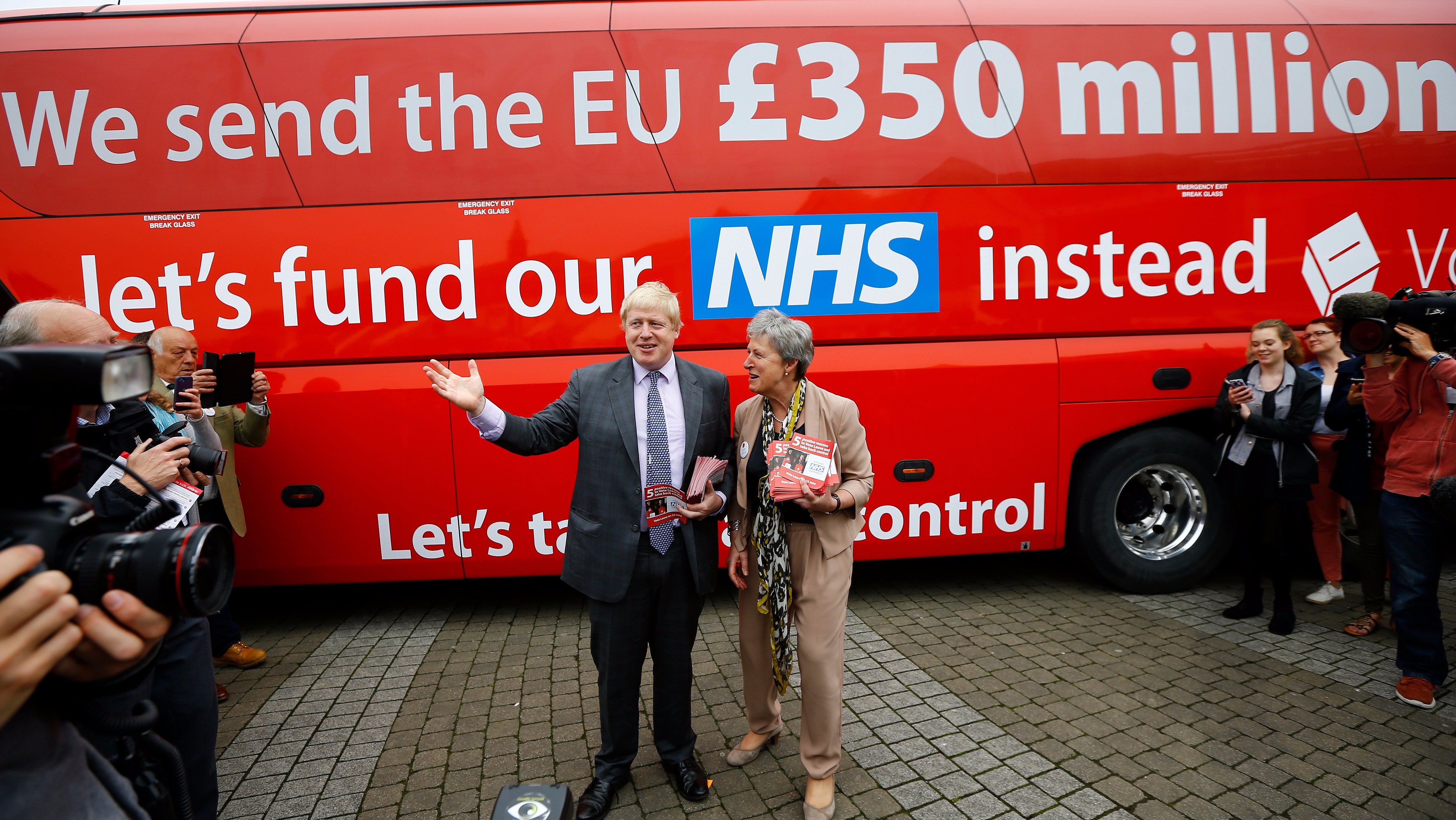
Political leaders campaign on promises of renewal. They pledge to improve public services, revive economic growth, build more homes and restore confidence in the political system. Yet once in office, they discover that the scope for meaningful change is narrower than their rhetoric suggested. Fiscal constraints, demographic pressures, weak productivity growth and institutional shortcomings all limit the government’s room for manoeuvre. Global economic developments and international crises introduce further complications, often at precisely the moment when ministers are attempting to implement domestic reforms.
This has become a recurring problem for governments of different political persuasions. Conservative prime ministers encountered it. Labour governments have encountered it. Any future occupant of No. 10 is likely to encounter it, too. Sir Keir Starmer’s critics argue that he has been too cautious, too managerial or insufficiently willing to make decisive choices. His defenders contend that he inherited an exceptionally difficult set of circumstances and has had to reconcile competing demands with limited resources. Both arguments have merit. But they risk overlooking a more fundamental question about the nature of political leadership in Britain today.
The office of prime minister has become an exercise in managing expectations that no government can realistically satisfy. Public demands remain extensive, while the political environment has grown more fragmented and unforgiving. Social media ensures that mistakes are amplified almost instantaneously. The news cycle moves relentlessly, public trust remains fragile and economic constraints limit the choices available to ministers.
At the same time, the prime minister is expected to respond to international crises, oversee public services, stimulate growth, address the housing shortage, strengthen national defence, tackle climate change and improve living standards. The list is virtually endless. The resources available to meet those demands are not.The result is a political system in which the promise of leadership often proves more attractive than the reality of governing.
Leadership contests are exercises in possibility. Candidates offer competing visions, supporters invest their hopes in particular personalities, and political parties briefly entertain the prospect that a change at the top might resolve problems that have resisted successive administrations. Government quickly introduces a less accommodating set of circumstances.
Promises must be translated into budgets. Priorities compete for funding. Policies encounter administrative obstacles. Decisions that appear straightforward in opposition become complicated when their costs, consequences and unintended effects become apparent. Disappointment follows, often regardless of whether the government has made genuine progress.This helps explain why political leadership contests can generate such excitement while the governments that emerge from them struggle to sustain public enthusiasm. A new leader offers the prospect of a fresh beginning. Governing requires confronting the accumulated consequences of the past.
Andy Burnham would be no exception.
Burnham, the mayor of Greater Manchester, has established himself as one of Labour’s most prominent figures outside Parliament. His supporters see him as a politician who communicates with greater instinct, articulates a clearer political vision and connects more readily with voters who feel detached from Westminster.
There are grounds for taking those arguments seriously. His mayoralty has given him a platform from which to champion Greater Manchester’s interests, challenge central government and present himself as an advocate for regional devolution. He has demonstrated a willingness to enter political disputes and make the case for a different relationship between Westminster and the rest of England. Those qualities could prove valuable in national politics. A leader who communicates clearly, identifies priorities and persuades voters that government understands their concerns has an advantage over one who struggles to explain what it is trying to achieve.
Burnham might also offer Labour a different political temperament. He could prove more comfortable articulating a broad vision for the country, more instinctive in his public communication or more effective at reaching voters who have grown disillusioned with the established political class.
But these are possibilities, not guarantees. And even if every one of them proved correct, the underlying difficulties confronting Britain would remain. A more persuasive prime minister cannot immediately build hundreds of thousands of homes. A more charismatic leader cannot reverse decades of weak productivity growth in a parliamentary term. Greater popularity cannot, by itself, generate the tax revenues required to finance every public service commitment. Political skill matters. The ability to set priorities, build coalitions and explain difficult decisions can make a substantial difference to the success of a government. But leadership has limits, particularly when the problems in question are structural rather than personal.
There is a persistent tendency in British politics to treat national difficulties as though they are primarily the consequence of whoever happens to occupy Downing Street. Change the prime minister, the argument goes, and the country might finally move in a different direction.
There is some truth in this. Leaders make decisions that affect investment, public spending, regulation and the operation of the state. Different governments can pursue meaningfully different policies, and the quality of political judgment can influence economic and social outcomes.
Yet Britain’s difficulties have accumulated over decades, under governments of different parties. Weak productivity growth, pressure on public services, housing shortages and regional economic disparities cannot be attributed to a single administration. Nor can they be resolved simply by replacing one politician with another. They are embedded in economic structures, demographic developments and institutional arrangements that take years to change.
Building homes requires more than announcing targets. It involves planning decisions, infrastructure, construction capacity and the availability of land and finance. Improving public services requires not only funding but also effective management, a sufficient workforce and reforms that produce measurable improvements. Raising productivity depends on investment, skills, technology and the conditions in which businesses operate.
These are not problems that disappear when a new prime minister enters Downing Street. They require sustained effort over many years, potentially across multiple parliamentary terms. Progress may be gradual, uneven and difficult to translate into immediate political rewards. That is the uncomfortable reality that would confront Burnham just as surely as it confronts Starmer.
If Burnham were to pursue the Labour leadership, he would face a familiar political dilemma. To win, he would need to persuade party members and colleagues that he represents a meaningful alternative to the current leadership. He would have to explain what he would do differently, why his approach would be more effective and how he would restore confidence in Labour’s ability to deliver.
Yet the more ambitious his promises, the greater the risk of repeating the cycle that has frustrated previous governments: elevated expectations followed by the discovery that the available options are more limited than advertised.
A credible leadership campaign would therefore need to strike a difficult balance. It would have to offer a convincing sense of direction without pretending that Britain’s problems could be resolved quickly. It would need to explain not only what a new government wanted to achieve, but also what it would prioritise, what it would postpone and what it could not reasonably promise.
That might mean acknowledging that some improvements would take years to become visible. It might mean explaining why certain popular policies could not be afforded, or why difficult reforms would produce benefits only gradually. Such a campaign would be less intoxicating than one built around the promise of national renewal. But it might offer a more durable foundation for government.
Whether voters and Labour members would respond to that kind of realism is another matter. Politics rewards optimism, clarity and confidence. It is less forgiving of qualifications, constraints and explanations of why things cannot happen immediately. Yet a leader who wins by encouraging unrealistic expectations may find that the victory contains the seeds of subsequent disappointment. For now, Burnham remains an important figure in the debate about Labour’s future, but the distinction between political speculation and an actual route to the leadership matters.
A return to Westminster would be a significant step. Winning a parliamentary seat, should an appropriate opportunity arise, would not automatically translate into a successful leadership campaign. Nor would winning the leadership necessarily resolve Labour’s electoral difficulties or establish that Burnham’s approach would prove more effective in government. Each stage would present its own obstacles.
First would come the practical and political challenge of returning to Parliament. Then the task of securing sufficient support within the Labour Party. Beyond that would lie the far more demanding responsibility of governing a country facing deep-rooted economic and institutional problems.
And even a successful prime minister would eventually have to confront the question that has dogged so many of their predecessors: how to demonstrate meaningful progress when the public expects rapid improvements and the machinery of government moves slowly.
British politics remains unpredictable. Economic conditions can change, public opinion can shift and political fortunes can reverse with remarkable speed. A politician who appears well placed for national leadership one year may find the opportunity has disappeared the next. It would therefore be premature to treat Burnham’s future as settled. But the questions raised by the prospect of his return to Westminster extend beyond his personal ambitions or Starmer’s political standing. They concern the limits of political leadership itself.
Changing a prime minister can alter the tone of government. It can change priorities, improve communication and lead to better decisions. In some circumstances, a change of leadership can make a substantial difference to a country’s direction. But it cannot eliminate the trade-offs inherent in governing a country with finite resources and extensive public needs.
The next prime minister will inherit many of the same constraints as the current one, regardless of party or personality. The challenge will be to distinguish between problems that can be solved through better leadership and those that require deeper, longer-term changes to Britain’s economy and institutions. That distinction is crucial. If every failure is attributed to the person at the top, politics risks becoming an endless search for a sufficiently talented individual to overcome problems that no individual can resolve alone. The cycle is familiar: a leader arrives promising renewal, encounters the limits of government and disappoints a public that expected more. Another leader emerges, offers a different style and raises hopes once again. The names change. The underlying difficulties endure.
For Burnham, the question is not simply whether he could communicate more effectively than Starmer or offer Labour a more compelling political identity. It is whether his approach could translate into tangible improvements in living standards, public services and economic opportunity — and whether those improvements could be sustained despite the constraints that have frustrated successive governments.
That is a much harder test than winning a by-election, a leadership contest or even a general election.The real challenge facing Britain’s next prime minister is not merely to persuade the country that things can change. It is to demonstrate that government still has the capacity to make that change happen.