The BLM Movement – It Comes and It Goes (but nothing changes)
/ Leave a comment / Edit
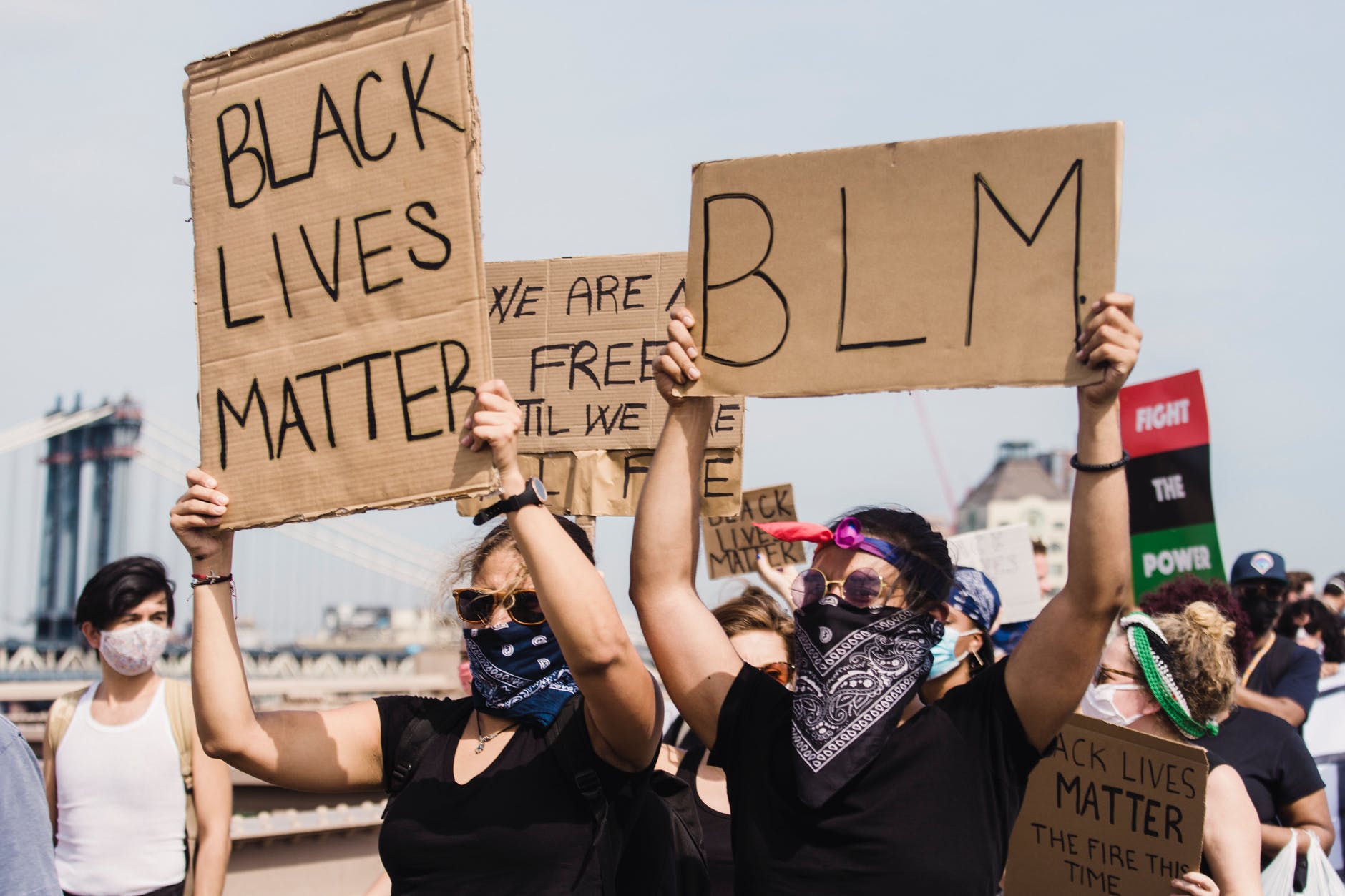
The death of George Floyd on the 20th May 2020 was obviously a tragic event, epitomising the inherent racism which exists in both America and in Britain. The outcry was massive. Despite a global pandemic, people marched and protested and signed petitions and changed the way they viewed their past behaviour. It was beautiful and horrifying at the same time. And in my naivety I thought it would last more than about two weeks.
Everyone was involved. Footballers take a knee before every game because in their sport Black Lives Matter. The same is done all over America. Lewis Hamilton tried to achieve the same level of protest by demanding that all drivers and pit-crews take a knee before the Austrian Grand Prix. 14 drivers knelt. 6 did not, including Red Bull’s Max Verstappen and Ferrari’s Charles Leclerc. An embarrassing response from an extremely wealthy and influential sport – but not at all surprising considering Lewis Hamilton is the first mixed-race Formula 1 driver in history.
That’s right, if you didn’t know. I’m not a fan of Lewis Hamilton I find him obnoxious, aggressive and frankly weird. But you can’t deny his passion, skill and natural talent. And when I say “first mixed-race driver” I don’t mean first to win 6 world championships. I don’t mean first to do a ‘three-peat’, winning three years in a row. And I definitely don’t mean the first to win a Grand Prix. I mean Lewis Hamilton was the first (and at the time of writing this article) and ONLY mixed race Formula 1 driver to start a race. Let that sink in for a second.
But the knee protest, popularised by San Francisco 49ers quarterback Colin Kaepernick in 2016, is not the end nor the beginning of my problem with the way people have responded to the BLM protests.
People rushed onto Instagram to quickly tell their like-minded followers not to be racist, a good thing obviously, although something I suspect was more a demonstration of how ‘woke’ they were, rather than an attempt to actually educate anyone. They posted ‘how you may be being racist without knowing’, they posted ‘research racism’s history’ and they posted ’10 ways YOU can combat racism’. They were all very interesting articles, but they were things we knew? Surely they were things you know? You know racism instantly – I have always said you can tell if someone’s genuinely racist within 20 seconds of meeting them. You know who the racists are and so do I.
Racists out there need to be treated in a similar way to the way we reacted to this pandemic. A slow start (150 years) but soon they must simply be isolated. You should stay away from them, you should wear a virtual mask and not talk to them. It may be a step too far to wash your hands after meeting one but if you have to that’s fair. Forget trying to ‘educate’ racists in 2020, they don’t want to learn. They should just be rejected, ignored, possibly even feared. Follow these rules and watch as they just disappear – not unlike COVID-19.
And that brings me to the question what happened to the BLM protest? Everyone posted their picture of the infamous Edward Colston statue being replaced by a sculpture of Black Lives Matter protester Jen Reid. Then what? Silence. No more posts on how not to be racist? No more lessons? Racism must be over then?
Then people argue, ‘well, one statue may not sound like a lot but its a start!’. Again, I don’t think so. In 1833 Britain introduced the ‘Slavery Abolition Act’, which abolished slavery in most British colonies, freeing more than 800,000 enslaved Africans in the Caribbean and South Africa as well as a small number in Canada. That could be classed as a ‘start’ of the fight against racism. A full 3 decades later, in 1865, Abraham Lincoln managed to emancipate American slaves and have them classed as humans instead of ‘property’, as they had previously been titled in the Southern states. That could’ve been a starting point.
When Rosa Parks refused to give up her seat to a white man on December 1st 1955, that should be considered a starting point. In the 1960s, a century after slavery had ended but the United States of America denied basic civil rights to African Americans, during the Civil Rights Movement. That could have been the ‘start’. In 1963 when Martin Luther King Jr gave his famous ‘I have a dream’ speech, that could have been a ‘start’. Two years later, when Martin Luther King Jr. led three peaceful protest marches in 1965 along the 54-mile highway from Selma, Alabama, to the state capital of Montgomery; on the way encountering dogs, bomb threats, death threats and riot police. That could have been a ‘start’.
When, in a similar but arguably even more brutal manner, unarmed Rodney King was beaten mercilessly on camera by four police officers who “could’ve struck him with batons between fifty-three and fifty-six times.” That could’ve been a ‘start’. But that was in 1991.
It’s 2020 and ‘starting points’ simply are not good enough. They haven’t been for a long time.
 Ignorantly Ignorant